Numeracy skills Grade 2 Adding up to 100 Worksheets
4 filtered results
-
From - To
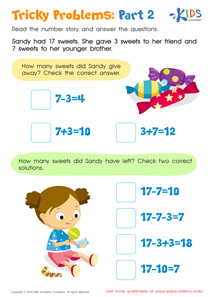
Enhance your child's math abilities with our "Numeracy Skills Grade 2 Adding up to 100 Worksheets." Designed for second graders, these worksheets offer a variety of engaging addition exercises to help young learners practice and master adding numbers up to 100. Each worksheet is tailored to build numeracy skills, improve accuracy, and boost confidence in solving math problems. With colorful illustrations and interactive tasks, students will find learning enjoyable and effective. Perfect for classroom activities or additional home practice, our worksheets make math an exciting adventure for every young learner. Download now to start the fun!
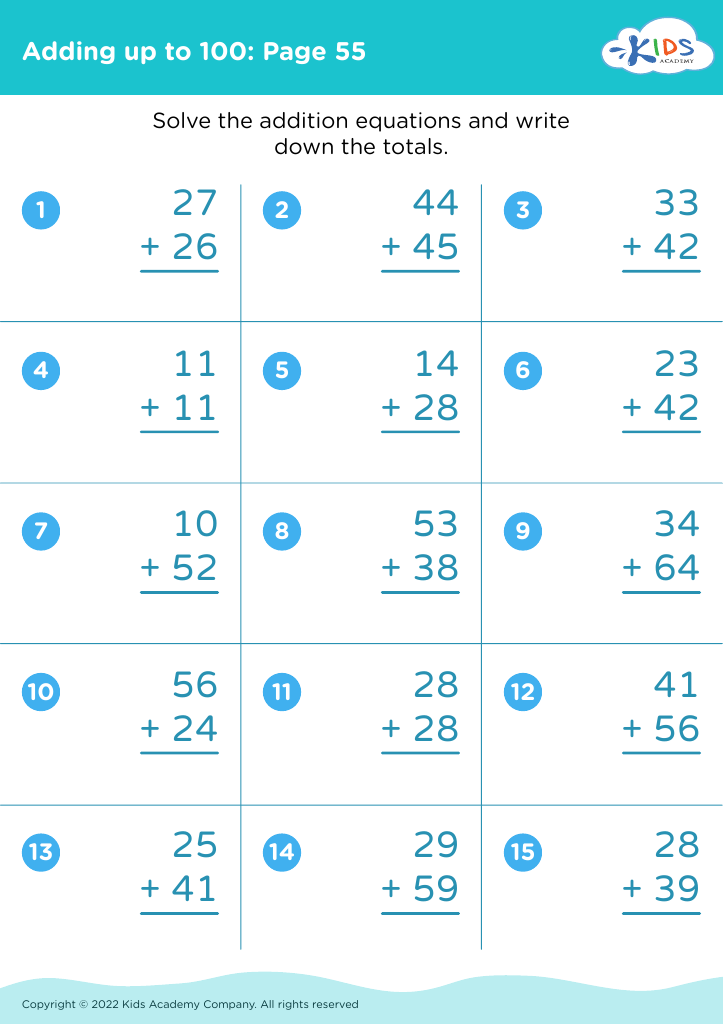
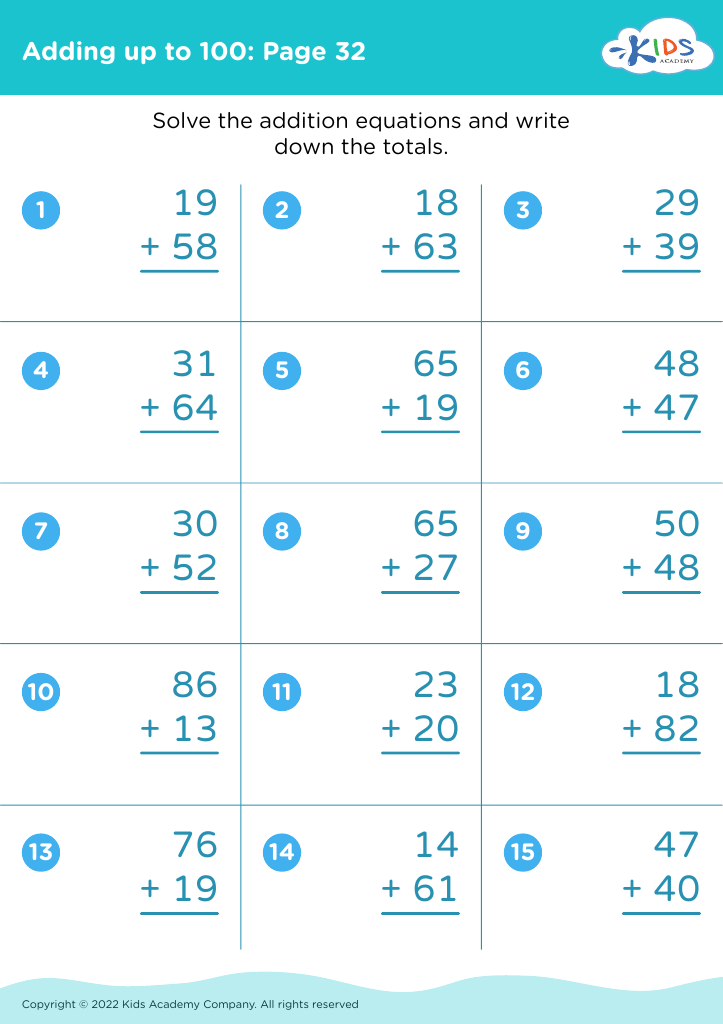
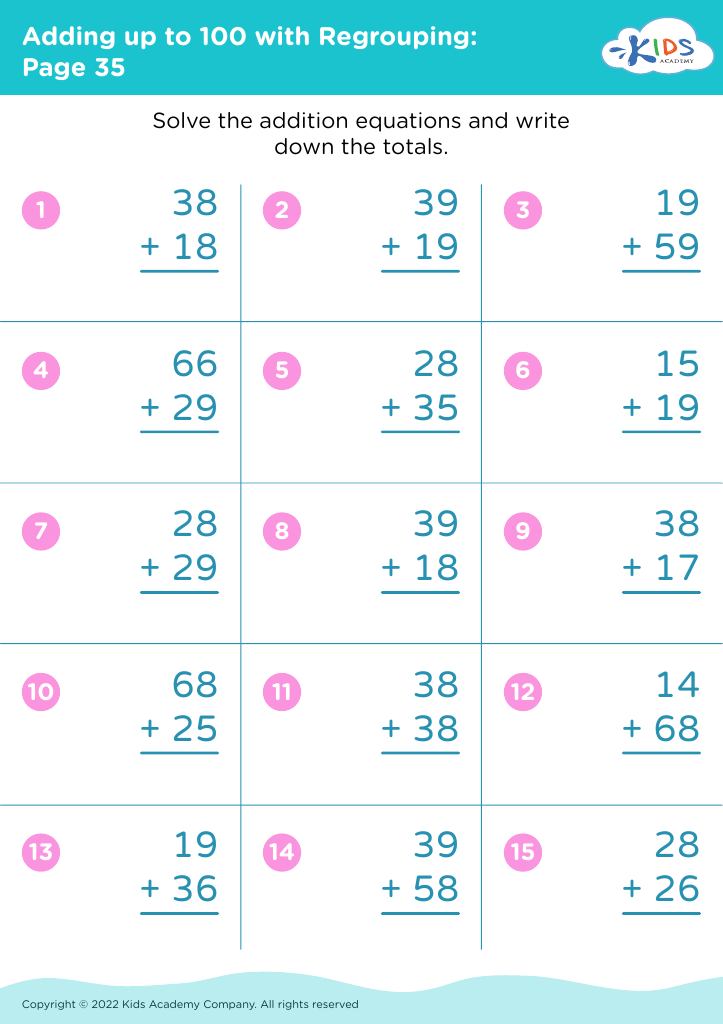
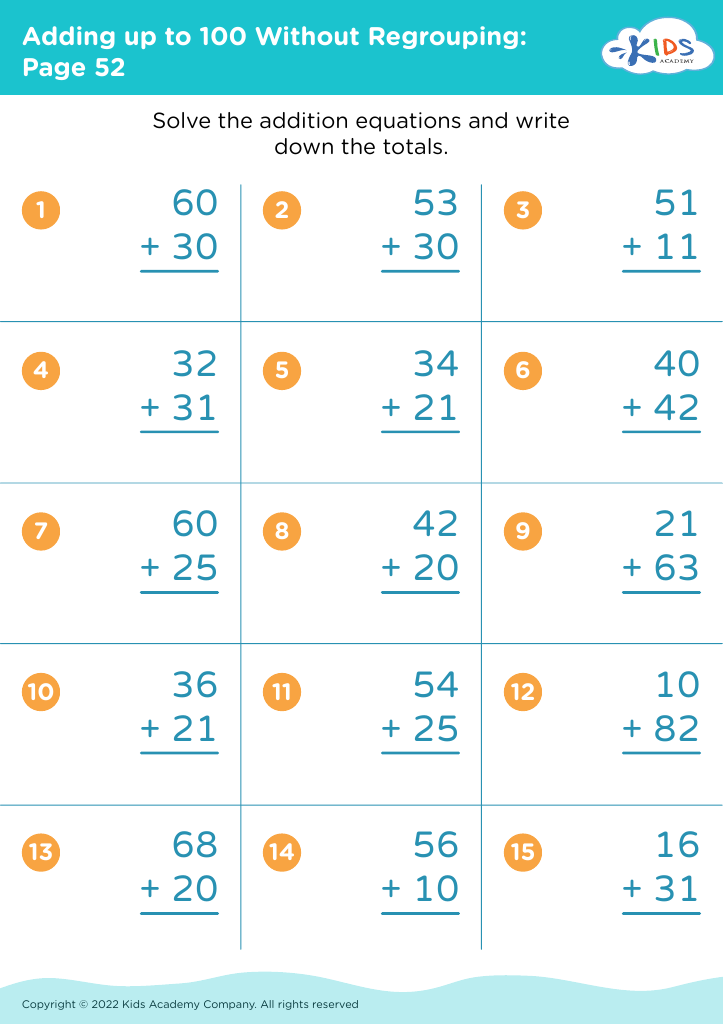





Numeracy skills in Grade 2, particularly the ability to add numbers up to 100, serve as a foundational pillar for future mathematical proficiency. At this stage, children transition from basic counting to more complex arithmetic, which stimulates cognitive development and improves problem-solving abilities. Proficiency in adding up to 100 equips students with skills critical for everyday tasks, such as managing money, understanding time, and following sequences. Additionally, this competence fosters self-confidence and encourages a positive attitude towards learning mathematics.
For teachers, emphasizing numeracy ensures that students develop a strong understanding of number relationships and patterns, which are essential for tackling advanced math concepts in later grades, such as multiplication, division, and fractions. It also aids in developing logical reasoning skills and the ability to think quantitatively.
Parents should care about these skills because a solid mathematical foundation enhances their child's academic performance across all subjects. Moreover, engaging in math activities together can strengthen parent-child relationships and create positive learning experiences.
In essence, mastering addition up to 100 in Grade 2 sets the stage for lifelong academic and practical success, making it crucial for both parents and teachers to prioritize and support this fundamental educational milestone.