Practicing multiplication Grade 2 Adding up to 100 Worksheets
4 filtered results
-
From - To
Unlock your child’s potential in math with our "Practicing Multiplication Grade 2 - Adding up to 100 Worksheets." These engaging and educational worksheets are designed to make learning multiplication fun for second graders. By focusing on adding up to 100, these activities strengthen foundational math skills, foster confidence, and improve problem-solving abilities. Each worksheet is crafted by experienced educators to align with common core standards, ensuring your child grasps essential concepts while enjoying the learning process. Ideal for classroom use or extra practice at home, our worksheets guarantee a solid understanding of multiplication and addition, preparing young learners for future success in math.
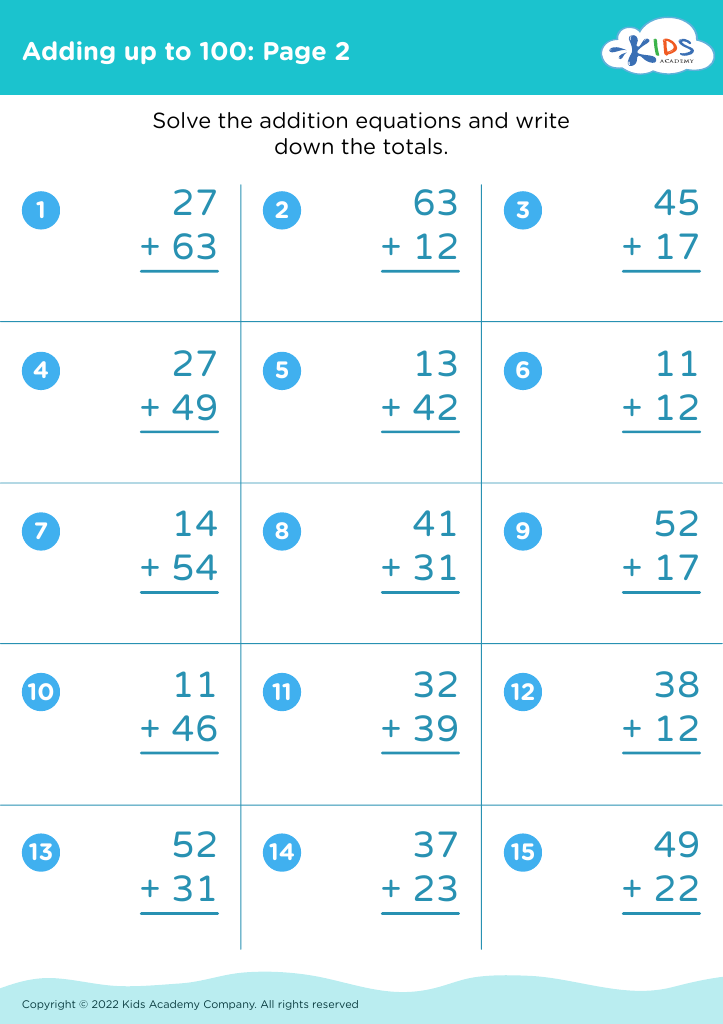
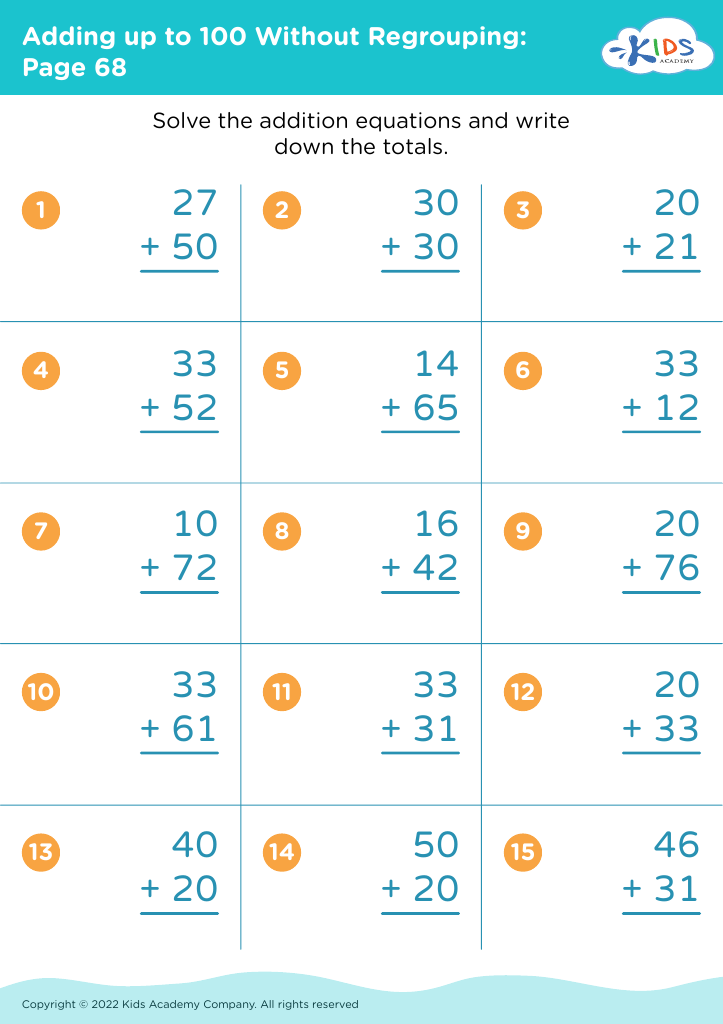
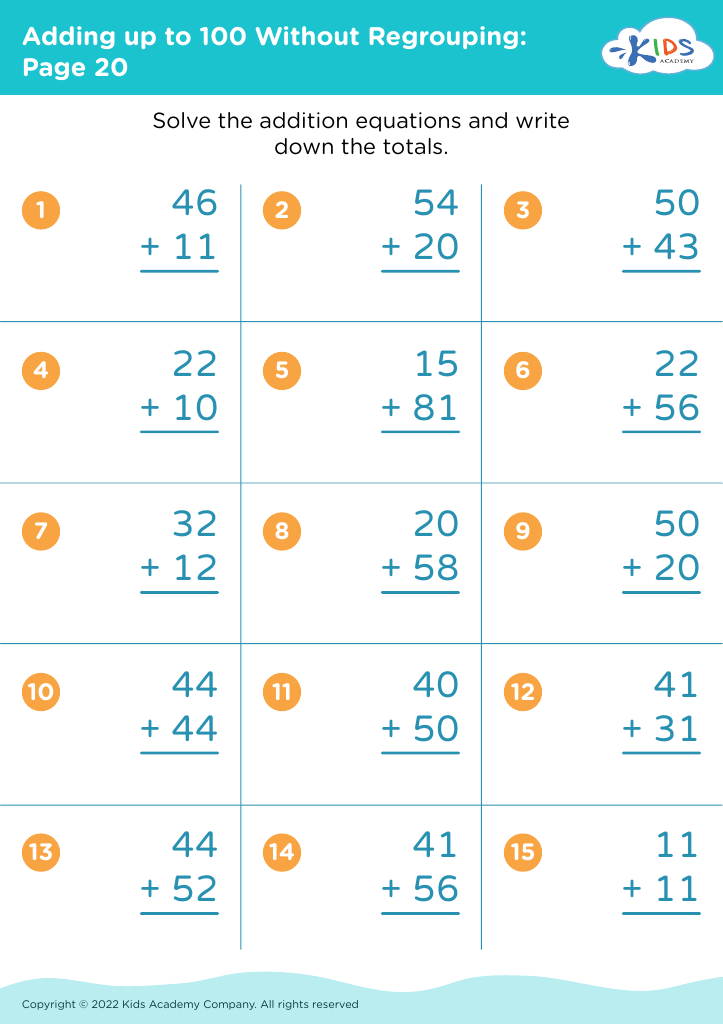
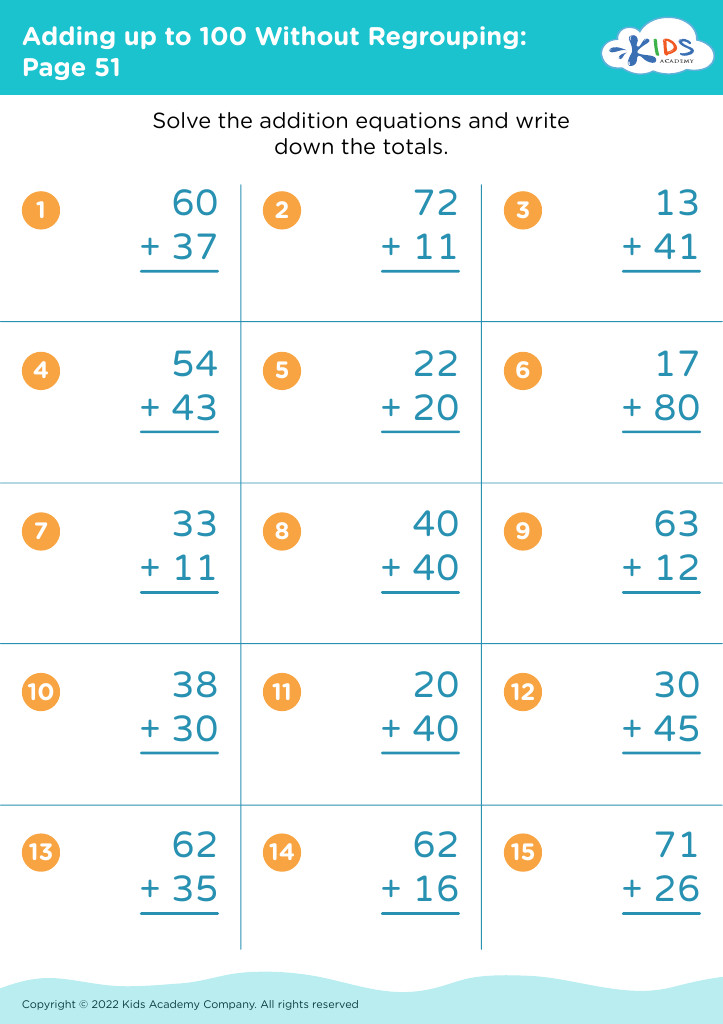





Practicing multiplication and adding up to 100 in Grade 2 is crucial for establishing a solid mathematical foundation for young learners. Multiplication skills are not just about rote memorization; they help children understand patterns and relationships between numbers. This early exposure sets the stage for more advanced mathematical concepts they'll encounter later, such as division, fractions, and algebra.
Moreover, addition skills, especially with numbers up to 100, ensure that students can handle everyday mathematical tasks with ease, from making change to measuring ingredients in a recipe. Mastery in these areas boosts mathematical confidence, making children more likely to enjoy and engage with the subject. Regular practice also develops problem-solving skills and enhances cognitive development, fostering critical thinking and the ability to work diligently and methodically.
For parents and teachers, taking an active interest in these foundational skills means creating a supportive learning environment both in school and at home. It’s about nurturing a love for learning, while ensuring that students build essential skills that will serve them for a lifetime. By prioritizing these basic operations early on, we’re setting students up for success not only in math, but across all subjects and real-life situations where analytical skills are invaluable.