Problem-solving practice Grade 2 Adding up to 100 Worksheets
5 filtered results
-
From - To
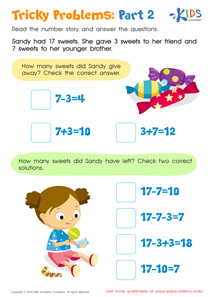
Welcome to our Problem-Solving Practice worksheets for Grade 2, designed to enhance your child's math skills by focusing on adding up to 100. These engaging worksheets challenge students with a variety of scenarios, encouraging critical thinking and solution-oriented approaches. As they practice, children will not only improve their addition skills but also develop essential problem-solving strategies. Suitable for classroom use or home learning, our worksheets promote a fun and interactive way to master math concepts. Let’s make math a joy with our comprehensive resources that lay a strong foundation for future success in mathematics! Explore our worksheets to get started!
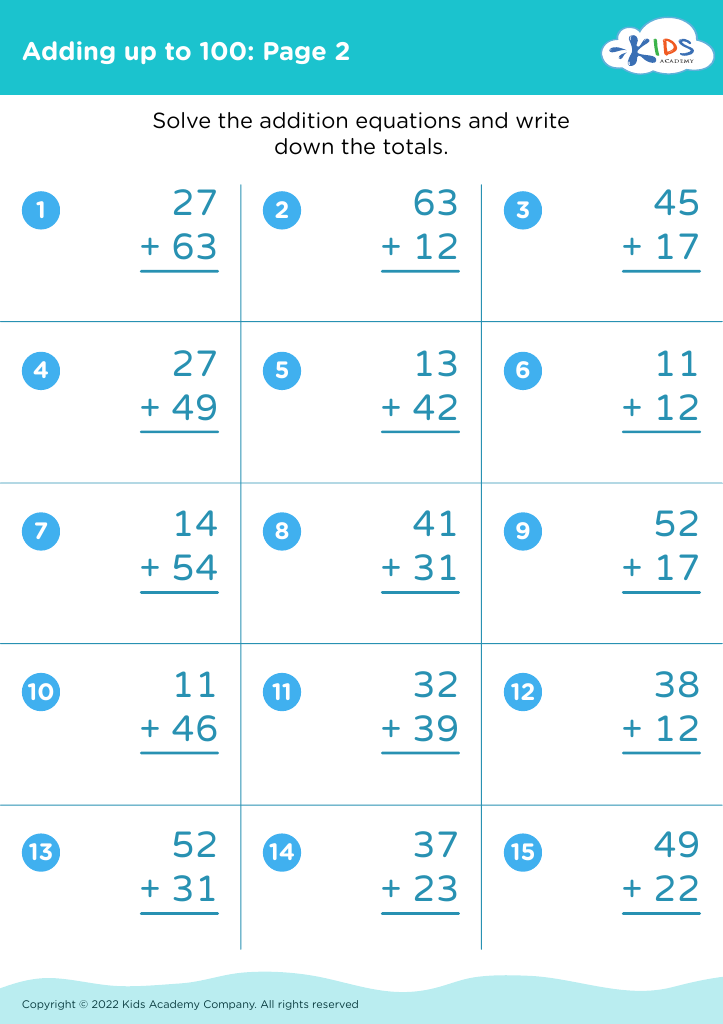
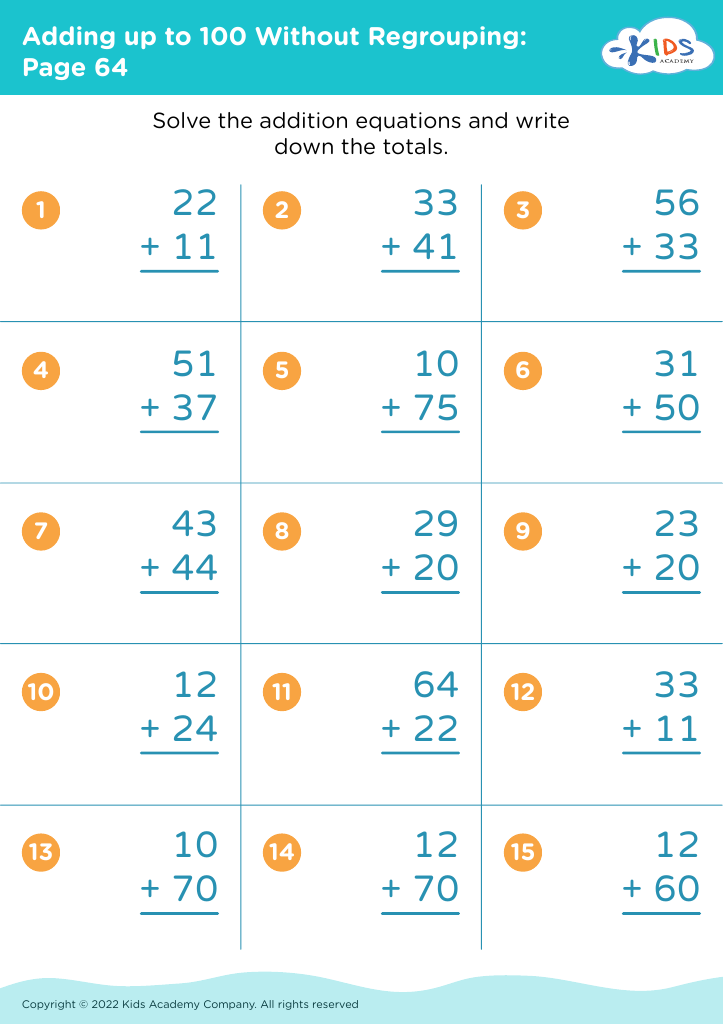
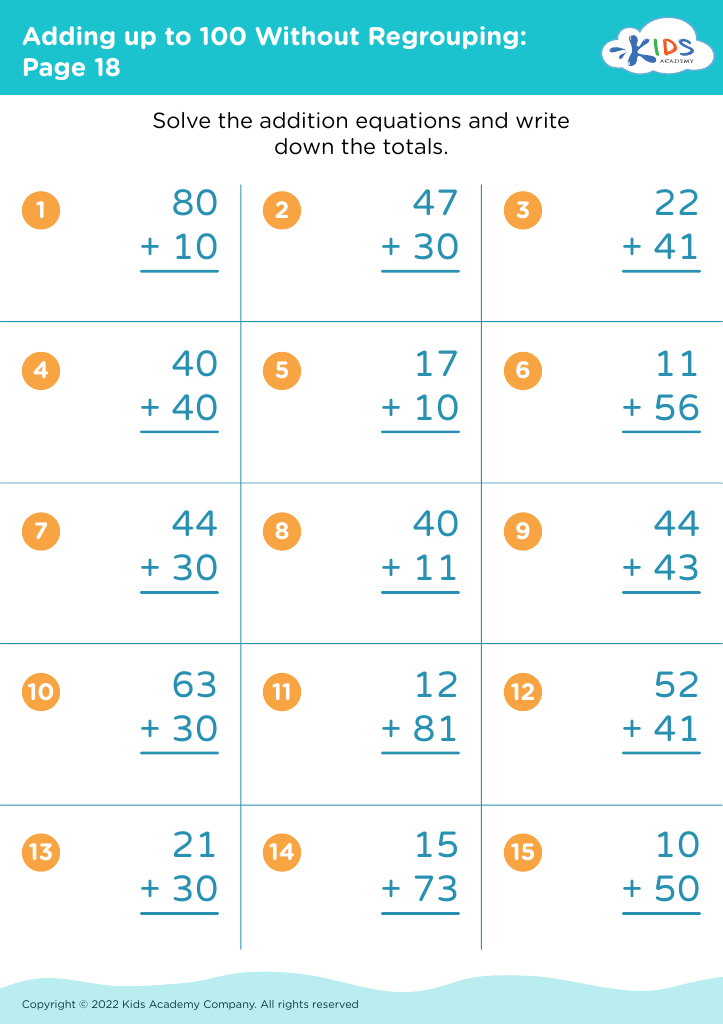
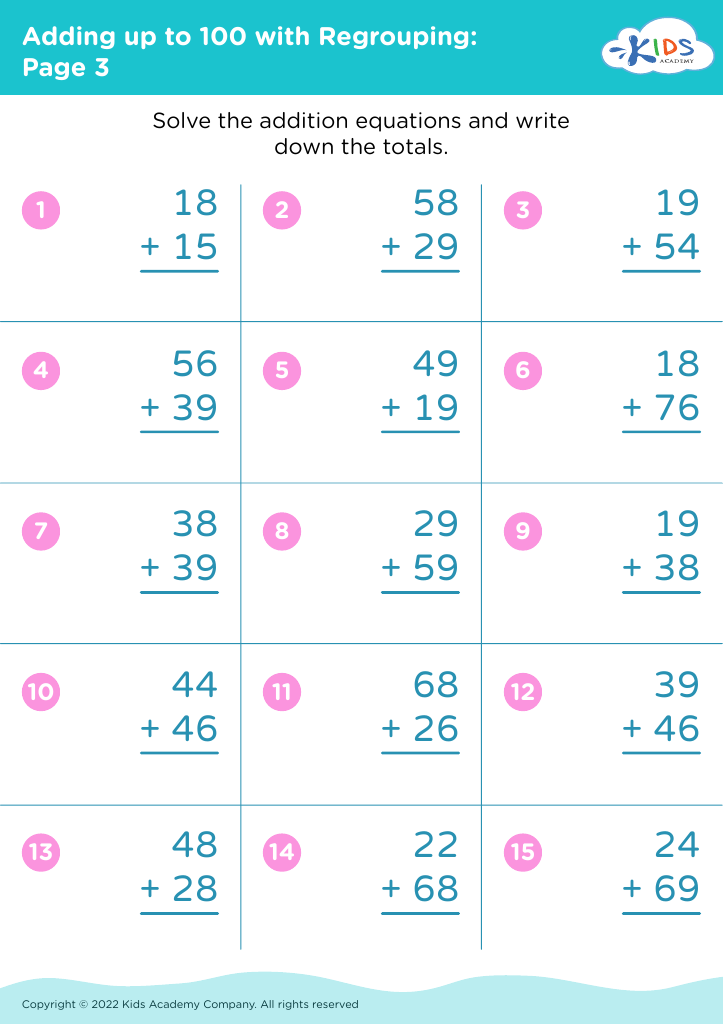
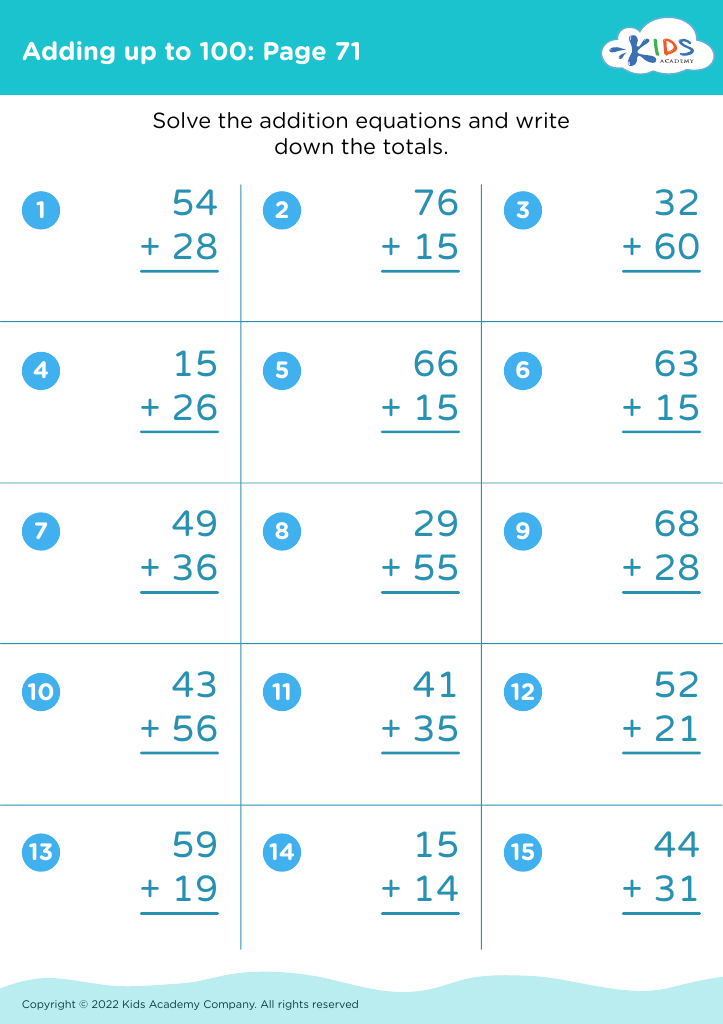





Problem-solving practice in Grade 2, particularly focusing on adding up to 100, is crucial for both parents and teachers for several reasons. Firstly, it enhances a child’s mathematical skills, building a solid foundation in arithmetic that is essential for future learning. Mastery of addition establishes confidence, making students more willing to tackle complex mathematical concepts later on.
Furthermore, problem-solving skills encourage critical thinking and reasoning. When children engage in problem-solving activities, they learn to analyze situations, devise strategies, and evaluate solutions. This practice fosters a growth mindset, teaching children that perseverance is key to overcoming challenges—an important life skill.
Collaboration between parents and teachers also amplifies learning. When parents are involved in this process, they reinforce skills at home, creating a supportive environment. This collaboration helps children see the value of their education, fostering a love for learning.
Additionally, as students practice adding up to 100, they become familiar with various equations and understand number relationships better. This capability is pivotal not just for mathematics, but also for daily life situations, enhancing practical skills like budgeting or measuring. Overall, prioritizing problem-solving practice in Grade 2 sets the stage for academic success and lifelong skills.