Recognizing Patterns Grade 2 Adding up to 100 Worksheets
5 filtered results
-
From - To
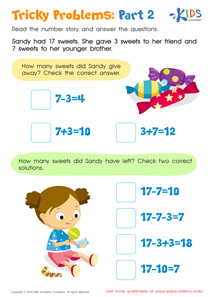
Explore our engaging "Recognizing Patterns Grade 2 Adding Up to 100 Worksheets," designed to enhance young learners' mathematical skills in a fun and interactive way! These worksheets focus on identifying patterns in numbers, helping students develop critical thinking and problem-solving abilities. Through a variety of exercises, kids will learn to recognize additions that lead to sums of 100, reinforcing their understanding of numerical relationships. Perfect for classroom use or home practice, these worksheets encourage children to think creatively while mastering essential math concepts. Download now to support your child’s journey in becoming confident and proficient in mathematics!
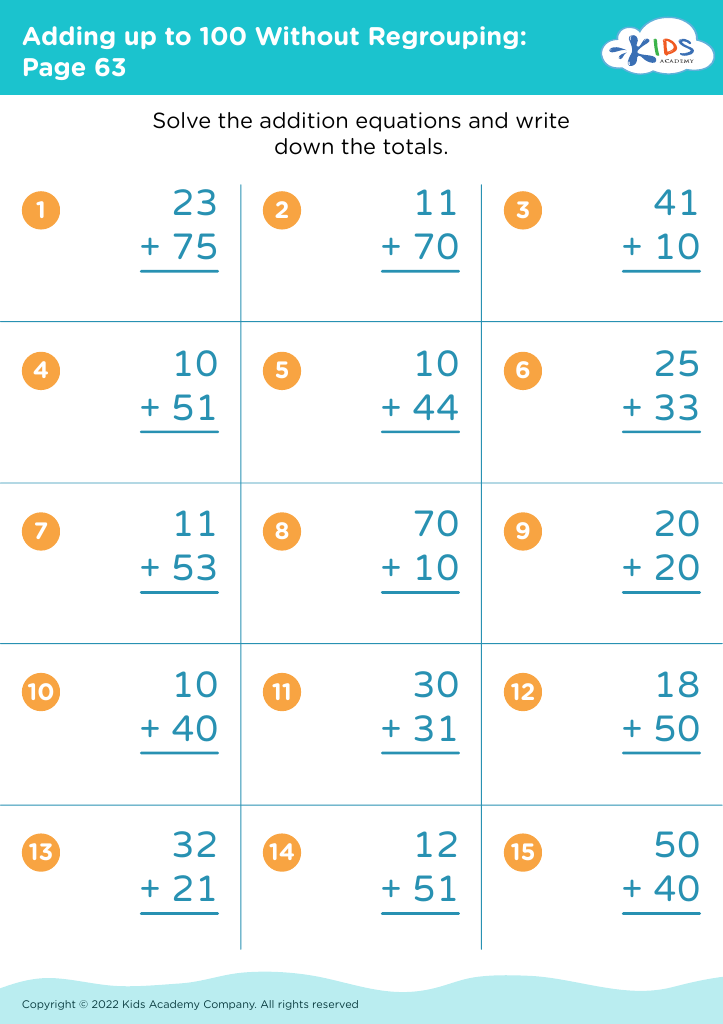
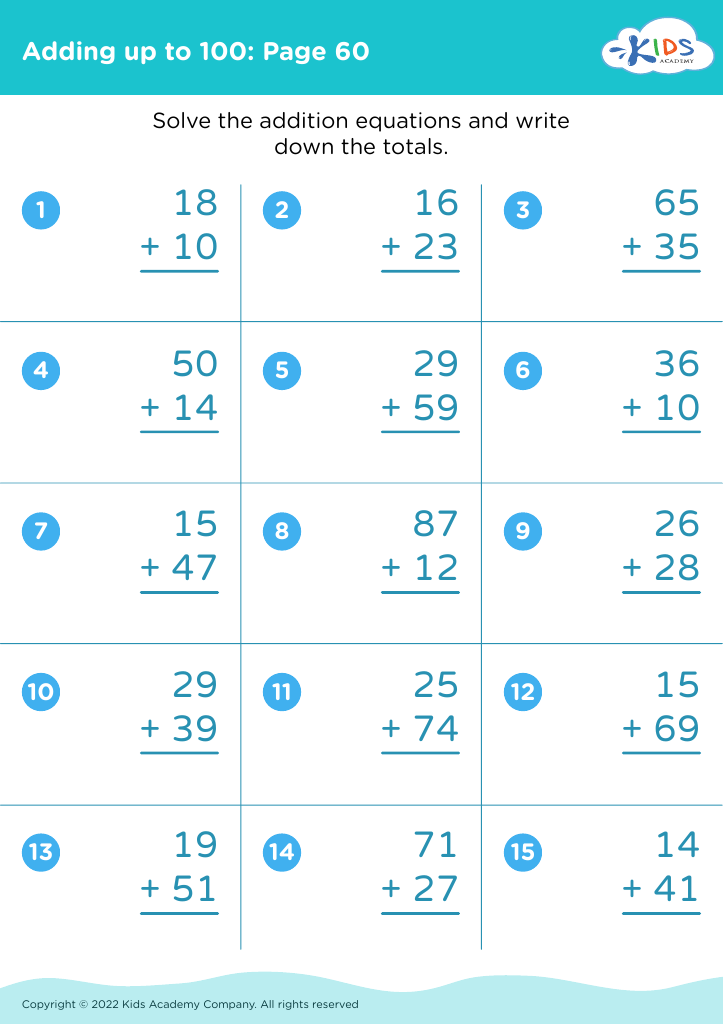
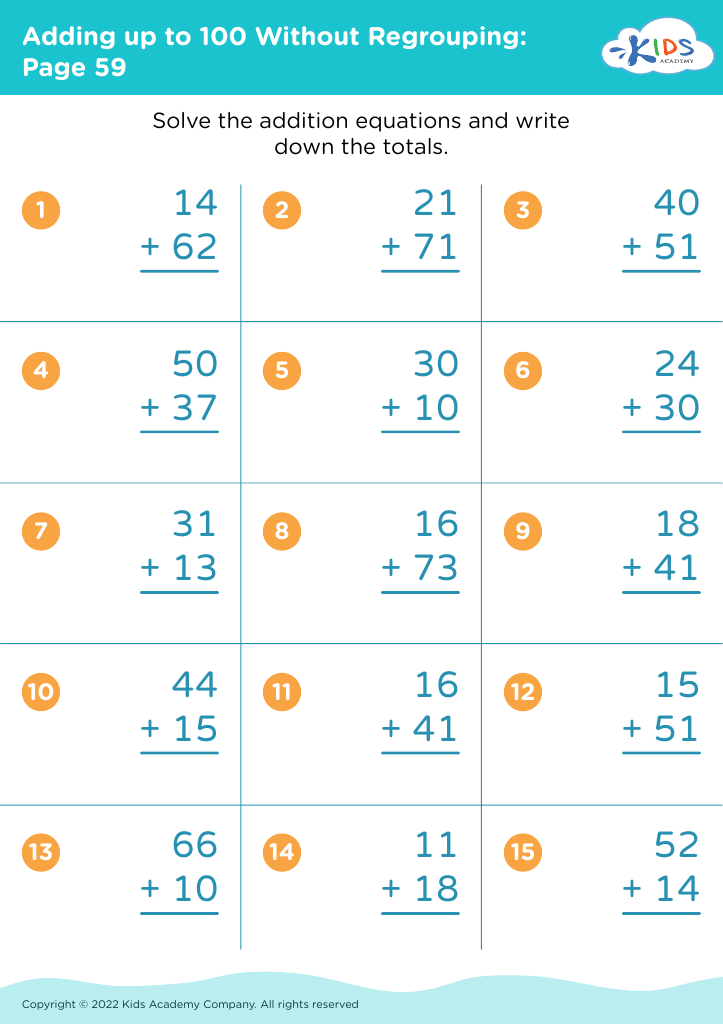
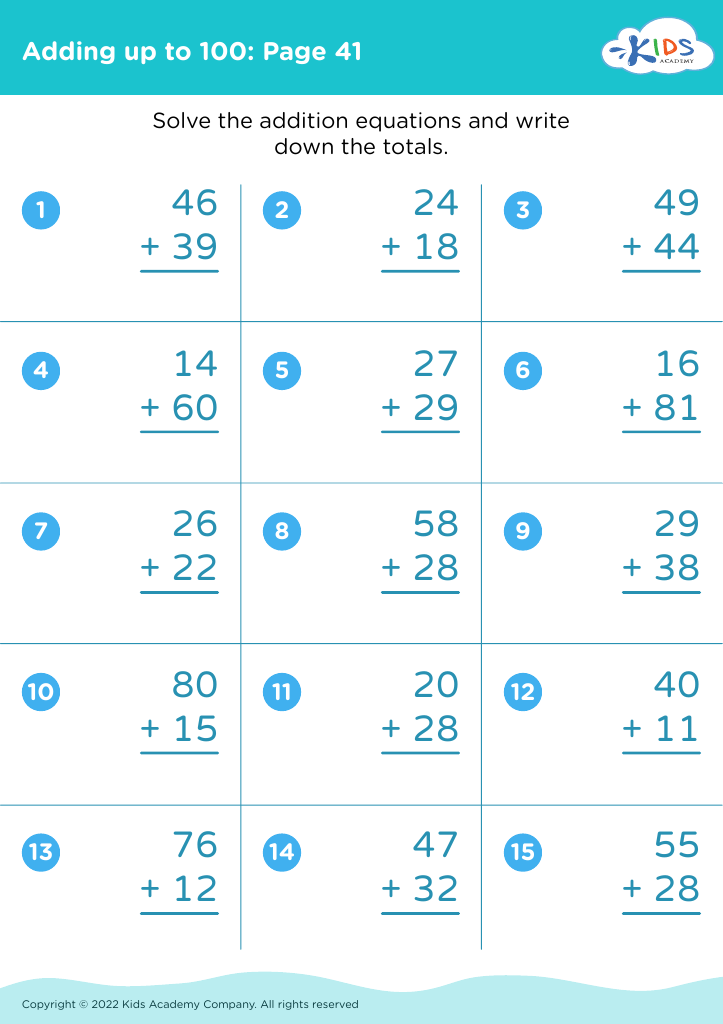
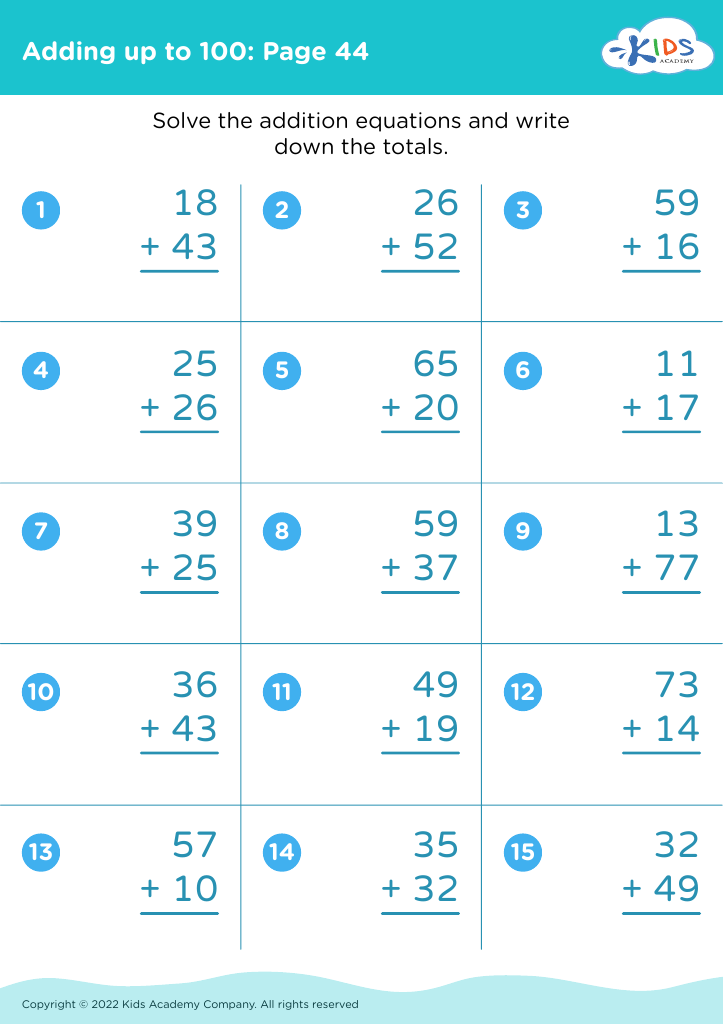





Recognizing patterns, particularly in the context of adding up to 100, is crucial for second graders as it lays the foundation for more complex mathematical concepts. When children learn to identify numerical patterns, they become adept at recognizing relationships between numbers, which enhances their problem-solving skills and algebraic reasoning.
For parents and teachers, fostering this skill means helping students become more confident in their mathematical abilities, which is vital at this developmental stage. Understanding patterns allows children to discover shortcuts and strategies, making addition more efficient and less intimidating. It also encourages logical thinking, which is essential not only in math but across various subjects.
Moreover, recognizing patterns prepares students for understanding numerical concepts like skip counting, place value, and eventually, more advanced topics such as multiplication and division. Engaging children in recognizing patterns can drive them towards a deeper interest in math, promoting a positive attitude towards the subject that will benefit them throughout their academic journey.
Incorporating activities that highlight these patterns enriches classroom experiences and provides parents with valuable opportunities to reinforce learning at home, creating a strong support system that nurtures mathematical literacy and critical thinking skills.