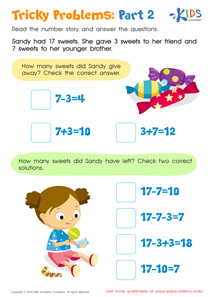
Understanding fractions Grade 2 Adding up to 100 Worksheets - Page 3
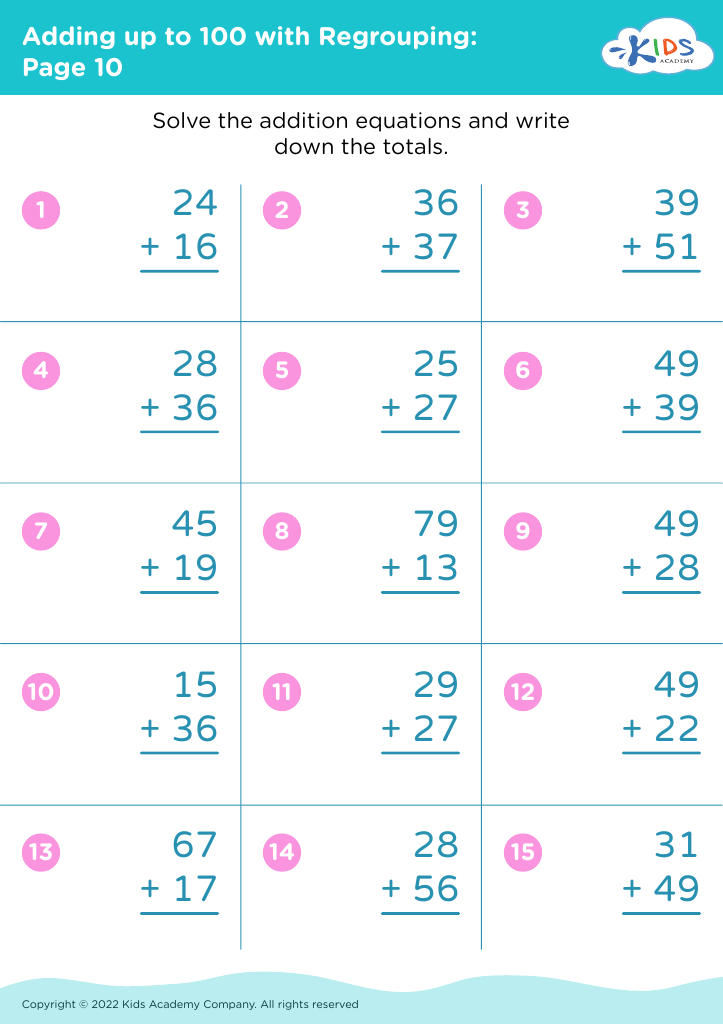
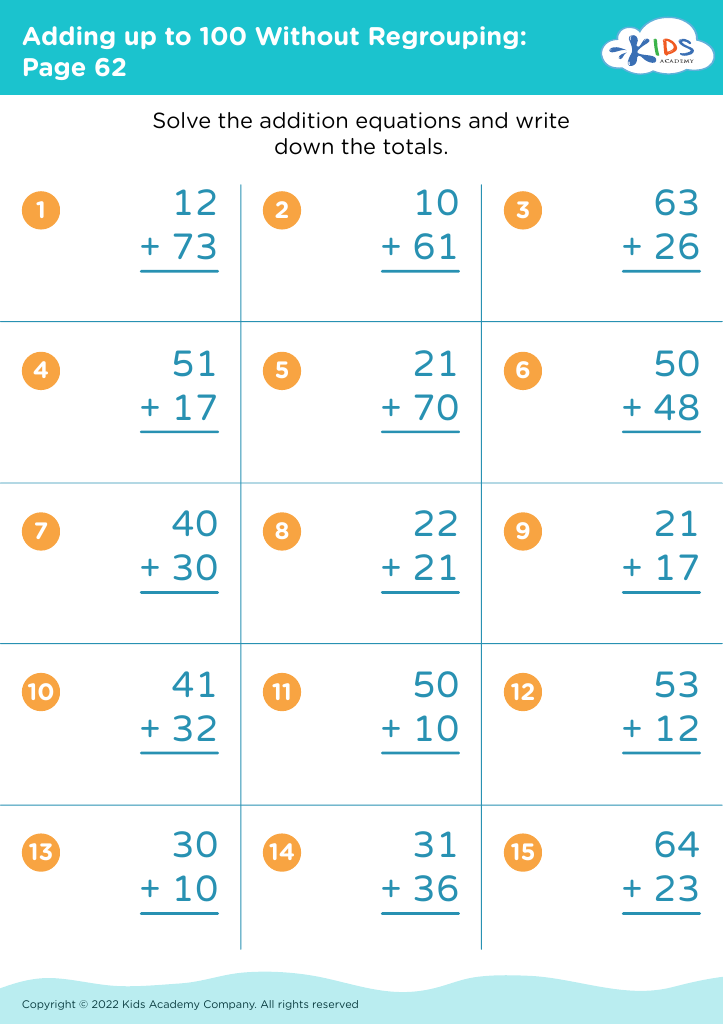
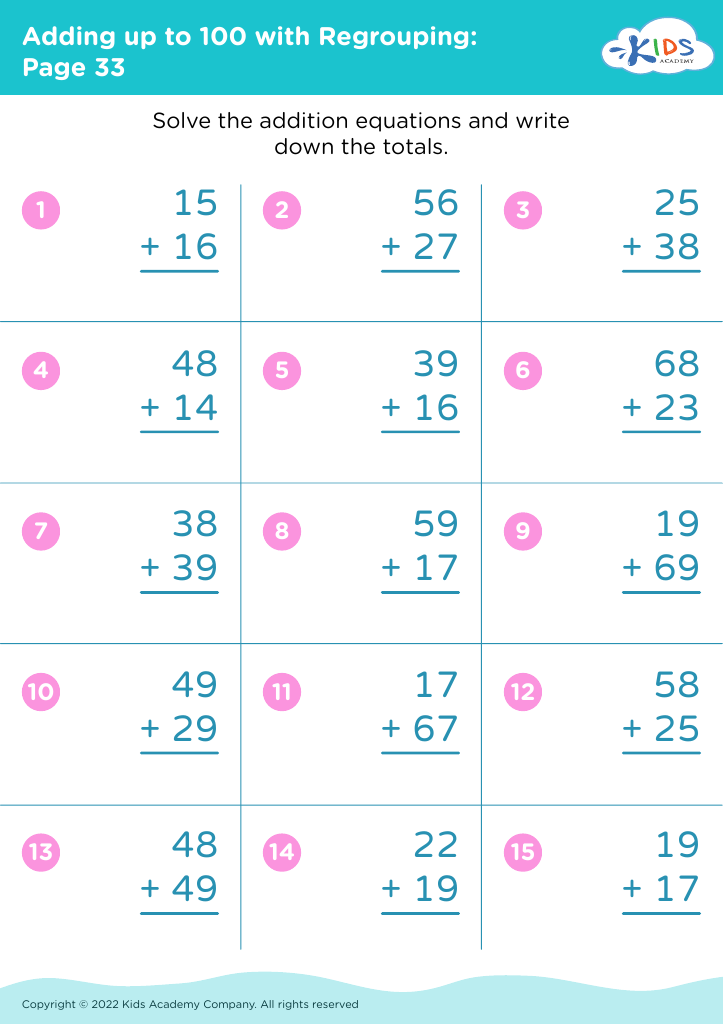






Understanding fractions is a crucial mathematical concept for second graders, as it lays the foundation for more advanced arithmetic skills. Learning about fractions helps children comprehend the notion of parts of a whole, which is essential in both math and everyday life.
When students learn to work with fractions, especially those that add up to 100, it enhances their number sense. This understanding promotes problem-solving skills, as children can relate fractions to real-world scenarios, such as sharing food or dividing items. Additionally, recognizing that fractions demonstrate different parts of a whole supports cognitive development and critical thinking.
For parents and teachers, fostering a solid grasp of fractions in young learners is essential because it directly influences their performance in future grades. A strong foundation in fractions contributes significantly to success in higher-level math subjects, such as multiplication, division, and ratios. Establishing a positive attitude towards math early on will encourage children to embrace challenges rather than shy away from them.
Moreover, as educators and nurturing guardians, instilling confidence in children when working with fractions empowers them as lifelong learners. Cultivating a supportive environment for exploring these concepts underlines their importance and relevance, ultimately benefiting both academic and everyday understanding.