Understanding multiplication Grade 2 Adding up to 100 Worksheets
9 filtered results
-
From - To
Enhance your child’s math skills with our "Understanding Multiplication Grade 2 Adding up to 100 Worksheets". These engaging worksheets are designed to make learning multiplication fun and effective. They provide a variety of exercises to help second graders grasp the concept of multiplication, transitioning from basic addition up to 100. Each worksheet is crafted to boost confidence, improve problem-solving abilities, and reinforce math fundamentals. Ideal for classroom use or additional practice at home, our printables ensure children develop a solid foundation in multiplication, setting the stage for future math success. Download today and watch your child’s math skills soar!
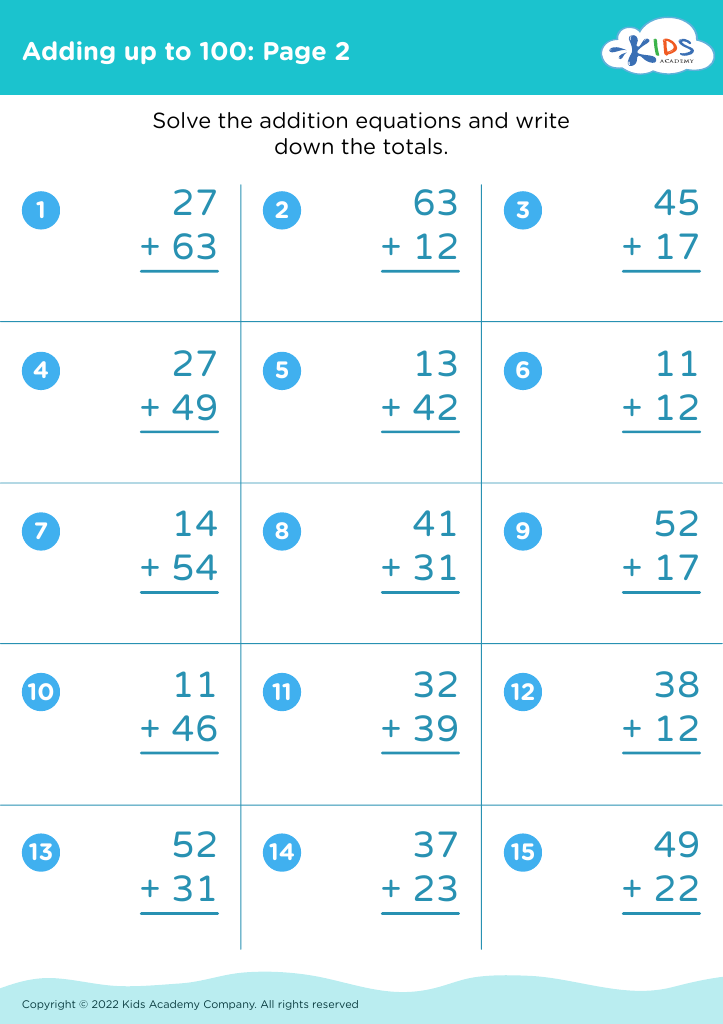
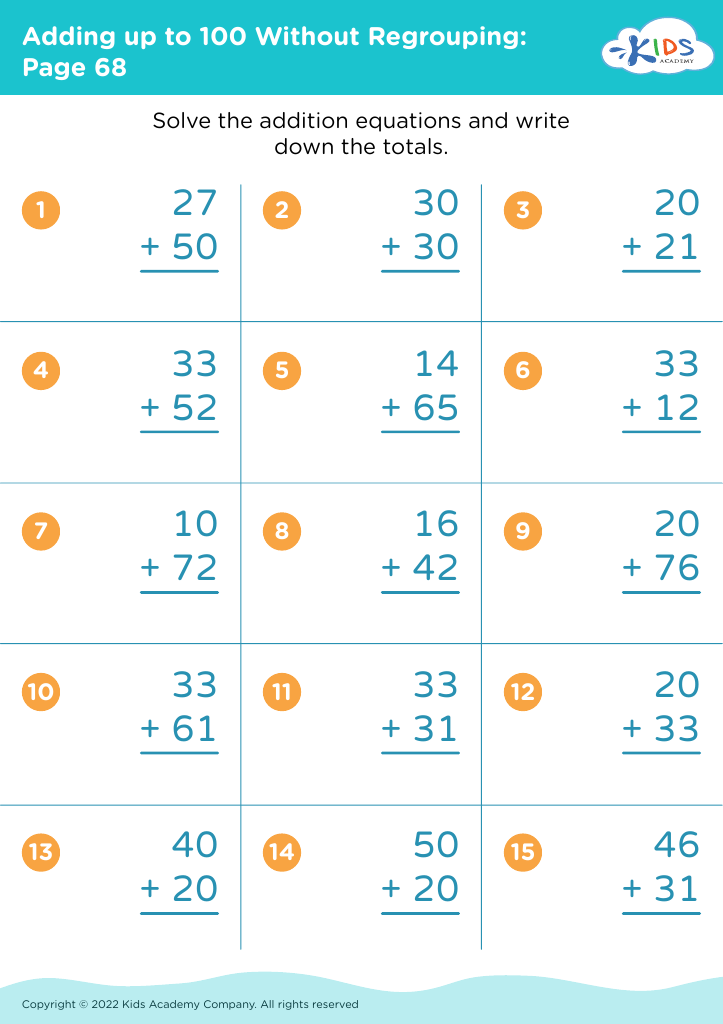
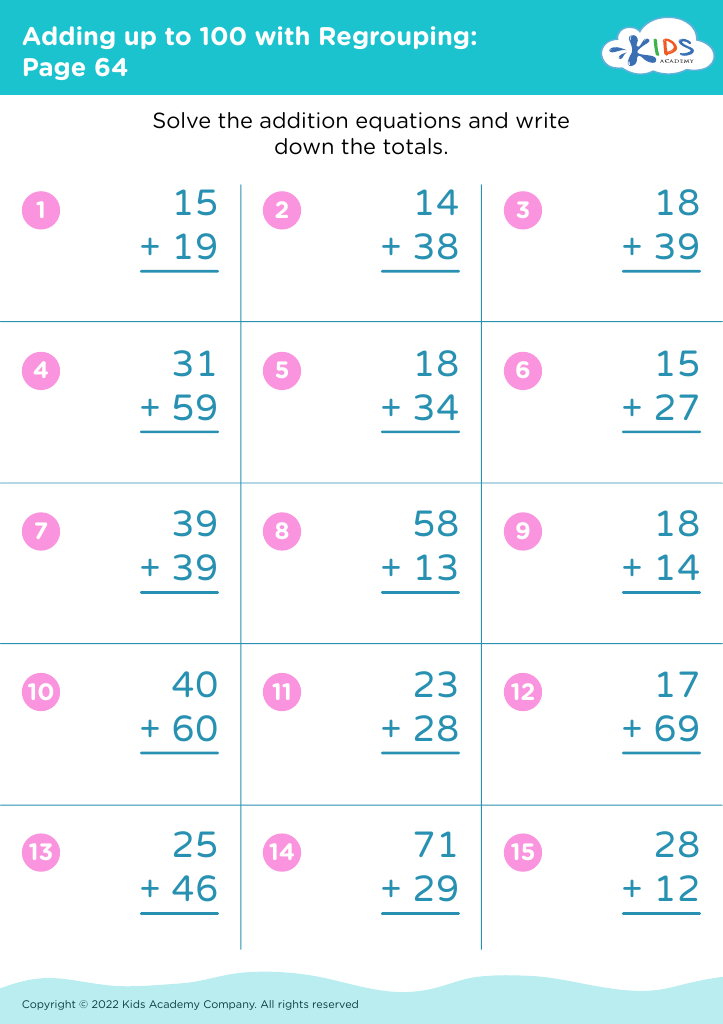
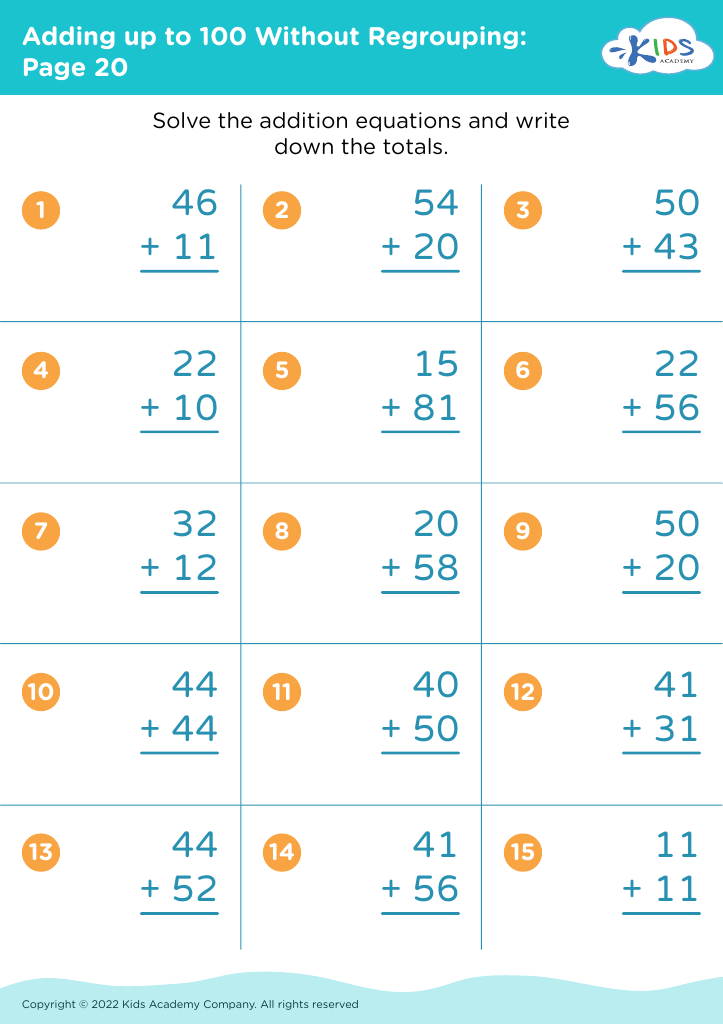
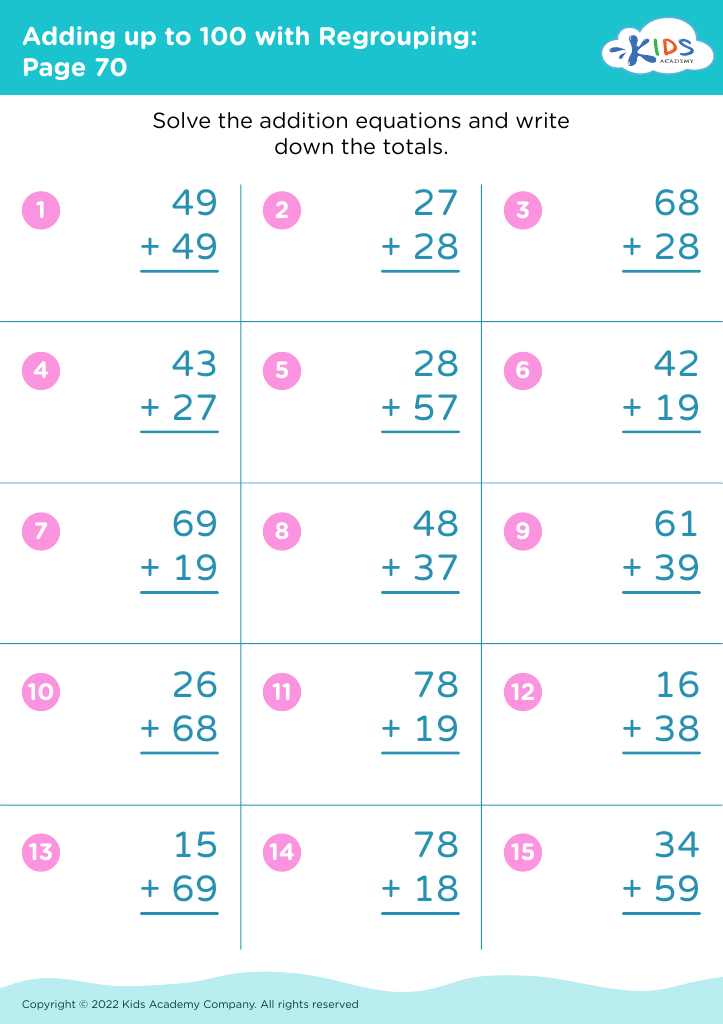
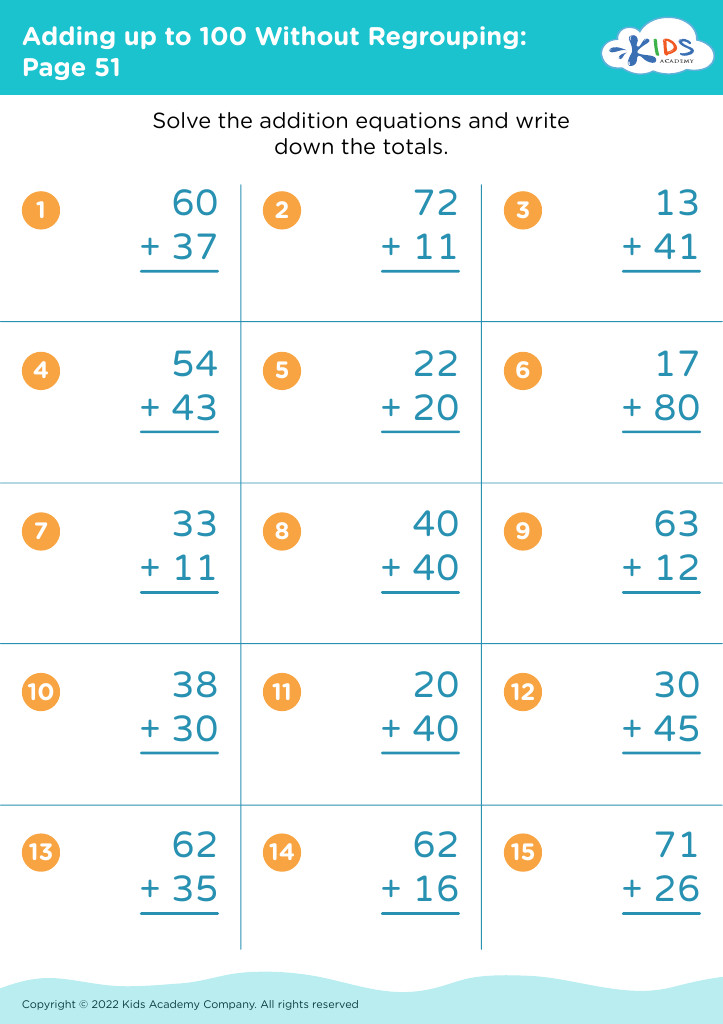
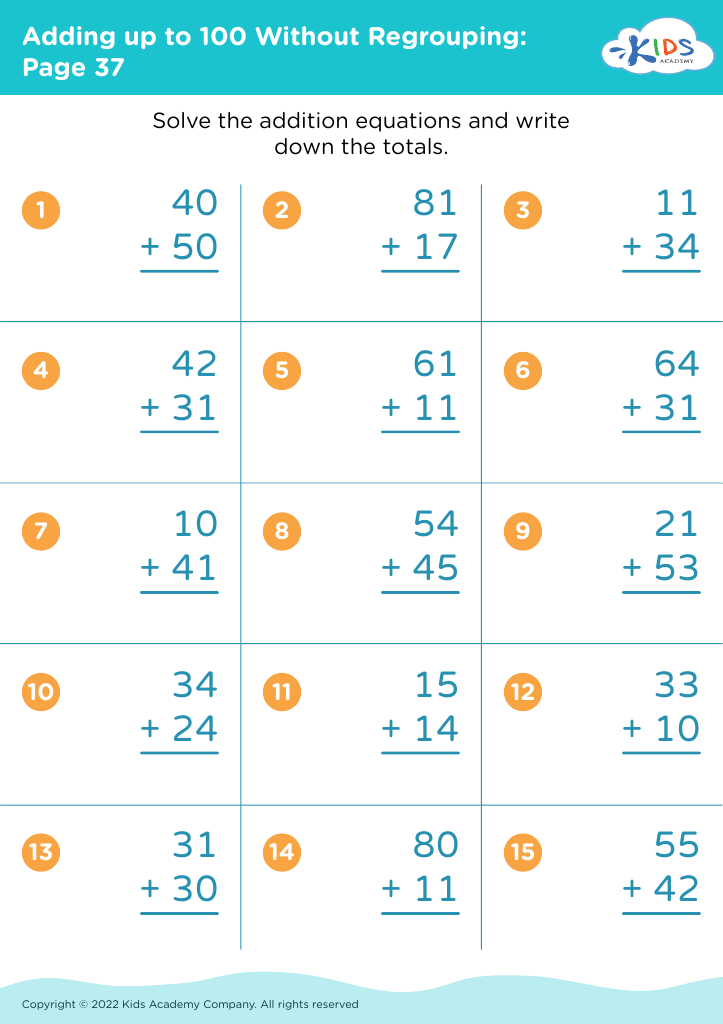
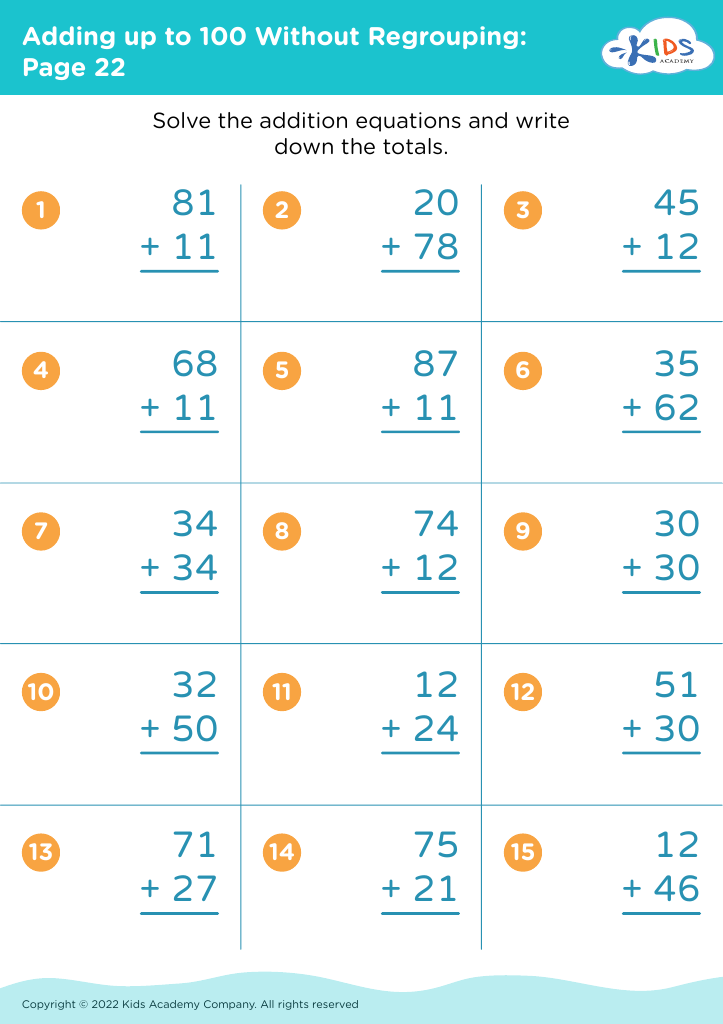
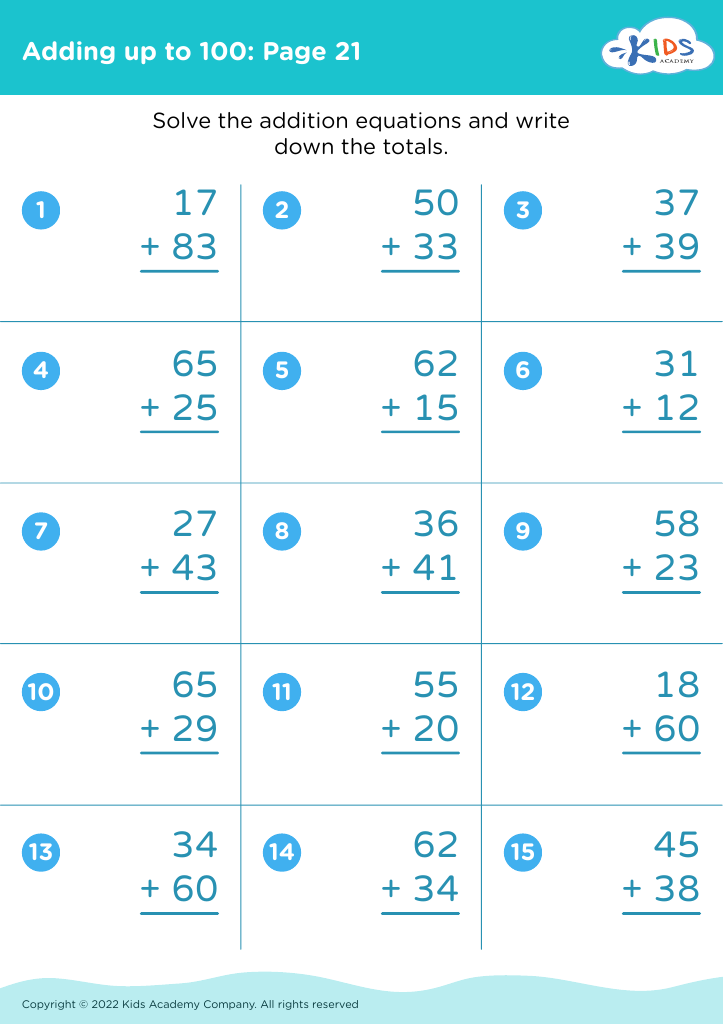





Understanding multiplication and adding up to 100 are foundational skills in Grade 2 that set the stage for future math success, and it's crucial for parents and teachers to prioritize these concepts.
First and foremost, multiplication lays the groundwork for more complex math operations, such as division, fractions, and algebra. When children grasp the basics early on, they build the confidence and competence needed for advanced math. In Grade 2, students typically learn multiplication as repeated addition. For example, they see that 3 times 4 is the same as 3 added four times (3+3+3+3). Mastering this paves the way for understanding arrays and patterns, which are critical thinking skills used in many areas of life and problem-solving.
Adding up to 100 involves more than performing simple arithmetic; it includes recognizing number patterns, understanding place value, and developing mental math strategies. These skills are essential not only for daily use but also for developing logical and analytical thinking.
Parents and teachers thus have the responsibility to ensure children get plenty of practice and support in these areas. This can involve games, interactive activities, and practical examples, making math engaging and relatable. Continuous encouragement and positive reinforcement can foster a lifelong appreciation and aptitude for math, equipping children with the necessary tools for academic achievement and everyday problem-solving.