Understanding symmetry Grade 2 Adding up to 100 Worksheets
5 filtered results
-
From - To
Explore our "Understanding Symmetry Grade 2 Adding Up to 100 Worksheets," designed to enhance your child's comprehension of symmetry concepts while practicing addition. These engaging worksheets feature vibrant visuals and interactive activities that make learning fun and effective. Students will identify symmetrical shapes, understand symmetry in the environment, and strengthen their addition skills up to 100. Our resources promote critical thinking and creativity, making math enjoyable. Ideal for classroom or home learning, these worksheets are perfect for preparing young learners for future math challenges. Dive into the world of symmetry with our thoughtfully crafted materials today!
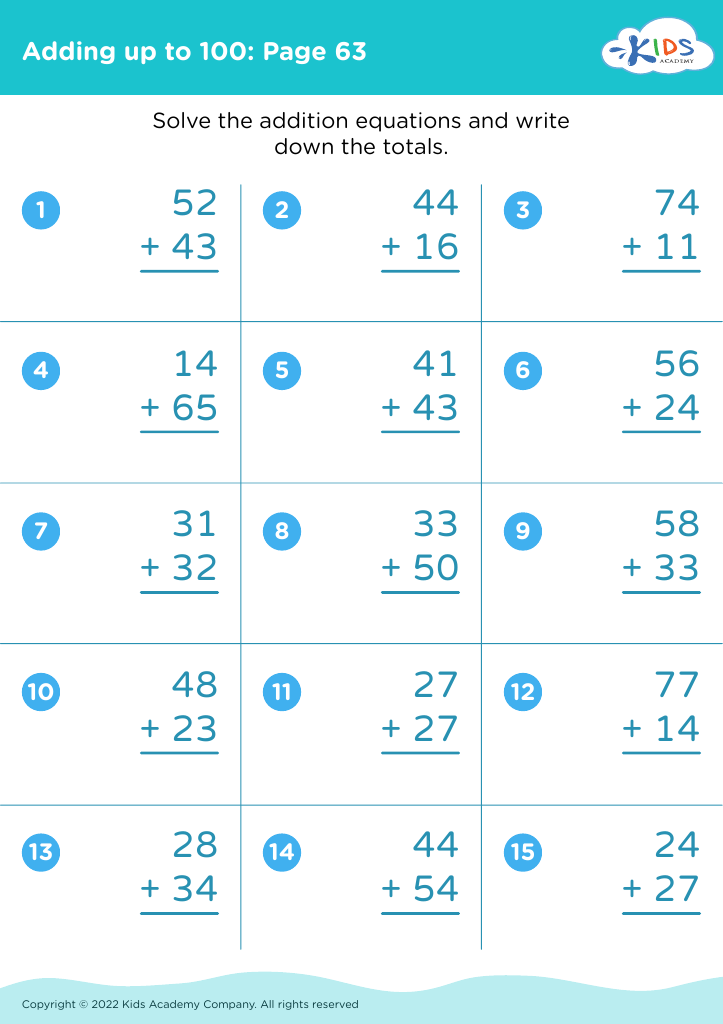
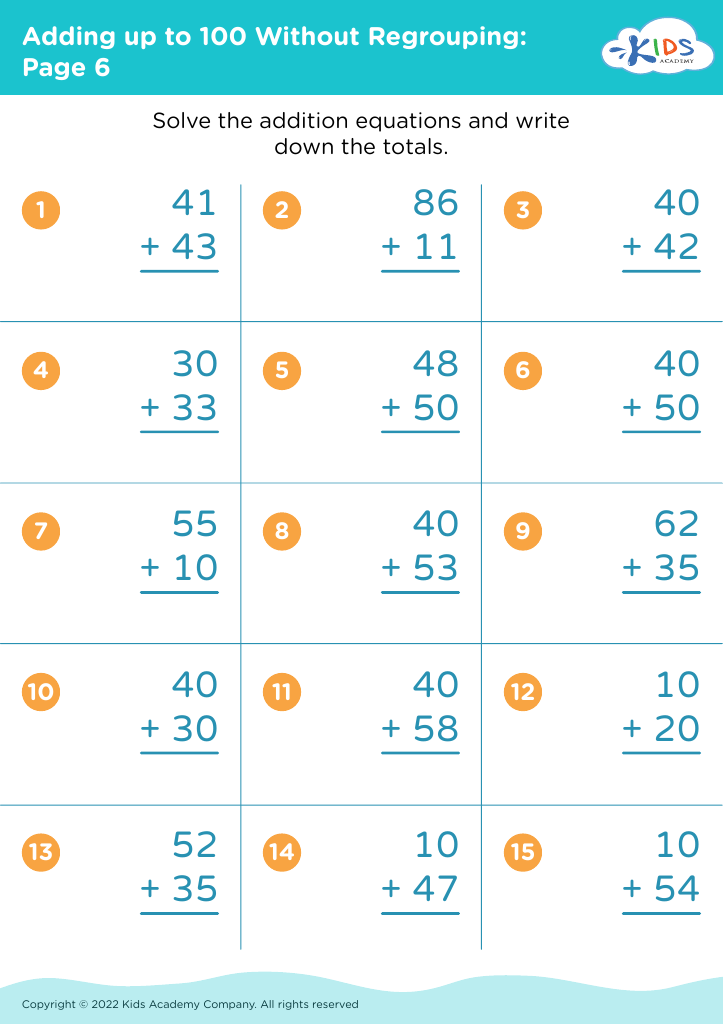
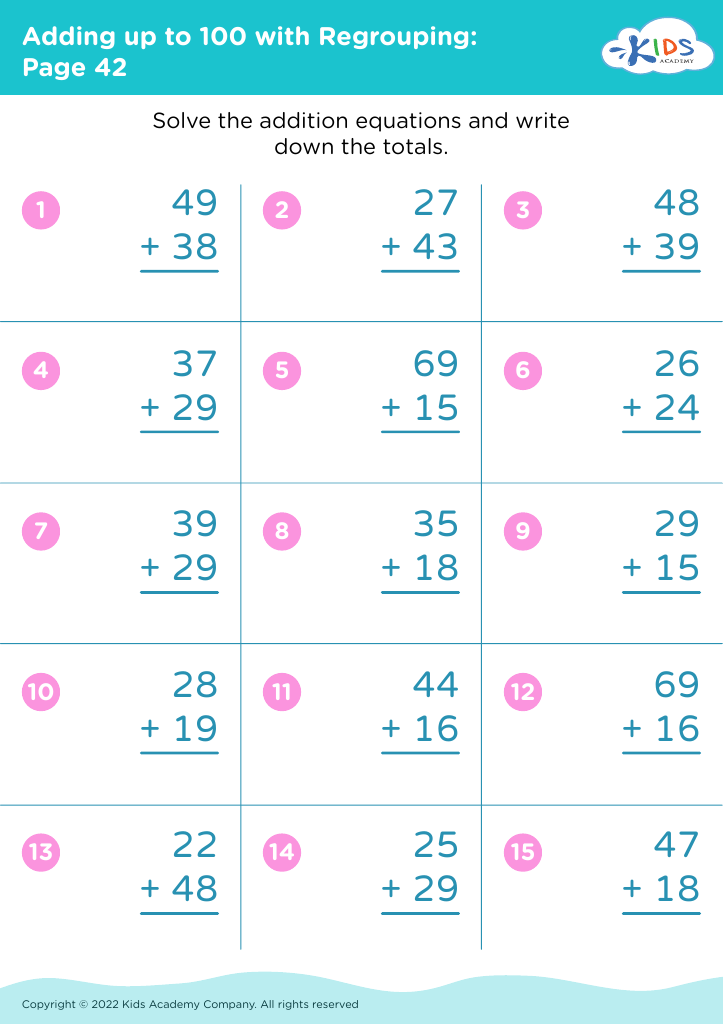
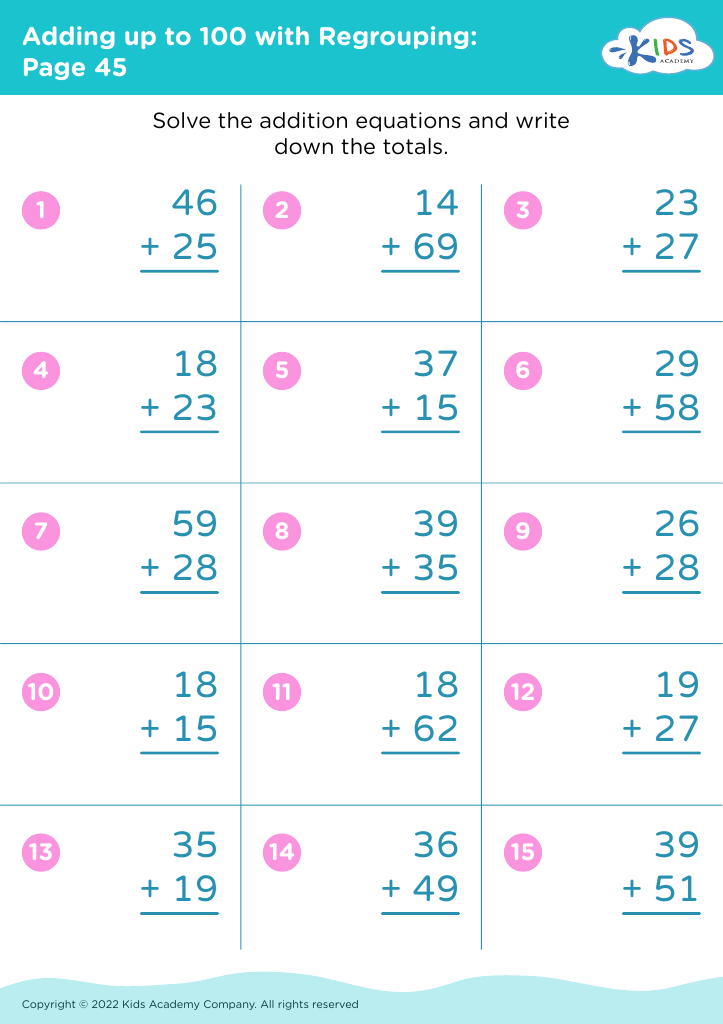
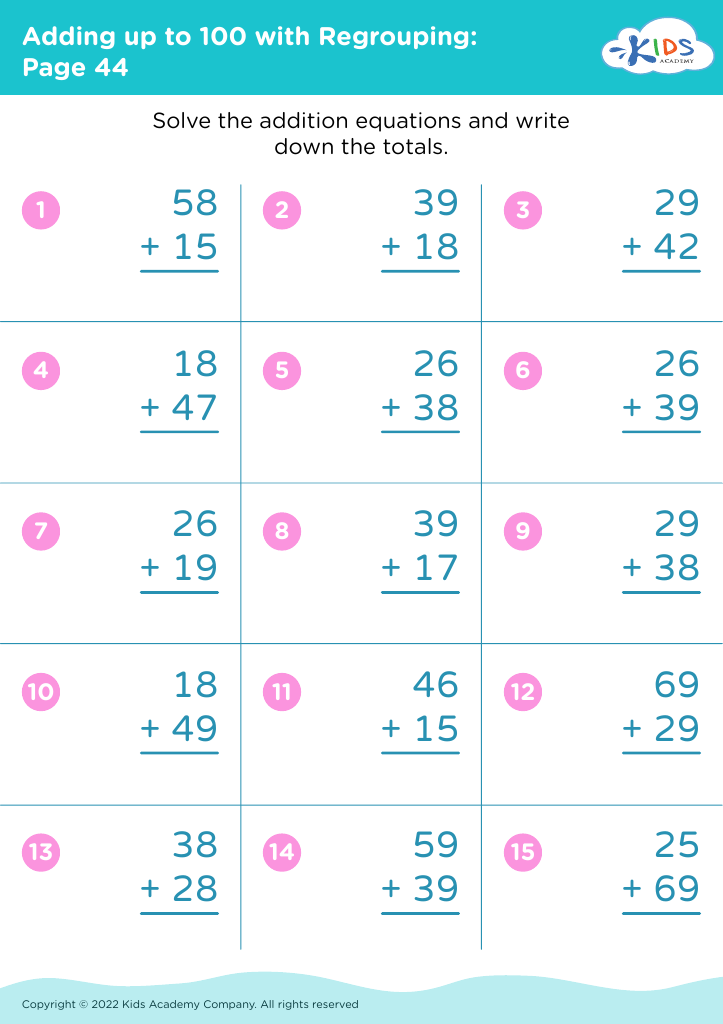





Understanding symmetry and mastering the concept of adding up to 100 are fundamental skills for Grade 2 students. For parents and teachers, these concepts are important not only for their mathematical implications but also for fostering overall cognitive development.
Symmetry helps children recognize patterns and shapes in their environment, promoting spatial awareness and creativity. By engaging with symmetry, students learn to identify similarities and differences, crucial skills for problem-solving and critical thinking. Activities involving folding paper to create symmetrical designs can enhance fine motor skills and introduce concepts of equilibrium and balance.
On the other hand, adding up to 100 is a critical foundational skill that enables students to grasp essential mathematical principles. Mastery of this concept promotes mental arithmetic, improves confidence in dealing with numbers, and strengthens understanding of other math areas, such as subtraction and place value. Parents and teachers can integrate fun games and real-life scenarios to make learning engaging and relatable.
Ultimately, when children comprehend symmetry and addition to 100, they build a strong mathematical foundation, leading to enhanced academic success and a lifelong love for learning. Thus, both parents and teachers should actively support these concepts in early education.