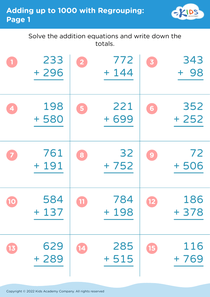
Enhance comprehension Grade 2 Adding up to 1000 Without Regrouping Worksheets
4 filtered results
-
From - To
Enhance your child's comprehension in Grade 2 with our "Adding Up to 1000 Without Regrouping" worksheets. Designed for young learners, these engaging printables focus on building essential math skills by helping students perform addition within 1000 confidently. Each worksheet features a variety of problems that promote understanding of number relationships and enhance problem-solving abilities. Interactive exercises provide immediate feedback, allowing kids to learn from their mistakes. These resources not only align with educational standards but also make learning fun! Strengthen your child's math foundation and boost their confidence in arithmetic with our thoughtfully crafted worksheets. Start exploring today!
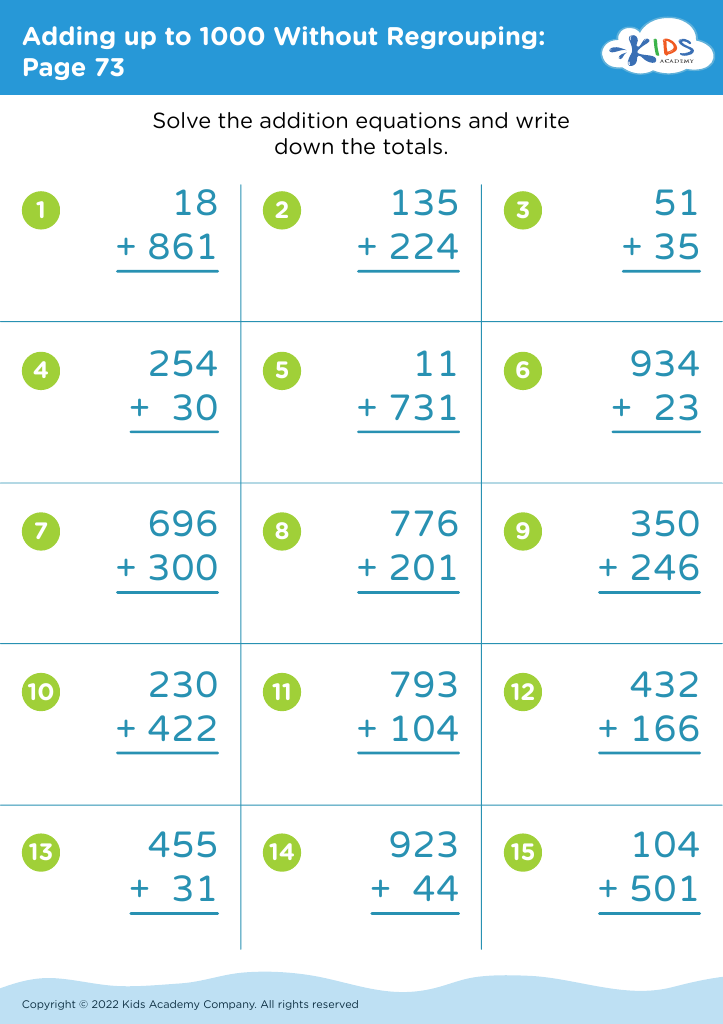
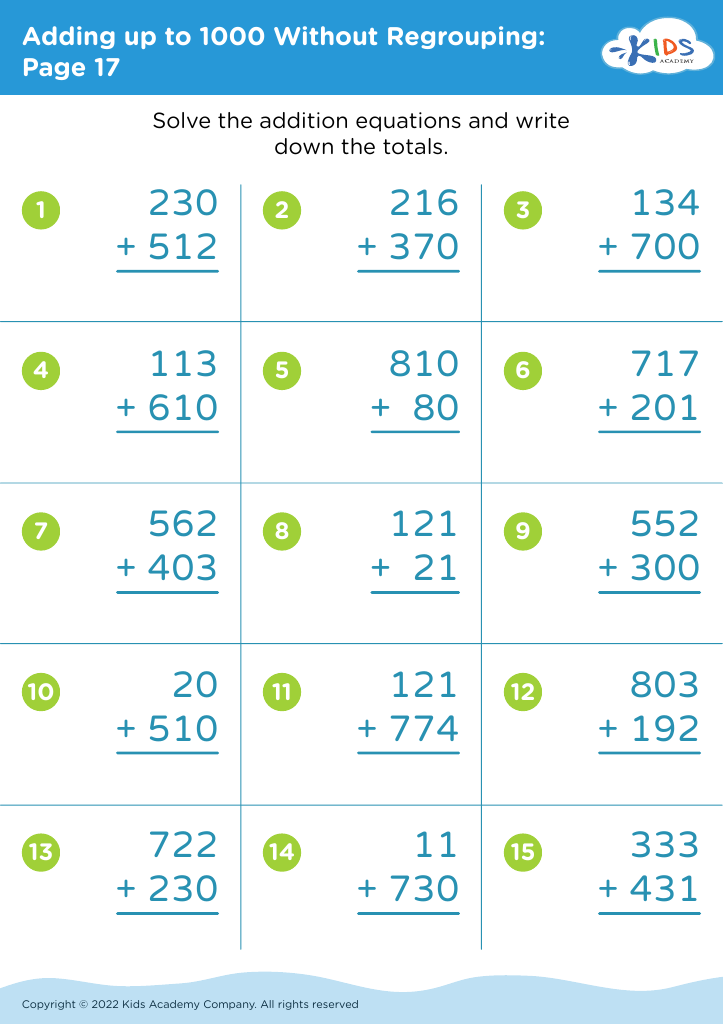
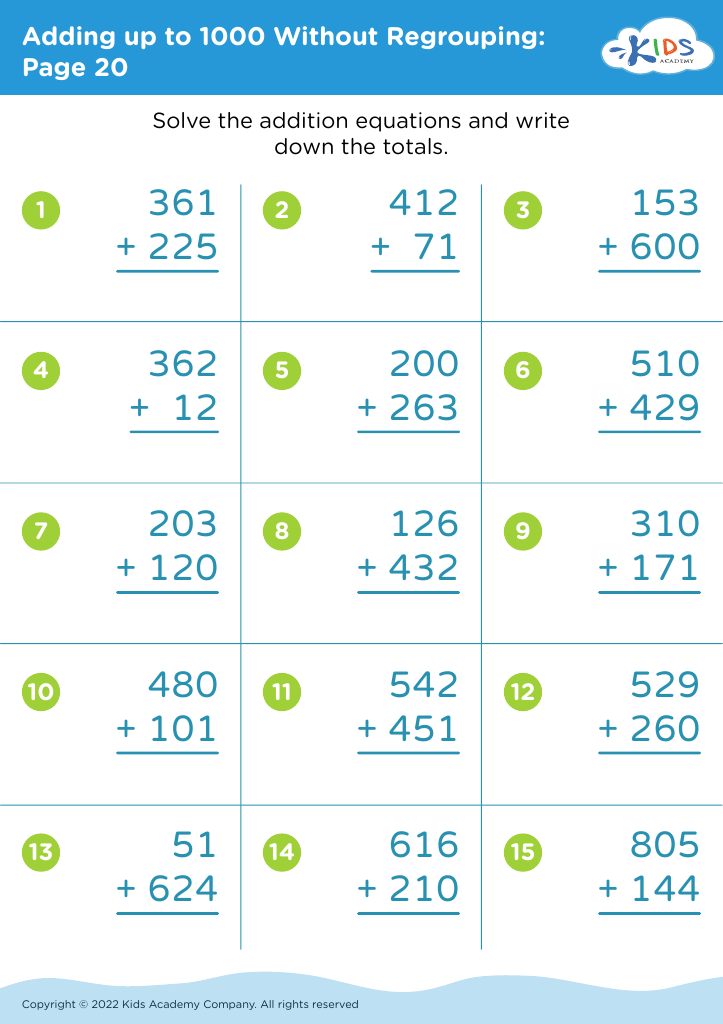
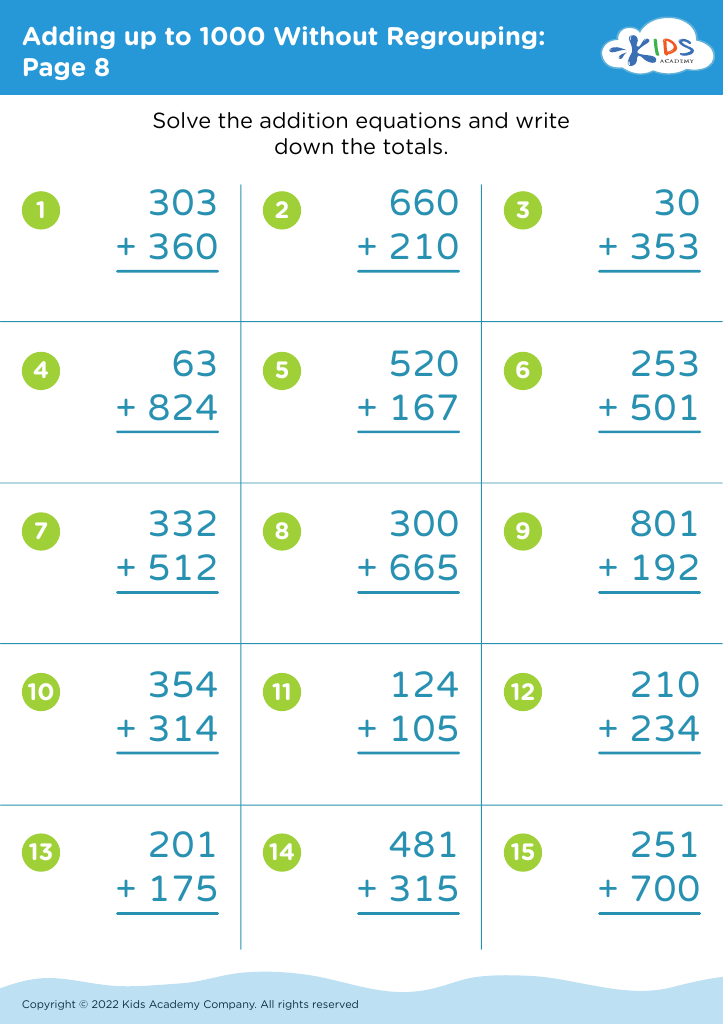


Enhancing comprehension of mathematical concepts, such as adding up to 1000 without regrouping, is crucial for second graders as it lays the foundation for their future learning. At this age, students are developing critical reasoning and problem-solving skills, making it essential for parents and teachers to address this topic.
Understanding how to add numbers up to 1000 without regrouping allows children to grasp place value and number relationships intuitively. This foundational skill will support them in more complex operations in later grades, including regrouping and working with larger numbers.
Moreover, by mastering these skills early, students can build confidence in their math abilities, reducing anxiety around numbers and mathematics as a whole. When children experience success in their initial encounters with addition, it motivates them to tackle more challenging problems in the future.
Lastly, teachers and parents play a vital role in creating a supportive environment where students feel encouraged to explore and ask questions about math. Engaging young learners in practical applications and fun activities centered around addition can further enhance comprehension and retention, making math a more enjoyable subject. Ultimately, prioritizing these skills will ensure students are well-prepared for academic challenges ahead.