Simplifying Fractions Grade 2 Adding up to 1000 Without Regrouping Worksheets
3 filtered results
-
From - To
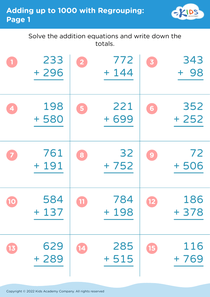
Our "Simplifying Fractions" worksheets for Grade 2 are designed to make math concepts engaging and easy to understand. These exercises focus on adding up to 1000 without regrouping, offering young learners the opportunity to practice addition skills efficiently. Each worksheet is crafted to reinforce basic arithmetic and help students develop confidence in their math abilities. Vibrant and interactive, our materials provide plenty of practice while emphasizing simplifying fractions and fundamental math operations. Ideal for both classroom use and home practice, our resources make mastering math fun and achievable for all second graders.
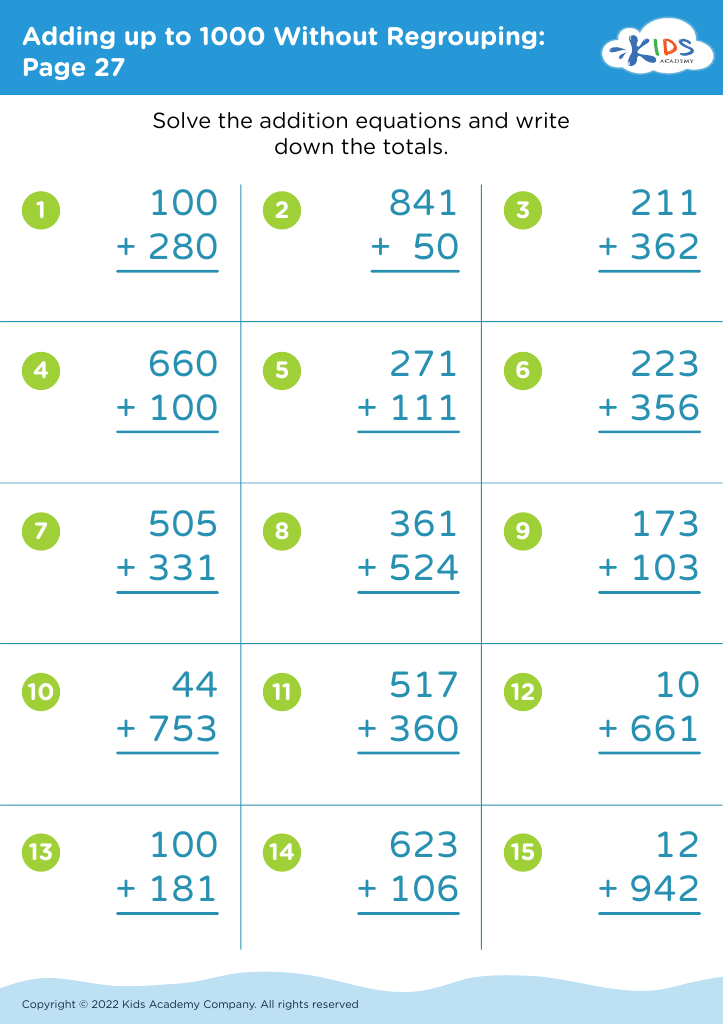
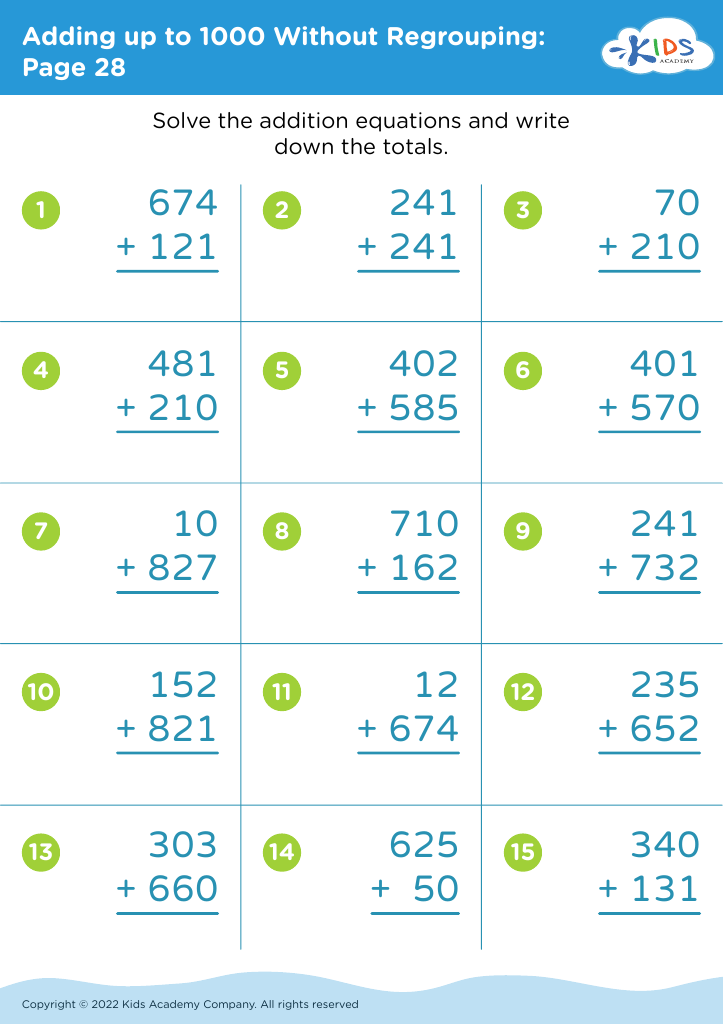
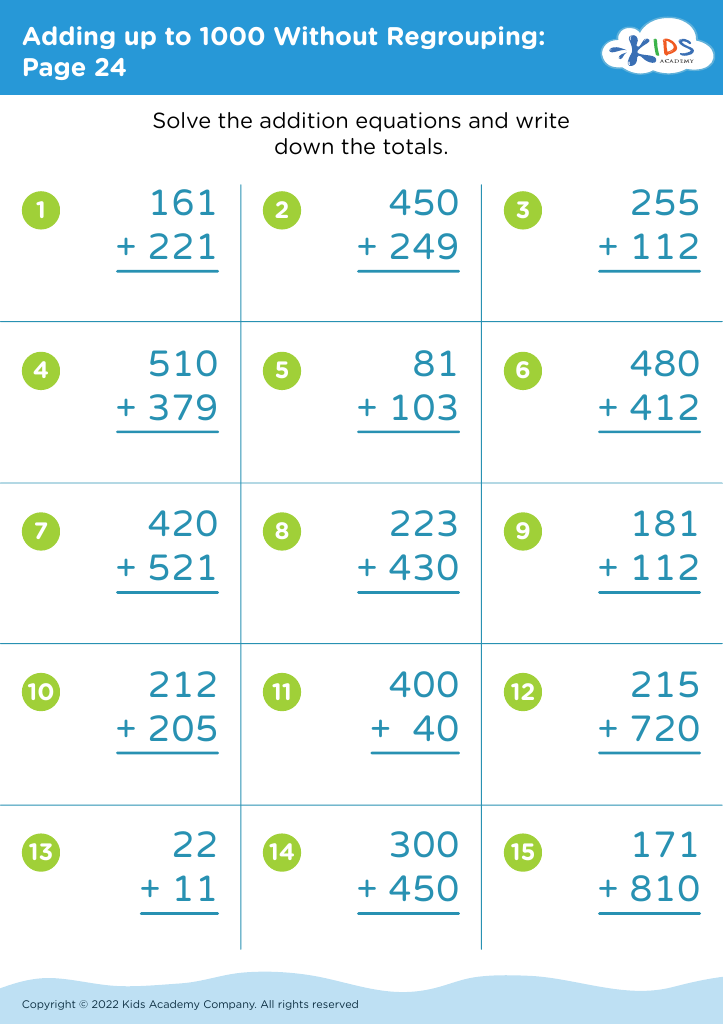


Understanding how to simplify fractions, add basic numbers, and comprehend math without regrouping is crucial for second graders as it builds a strong foundation for more advanced mathematical concepts. Simplifying fractions introduces children to the idea of breaking down numbers, helping them recognize relationships within numbers which fosters critical thinking. It promotes a better grasp of equivalent fractions, an essential skill for understanding proportions and ratios in higher grades.
Adding numbers up to 1000 without regrouping is a practical skill that allows kids to handle larger numbers confidently and helps them with fundamental arithmetic operations. It ensures that they can perform mental math more efficiently. This skill is integral in developing computational fluency, fostering a sense of number sense which is the intuition about numbers that develops when students connect numbers with their quantities.
Both these skills also have daily life applications, from making sense of fractions in recipes to understanding distances and times in larger units. Learning these at an early age nurtures a positive attitude toward math, encourages problem-solving, and sets the stage for successful comprehension of more complex operations in future grades. Therefore, parents and teachers should prioritize these concepts to ensure a robust mathematical foundation for their children.