Recognizing Patterns Grade 2 Adding up to 1000 Worksheets
6 filtered results
-
From - To
Explore our "Recognizing Patterns Grade 2 Adding up to 1000 Worksheets" designed to enhance your child's math skills in a fun and engaging way! These worksheets focus on helping students identify and understand numerical patterns while practicing addition up to 1000. Ideal for reinforcing classroom learning, our resources encourage critical thinking and problem-solving skills. Each worksheet includes visually appealing activities that make recognizing patterns enjoyable and effective. Perfect for homeschooling or supplementary practice, these worksheets are crafted to build confidence in young learners as they tackle math with enthusiasm. Unlock your child’s potential today with our enjoyable math resources!
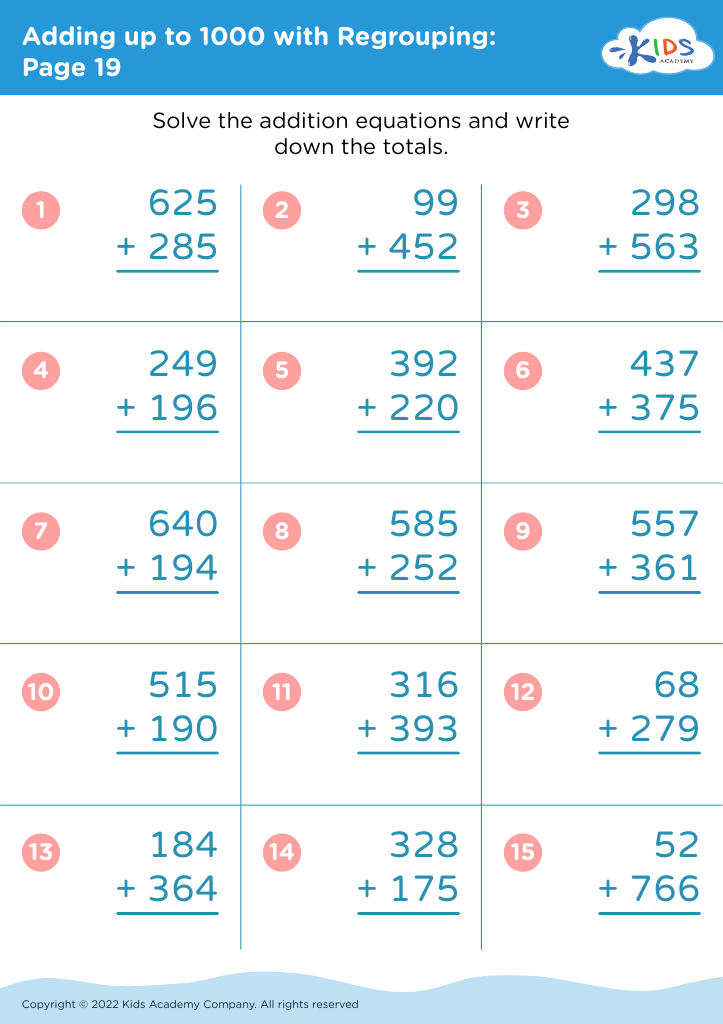
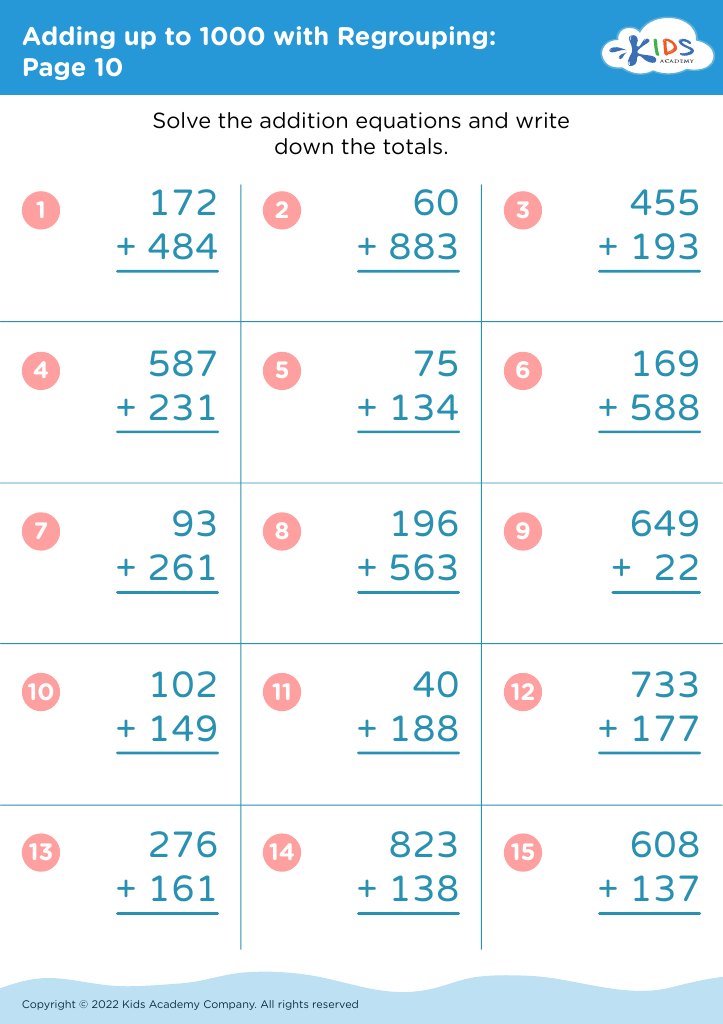
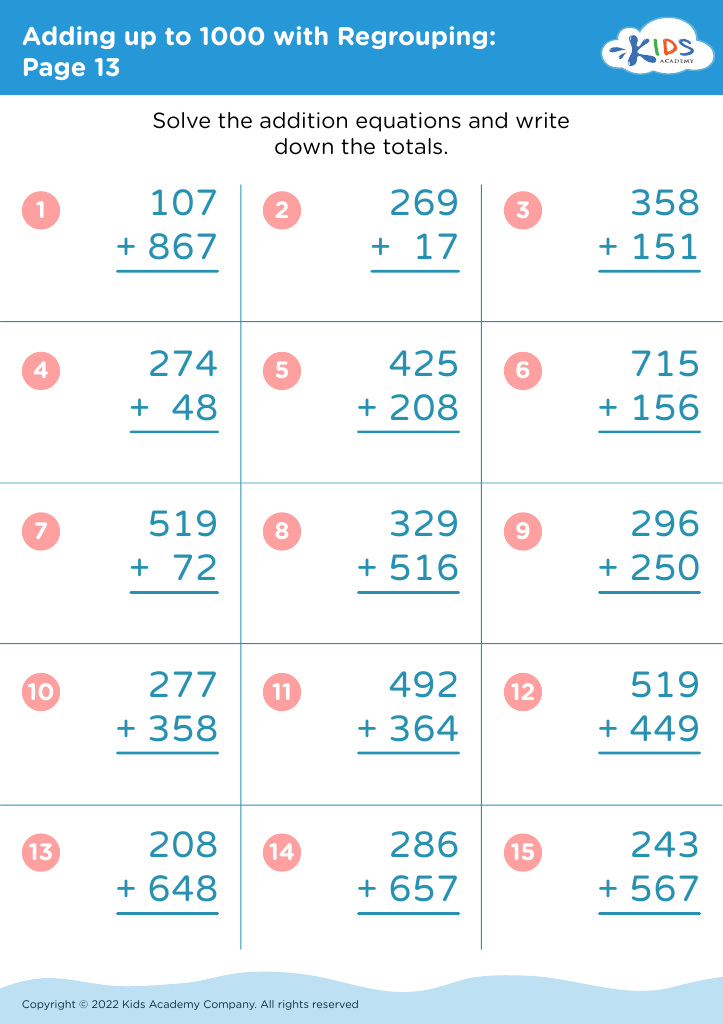
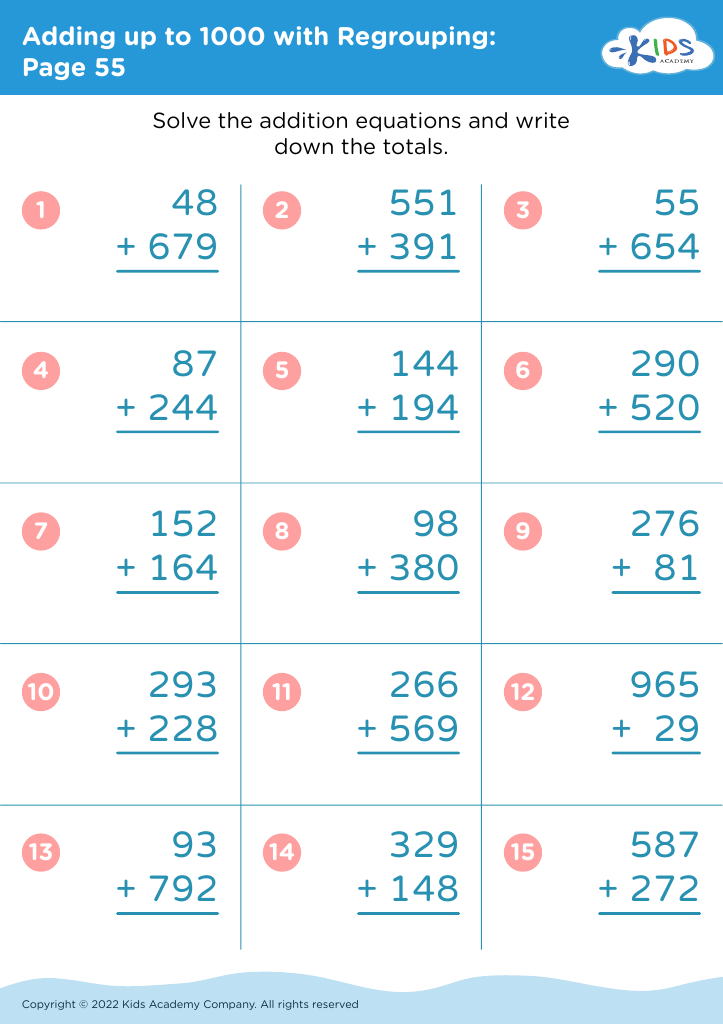
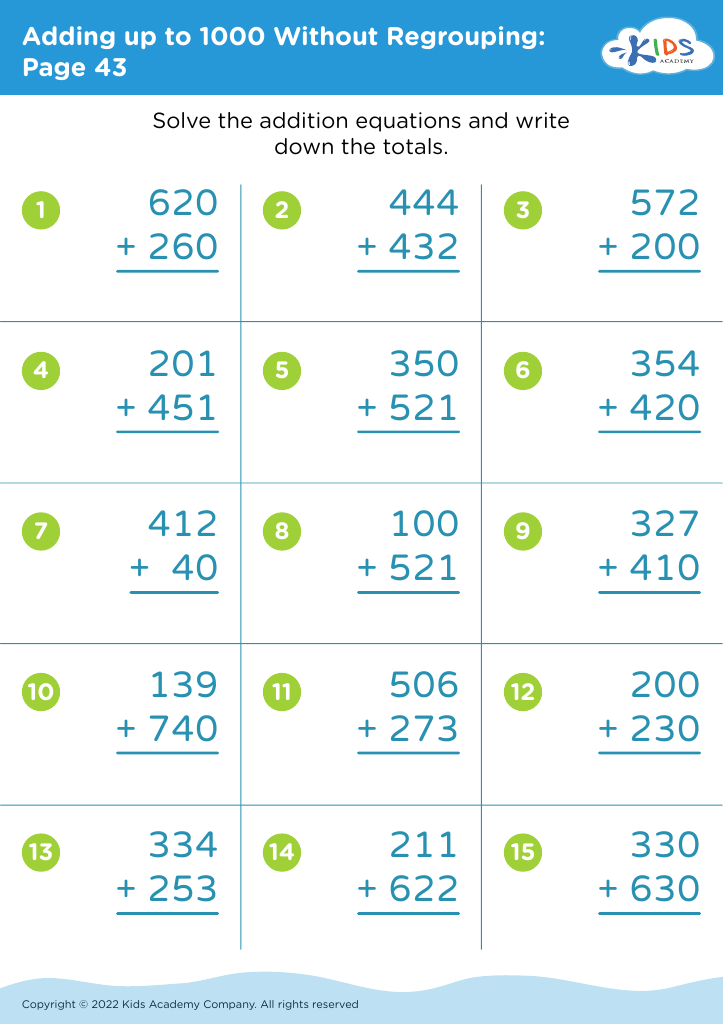
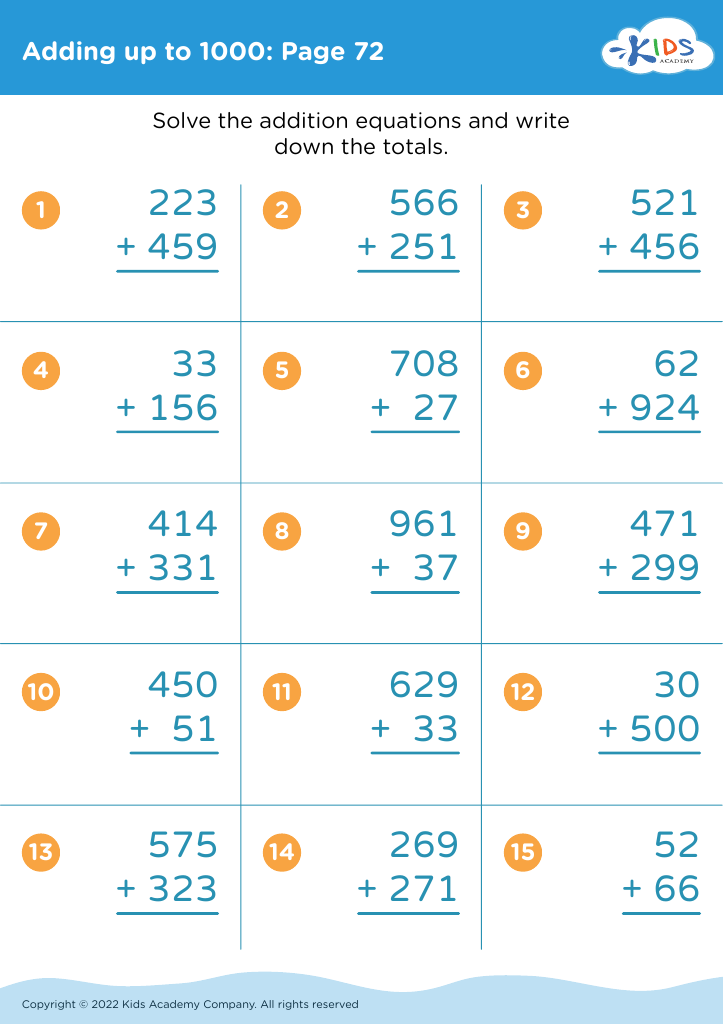



Recognizing patterns is a fundamental skill in mathematics, particularly when it comes to understanding number relationships and operations. For second graders, adding up to 1000 provides a vital stepping stone in their mathematical journey. When parents and teachers emphasize pattern recognition in this context, they help students develop a deeper understanding of numbers, enhance their problem-solving skills, and build confidence.
Learning to recognize patterns helps children predict outcomes and formulate strategies for addition. For example, noticing that adding multiples of 10, like 30 + 40, can synthesize to an easier 300 + 400 helps solidify their understanding of place value and makes calculations more manageable. This lays critical groundwork for future mathematical concepts.
Engaging students in recognizing these patterns fosters critical thinking and encourages them to approach math as a puzzle, which can spark a lifelong interest in the subject. Additionally, it supports mathematical fluency, an essential skill for everyday life, enabling better decision-making, budgeting, and computation.
Ultimately, when parents and teachers value pattern recognition, they not only enhance academic achievement but also cultivate curiosity and analytical skills that transcend the classroom, benefiting children's overall cognitive development. Investing in these skills equips young learners for success in mathematics and beyond.