Simplifying Fractions Grade 2 Adding up to 1000 Worksheets
6 filtered results
-
From - To
Enhance your second grader's math skills with our "Simplifying Fractions Grade 2: Adding Up to 1000 Worksheets." Designed for young learners, these engaging worksheets focus on the concept of simplifying fractions, helping students grasp this essential skill in a fun and interactive way. Our carefully curated resources support children in mastering fraction simplification, offering a range of practice exercises that cater to different learning styles. With visually appealing formats and clear instructions, our worksheets not only encourage comprehension but also build confidence in mathematical abilities. Empower your child to excel in math today with these valuable educational tools!
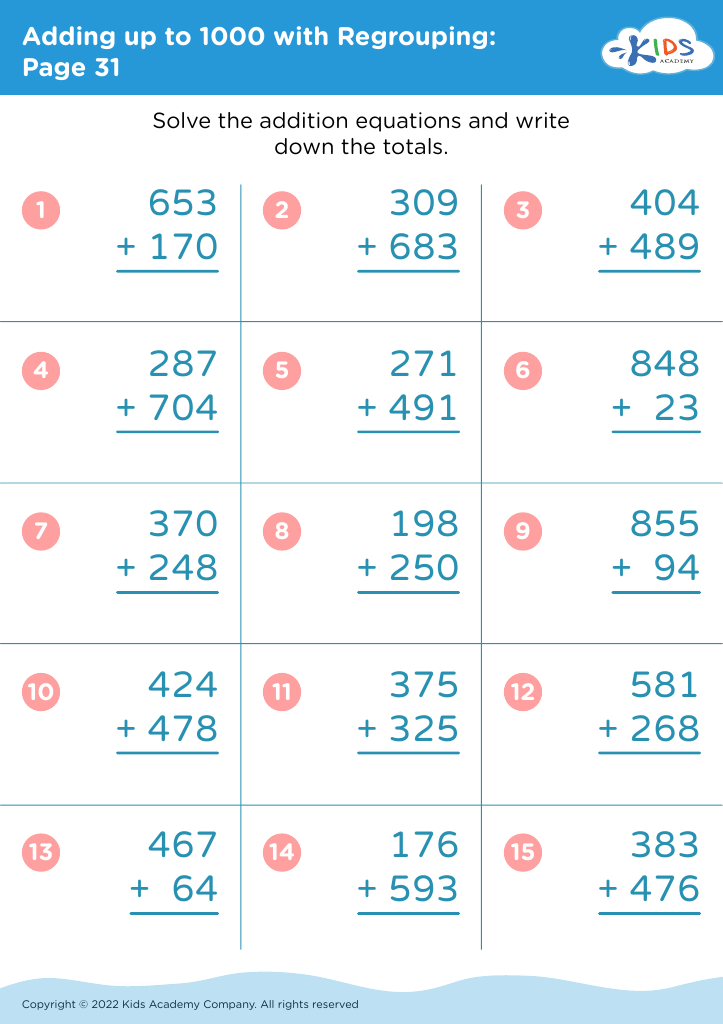
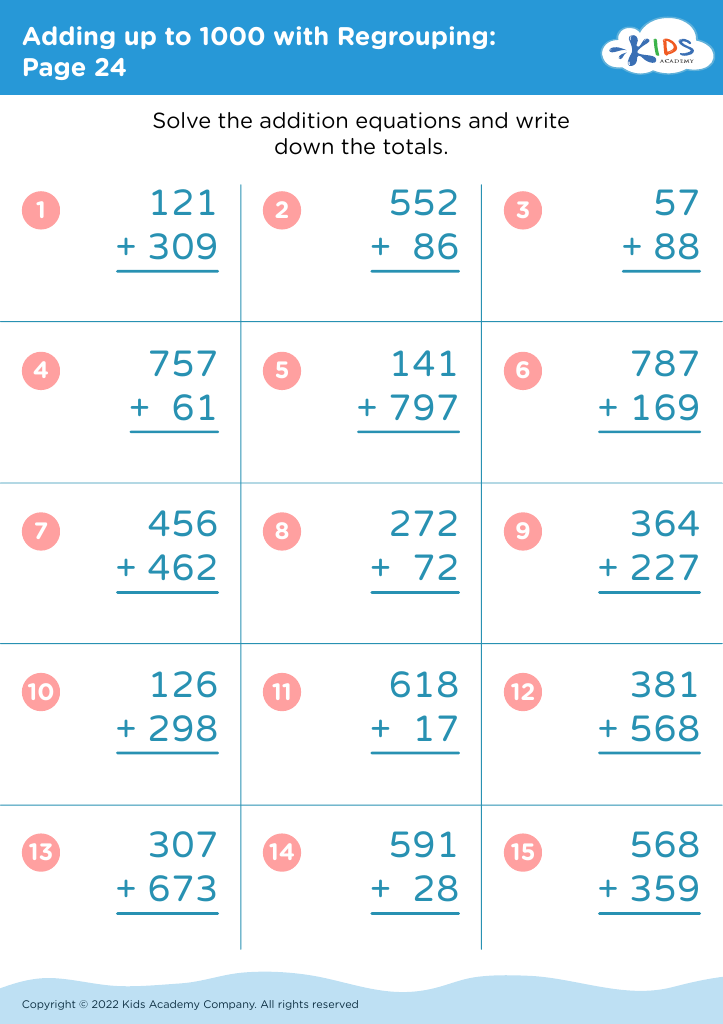
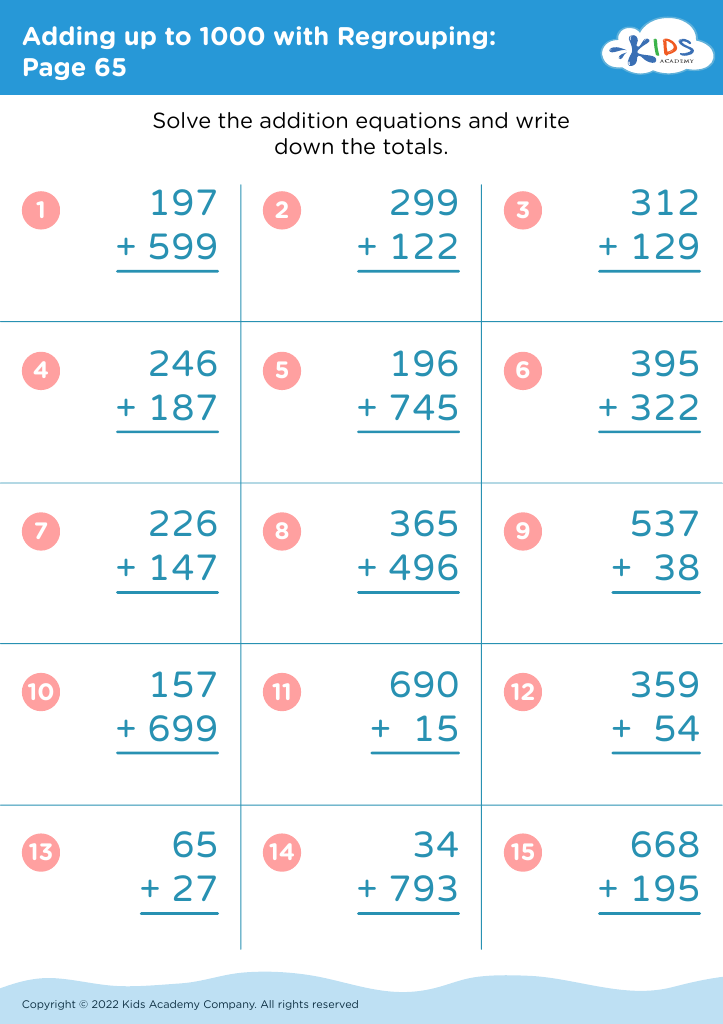
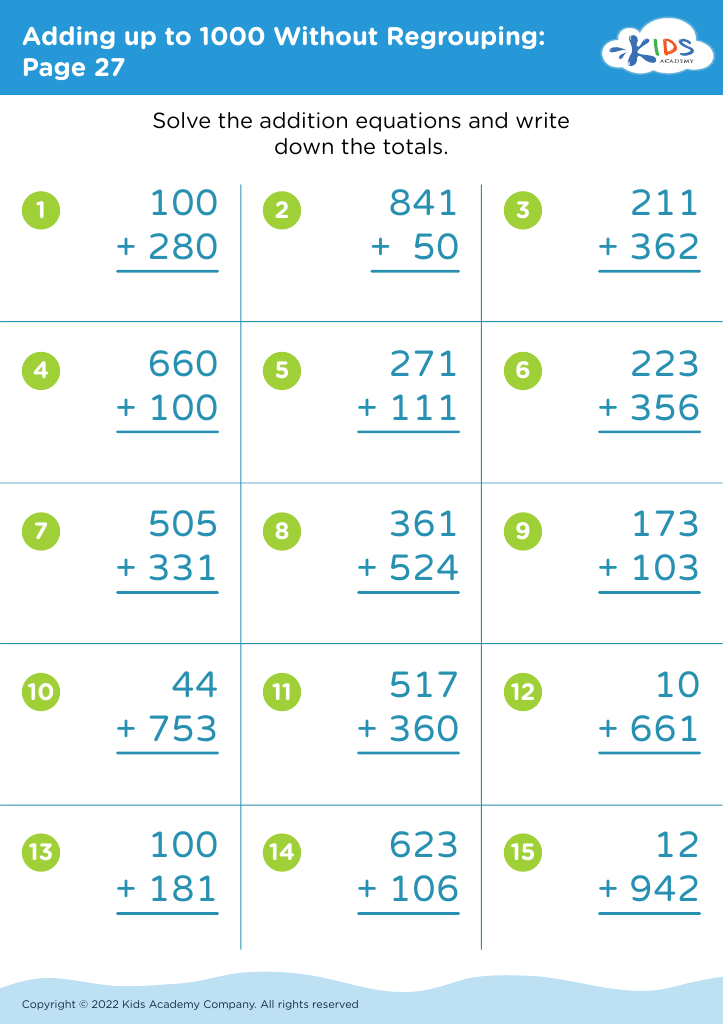
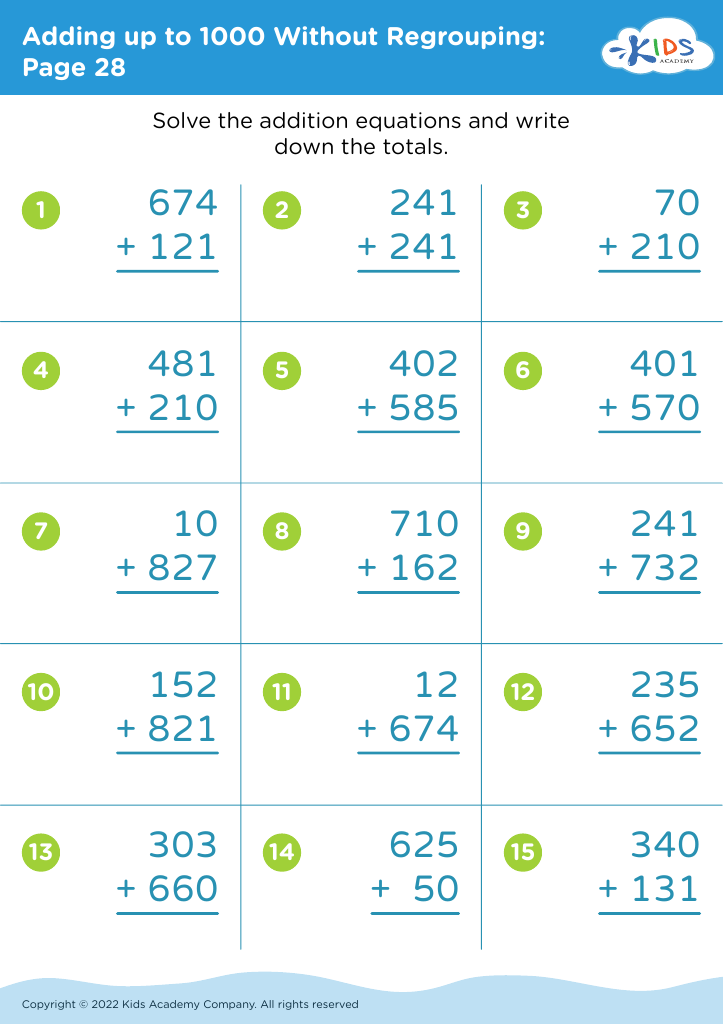
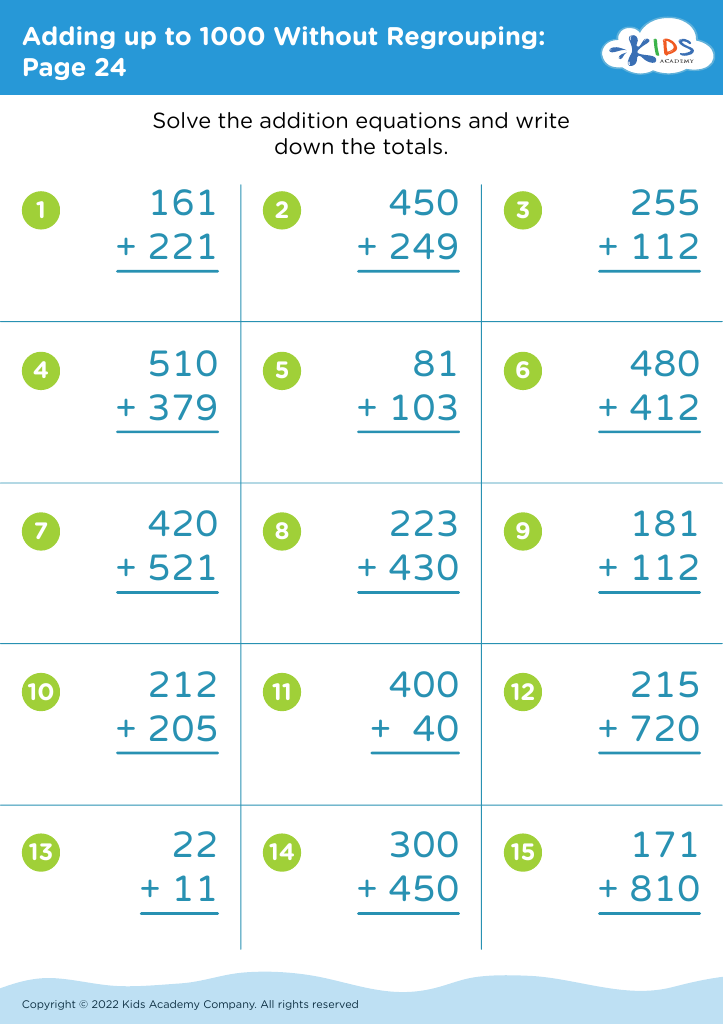



Simplifying fractions and adding numbers up to 1000 are foundational skills in mathematics that every parent and teacher should prioritize for Grade 2 students. Understanding these concepts encourages number sense and lays the groundwork for future mathematical learning.
When students simplify fractions, they learn to recognize relationships between numbers. This process helps them develop critical thinking and problem-solving skills as they grasp the concept of equivalence. Moreover, simplifying fractions allows students to operate more efficiently with numbers, paving the way for more complex topics like ratios and proportions in higher grades.
Adding numbers up to 1000 enhances a child's computational skills, promoting confidence in their ability to tackle larger numbers. This skill is vital not only in mathematics but also in everyday tasks like budgeting and measuring, which students will encounter in real life.
Both skills create a strong mathematical foundation, making students better equipped for future learning challenges. When parents and teachers emphasize these concepts, they are not just teaching math; they are also fostering perseverance, logical reasoning, and the ability to face academically rigorous content later on, ultimately helping children succeed in their educational journey and beyond.