Filters

44 filtered results

Clear all filters
Favorites
With answer key
Interactive

44 filtered results

Difficulty Level

Grade


Check out this FREE Grade 2 Trial Lesson on Adding up to 1000!

One-Syllable Long and Short Vowel Words

Favorites
With answer key
Interactive
  • Grade 2
  • Understanding fractions
  • Adding up to 1000
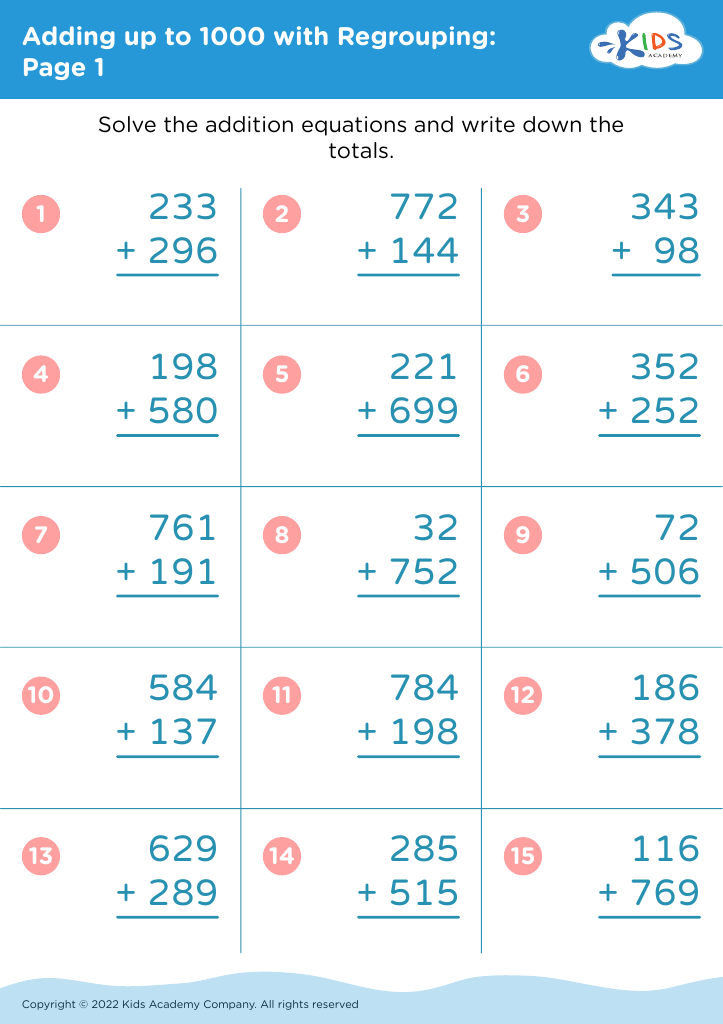
Adding up to 1000 with Regrouping: Page 1
Worksheet
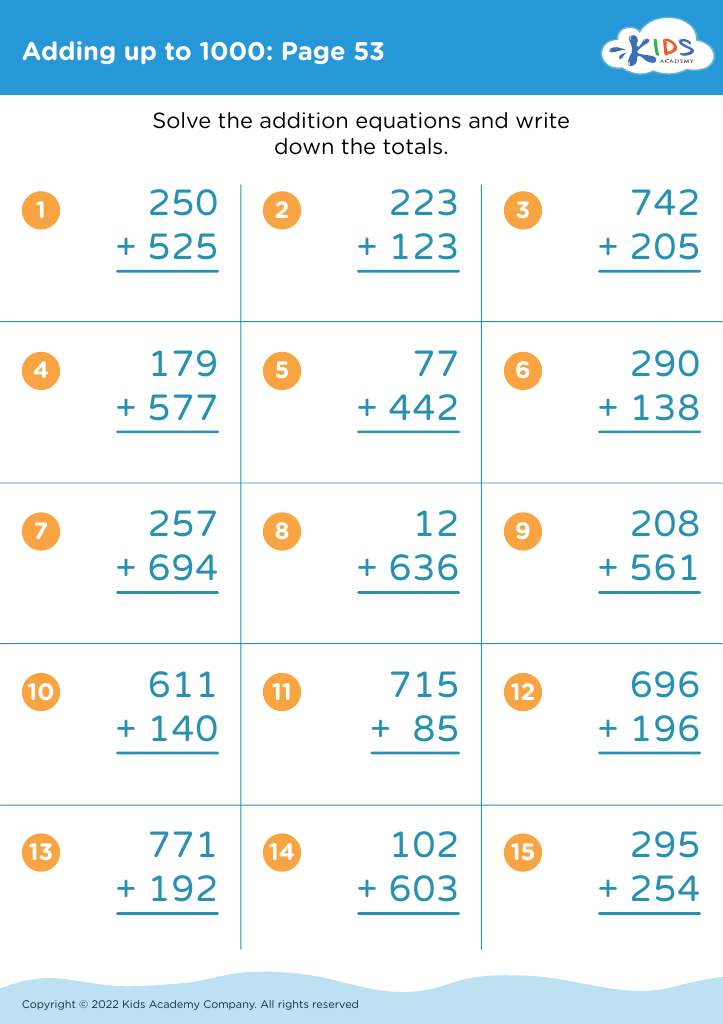
Adding up to 1000: Page 53

Adding up to 1000: Page 53

Adding up to 1000: Page 53
Worksheet
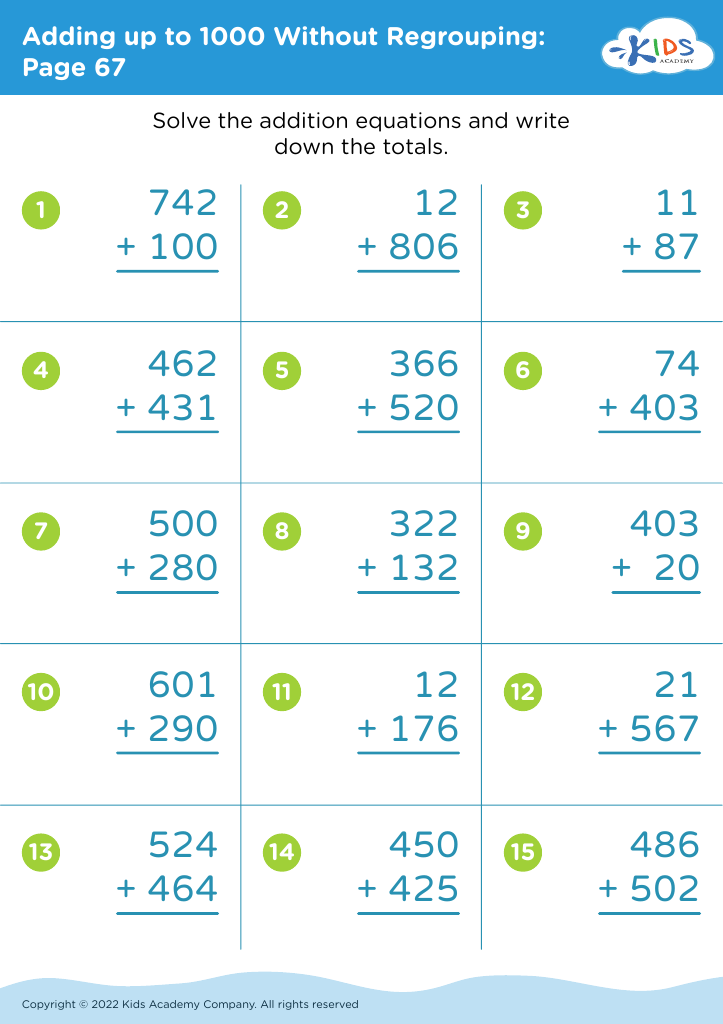
Adding up to 1000 Without Regrouping: Page 67
Worksheet
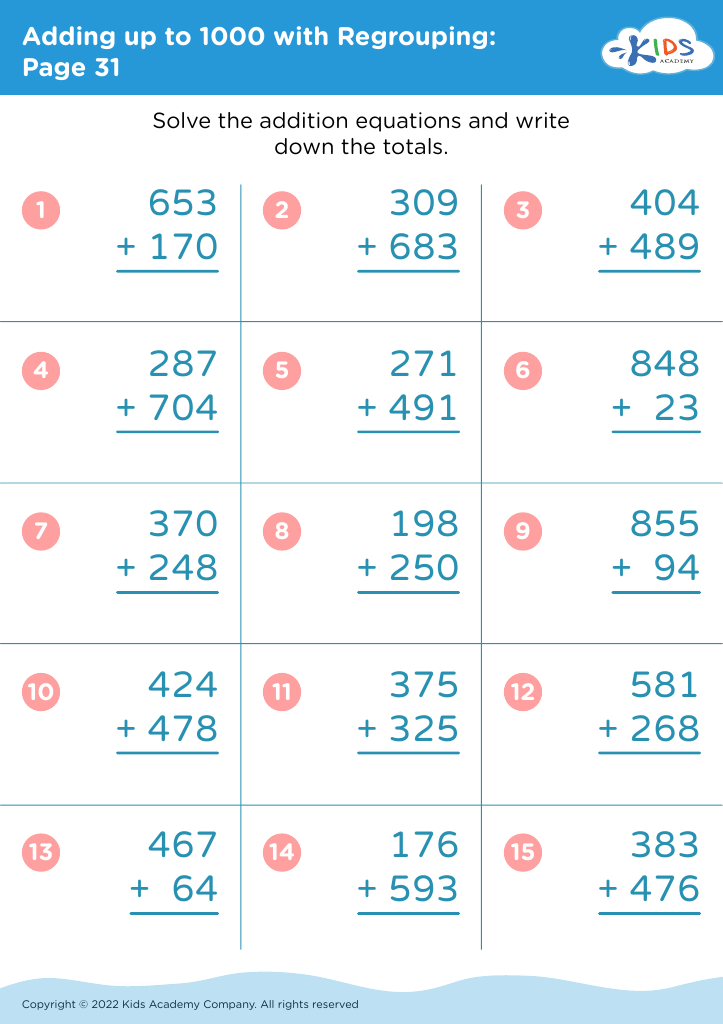
Adding up to 1000 with Regrouping: Page 31
Worksheet
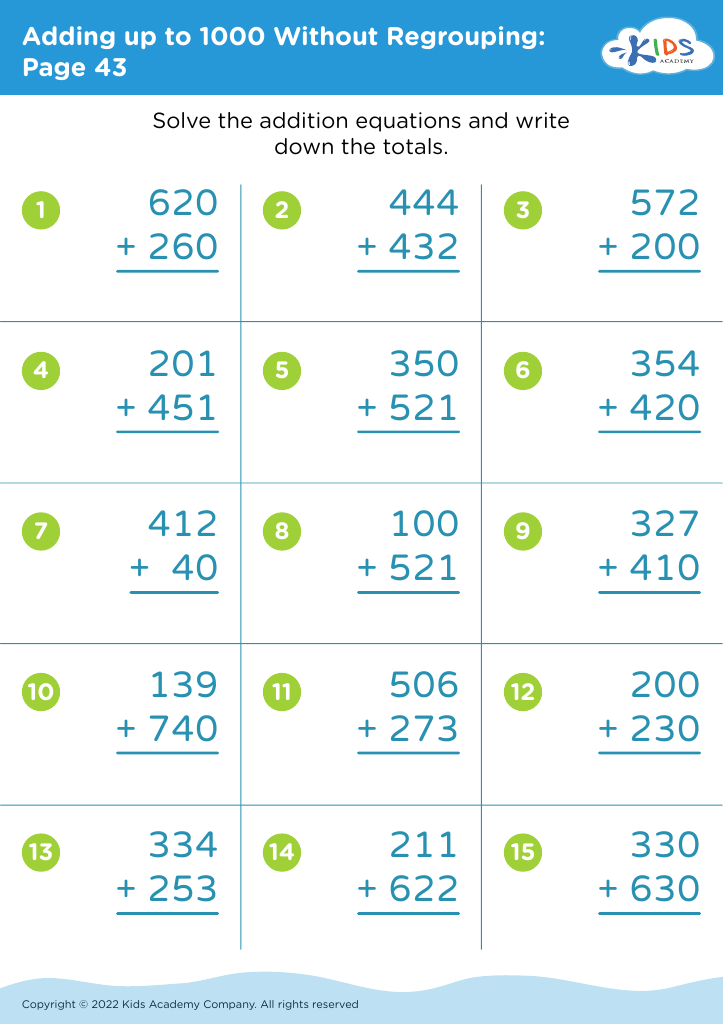
Adding up to 1000 Without Regrouping: Page 43
Worksheet
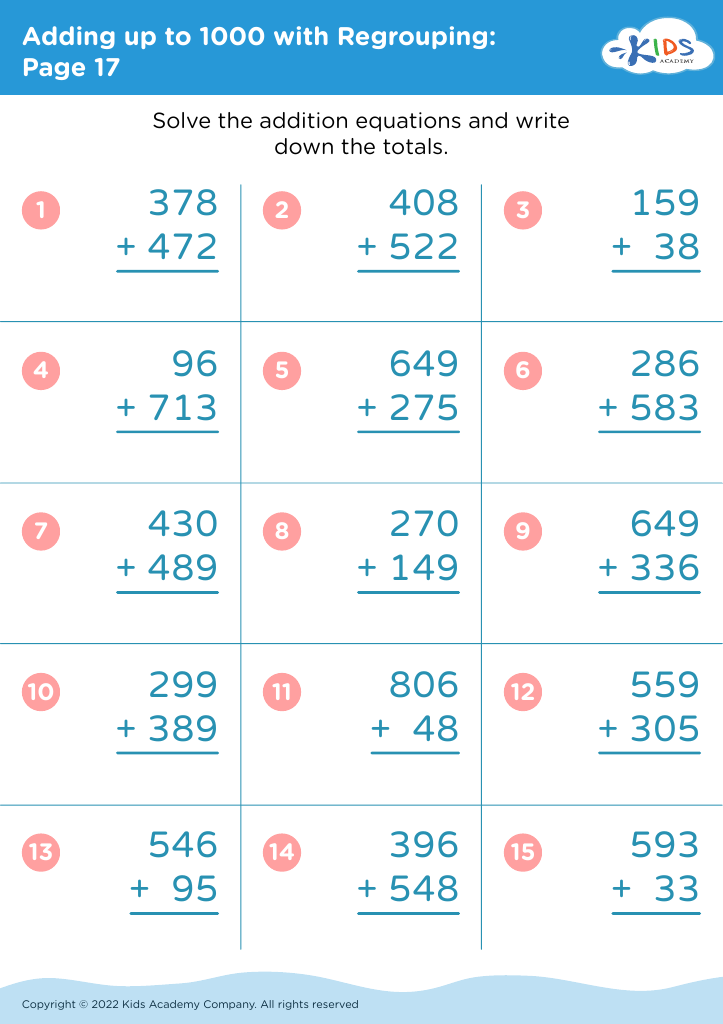
Adding up to 1000 with Regrouping: Page 17
Worksheet
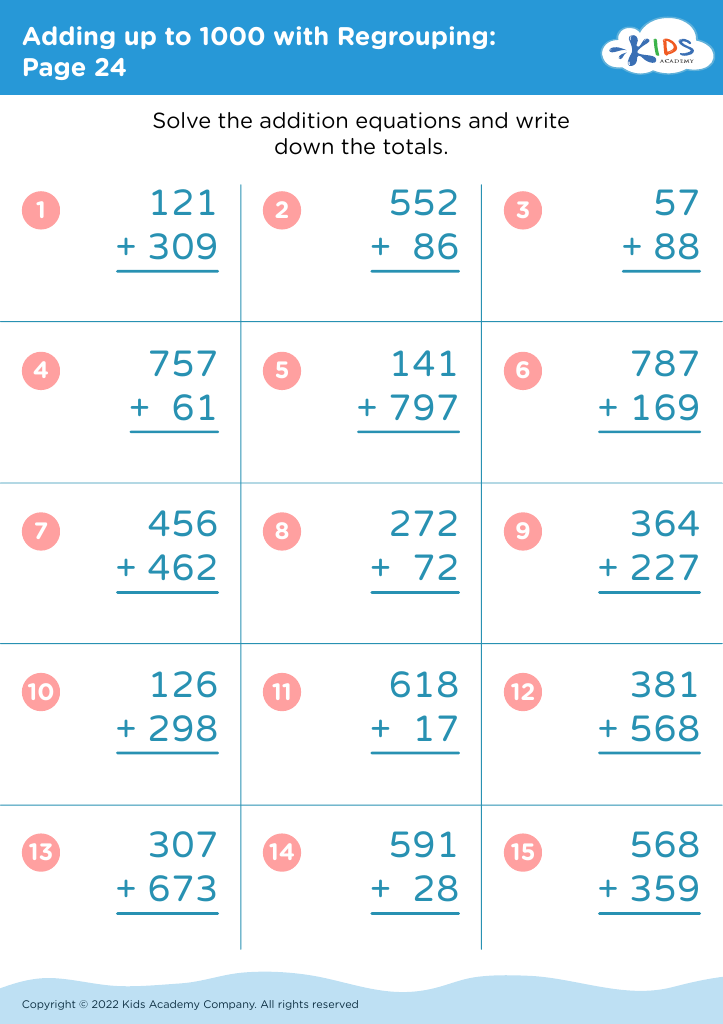
Adding up to 1000 with Regrouping: Page 24
Worksheet
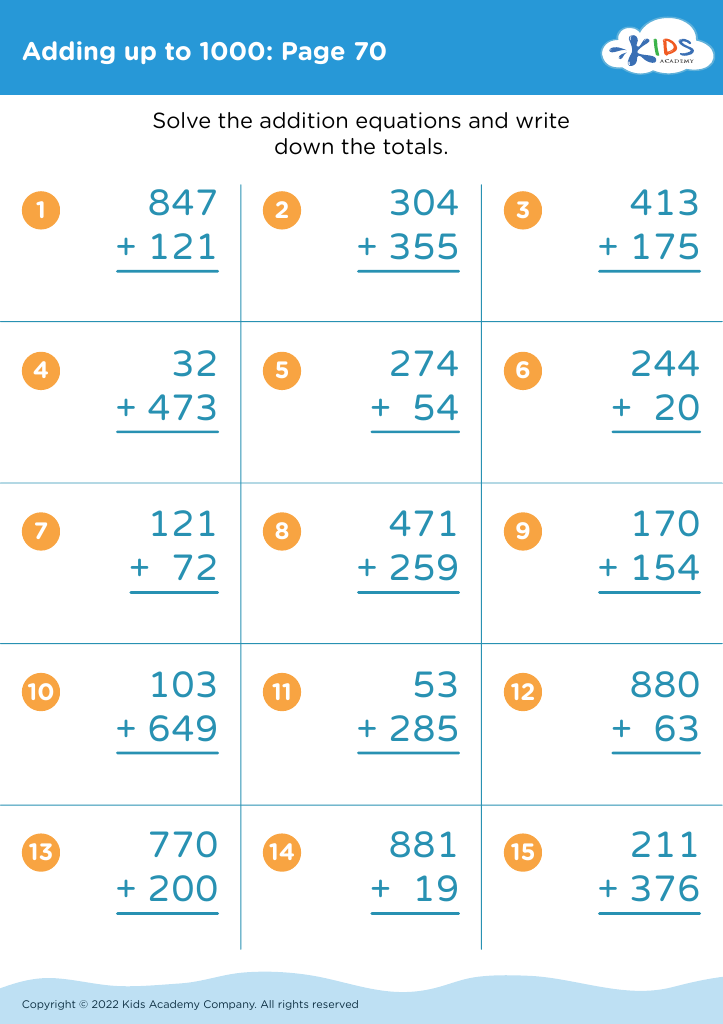
Adding up to 1000: Page 70

Adding up to 1000: Page 70

Adding up to 1000: Page 70
Worksheet
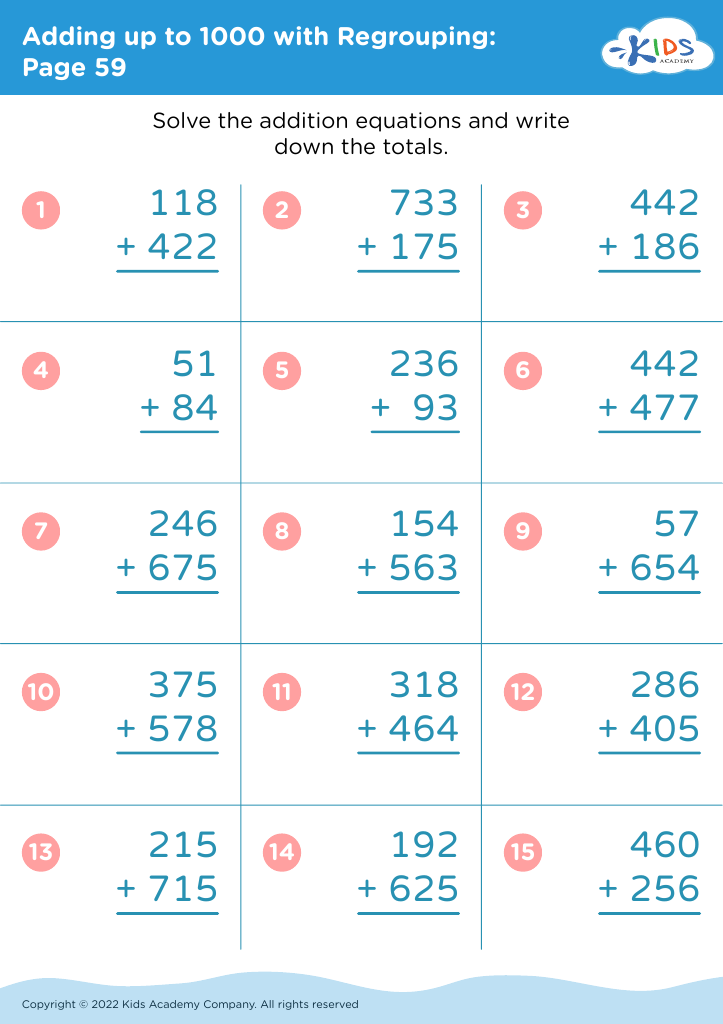
Adding up to 1000 with Regrouping: Page 59
Worksheet
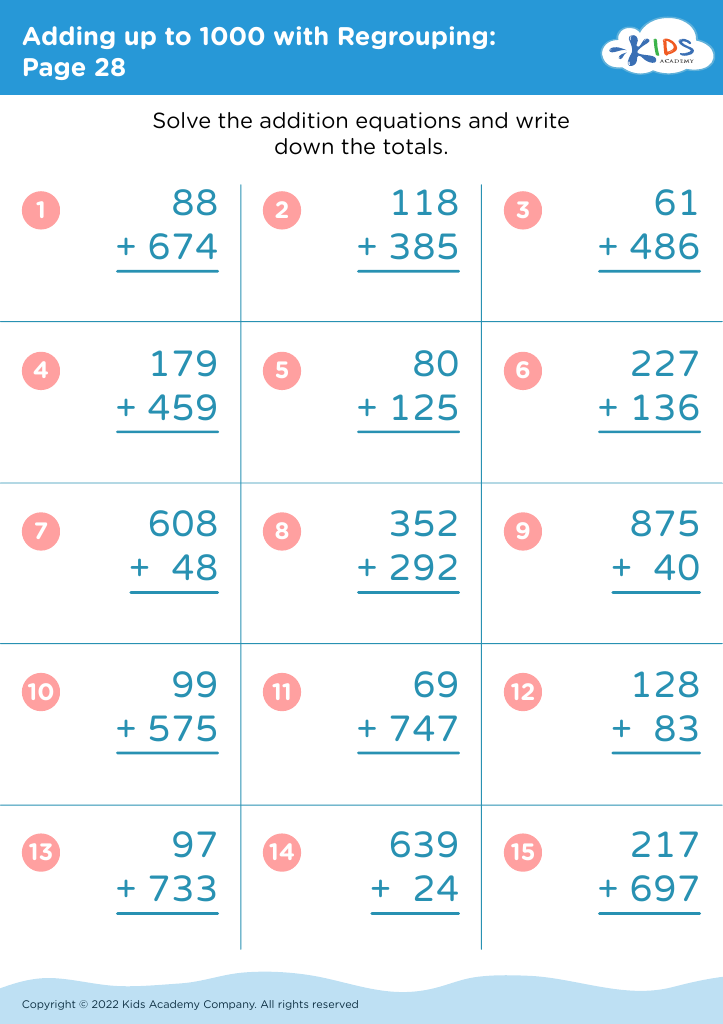
Adding up to 1000 with Regrouping: Page 28
Worksheet
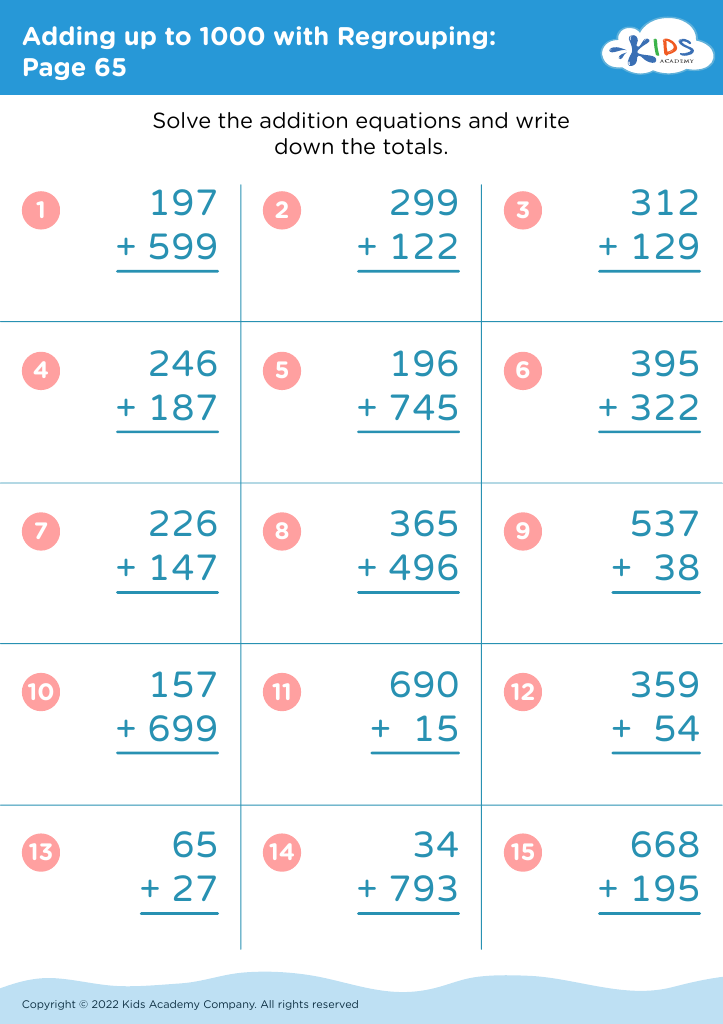
Adding up to 1000 with Regrouping: Page 65
Worksheet
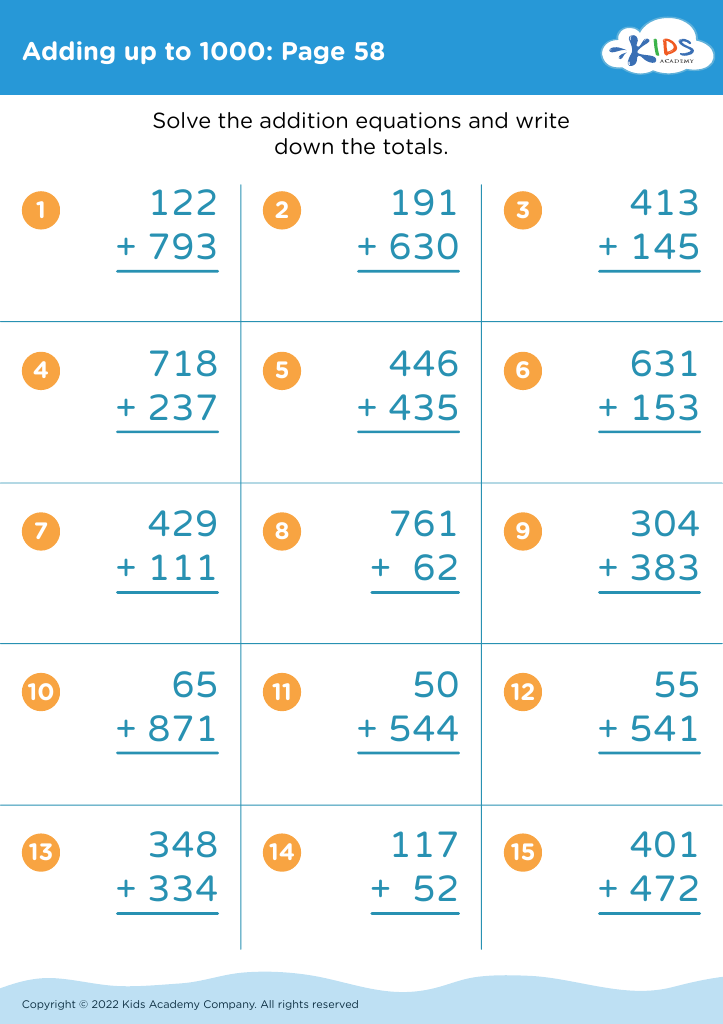
Adding up to 1000: Page 58

Adding up to 1000: Page 58

Adding up to 1000: Page 58
Worksheet
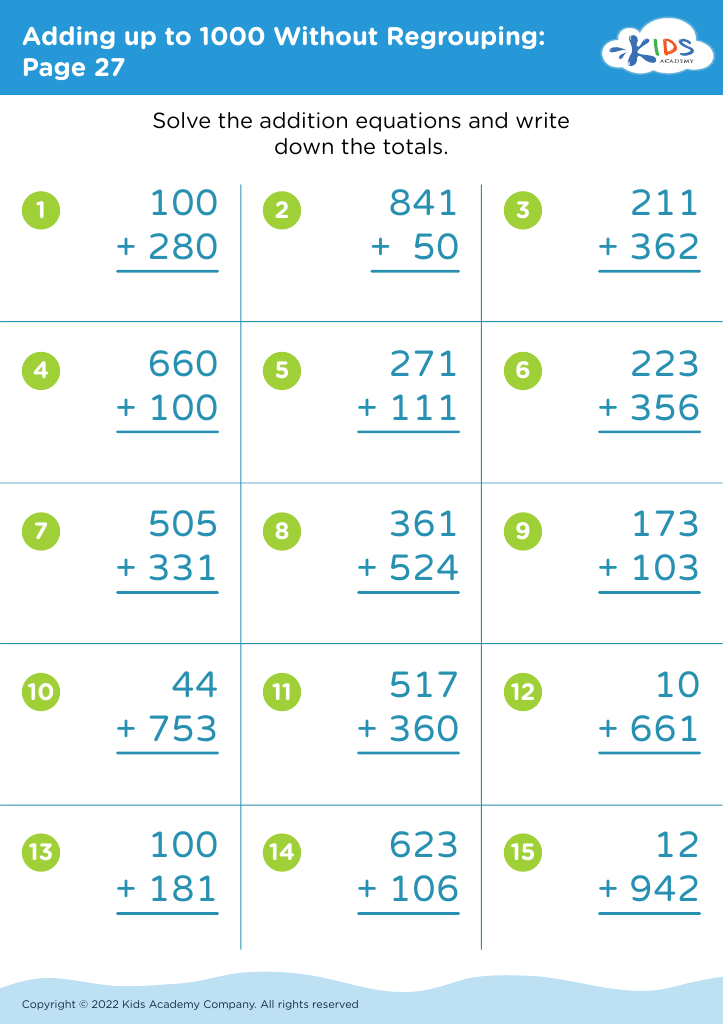
Adding up to 1000 Without Regrouping: Page 27
Worksheet
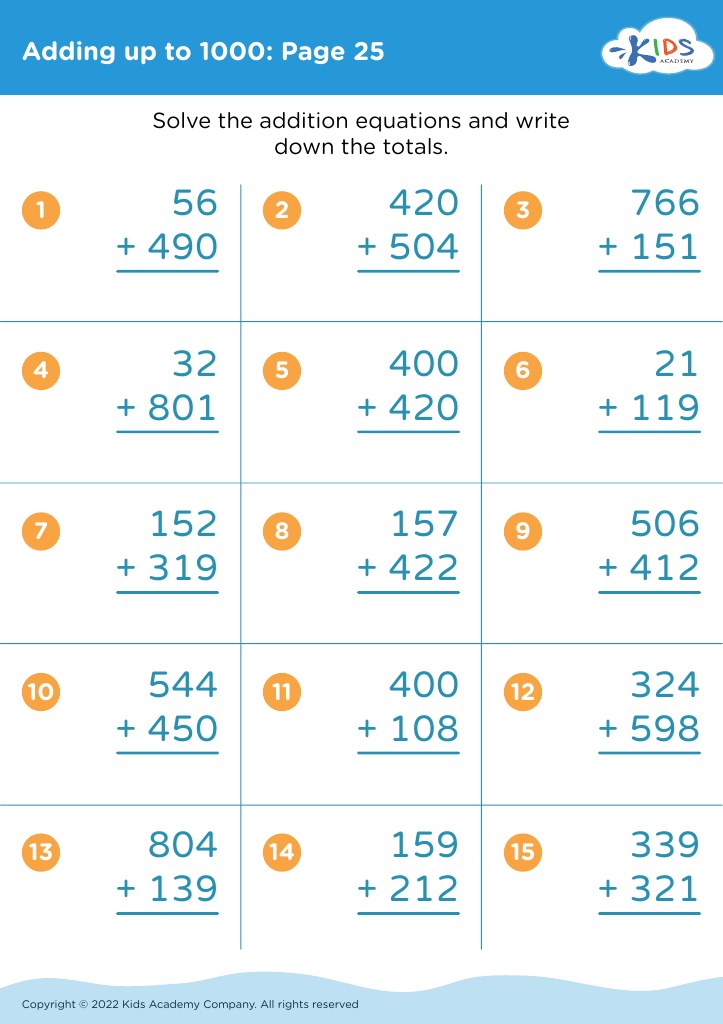
Adding up to 1000: Page 25

Adding up to 1000: Page 25

Adding up to 1000: Page 25
Worksheet
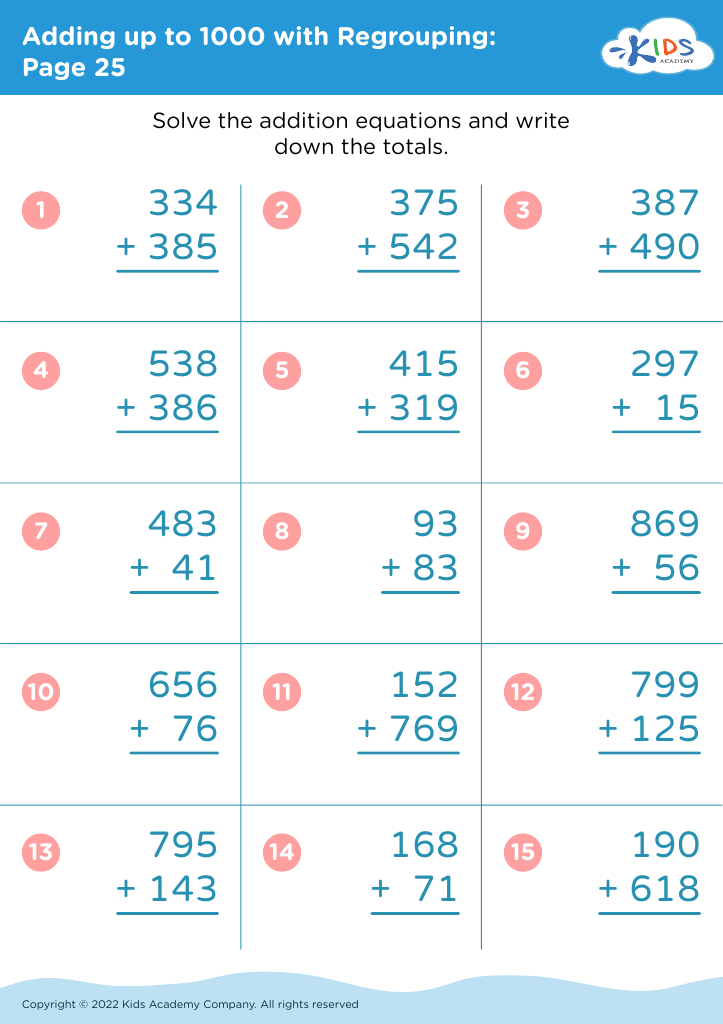
Adding up to 1000 with Regrouping: Page 25
Worksheet
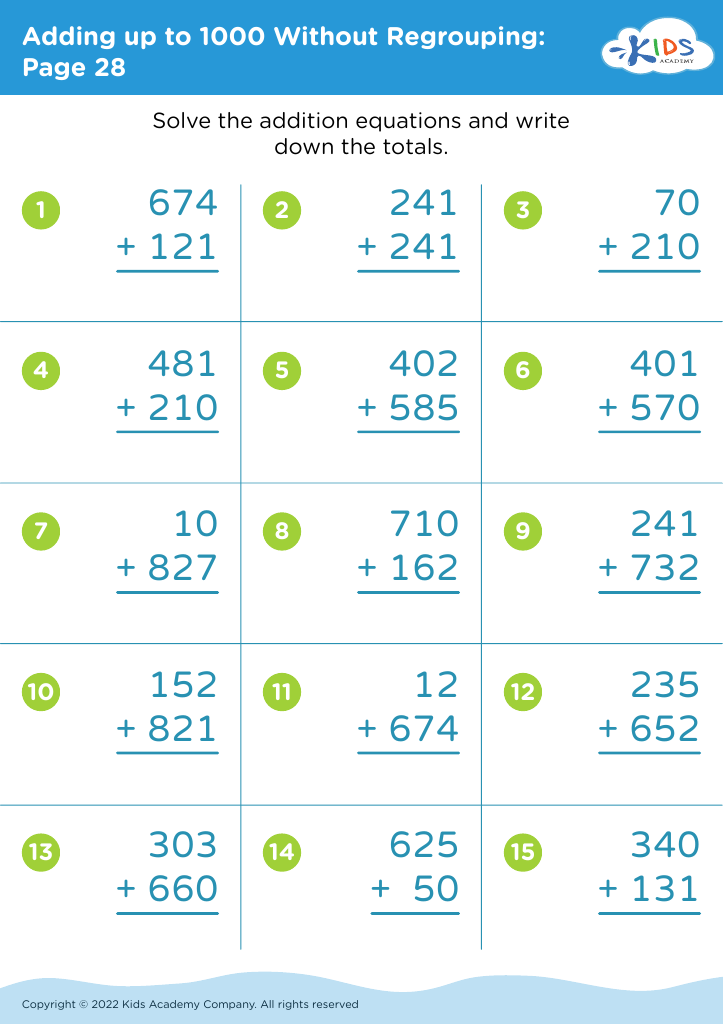
Adding up to 1000 Without Regrouping: Page 28
Worksheet
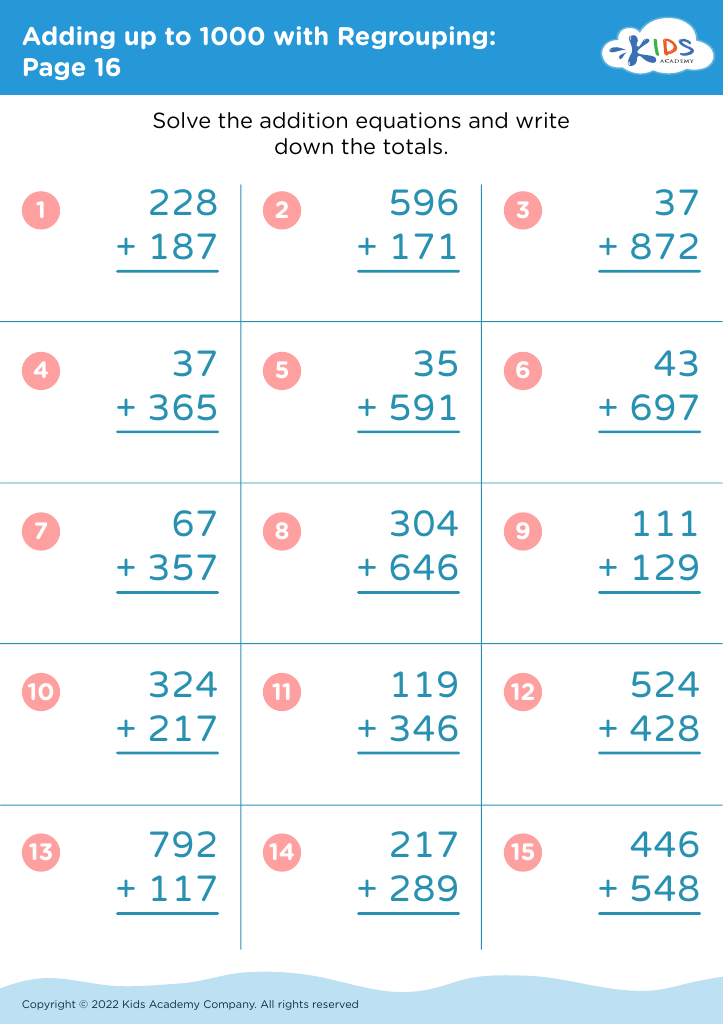
Adding up to 1000 with Regrouping: Page 16
Worksheet
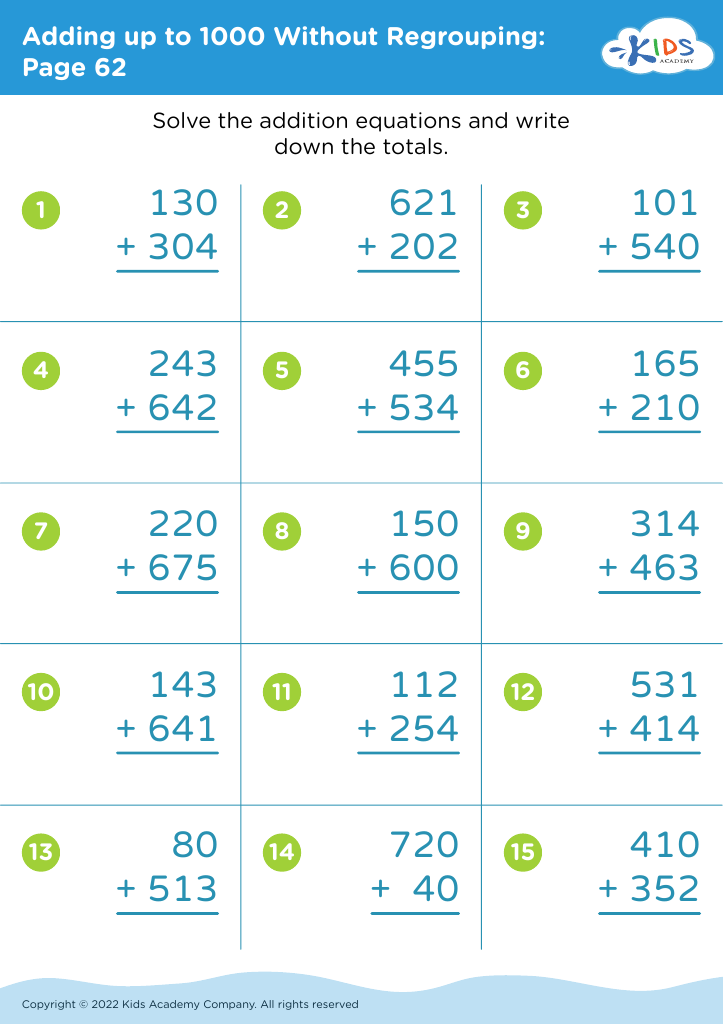
Adding up to 1000 Without Regrouping: Page 62
Worksheet
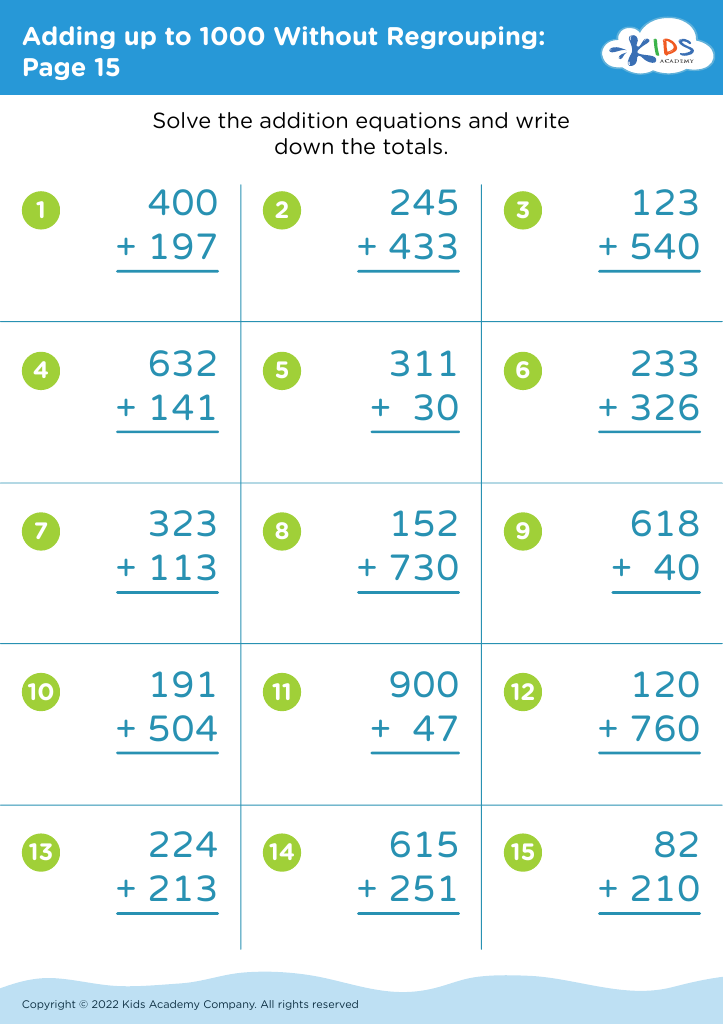
Adding up to 1000 Without Regrouping: Page 15
Worksheet
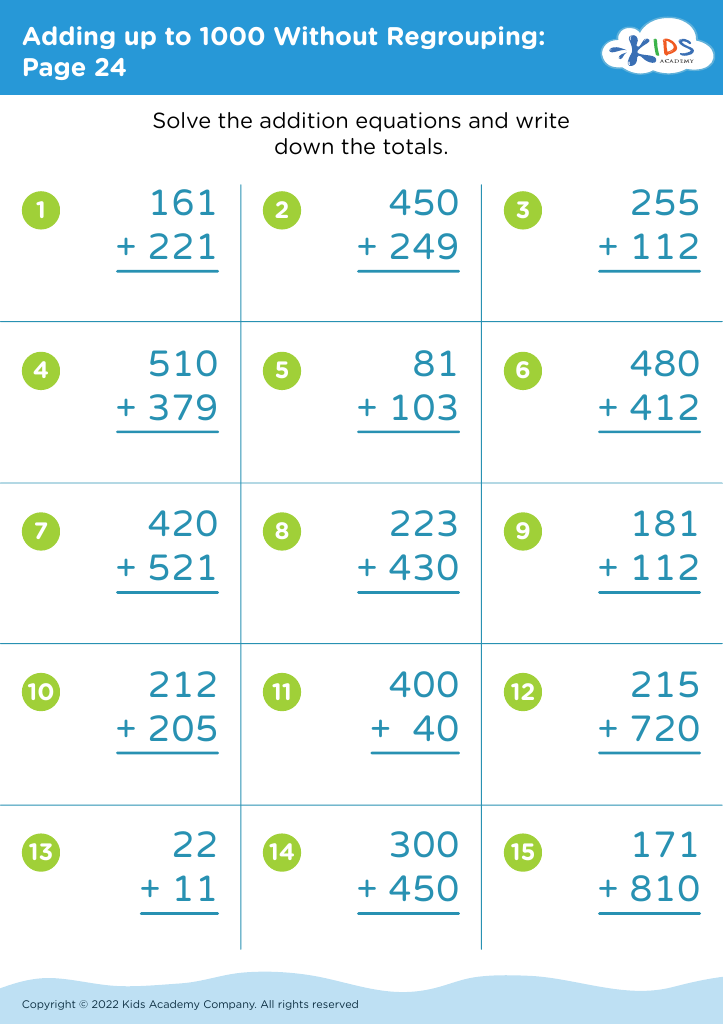
Adding up to 1000 Without Regrouping: Page 24
Worksheet


Understanding fractions and the ability to manipulate numbers confidently, including addition to 1000, are crucial competencies for second graders in today’s educational landscape. First and foremost, these skills form the foundation for future math concepts. In grade 2, children start to grasp the essential idea of dividing wholes into parts, which can be applied in various real-life situations such as cooking, sharing, and measuring.

When children develop fraction skills early on, they build a better understanding of proportional relationships, which are vital in more advanced mathematics. Additionally, adding numbers up to 1000 promotes a sense of number sense and enhances mental calculation strategies. This foundational knowledge not only prepares students for more complex math concepts in higher grades, like decimals and percentages but also enhances problem-solving abilities.

Moreover, being comfortable with fractions fosters resilience and helps build a positive mathematical mindset. Parents and teachers can guide children through engaging activities that reinforce these skills, thus encouraging enthusiasm for learning. Supporting children in mastering fractions promotes critical thinking, increases confidence, and ensures their success in both academic and everyday contexts. Ultimately, investing in these mathematical skills sets the stage for lifelong learning and competency in mathematics.