Understanding sequencing Grade 2 Adding up to 1000 Worksheets
3 filtered results
-
From - To
Welcome to our "Understanding Sequencing: Grade 2 Adding up to 1000 Worksheets" page! Here, young learners dive into the fundamental concept of sequencing numbers to enhance their math skills. Our engaging worksheets help students practice arranging numbers and performing addition effectively, fostering critical thinking and a solid number sense. Through fun exercises, kids will learn how to identify patterns and relationships while confidently adding numbers together up to 1000. Designed for second graders, these worksheets offer a comprehensive approach to mastering sequencing while building a strong foundation in mathematics. Embrace learning with our resources and watch your child’s confidence soar!
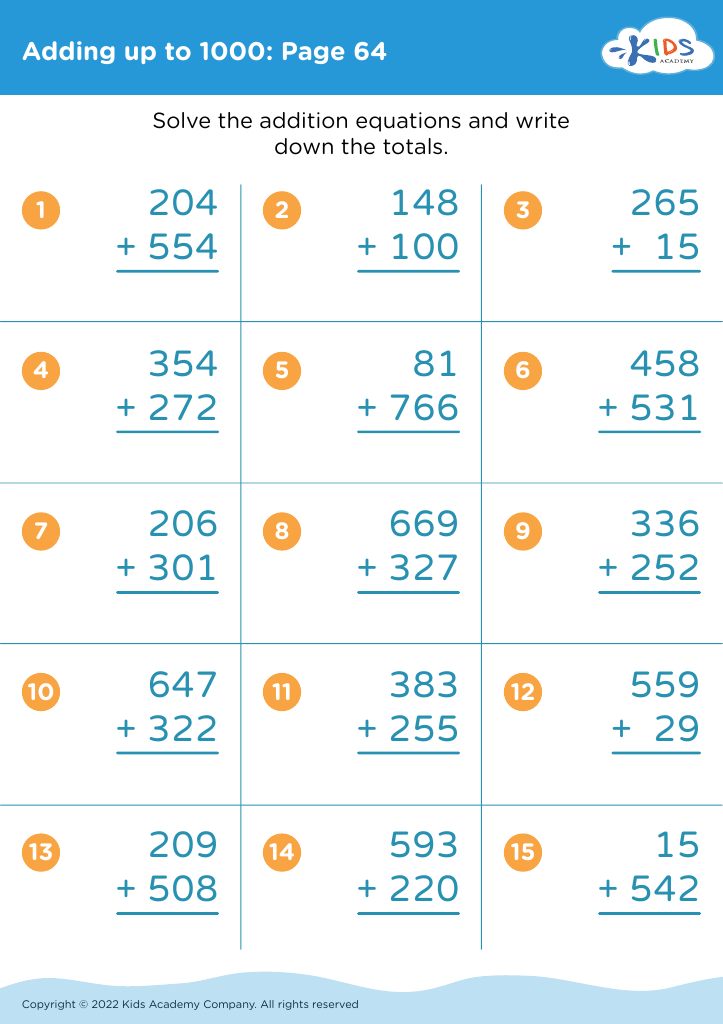
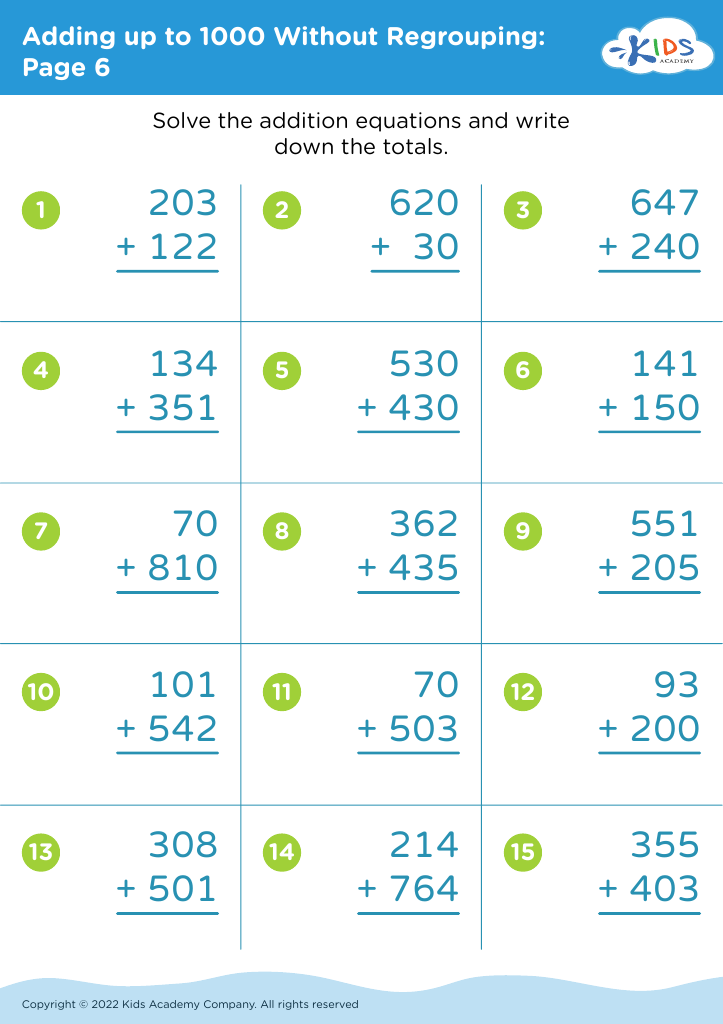
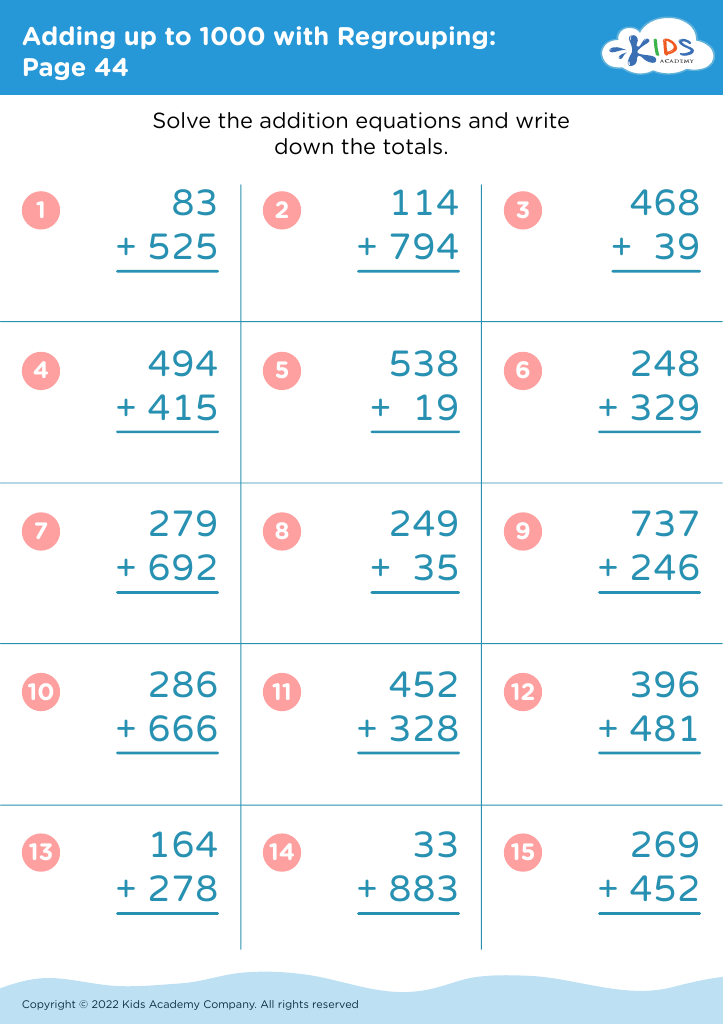



Understanding sequencing is crucial for Grade 2 students as they begin to grasp more complex mathematical concepts, including addition up to 1000. Sequencing helps children learn the order of operations and develop logical reasoning skills, which are foundational for effective problem-solving.
When parents and teachers emphasize sequencing, they provide children with a structured approach to mathematics. This structure aids in memory retention and allows young learners to visualize the steps in an addition problem, encouraging them to break down larger numbers into manageable parts. For instance, recognizing that 200 + 800 equals 1000 requires an understanding of both the sequence of numbers and place value.
Additionally, mastering the sequencing of addition helps students build confidence and encourages a positive attitude towards math. As they experience success in adding up to 1000, children are more likely to take on more challenging math tasks in the future.
Moreover, sequencing connects mathematical concepts with real-life situations, reinforcing the relevance of math outside the classroom. Ultimately, a strong foundation in sequencing not only sets the stage for advanced math skills but also fosters critical thinking and adaptability in problem-solving, skills that are invaluable throughout a child's educational journey and beyond.