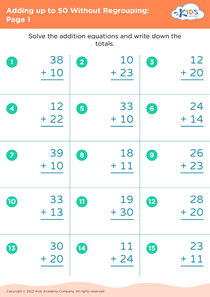
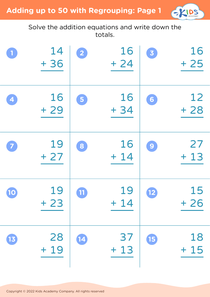
Counting practice Grade 2 Adding up to 50 Misc Worksheets
5 filtered results
-
From - To
Discover engaging Counting Practice worksheets for Grade 2, designed to reinforce addition skills up to 50. Our printable resources provide students with varied exercises that enhance their number sense and arithmetic fluency. These thoughtfully crafted worksheets feature colorful illustrations and diverse problems, ensuring learners stay motivated while they practice. Perfect for classroom use or home schooling, our materials allow teachers and parents to track progress and support developmental milestones. With activities that involve real-life scenarios, children will not only learn to add but also grasp the relevance of mathematics in their daily lives. Explore our collection today and boost your child’s confidence in math!
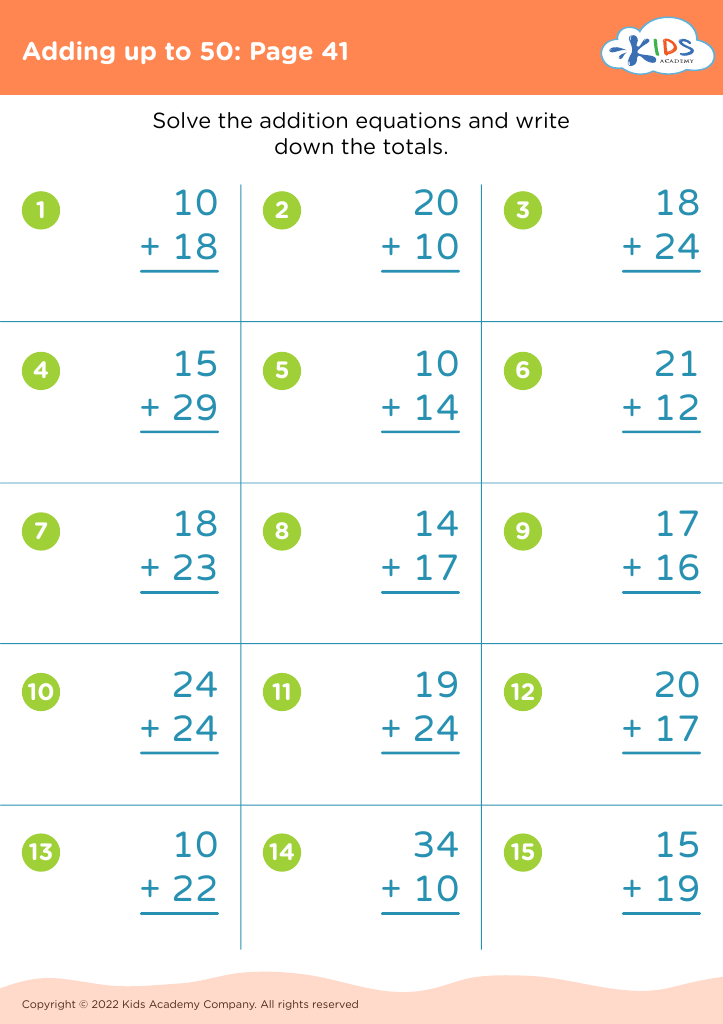
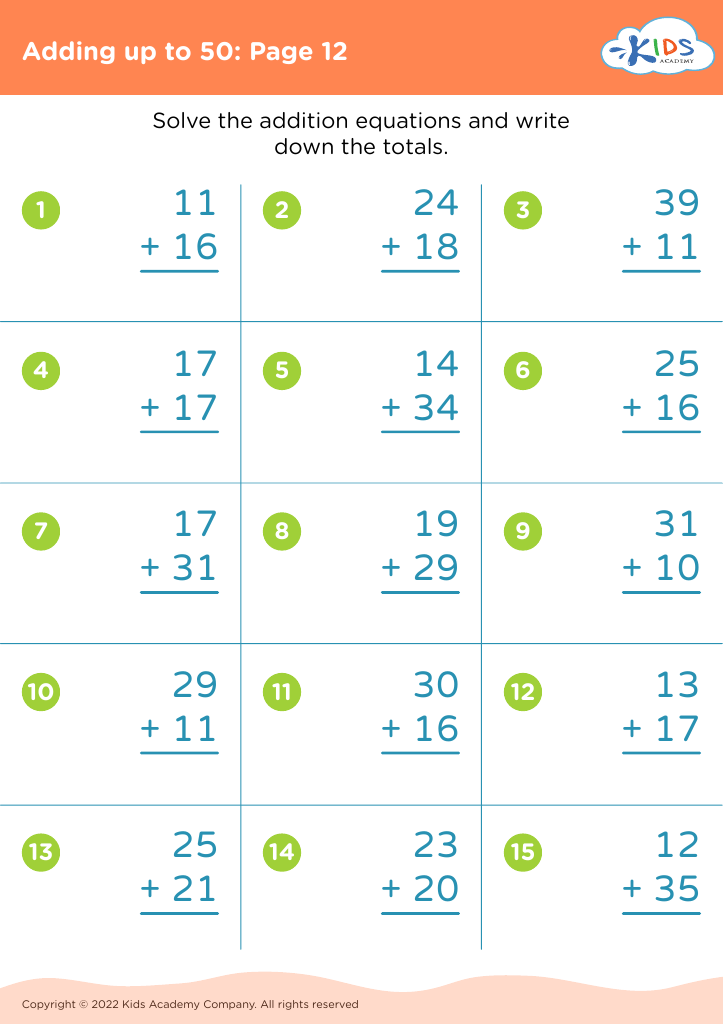
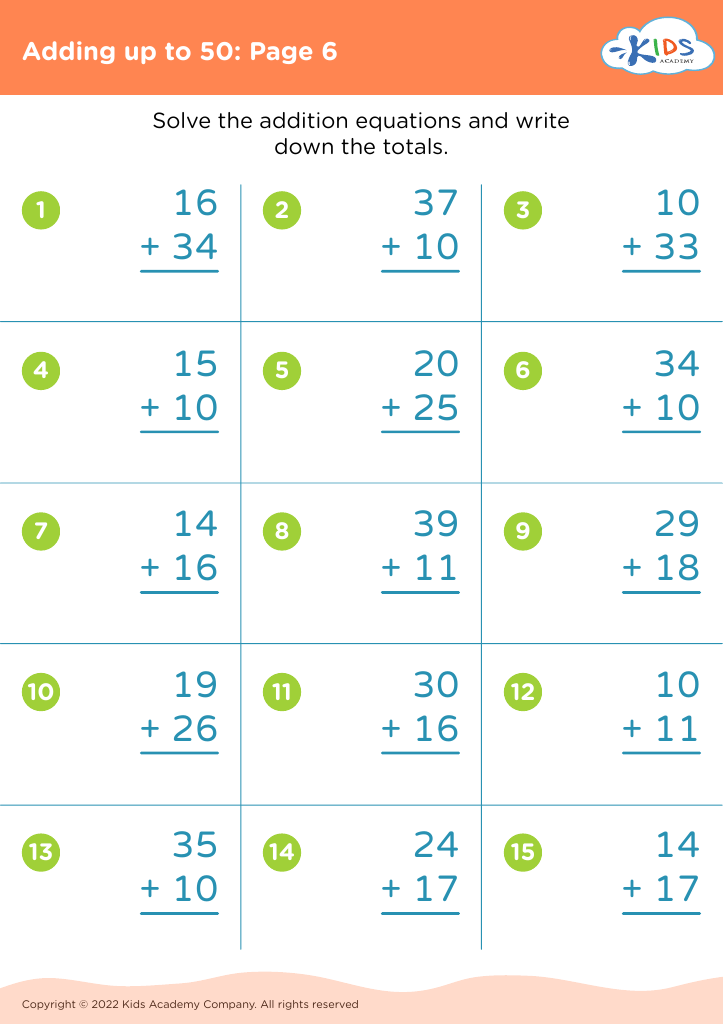
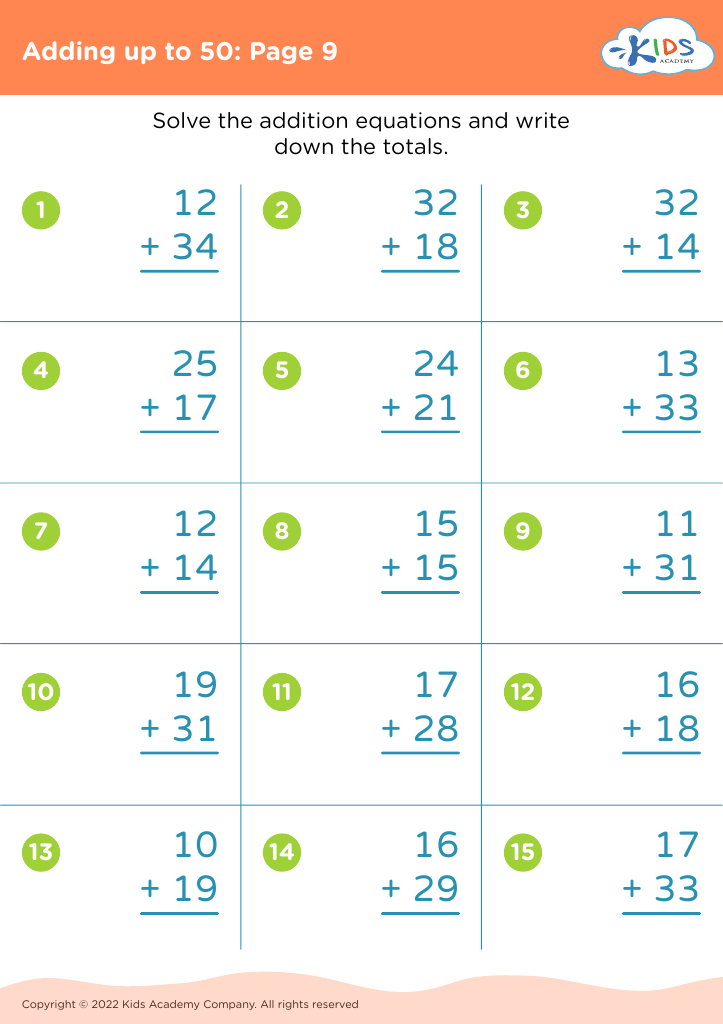
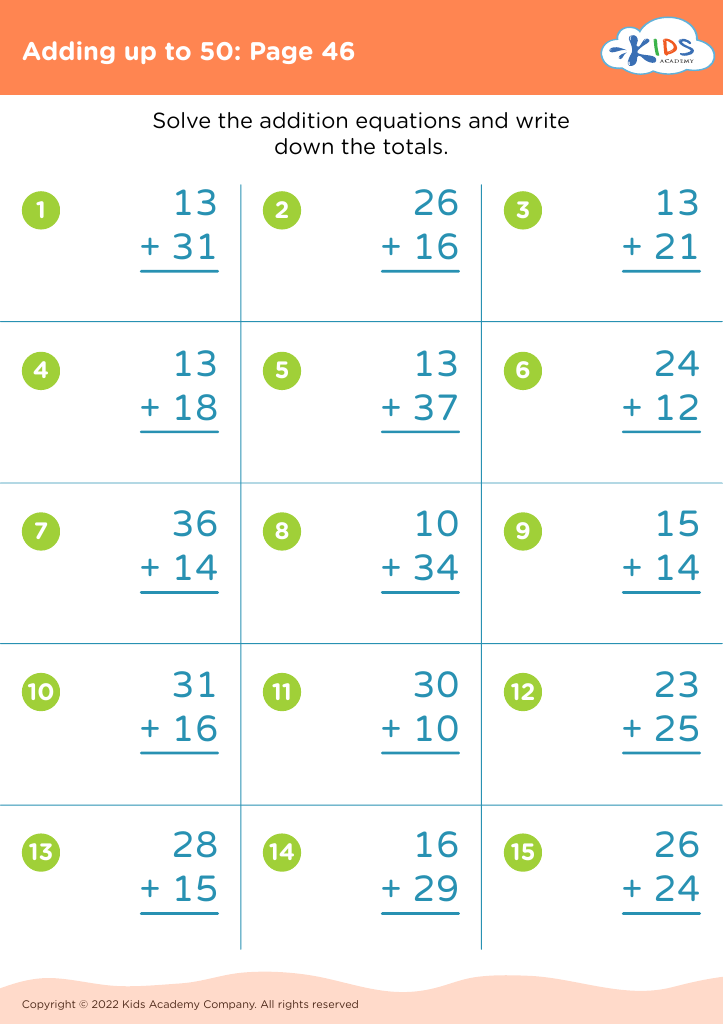


Counting practice and addition skills are foundational elements in a child's education, particularly in Grade 2, where students are typically introduced to basic arithmetic strategies. Mastery of counting and addition helps children develop number sense, which is crucial for understanding more complex mathematical concepts in the future.
By focusing on adding numbers up to 50, children learn to recognize patterns, understand sequencing, and build confidence in their mathematical abilities. This knowledge lays the groundwork for problem-solving skills and critical thinking, essential traits for academic success in all subject areas.
Moreover, strong counting and addition skills enhance children's ability to manage everyday tasks—like budgeting, assessing time, and measuring—thereby empowering them in their daily lives.
Parents and teachers should prioritize counting practice because it fosters a positive attitude towards mathematics, reducing math anxiety later in life. Engaging with children through fun and interactive math activities can also strengthen parent-child relationships and encourage collaborative learning. Overall, investing time in counting practice will help foster a strong educational foundation that benefits children in their academic journey and beyond.