Understanding multiplication Grade 2 Adding up to 50 Misc Worksheets
3 filtered results
-
From - To
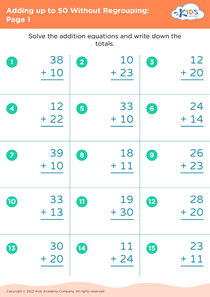
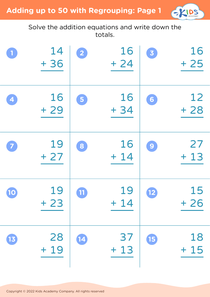
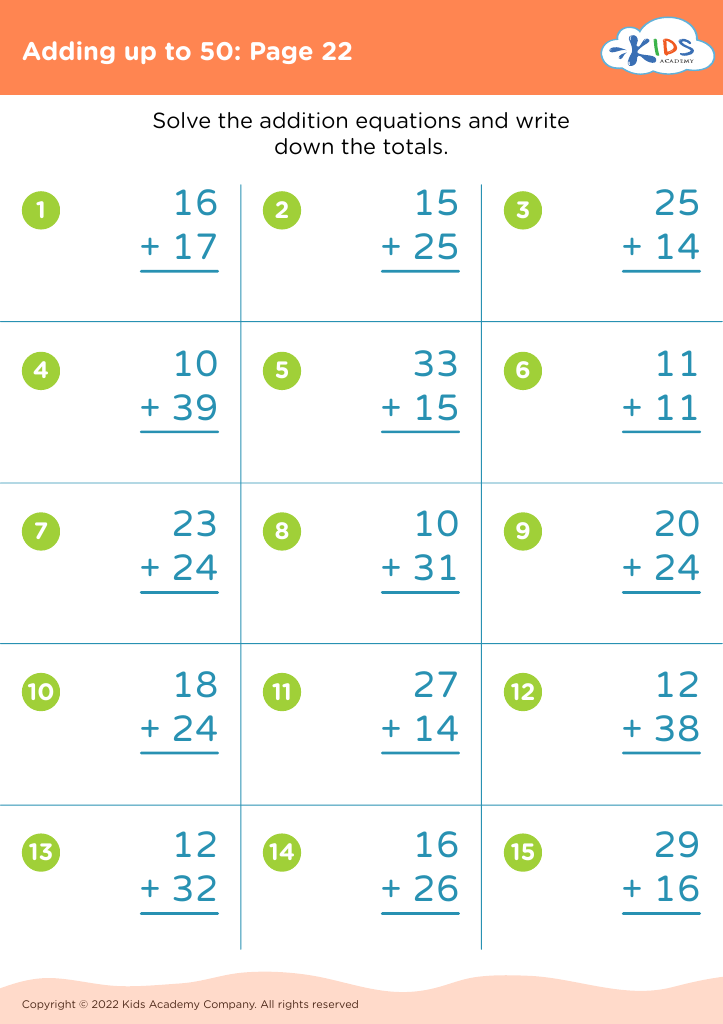
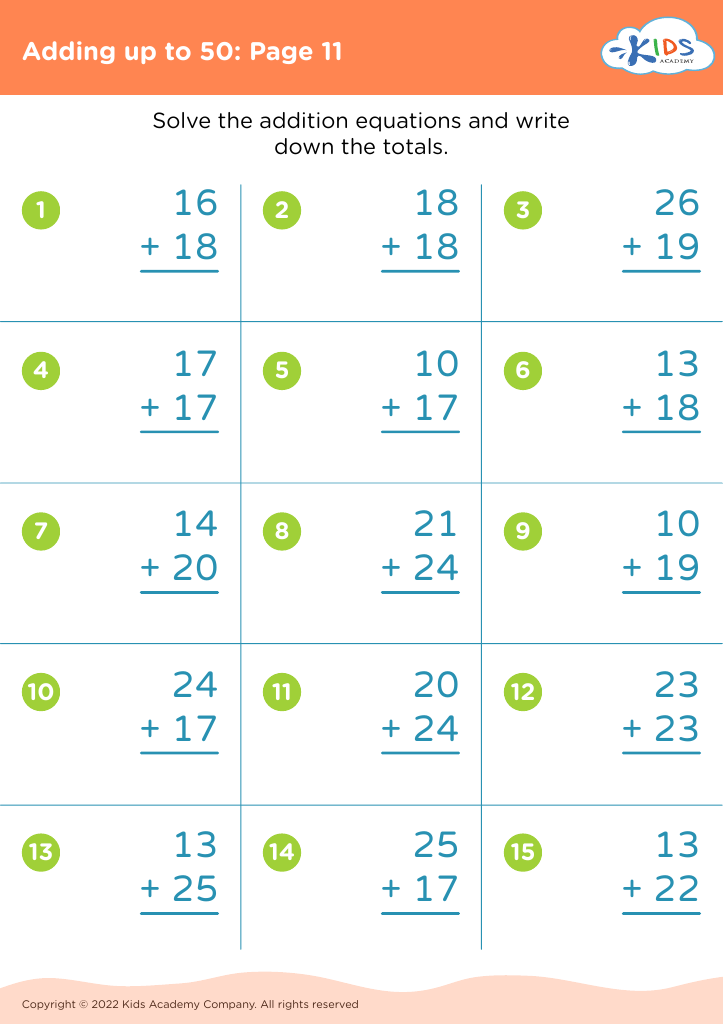
Explore our Grade 2 "Understanding Multiplication" collection, focused on adding up to 50. Perfect for young learners, these misc worksheets lay the foundation for mastering multiplication by reinforcing addition skills. Each worksheet provides engaging exercises to help students practice adding numbers up to 50, maintaining a fun and educational atmosphere. Our expertly designed activities aim to build confidence and prepare children for future math challenges. Give your second graders the tools to excel in math with our user-friendly worksheets, nurturing their understanding of multiplication in an enjoyable way. Start your child's multiplication journey today!
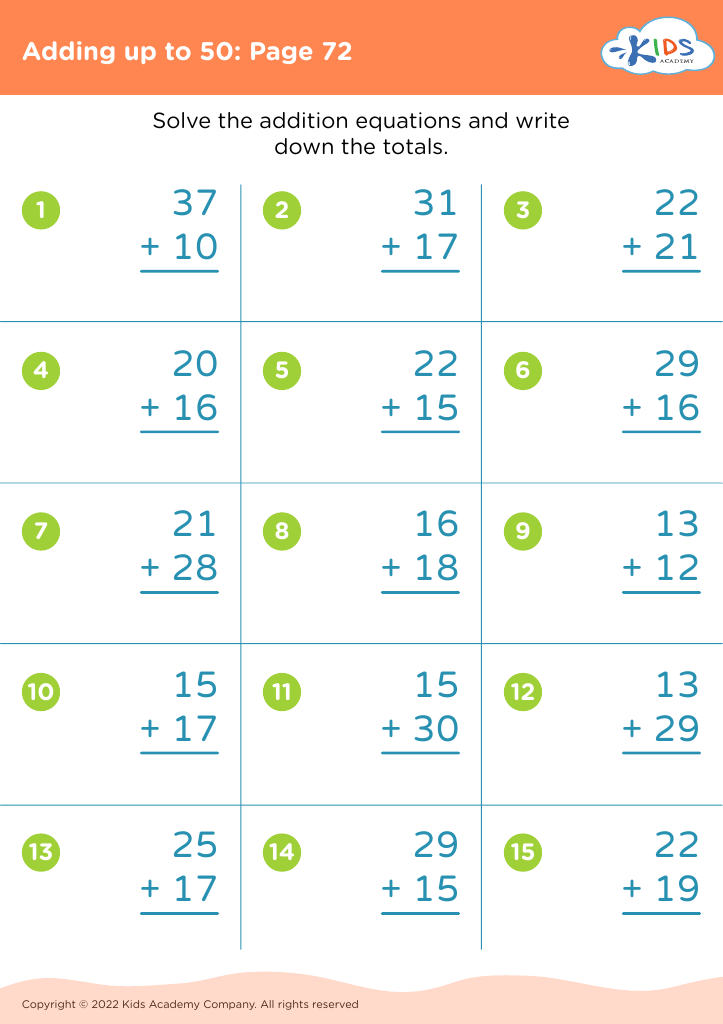


Understanding multiplication and addition up to 50 in grade 2 is crucial for young learners. Firstly, these foundational arithmetic skills serve as the building blocks for more complex mathematical concepts encountered in later grades. Mastery of basic multiplication and addition boosts a child’s confidence and fosters a positive attitude toward math. This early success creates a solid framework for tackling multi-digit problems, fractions, and eventually, algebra and geometry.
Parents and teachers should prioritize these concepts because early numeracy skills are predictive of later academic achievement. When children understand multiplication, they learn to see patterns and relationships between numbers, enhancing their problem-solving abilities. Similarly, being proficient in addition up to 50 strengthens their ability to perform quick mental calculations, important both in the classroom and in everyday situations.
Additionally, understanding these basic operations helps in enhancing logical reasoning and critical thinking. This cognitive development extends beyond math, supporting overall intellectual growth. Engaging activities, such as interactive games, visual aids, and practical examples, can make learning these concepts enjoyable and effective. Thus, investing time and resources in teaching multiplication and addition early sets a firm educational foundation that benefits students throughout their academic journey and everyday lives.