Understanding symmetry Grade 2 Adding up to 50 Misc Worksheets
3 filtered results
-
From - To
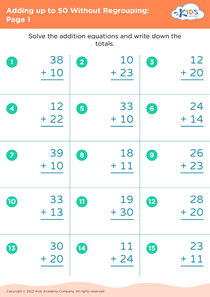
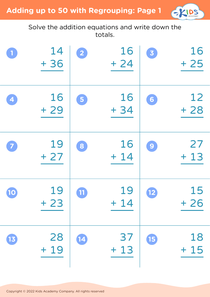
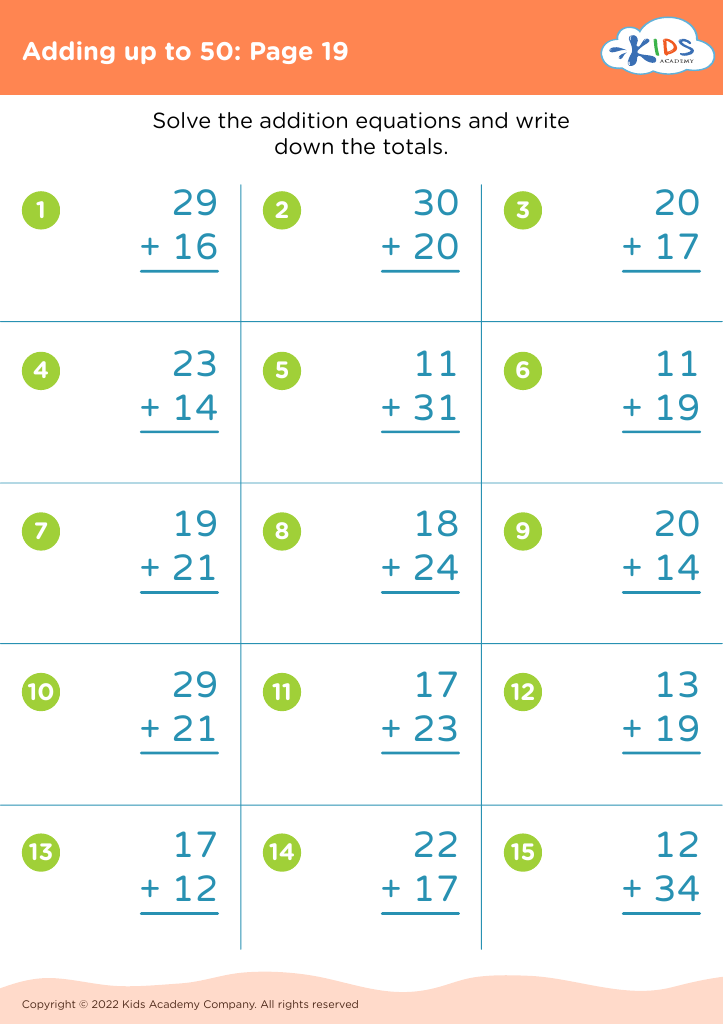
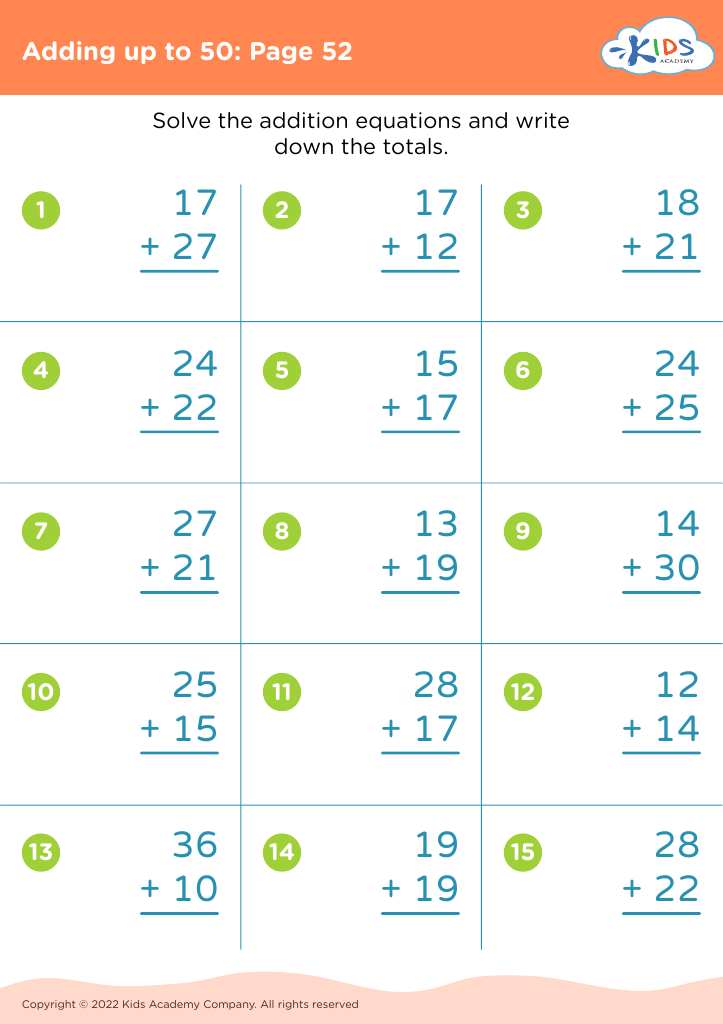
Explore our engaging "Understanding Symmetry" worksheets designed for Grade 2 students! These activities combine geometry and addition, helping young learners grasp the concept of symmetry while practicing addition up to 50. Students will enjoy a variety of fun and interactive exercises, reinforcing their knowledge of symmetrical shapes and figures. With vibrant visuals and clear instructions, kids will enhance their understanding of symmetry in a playful context. Perfect for reinforcing classroom learning or as at-home practice, these printable worksheets encourage creative thinking and problem solving. Dive into the world of balance and design today, making math fun and accessible for all learners!
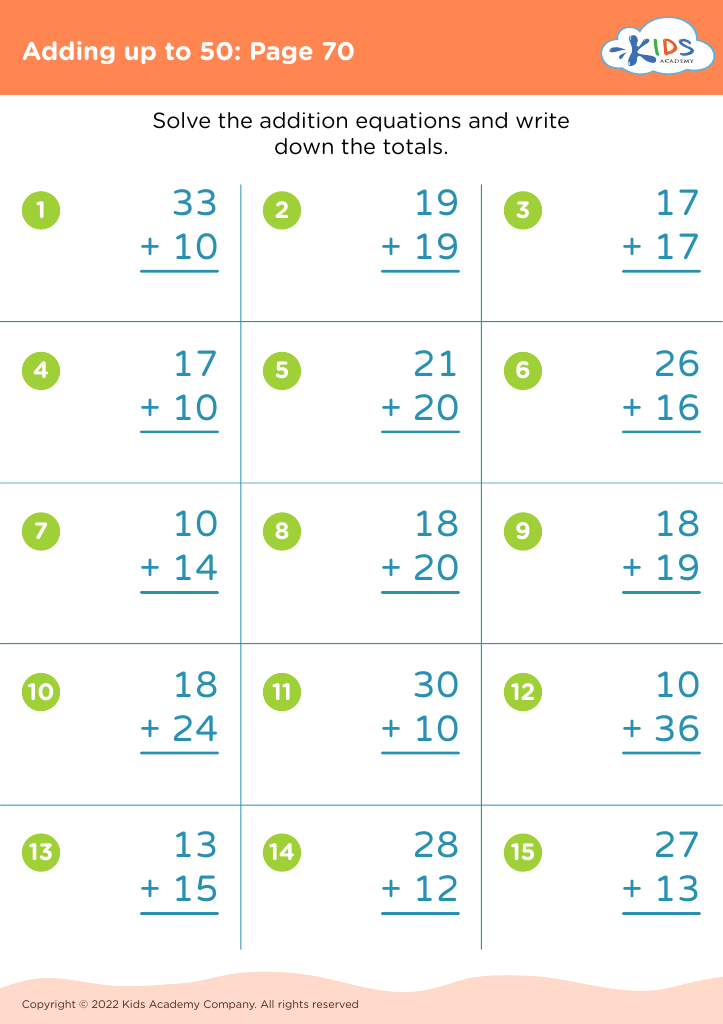


Understanding symmetry is essential for second graders as it builds a foundation for critical thinking and spatial reasoning skills. When children grasp the concept of symmetry, they learn to recognize patterns, shapes, and relationships in the world around them. This knowledge is instrumental in nurturing creativity and problem-solving abilities, as symmetry is present in art, nature, and everyday objects.
Additionally, mastering addition up to 50 is a key milestone in early mathematics. It enhances numerical fluency, helps children make connections between numbers and their practical applications, and sets the stage for more complex mathematical concepts. By developing confidence in addition, students are better equipped to tackle word problems, measurement, and data comparison later on.
By integrating lessons on symmetry with addition skills, teachers and parents can create engaging learning experiences. For instance, using symmetrical shapes to visualize number combinations or exploring symmetrical patterns in art can reinforce both mathematical concepts and artistic skills. Ultimately, understanding symmetry and mastering addition are not merely academic goals; they are essential life skills that promote analytical thinking, creativity, and overall cognitive development in young learners. Encouraging these skills can lead to greater academic success and a deeper appreciation for the mathematics present in our world.