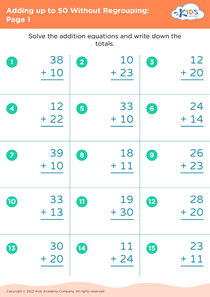
Addition Practice Grade 2 Adding up to 50 with Regrouping Worksheets
5 filtered results
-
From - To
Enhance your child's math skills with our "Addition Practice Grade 2 Adding up to 50 with Regrouping Worksheets". Designed specifically for second graders, these worksheets offer fun and engaging exercises, helping students master the concept of addition and regrouping. With colorful illustrations and a variety of problems, kids will develop confidence in solving sums up to 50. Our expertly crafted worksheets promote critical thinking and problem-solving skills, ensuring your child gains a solid foundation in math. Perfect for classroom use or at-home practice, these resources make learning addition an exciting and rewarding experience!
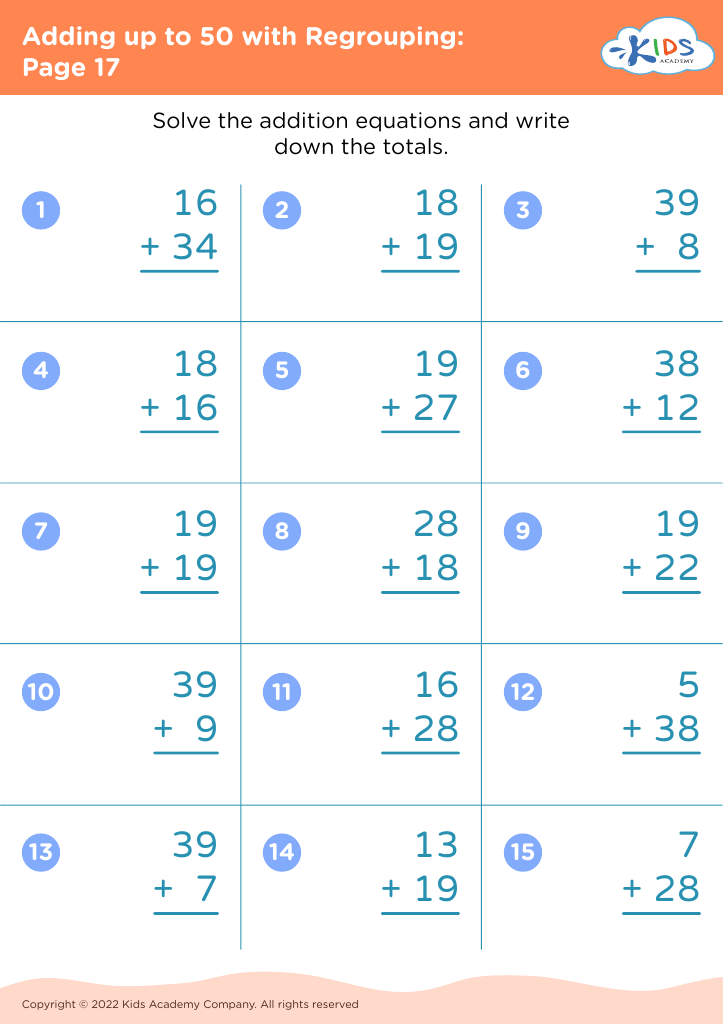
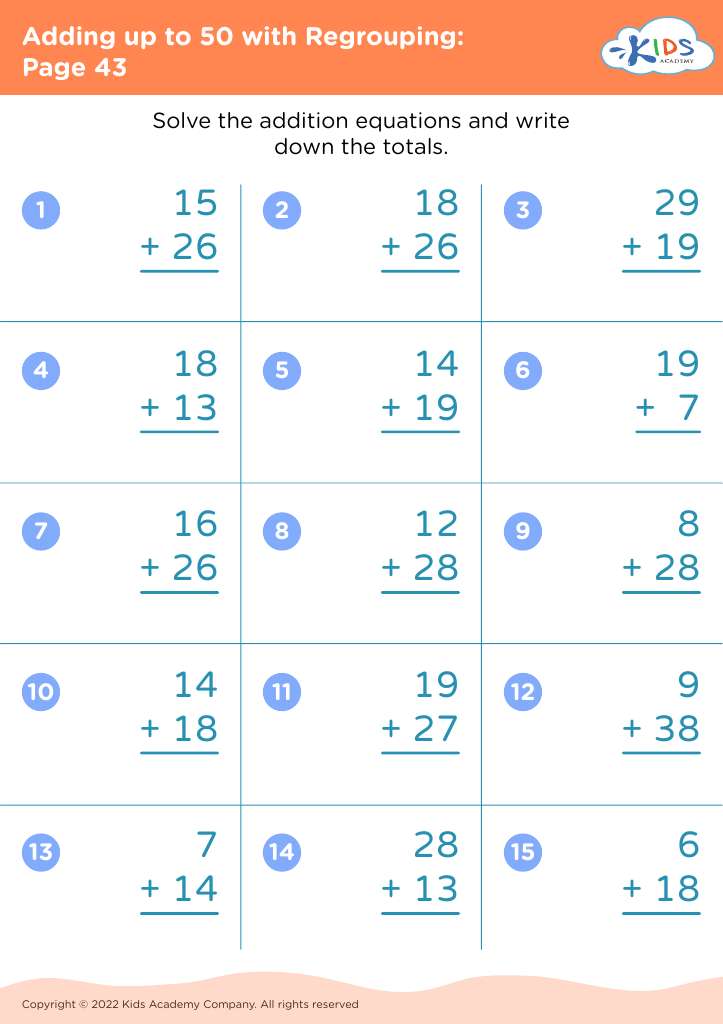
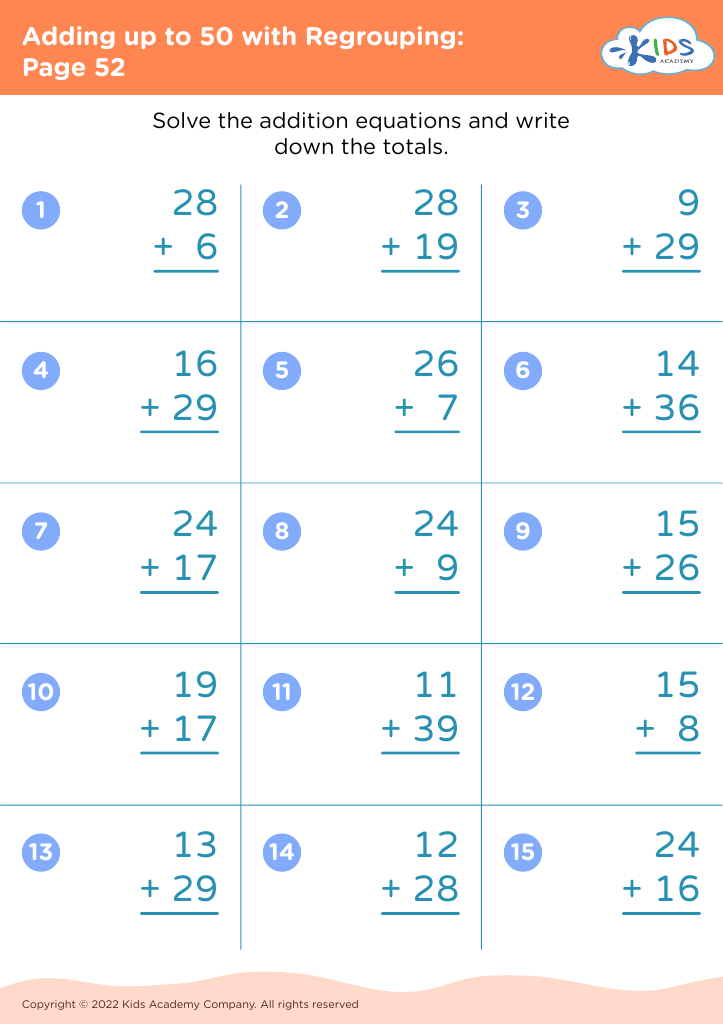
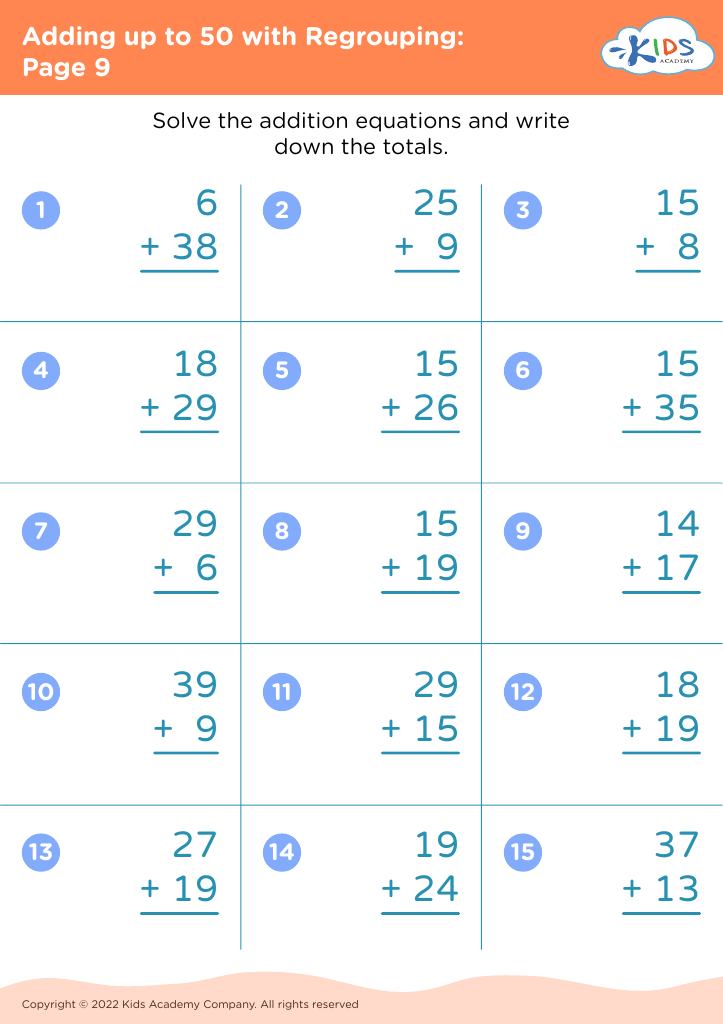
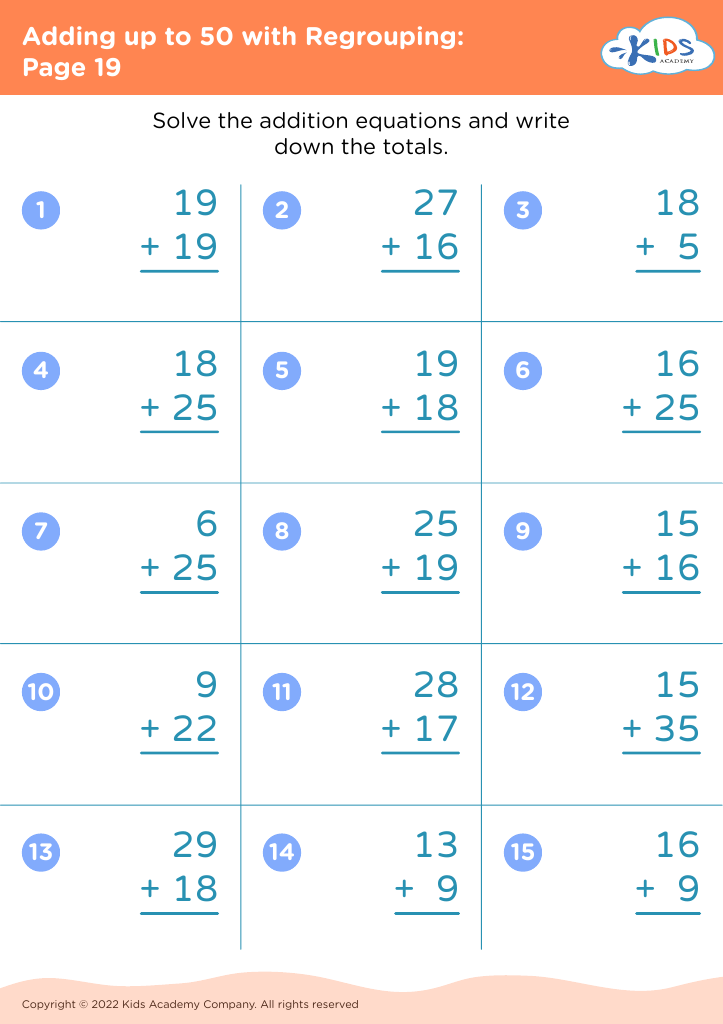


Addition practice for second graders, especially when focusing on adding up to 50 with regrouping, is crucial for several developmental reasons. Firstly, mastering this foundational mathematical skill boosts overall numeracy, which is vital for higher-level math concepts encountered in later grades. Regrouping, or "carrying over," tends to be a new and challenging concept at this age, and consistent practice helps children understand and become comfortable with it.
Additionally, proficiency in addition enhances cognitive abilities such as logical thinking and problem-solving. These skills are not only applicable in math but are essential life skills useful in everyday decisions and tasks. For example, understanding math concepts aroift project planning, budgeting, and time management.
From a pedagogical perspective, focusing on addition and regrouping at this stage aligns with common core standards and curricular goals, thereby ensuring that students are on the right track with their peers nationwide. Moreover, it builds confidence and reduces math anxiety, allowing children to enjoy the subject more.
For parents, investing time in their child's math practice can reinforce learning at home, bridge potential gaps in classroom instruction, and provide a shared activity that strengthens the parent-child bond. Therefore, fostering these skills lays a solid academic foundation and promotes long-term educational success.