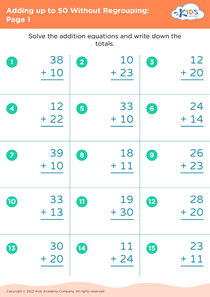
Understanding fractions Grade 2 Adding up to 50 with Regrouping Worksheets
17 filtered results
-
From - To
Welcome to our "Understanding Fractions: Grade 2 Adding Up to 50 with Regrouping" worksheets! Designed specifically for young learners, these engaging exercises introduce students to the fundamental concepts of fractions while practicing addition skills up to 50. Through various interactive and visually appealing worksheets, children will enhance their understanding of how to regroup numbers, making learning both fun and effective. Each worksheet is carefully crafted to reinforce key math skills, ensuring students build a strong foundation and boost their confidence in tackling more advanced concepts. Perfect for classroom use or home practice, these resources are ideal for fostering a love of math!
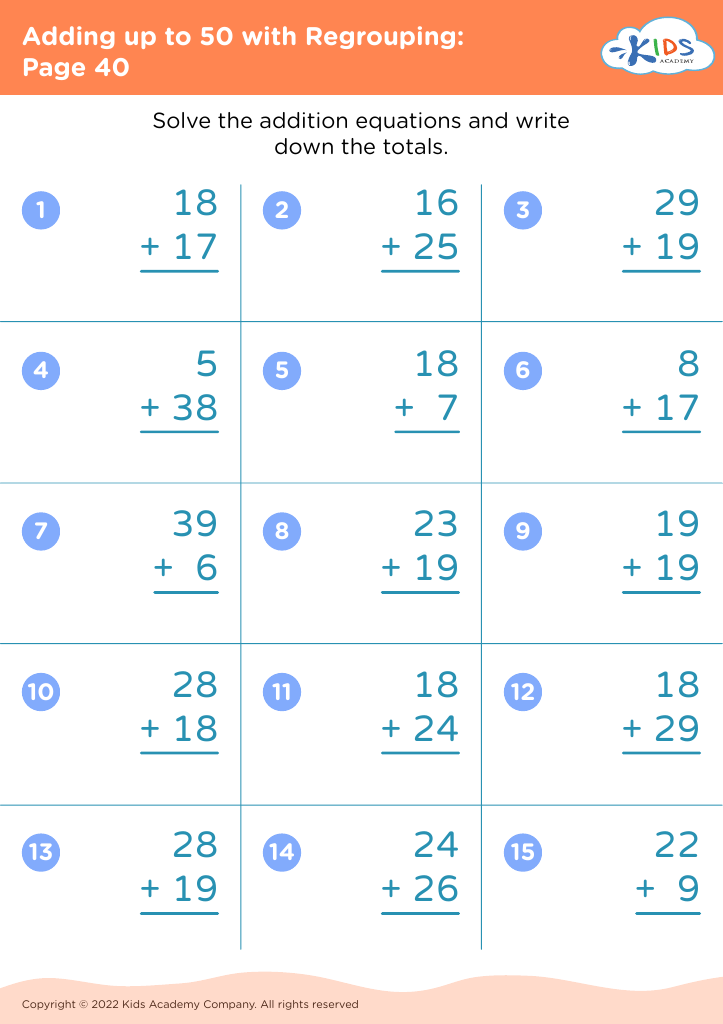
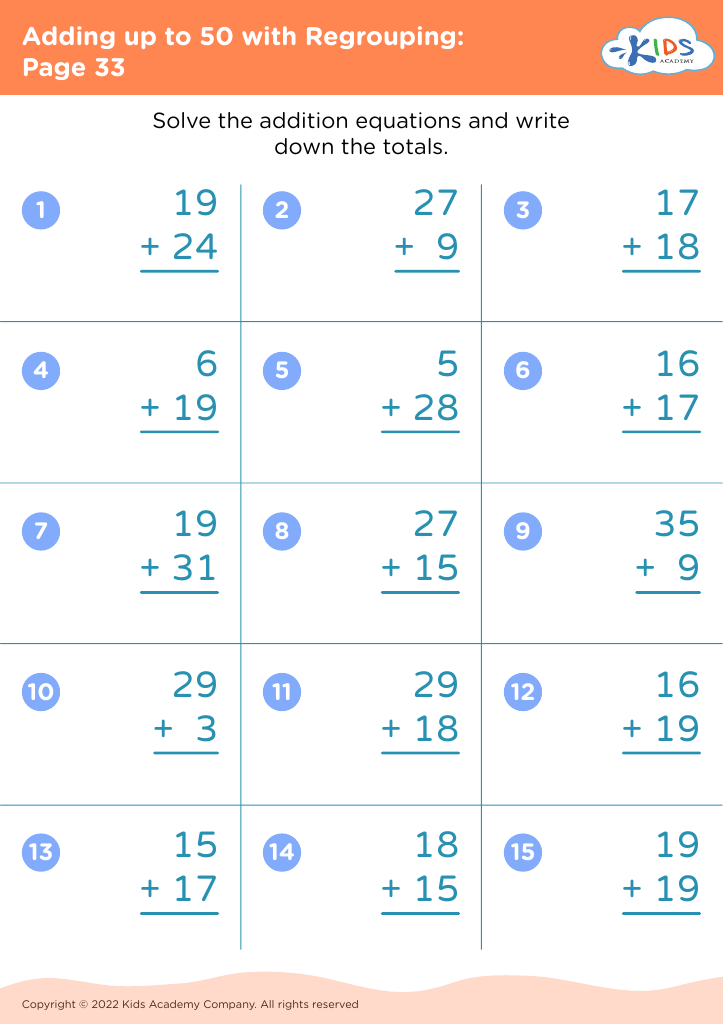
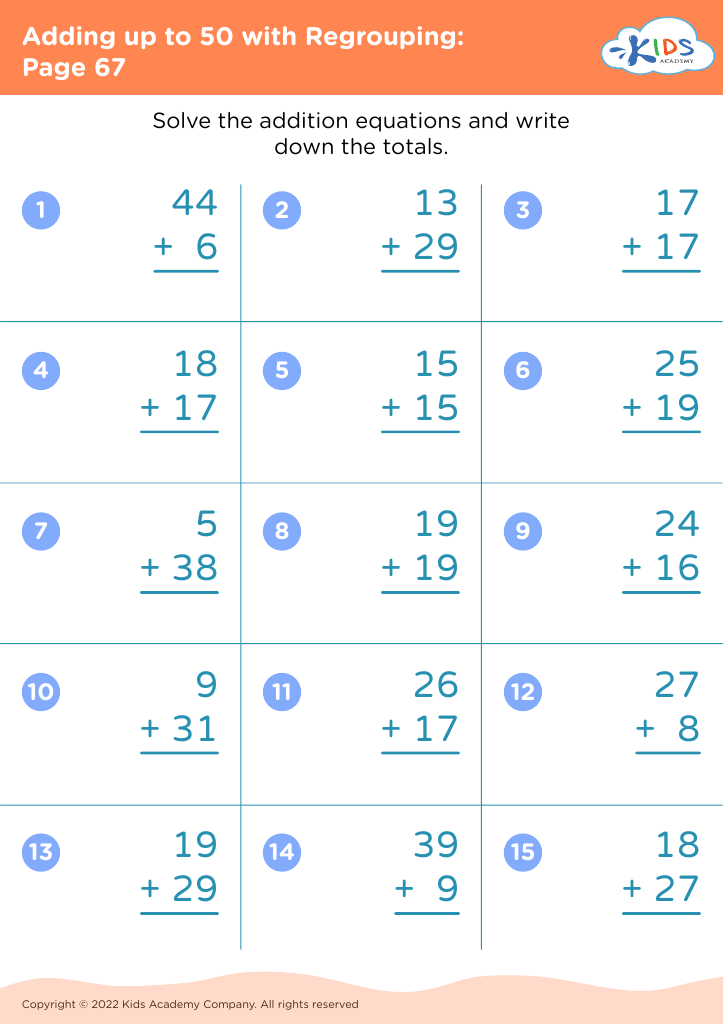
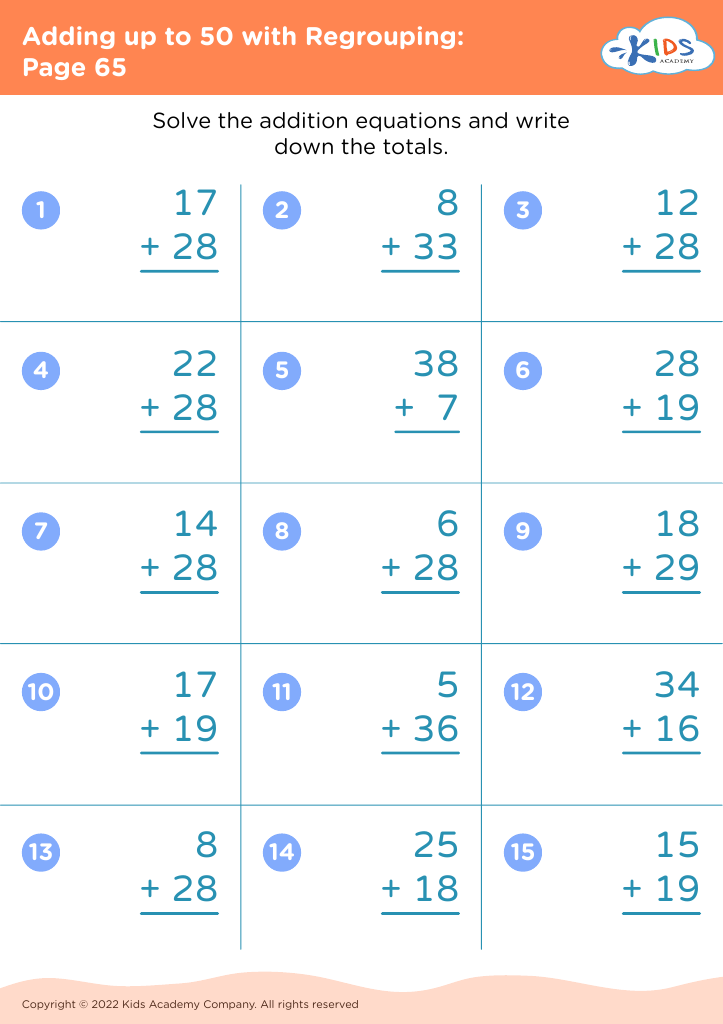
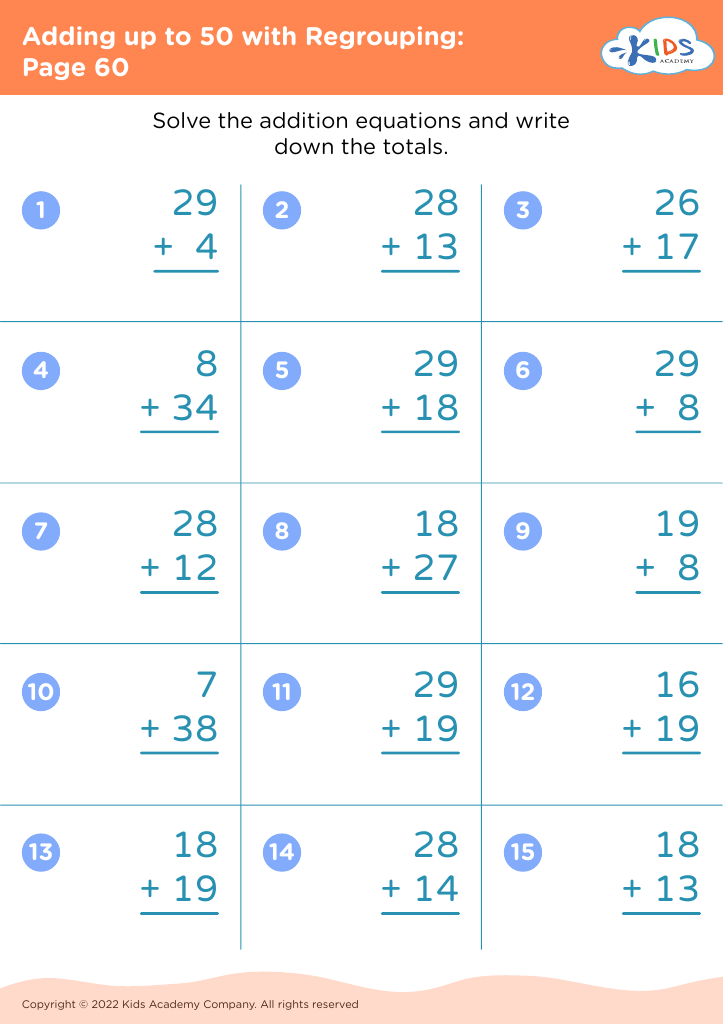
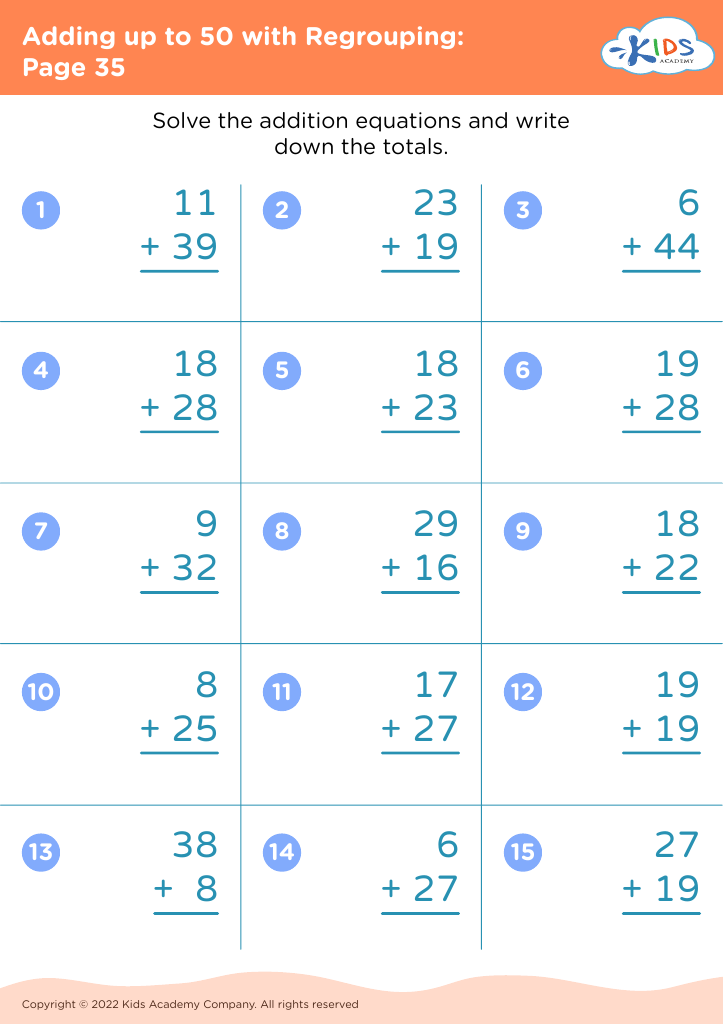
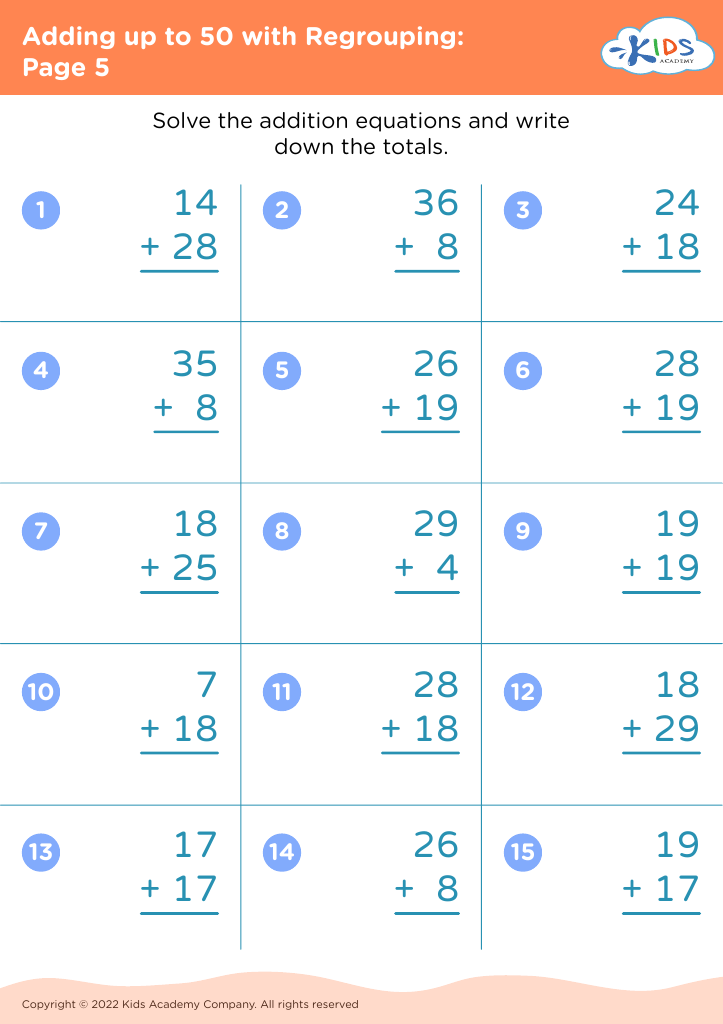
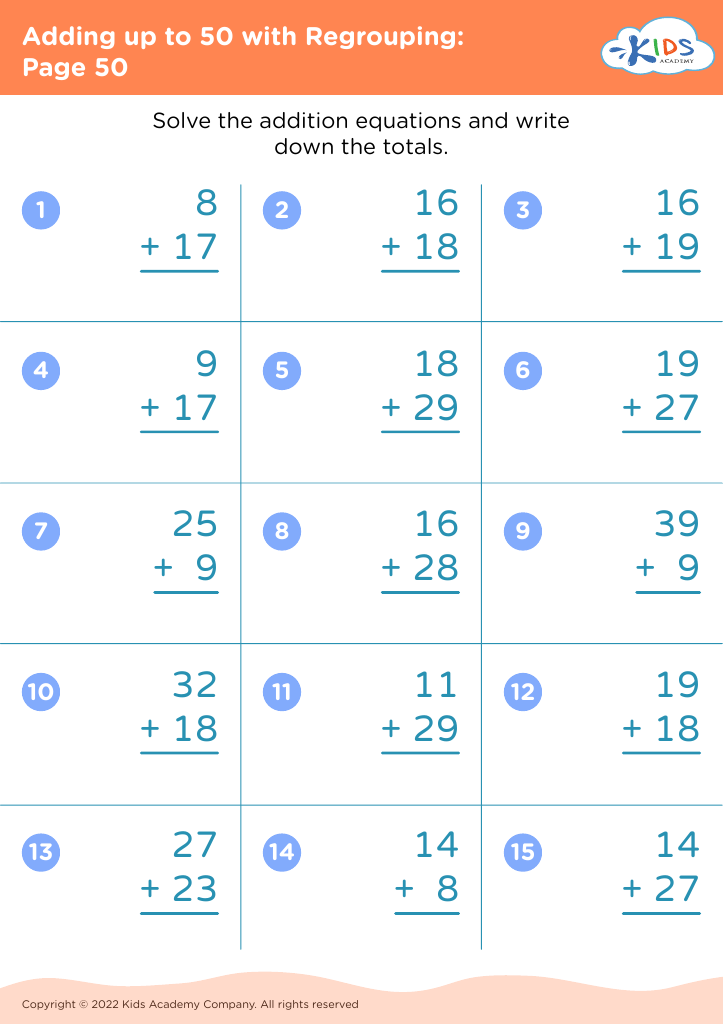
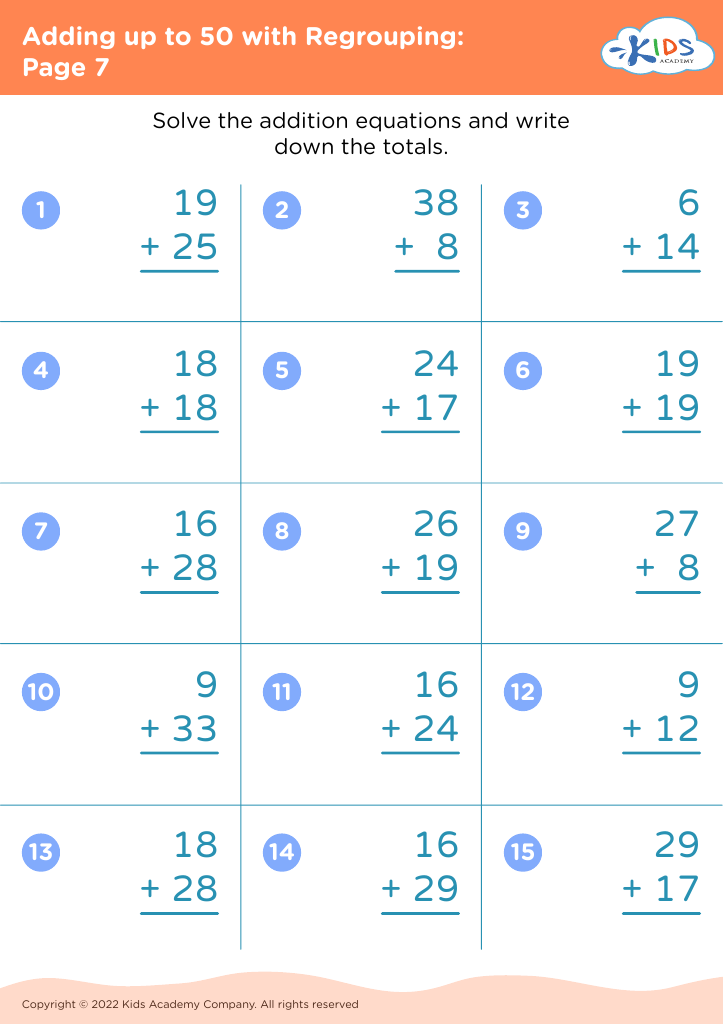
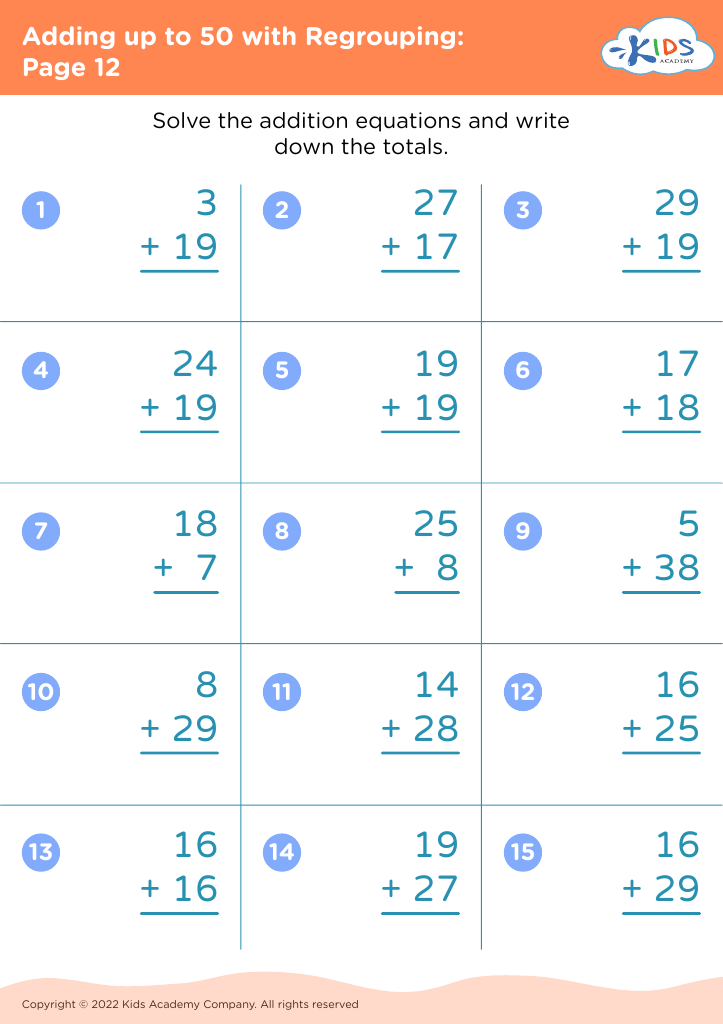
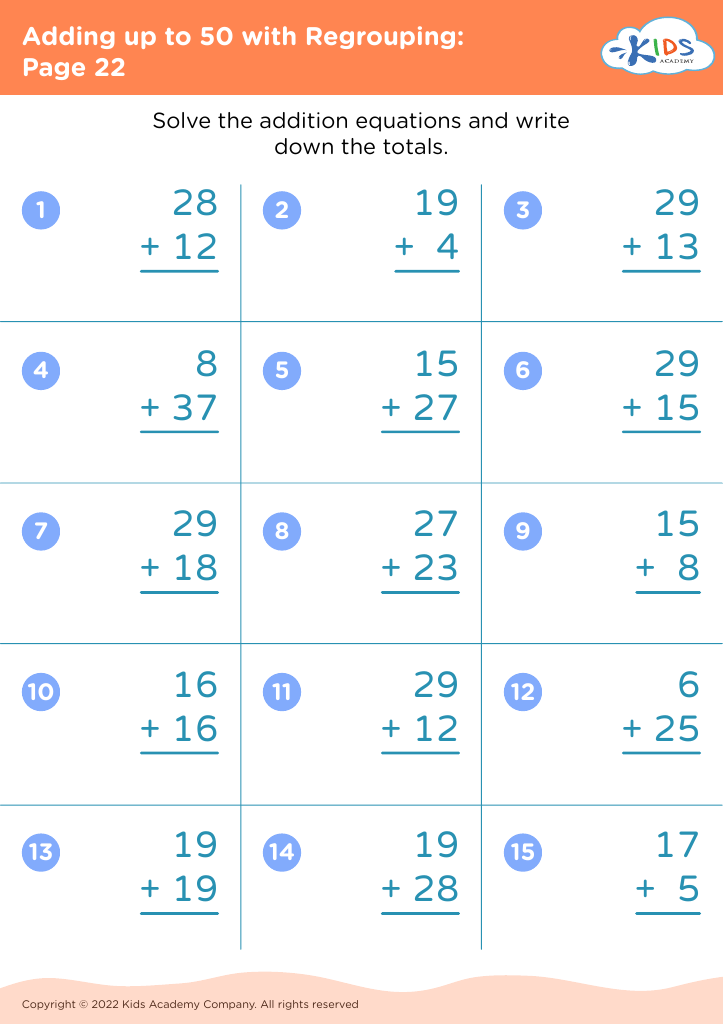
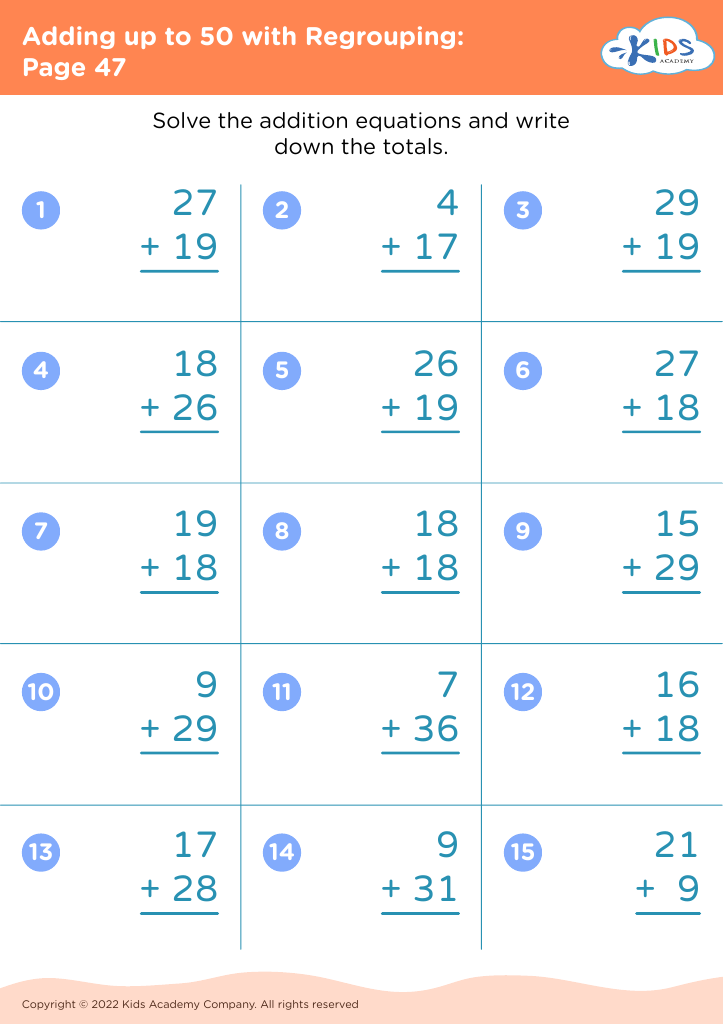
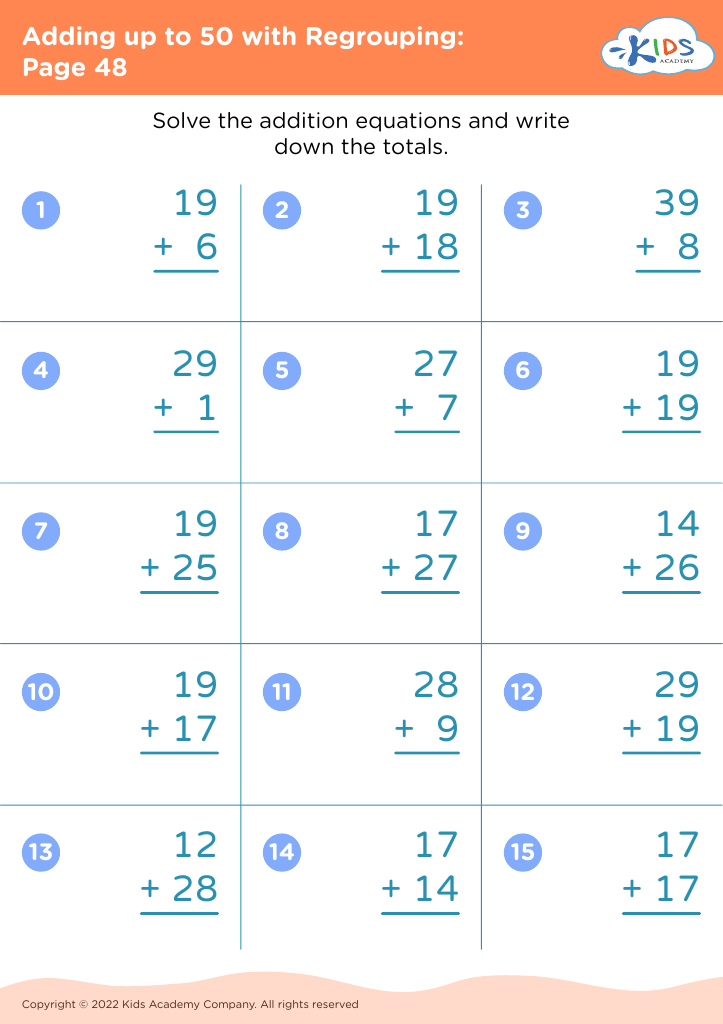
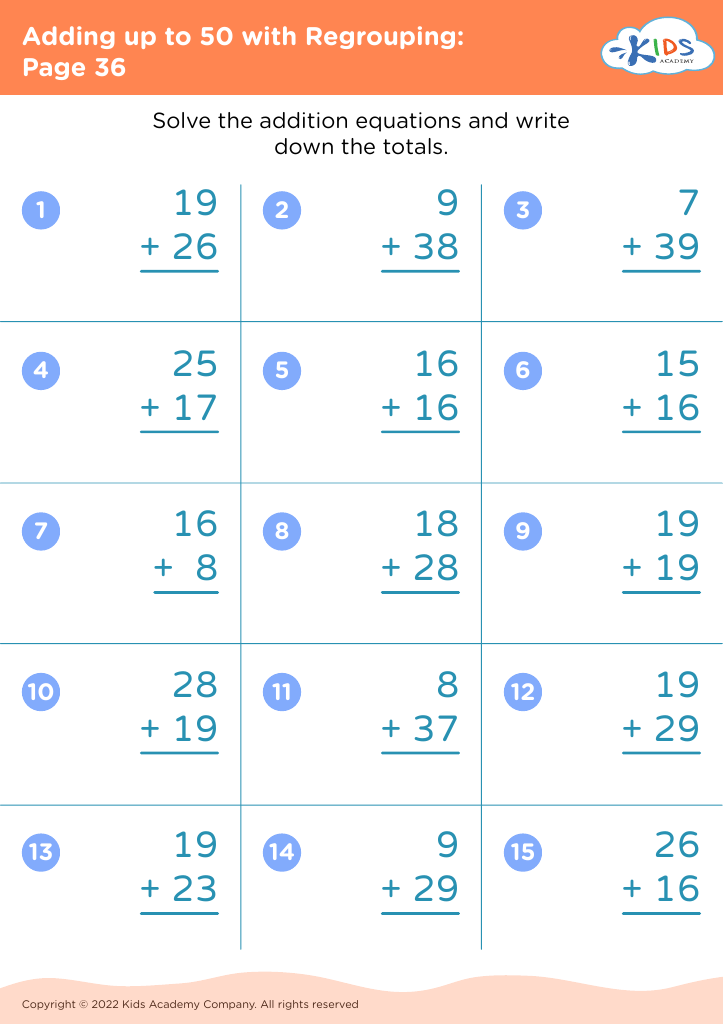
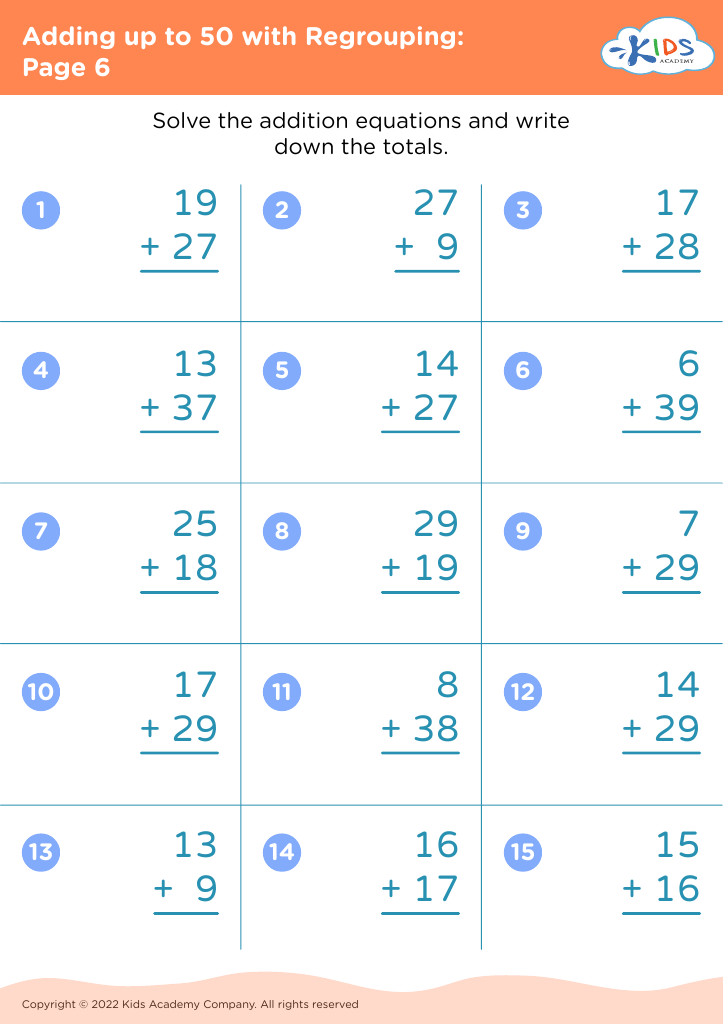
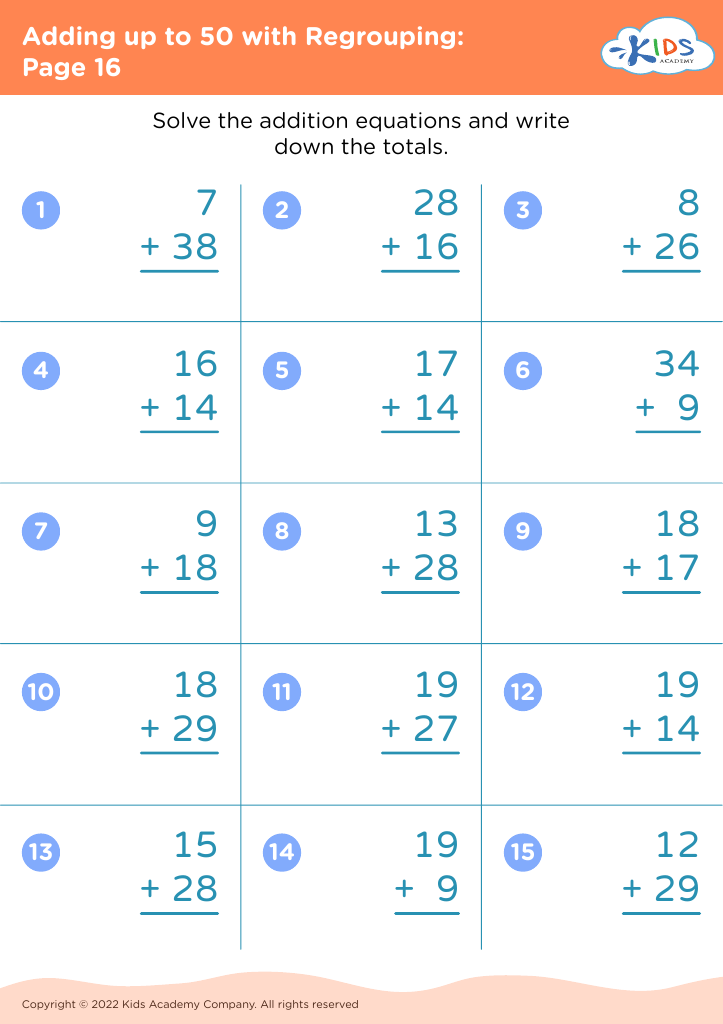
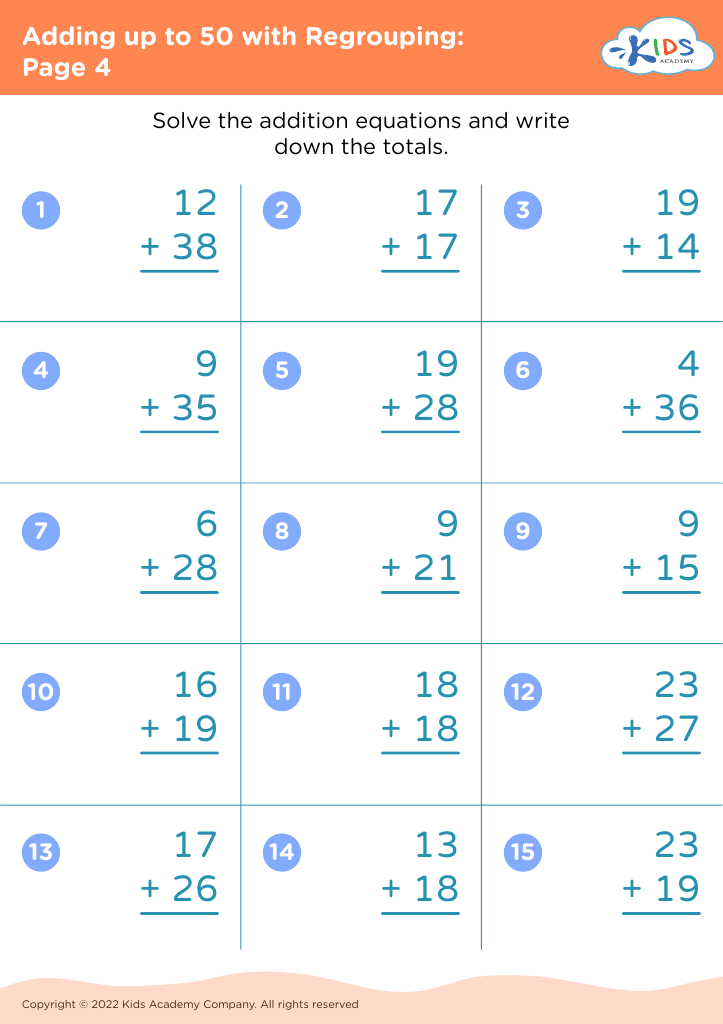


Understanding fractions and mastering addition with regrouping are essential skills for second graders, as these concepts form the foundation for more advanced mathematical learning. For parents and teachers, fostering a solid understanding of these principles not only boosts a child's confidence but also enhances their critical thinking and problem-solving abilities.
Fractions introduce children to parts of a whole, paving the way for more complex concepts in measurement and proportions later on. Recognizing how fractions can add up to create whole numbers is crucial, especially when combined with the objective of learning addition up to 50. This reinforces the idea that numbers work together to form larger quantities, a key understanding in mathematics.
Moreover, learning to regroup during addition addresses one of the biggest challenges students face as they move into more difficult arithmetic. Regrouping promotes number sense, enabling children to see relationships among numbers and simplifying larger problems.
When parents engage in this learning process, it promotes a supportive environment, making math feel approachable and fun. Schools also benefit, as having aligned support at home fosters better retention of skills, leading to academic success and a lifelong appreciation for math. Ultimately, nurturing these skills prepares students for future learning and real-life applications.