Number Recognition Grade 2 Adding up to 50 Without Regrouping Worksheets
15 filtered results
-
From - To
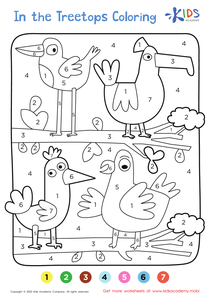
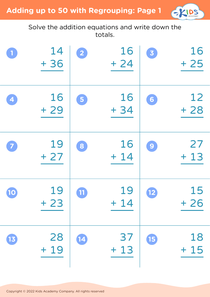
Discover engaging "Number Recognition Grade 2 Adding Up to 50 Without Regrouping Worksheets" tailored to enhance your child's math skills! These carefully crafted worksheets focus on helping second graders master number recognition while adding numbers up to 50 without regrouping. Students will practice essential addition strategies, gain confidence in their math abilities, and improve their overall numeric fluency. Each worksheet features fun, relatable scenarios to keep learning enjoyable and relevant. Perfect for classroom use or extra practice at home, these resources aim to build a strong foundation in mathematics, making learning a positive and rewarding experience for young learners.
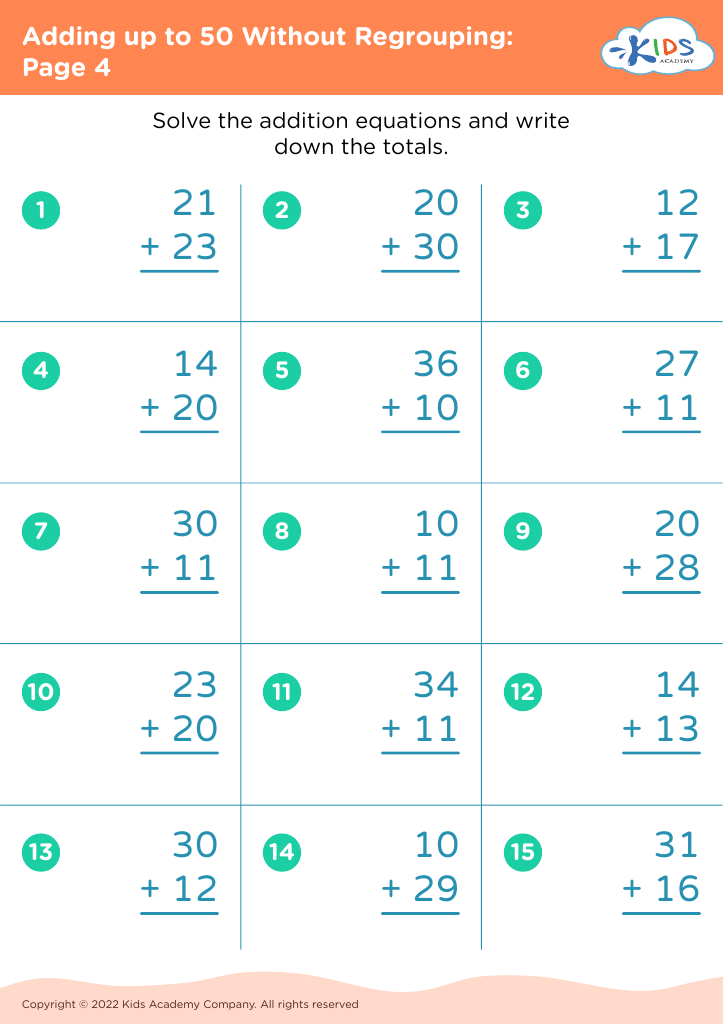
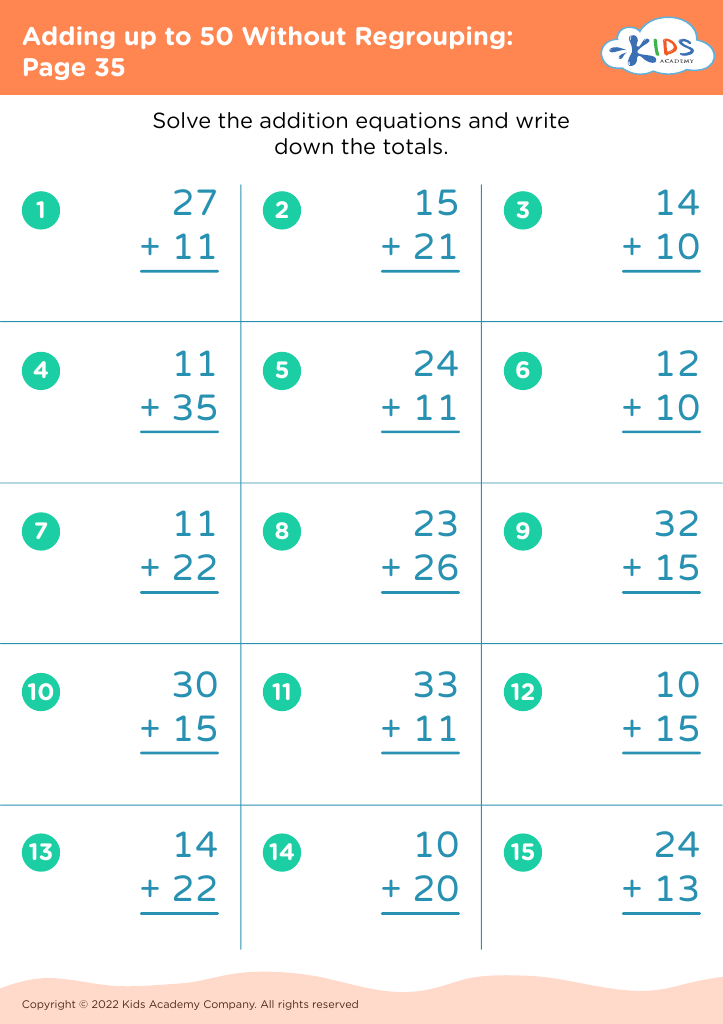
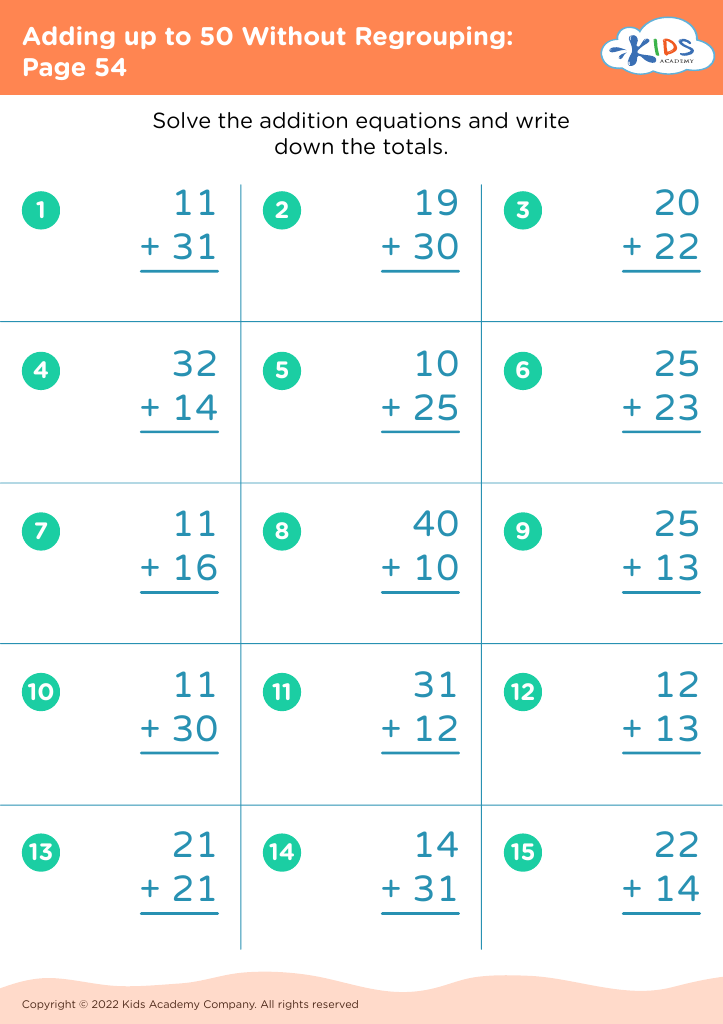
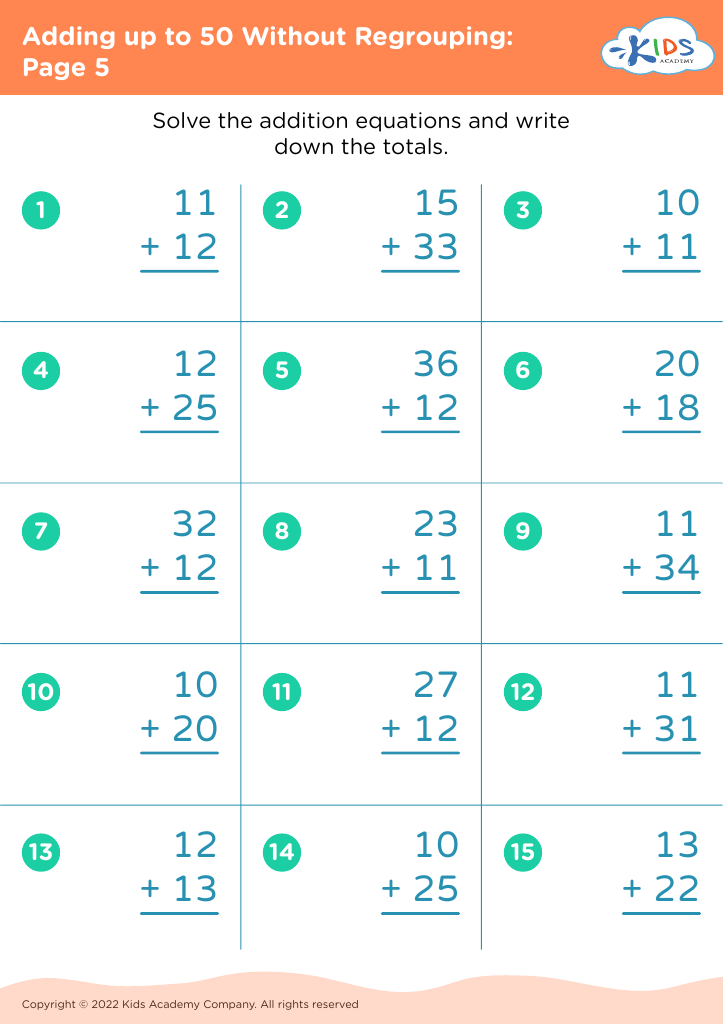
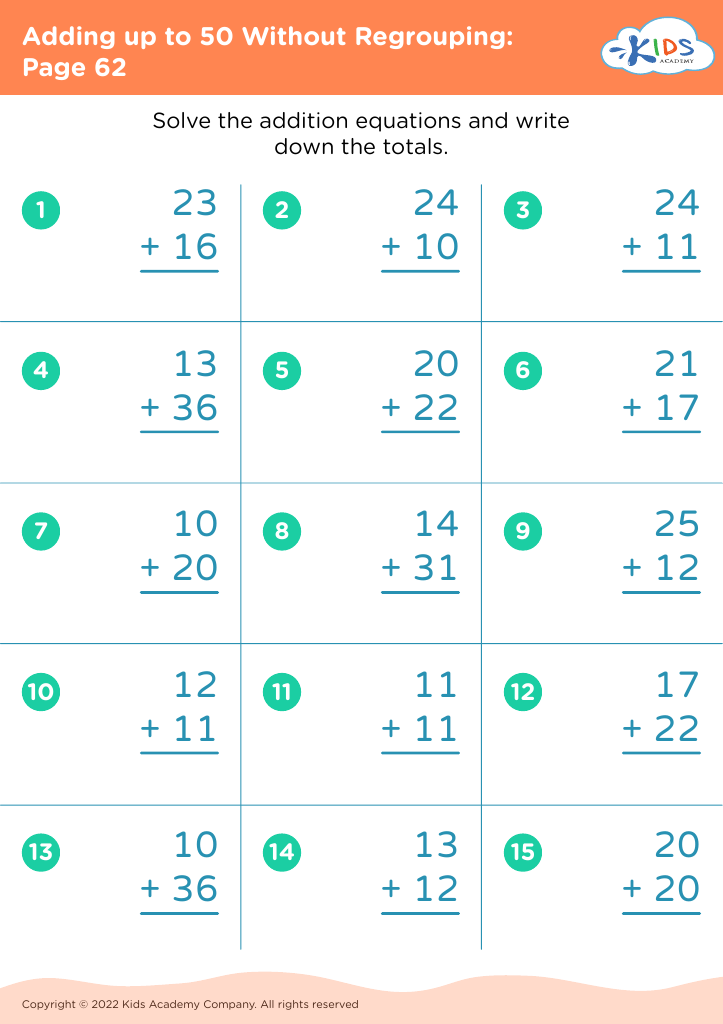
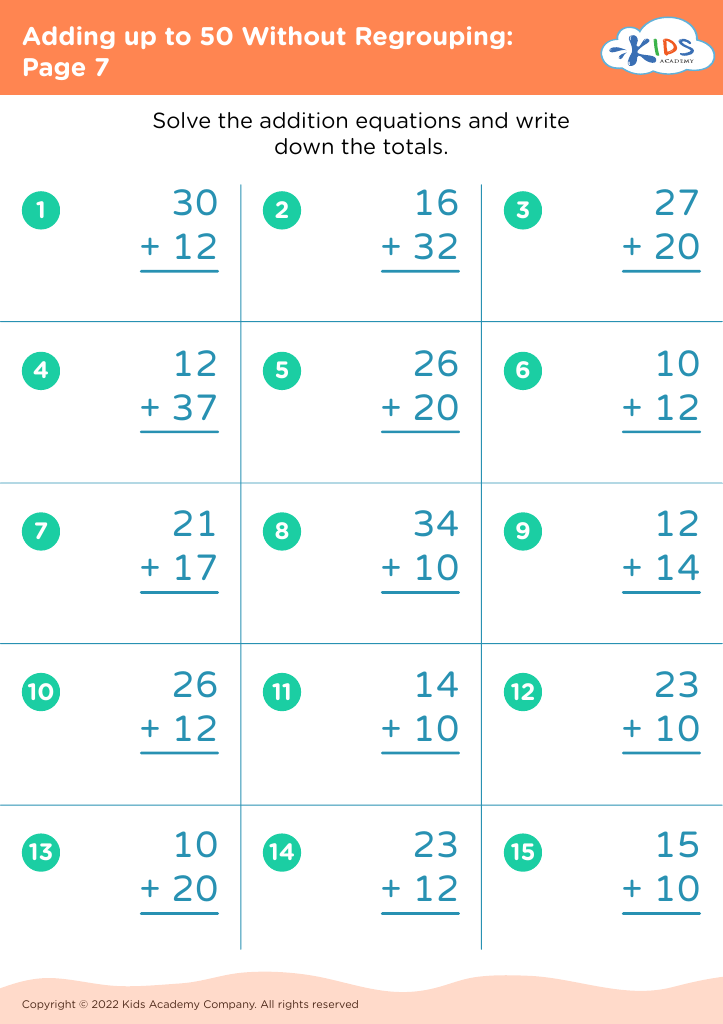
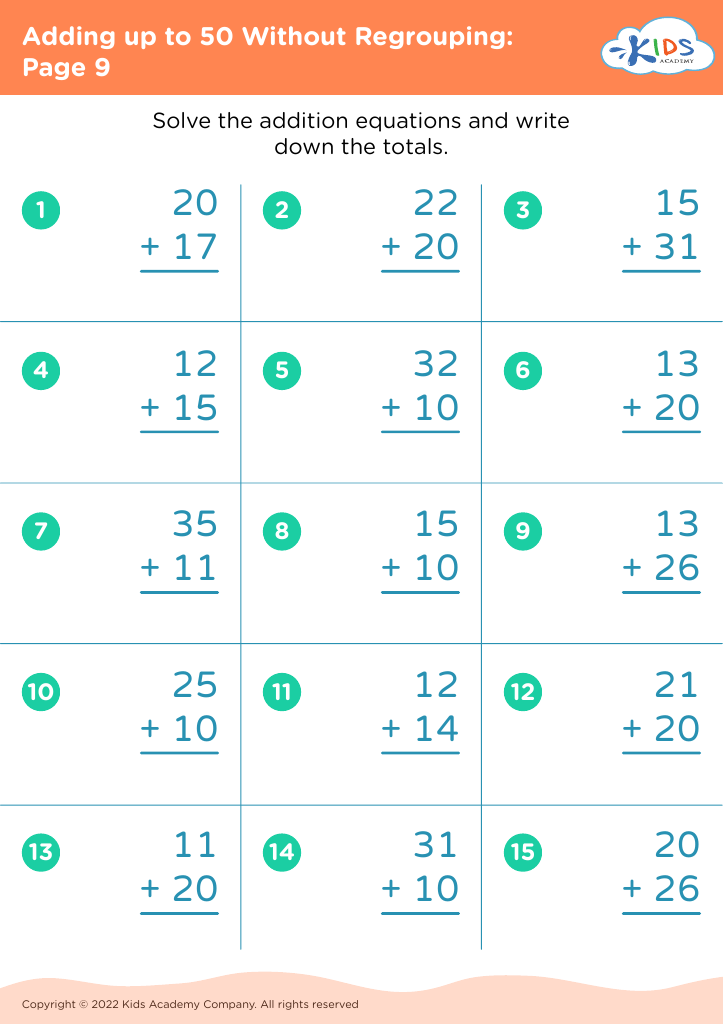
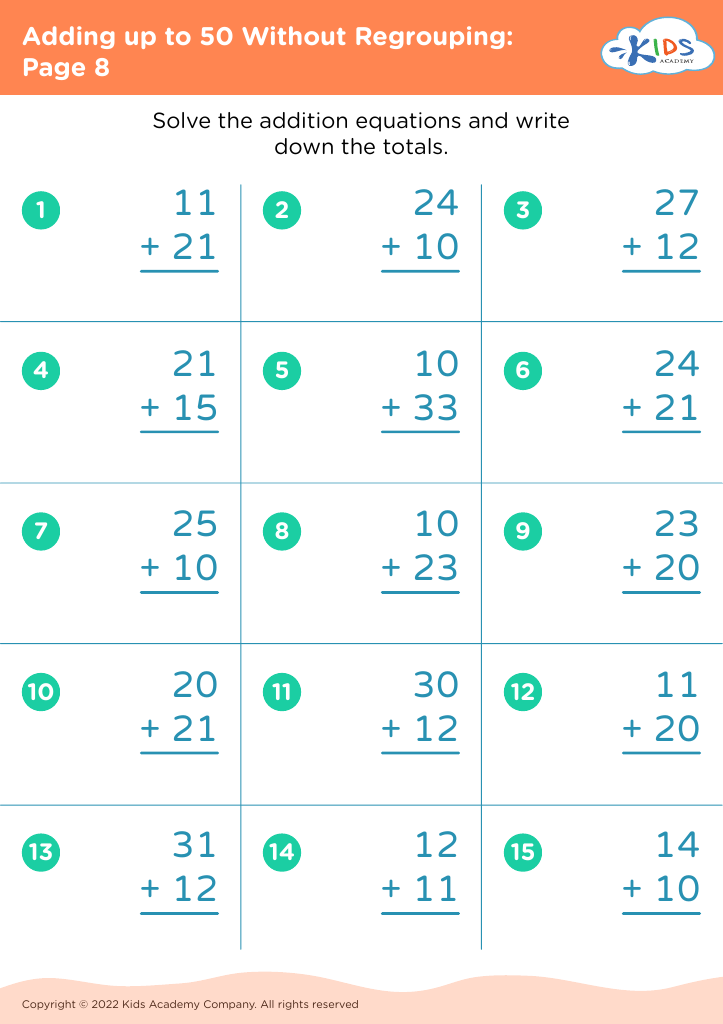
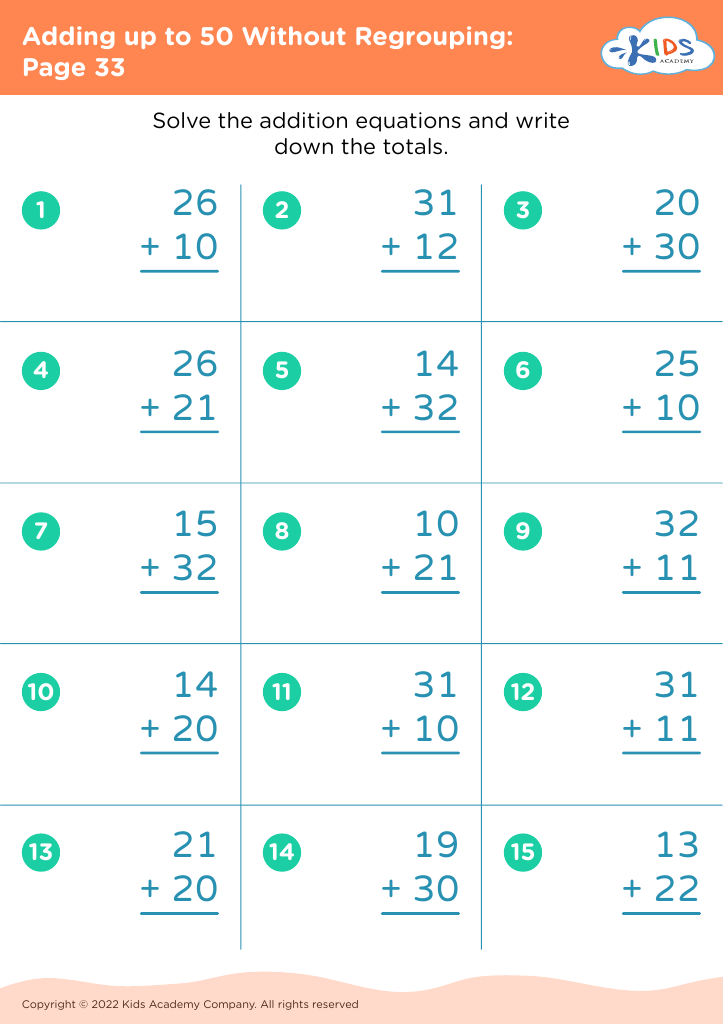
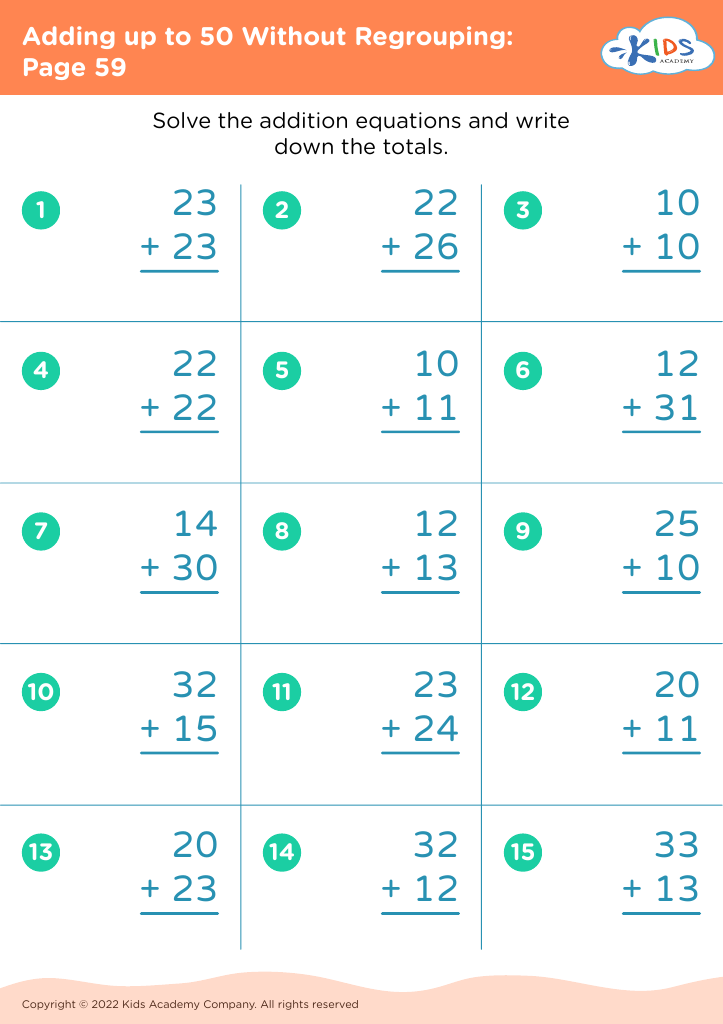
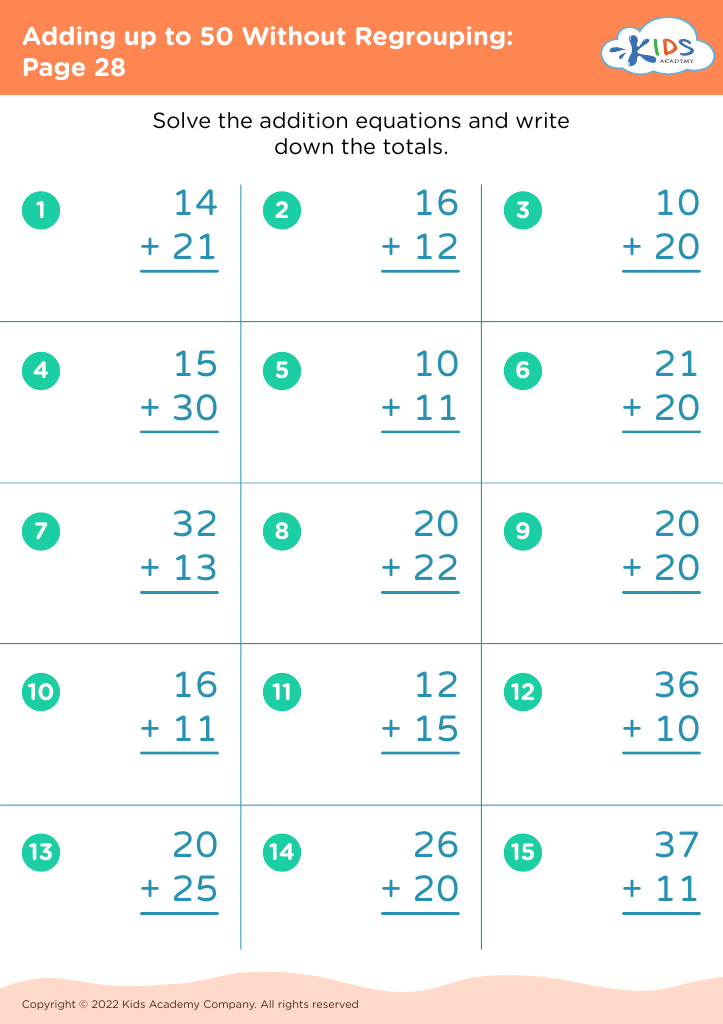
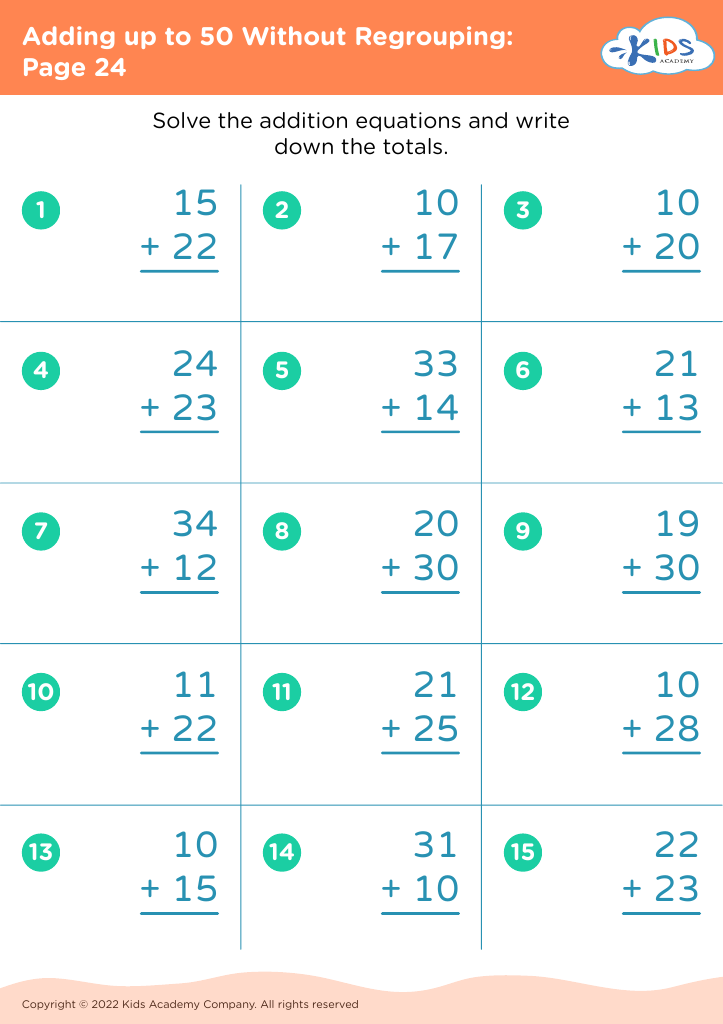
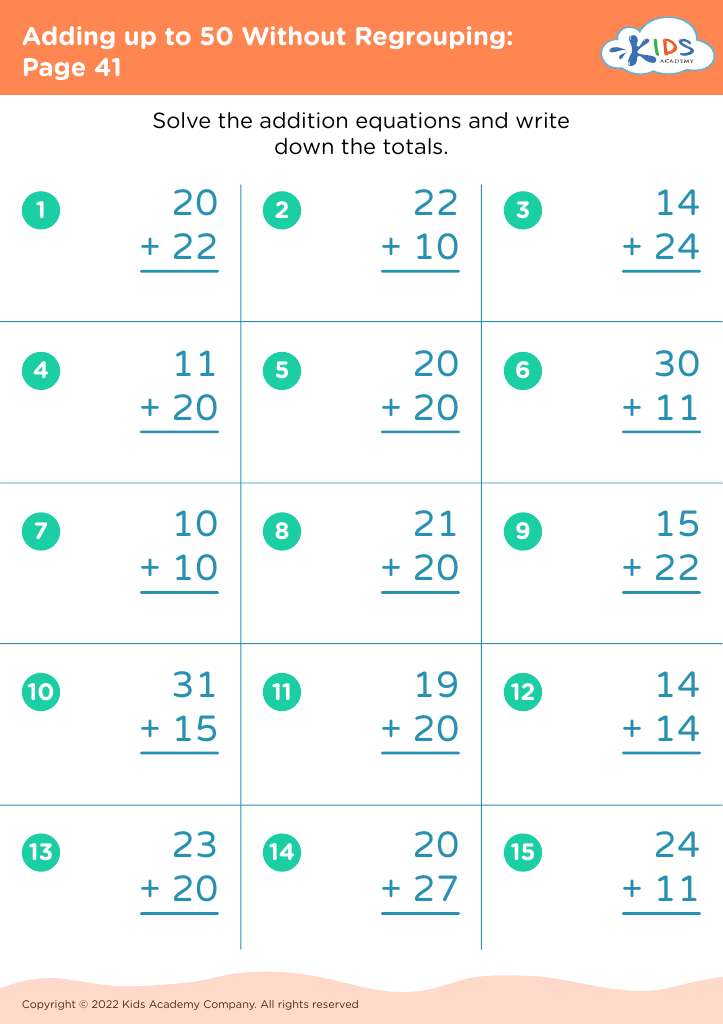
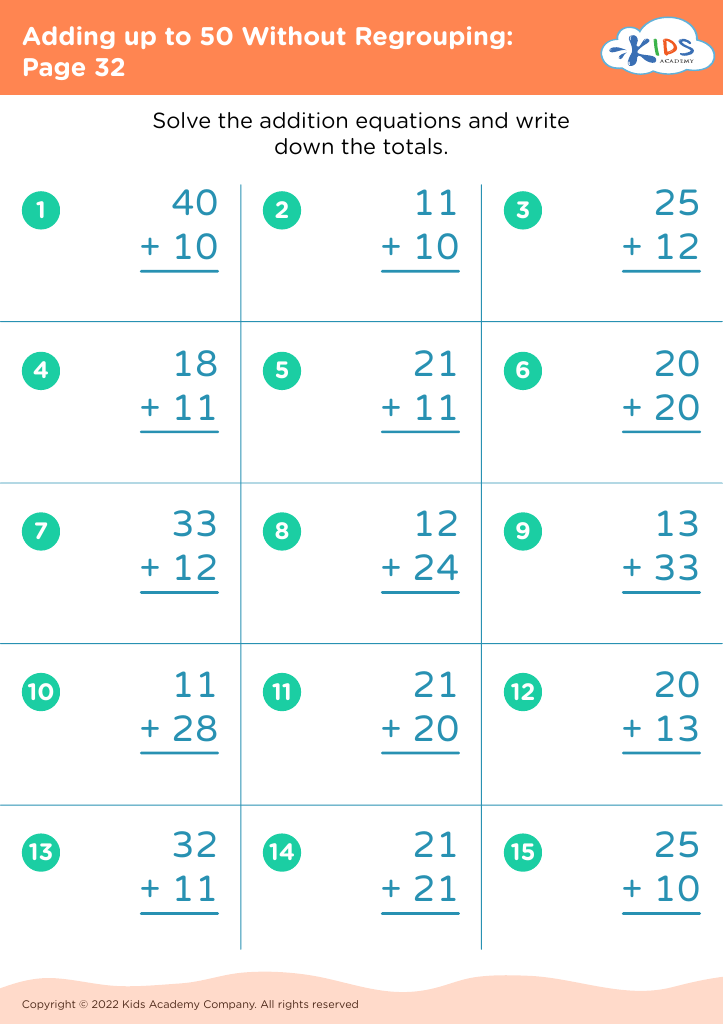
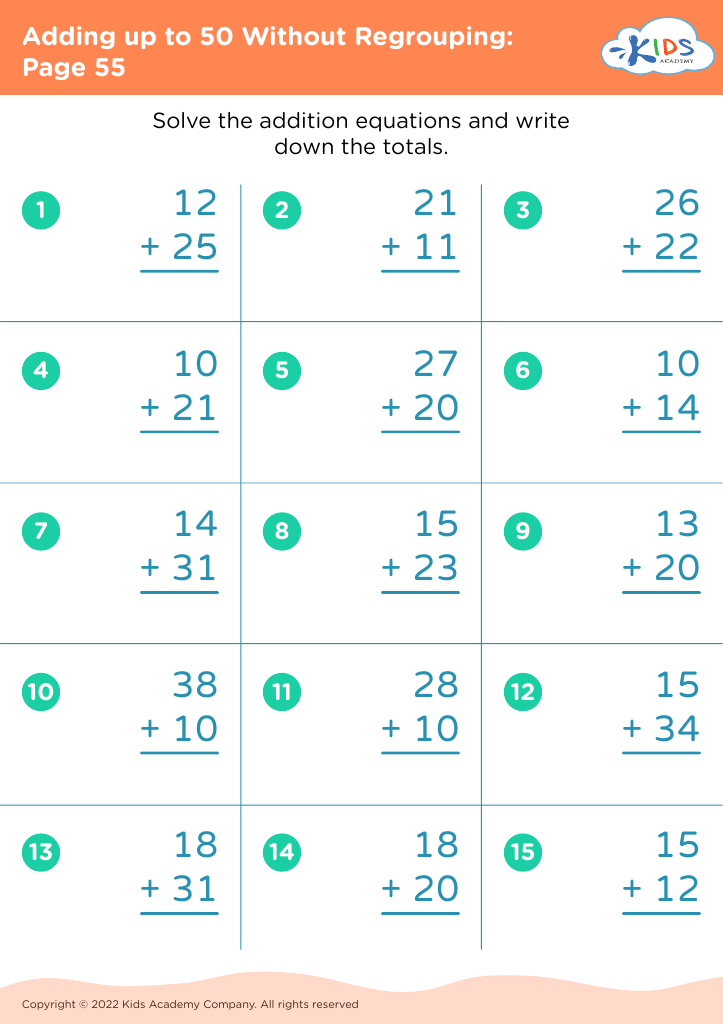


Number recognition, especially in the context of Grade 2 mathematics, is crucial for foundational learning. By focusing on adding two-digit numbers that sum up to 50 without regrouping, parents and teachers can strengthen a child's arithmetic skills, laying the groundwork for more complex mathematical concepts.
First, mastering addition up to 50 enhances a child's confidence in their abilities, fostering a positive attitude towards math. This early success encourages perseverance when facing more challenging problems later. Additionally, this skill is directly tied to everyday life; from understanding prices while shopping to calculating scores in games, proficient addition aids in problem-solving across various situations.
Moreover, practicing these skills helps develop cognitive abilities, including critical thinking and number sense. Engaging with math in a fun, engaging manner can enhance a child's focus and engagement in the classroom.
It's essential for adults to create supportive learning environments that emphasize the importance of number recognition. This investment in their education prepares children for future academic success and instills essential life skills that will benefit them throughout their lives. Overall, fostering an understanding of addition enriches not just their academic journey but their day-to-day interactions with the world around them.