Color Identification Grade 2 Adding up to 50 Worksheets
7 filtered results
-
From - To
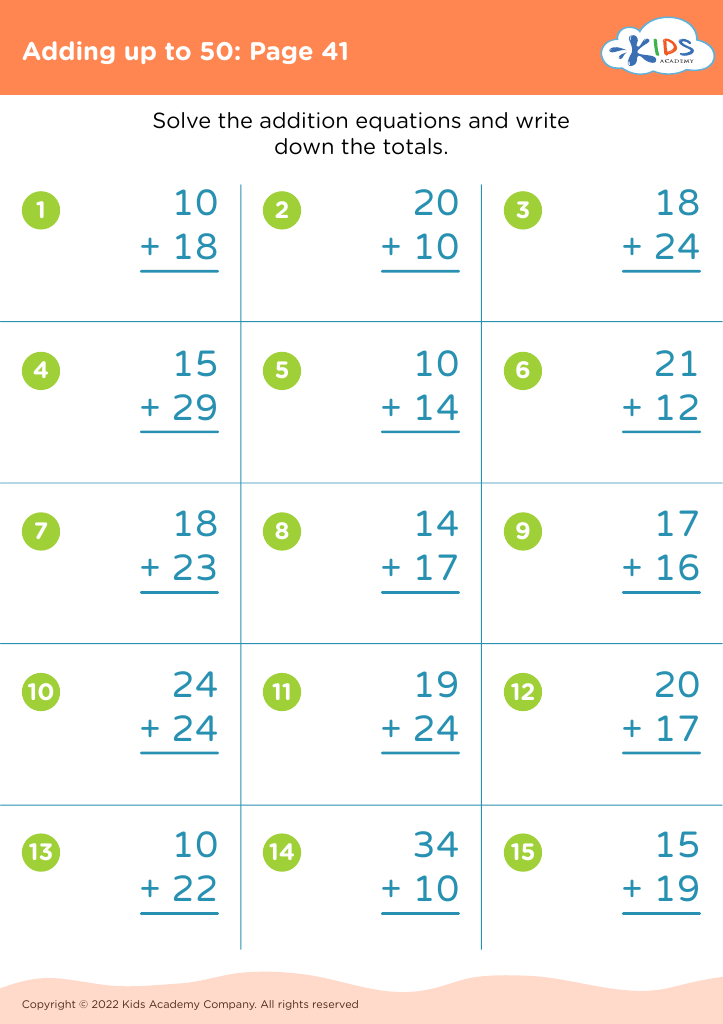
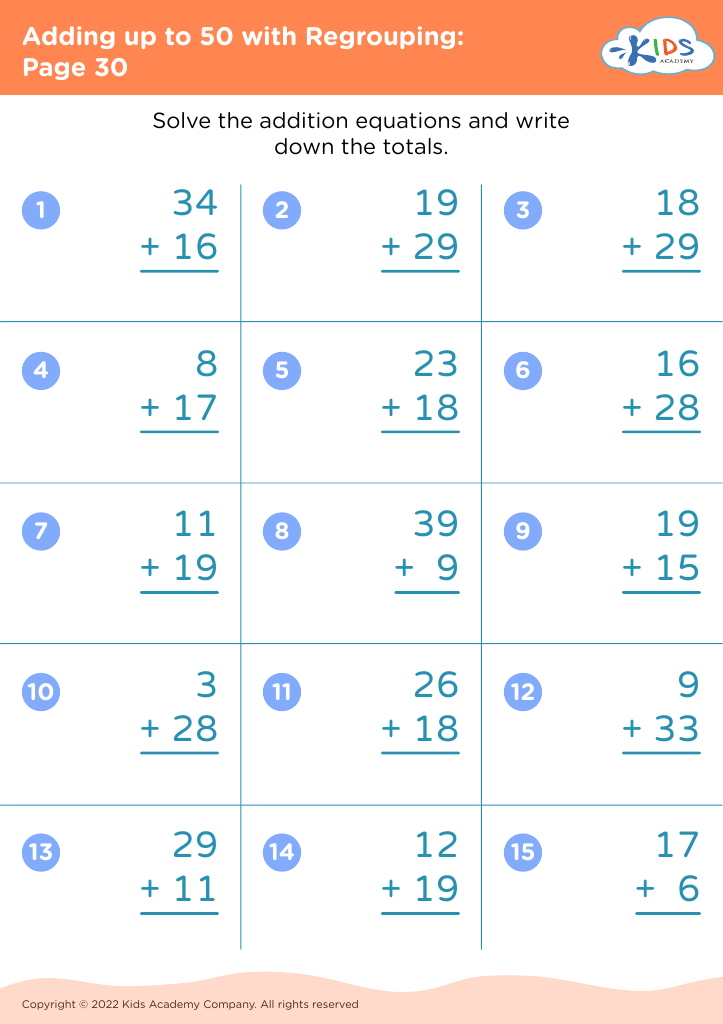
Introducing Color Identification Grade 2 Adding up to 50 Worksheets! Our engaging worksheets combine the excitement of color recognition with the foundational skills of addition, making learning fun and interactive for your second grader. Each worksheet is designed to captivate young minds with vibrant activities that enhance both math proficiency and color identification abilities. Kids will practice adding numbers up to 50 while decoding colorful patterns and scenes, fostering an enjoyable educational experience. Perfect for classroom use or at-home learning, these worksheets provide a dynamic approach to strengthening essential math skills while keeping students motivated and entertained. Start exploring today!
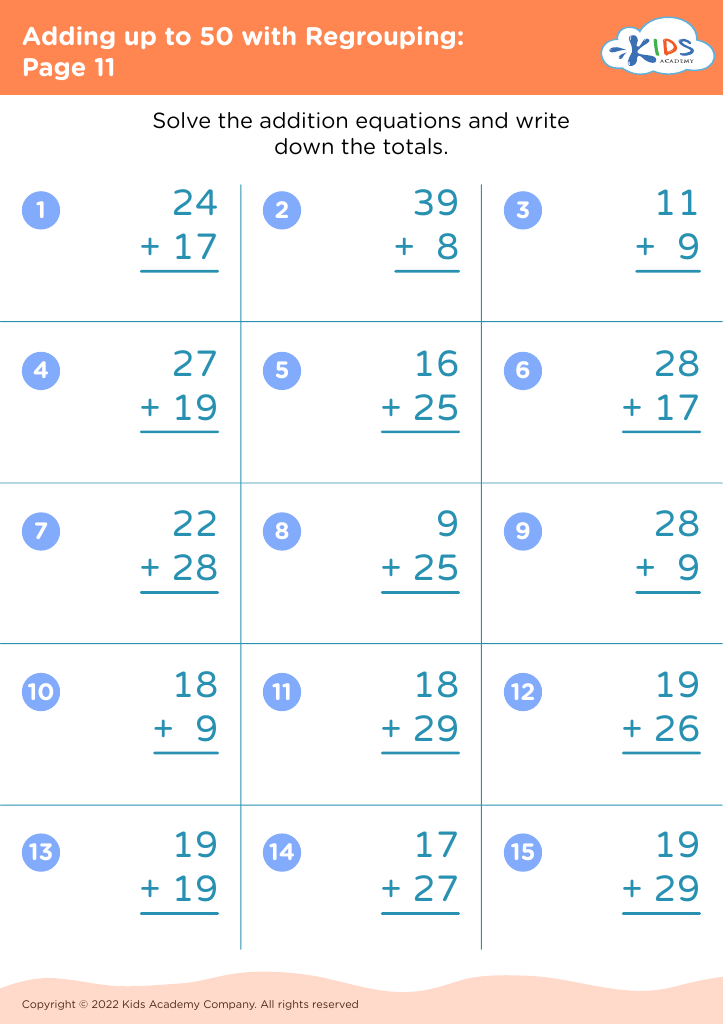
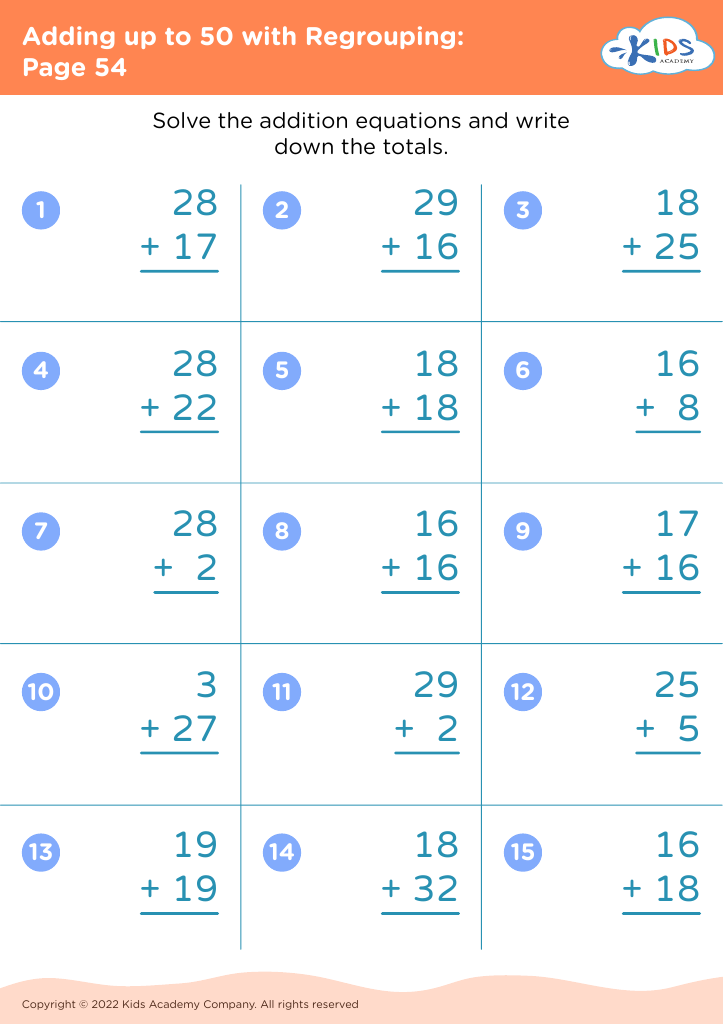
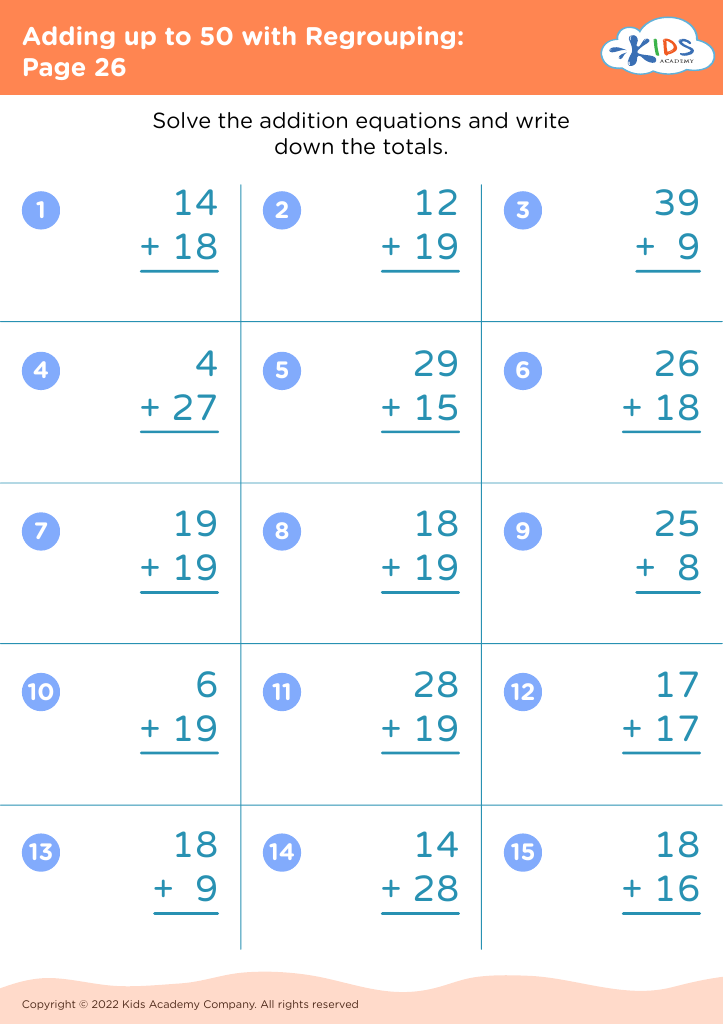
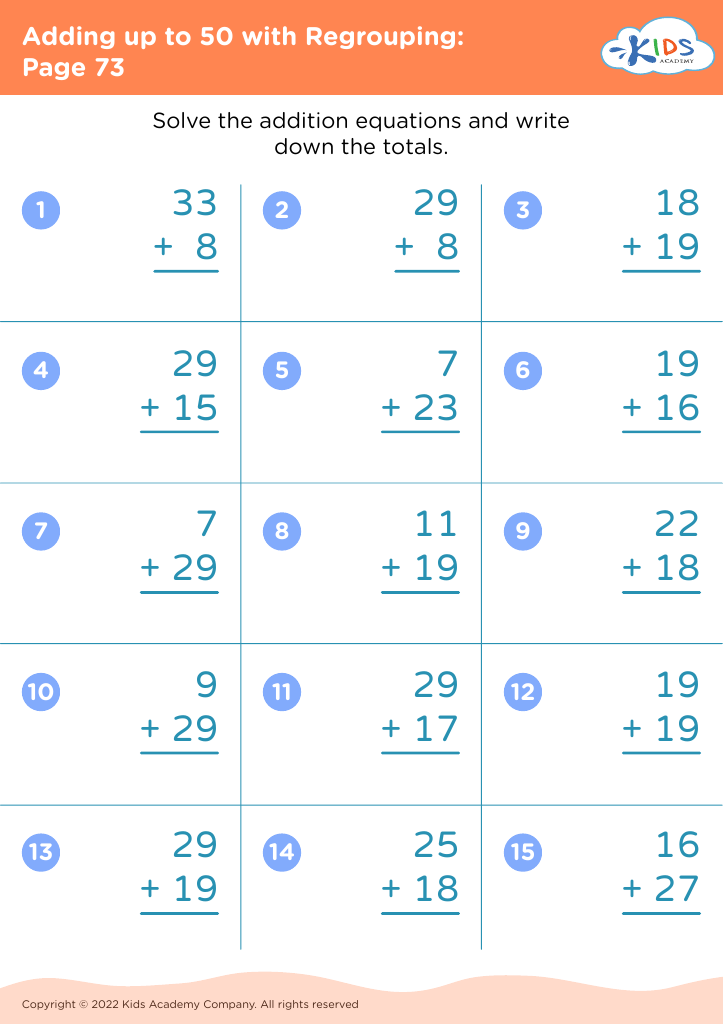
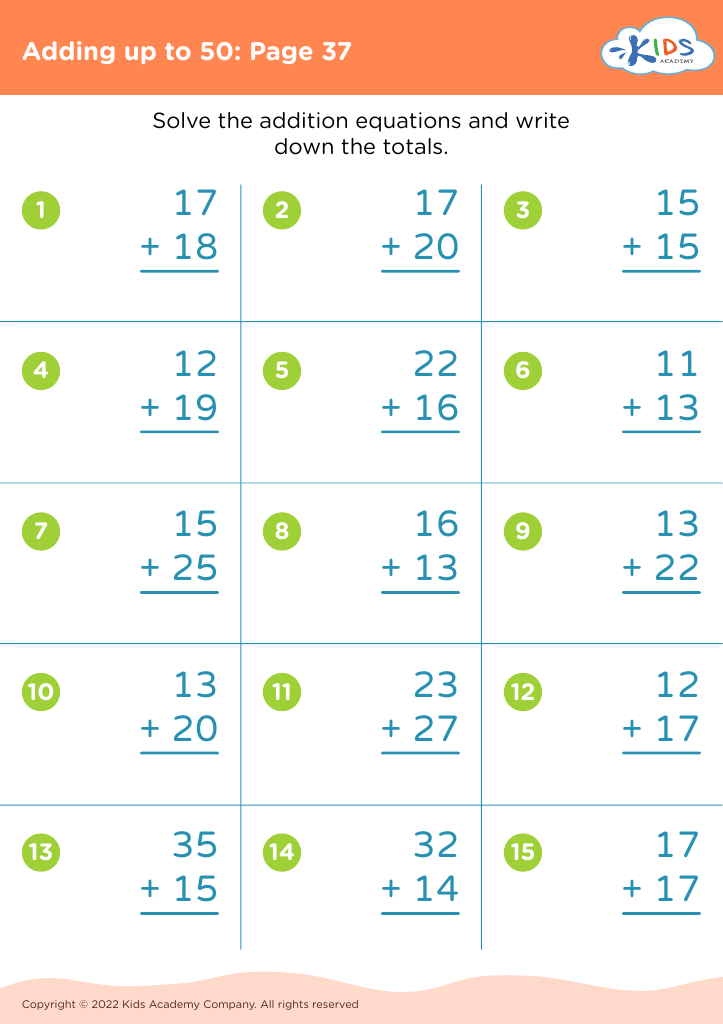


Color identification and basic addition skills are fundamental building blocks for early childhood education, providing a strong foundation for more advanced concepts. For parents and teachers, focusing on these skills in Grade 2 is crucial for several reasons.
Firstly, color identification enhances cognitive development and helps children make sense of the world around them. Understanding colors aids in visual perception and differentiation, which are essential skills in many areas of learning, including reading and math. Moreover, identifying colors is linked to language development, as children learn to describe and categorize objects by their colors, enriching their vocabulary.
Secondly, mastering basic addition up to 50 develops crucial numerical literacy. It equips students with essential problem-solving skills and prepares them for more complex arithmetic operations. Understanding addition helps in various real-life situations, such as counting money, measuring ingredients, or telling time. Strong numeracy skills acquired at this stage result in greater confidence and competence in mathematics, which can influence a child's attitude toward the subject in the future.
Moreover, integrating color identification with addition allows children to engage with the material in a multisensory way, making abstract concepts more concrete and enjoyable. This combined approach also caters to different learning styles and can address individual needs more effectively, ensuring that every child builds a solid educational foundation.