Develop critical thinking Grade 2 Adding up to 50 Worksheets
3 filtered results
-
From - To
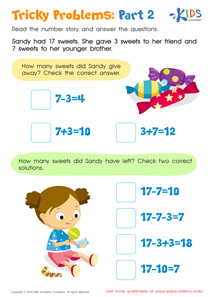
Enhance your Grade 2 students' critical thinking skills with our engaging "Adding Up to 50" worksheets! These thoughtfully designed activities encourage young learners to explore addition concepts while boosting their analytical abilities. By solving problems that require reasoning and strategy, students will deepen their understanding of number relationships and develop essential math skills. Our worksheets promote interactive learning through fun exercises, helping children to connect addition with real-world scenarios. Perfect for classroom or home use, these resources cultivate a strong math foundation while fostering a love for problem-solving. Equip your students with the tools they need to succeed in math and beyond!
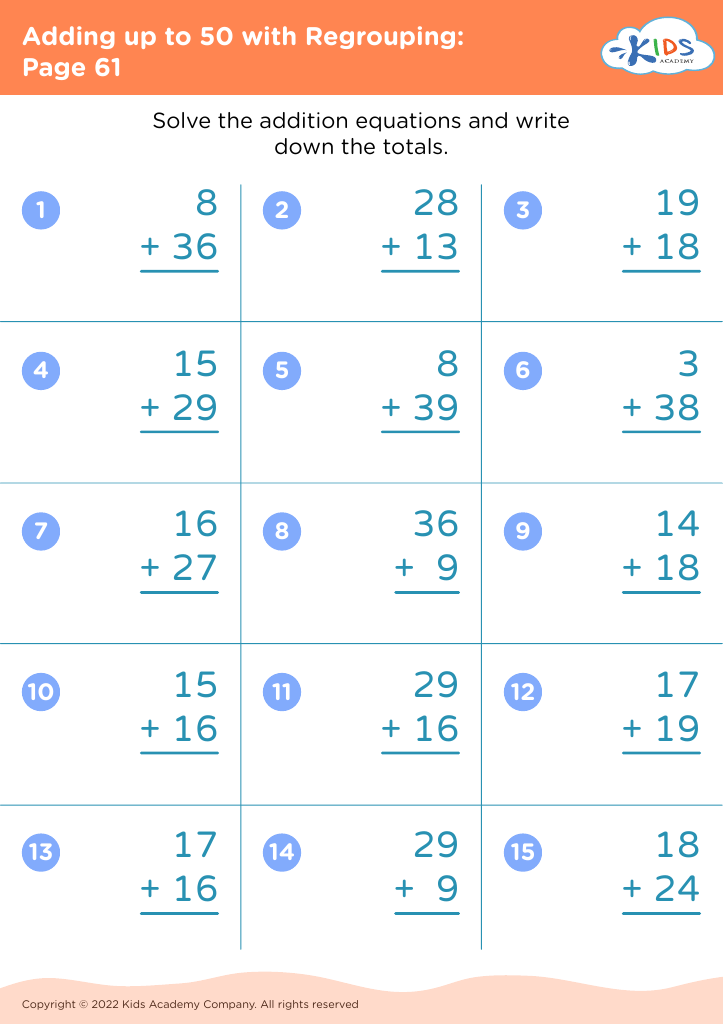
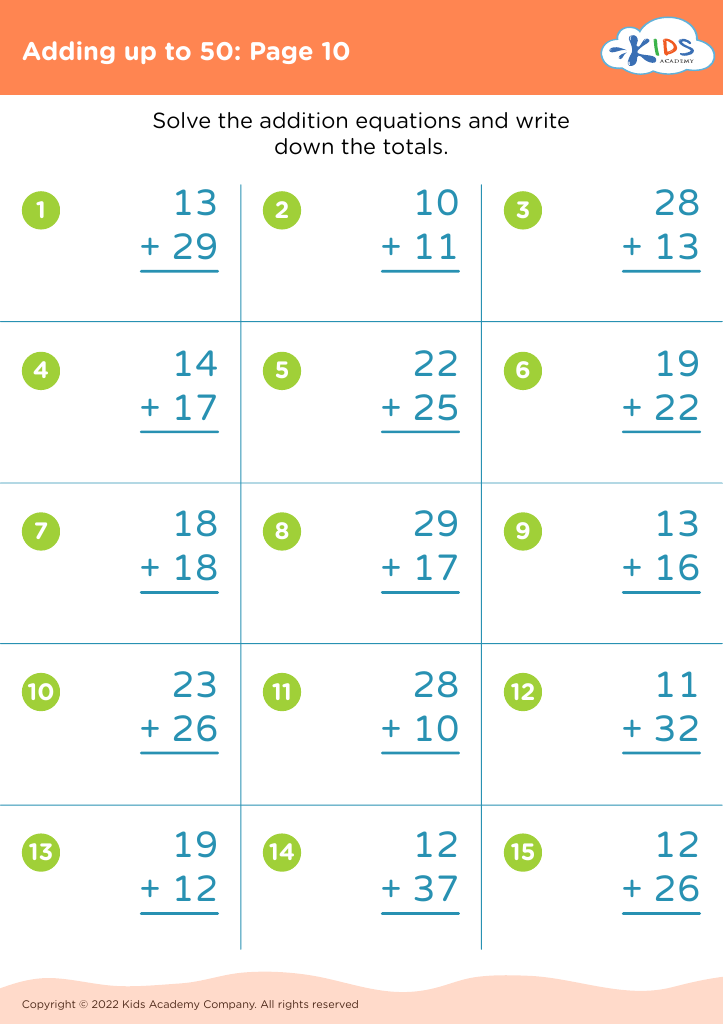
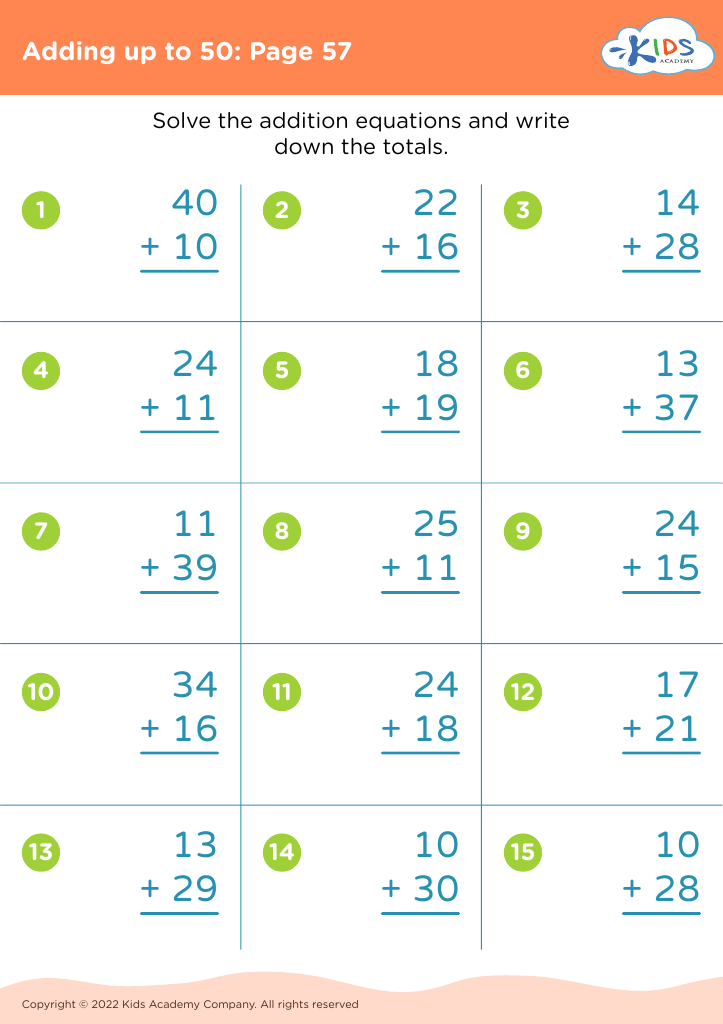


Developing critical thinking skills in Grade 2, particularly in topics like adding up to 50, is essential for several reasons. Firstly, critical thinking promotes problem-solving abilities. When students learn to approach math problems with curiosity and a questioning mindset, they not only focus on arriving at the correct answer but also explore different methods to get there. This fosters flexibility and adaptability in their thinking processes.
Secondly, teaching critical thinking in mathematics lays a strong foundation for future learning. At this grade level, children are still building their numerical understanding, making it an ideal time to introduce strategic and analytical thought processes. When they learn to explain their reasoning or compare various approaches, they deepen their comprehension and can transfer these skills to other subjects.
Moreover, developing critical thinking in math enhances students' confidence. When children feel equipped to tackle problems, they develop a positive attitude towards learning and an intrinsic love for exploration.
Finally, collaborative discussions regarding math problems—junctures for critical thinking—allow students to articulate their thought processes. Students learn from one another, cultivating teamwork and communication skills while becoming independent thinkers. For both parents and teachers, nurturing these critical thinking skills promotes holistic development for children, resulting in well-rounded learners.