Improve reading skills Grade 2 Adding up to 50 Worksheets
7 filtered results
-
From - To
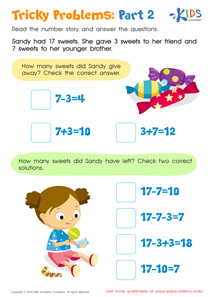
Enhance your second grader's reading skills with our "Improve Reading Skills: Grade 2 Adding Up to 50 Worksheets." This collection of engaging worksheets is designed to support young learners as they build fluency in reading while tackling addition problems up to 50. Each worksheet integrates math concepts with reading comprehension, ensuring children not only practice their addition skills but also improve their vocabulary and understanding of instructions. Fun, interactive activities and relatable scenarios keep students motivated and excited about learning. Perfect for homework or in-class exercises, these resources foster a comprehensive learning experience that builds confidence in both reading and math skills.
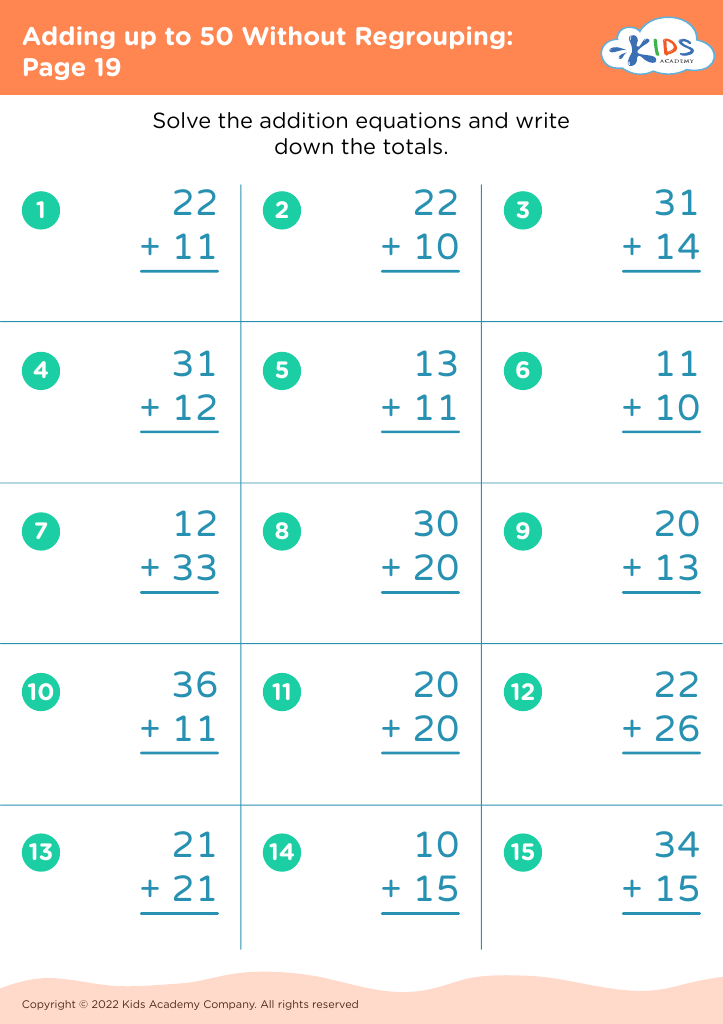
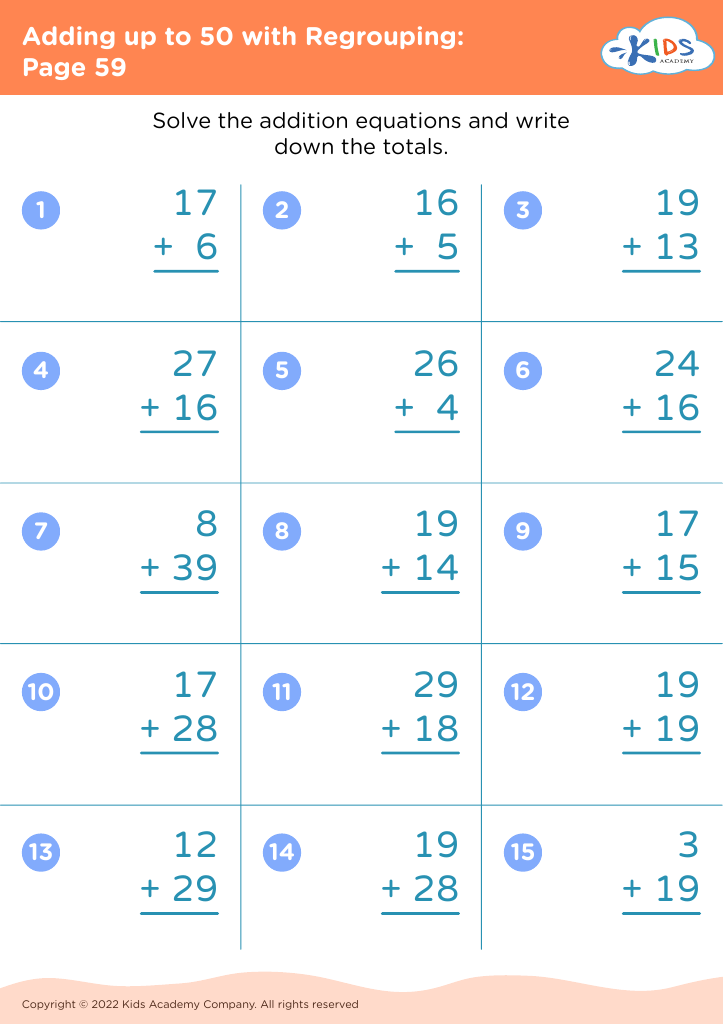
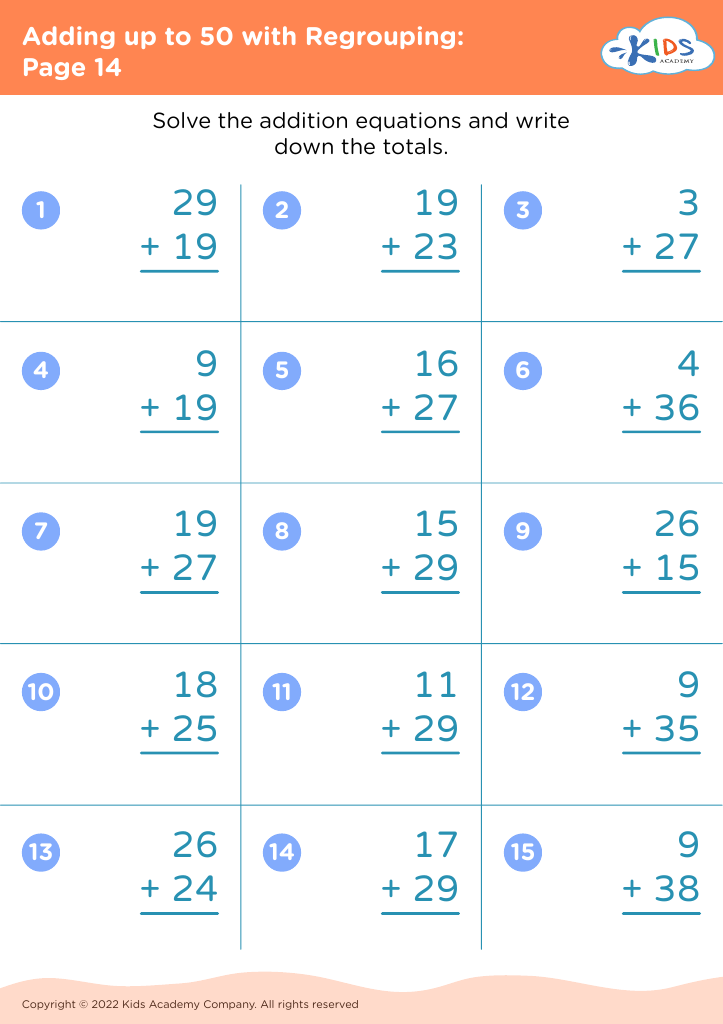
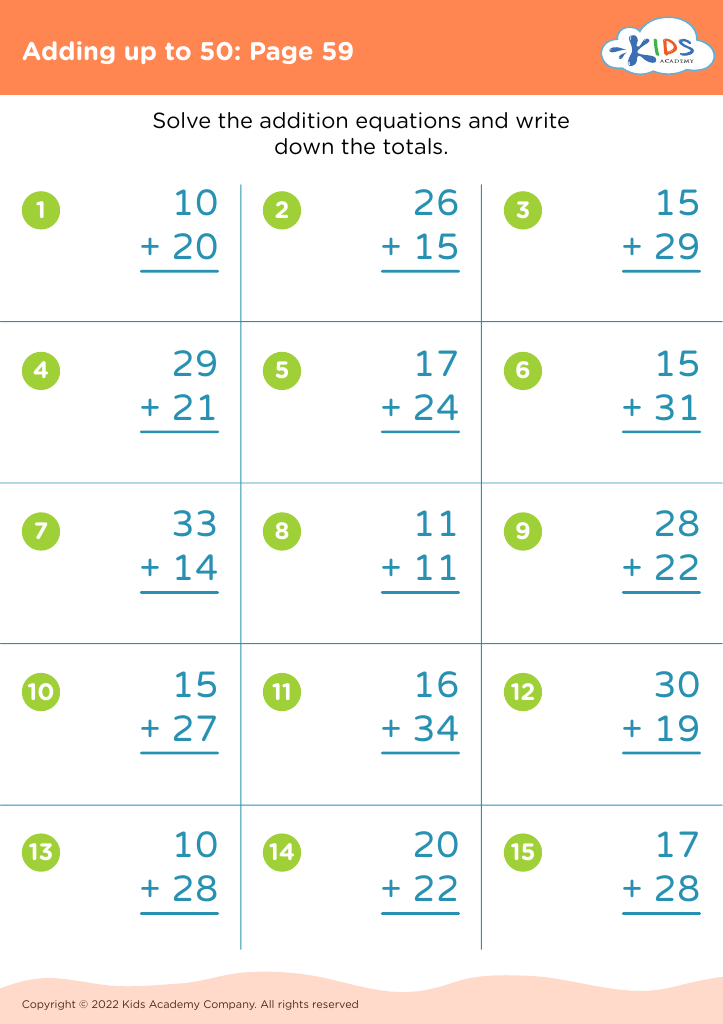
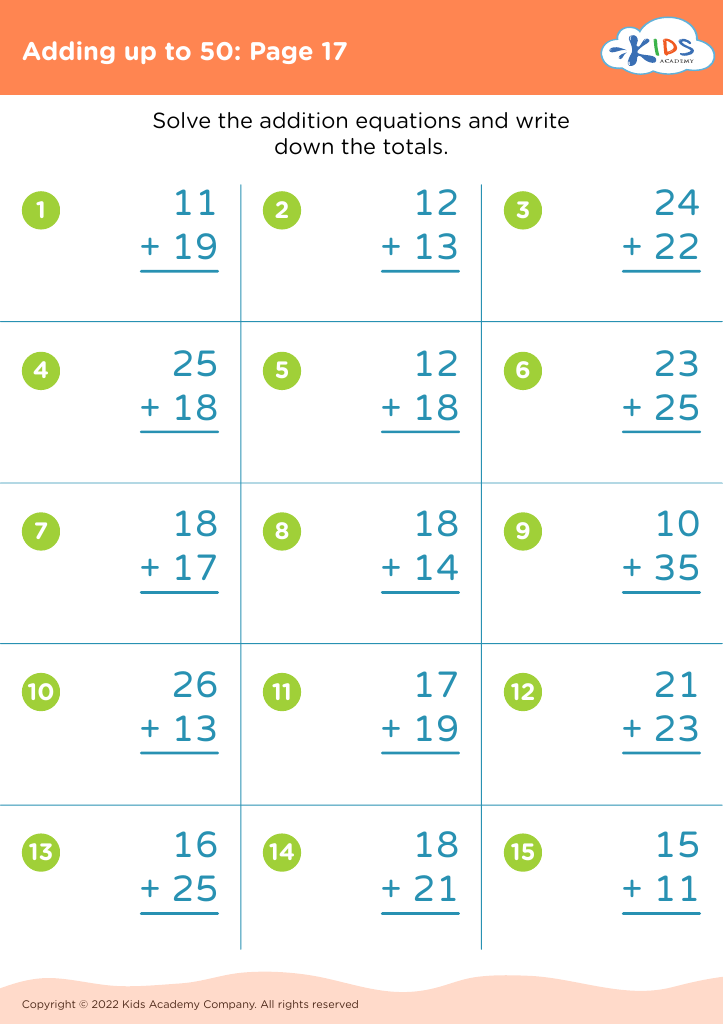
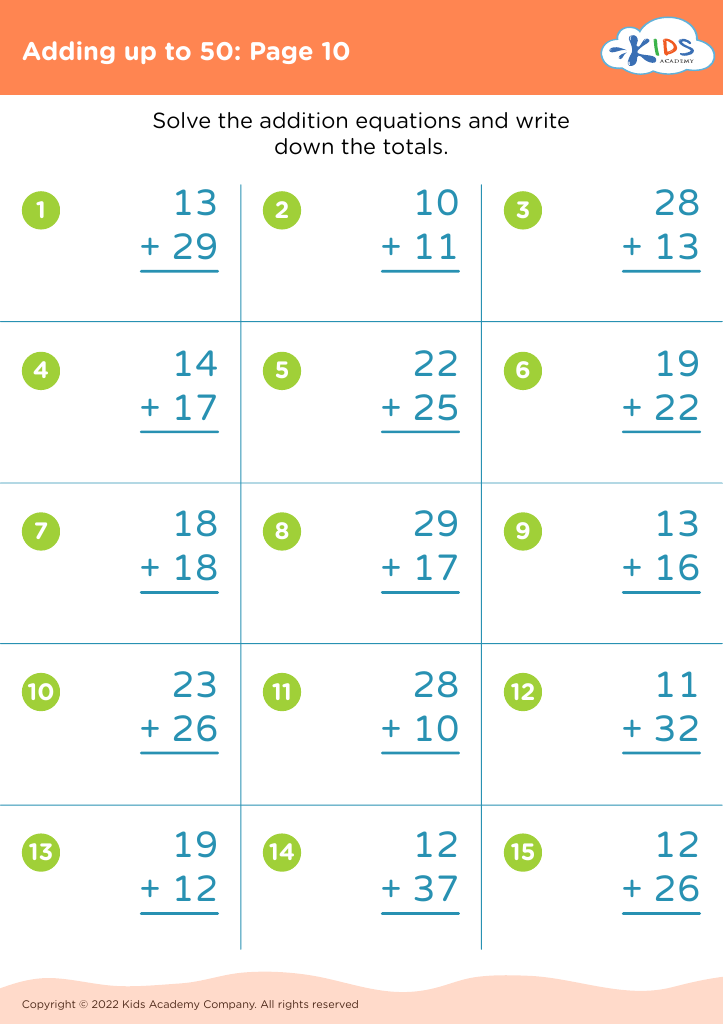
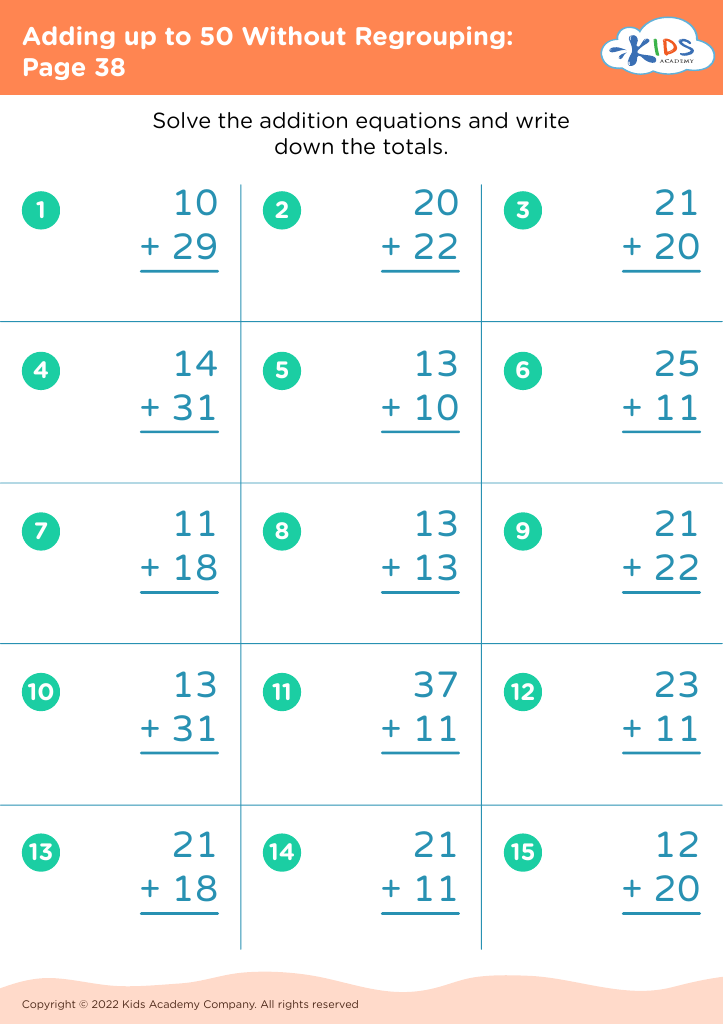


Parents and teachers should prioritize improving reading skills in Grade 2, especially when integrating math concepts like "Adding up to 50." Strong reading abilities are crucial for children at this age as they form the foundation for future academic success. Reading skills enhance comprehension, enabling students to understand and interpret word problems in mathematics, which is essential for grasping basic addition concepts.
When children can read effectively, they gain access to a wide range of learning materials, including books and educational resources that support both literacy and numeracy. Moreover, fostering reading skills develops critical thinking and problem-solving abilities necessary for tackling multi-step math problems.
Additionally, introducing math-focused reading activities can create a more interdisciplinary learning experience, making subjects more engaging and relatable. Parents and teachers can facilitate discussions around math-related stories, helping students see the practical applications of their reading in solving real-life problems.
Supportive coaching in reading and math at this stage nurtures confidence, ignites a love for learning, and sets the stage for lifelong skills. Consequently, emphasizing reading proficiency not only boosts mathematical understanding but also nurtures overall cognitive development, ultimately enhancing students' academic futures.