Recognizing Patterns Grade 2 Adding up to 50 Worksheets
7 filtered results
-
From - To
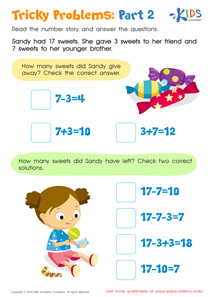
Discover engaging "Recognizing Patterns Grade 2 Adding up to 50 Worksheets" designed to enhance your child's mathematical skills! These worksheets focus on identifying patterns in numbers and help students practice addition with sums up to 50. With fun exercises and colorful illustrations, kids will develop critical thinking and problem-solving abilities, all while reinforcing their understanding of numerical relationships. Whether in the classroom or at home, these worksheets provide an interactive and effective way for second graders to master addition and build a solid foundation in math. Give your child the confidence to excel in their mathematical journey with these comprehensive resources!
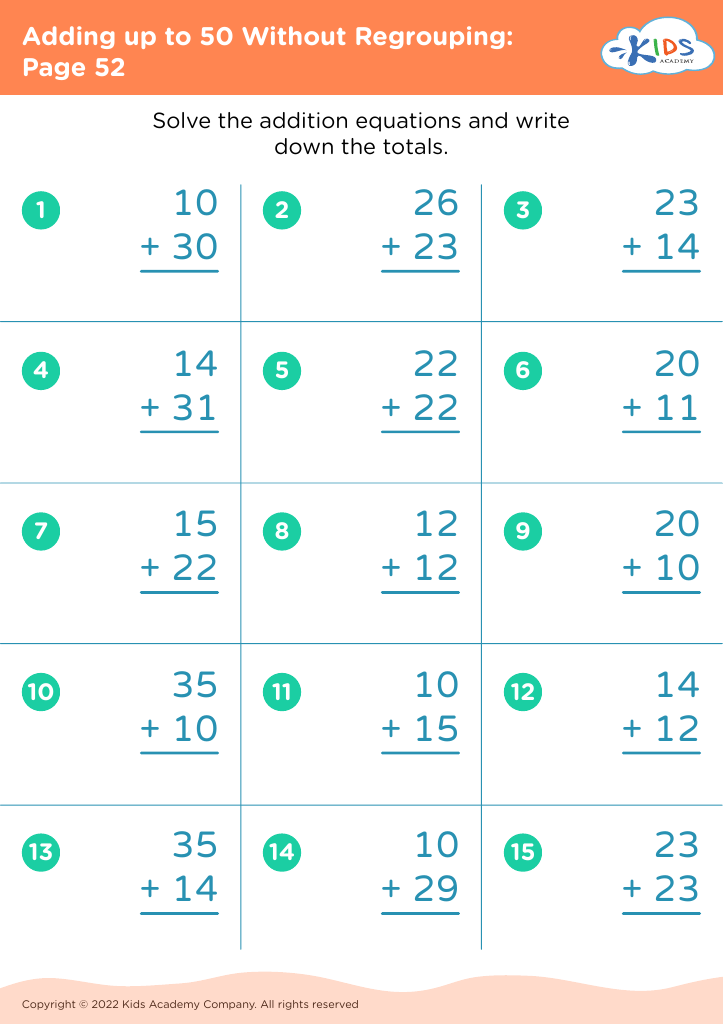
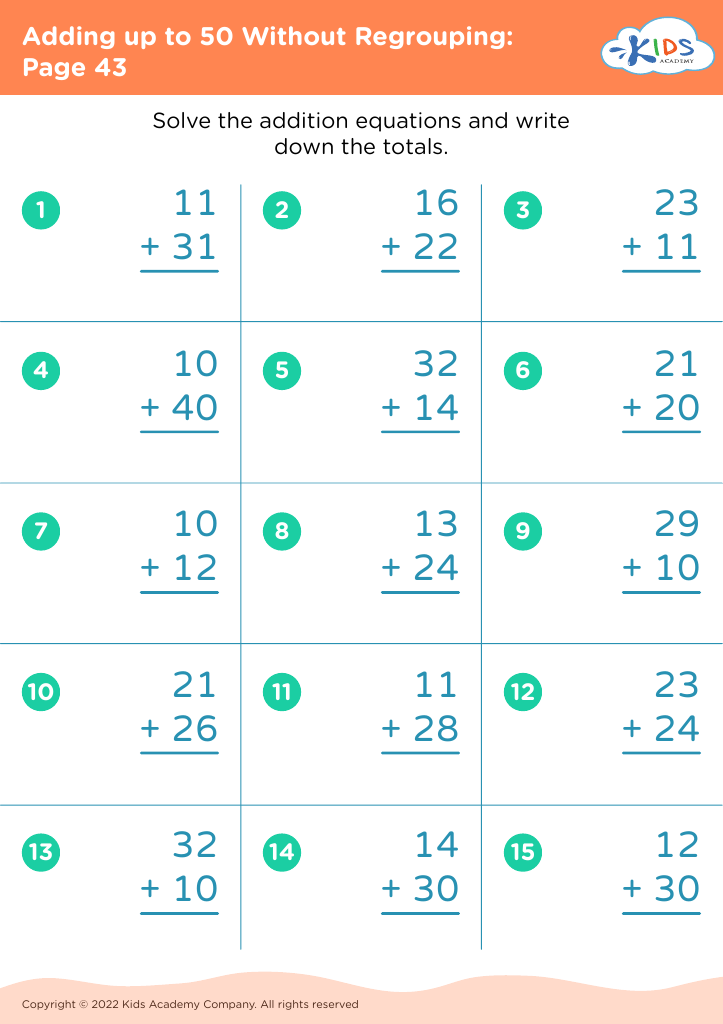
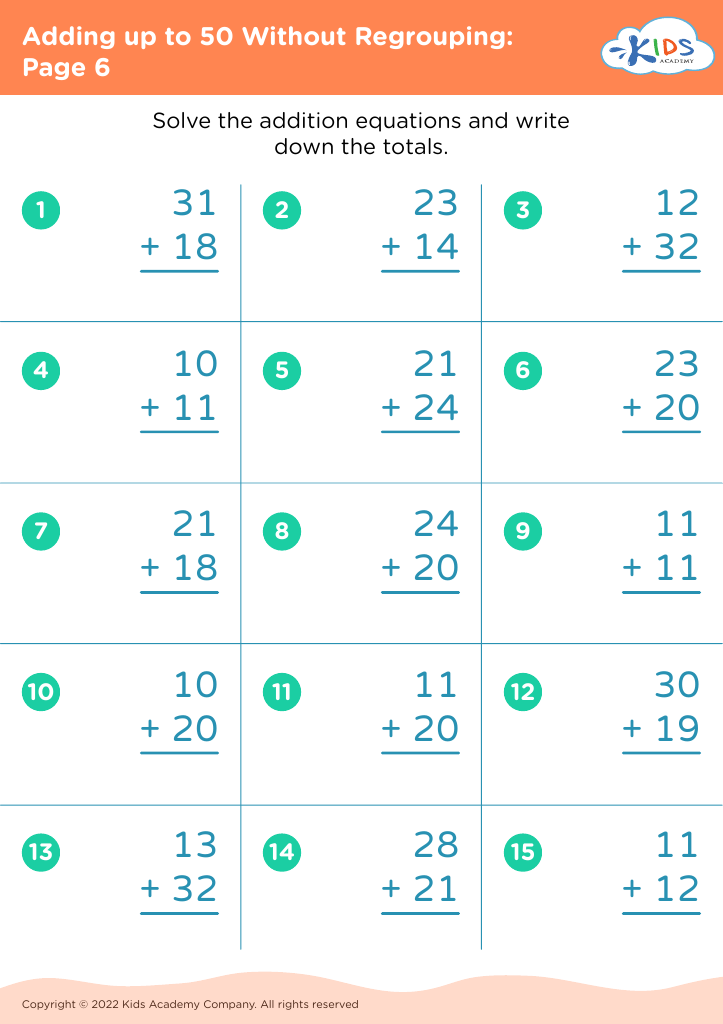
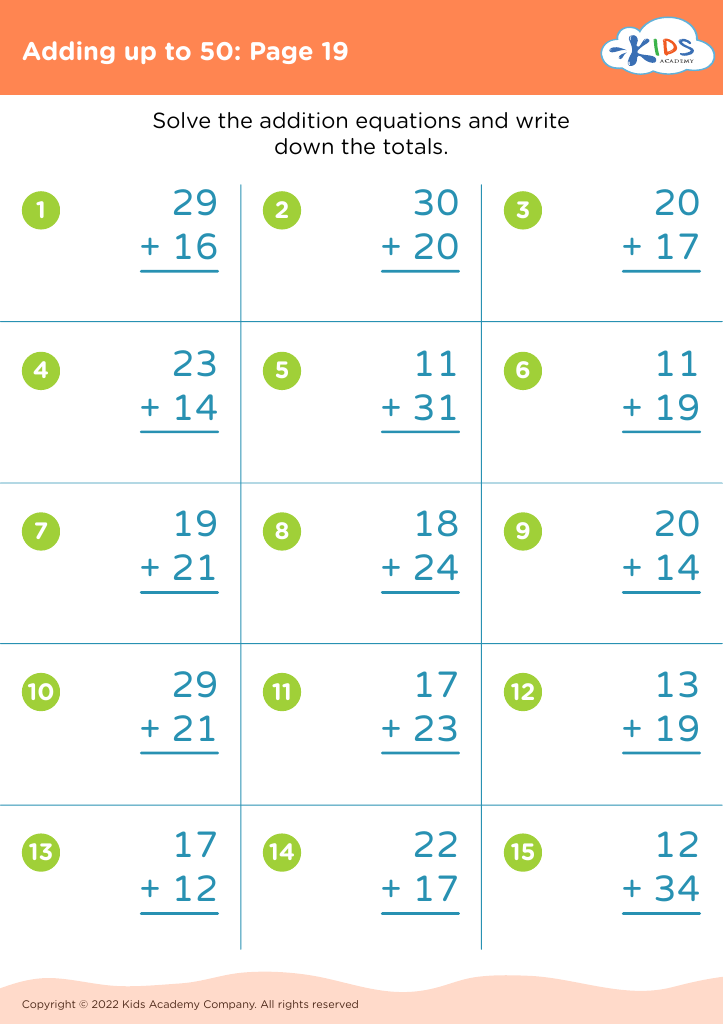
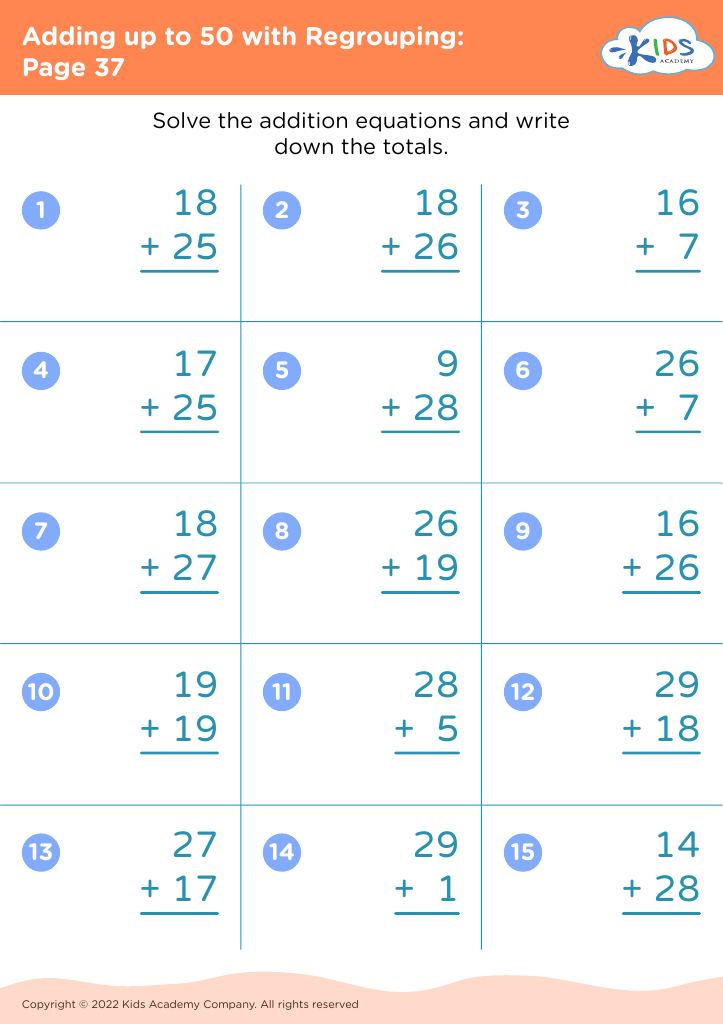
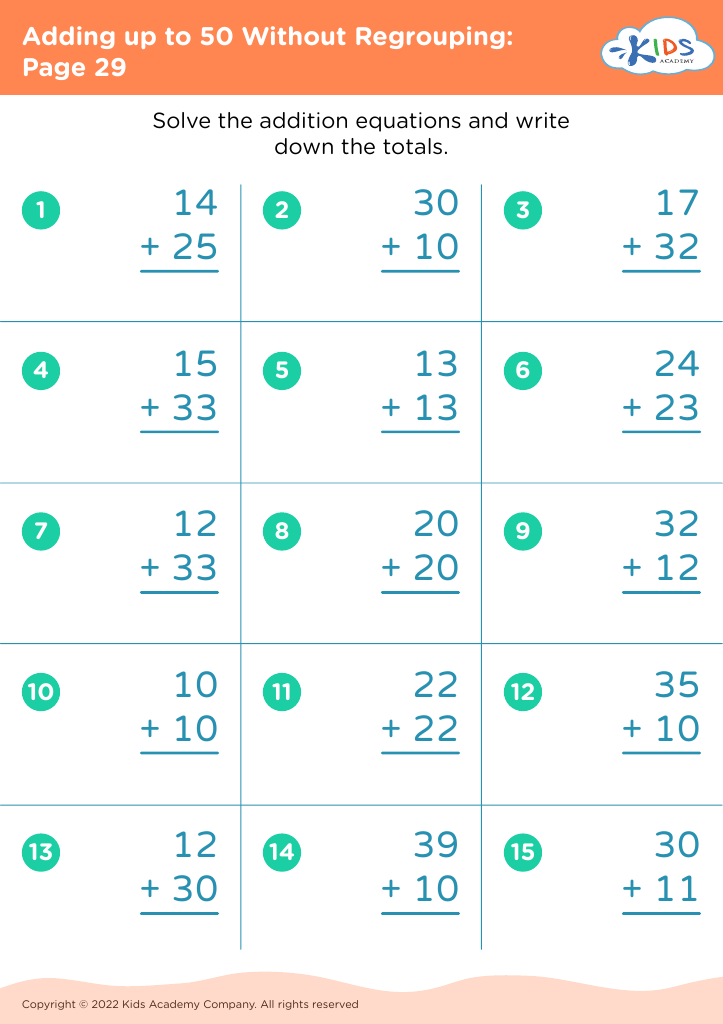
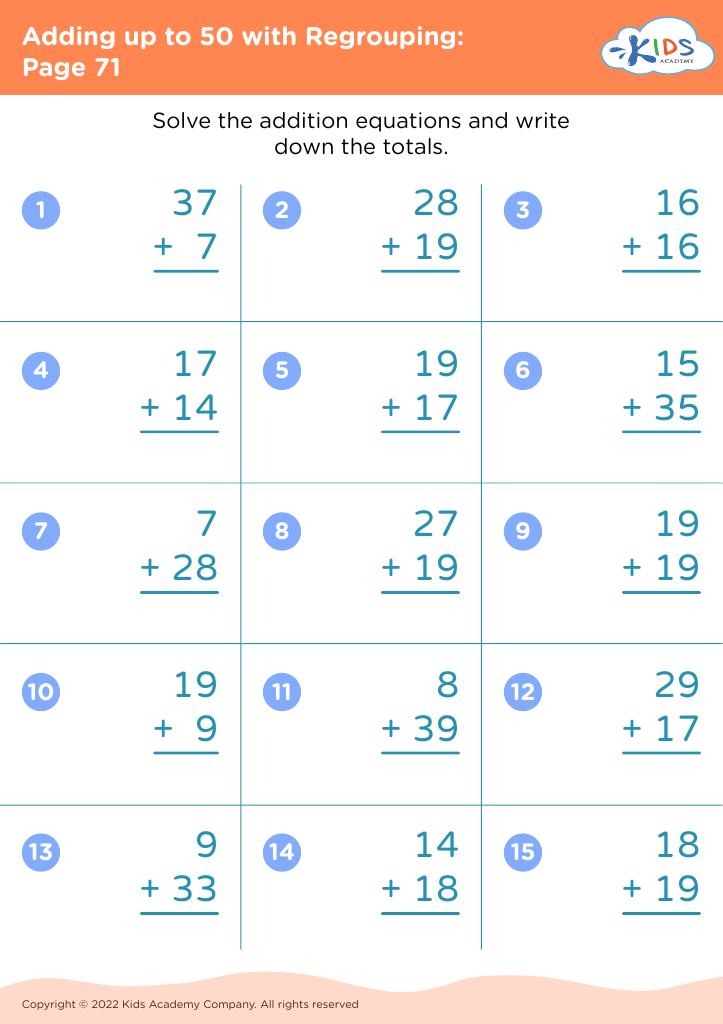


Recognizing patterns in numbers is a key foundational skill for students in Grade 2, especially when adding up to 50. For parents and teachers, understanding this concept is fundamental for several reasons.
Firstly, recognizing patterns helps students identify relationships between numbers, enhancing their mathematical fluency. When children see that adding 10 to a number results in a consistent increase, or that adding 5 is always progressing in smaller, manageable steps, they develop a more intuitive grasp of addition.
Secondly, this skill fosters problem-solving and critical thinking abilities. By noticing patterns, students are better equipped to tackle more complex mathematical concepts in the future, building their confidence as they transition to advanced topics in later grades.
Additionally, recognizing patterns is not restricted to mathematics alone; it supports logical reasoning in subjects like science and reading. Patterns appear throughout various facets of learning, and developing this skill can help children make connections across disciplines.
Finally, engaging in pattern recognition encourages collaboration and discussion among peers during group work. This social interaction enhances communication skills, fostering a positive learning environment and nurturing a love for learning. Overall, recognizing patterns plays a vital role in a child’s academic growth and development.