Recognizing shapes Grade 2 Adding up to 50 Worksheets
8 filtered results
-
From - To
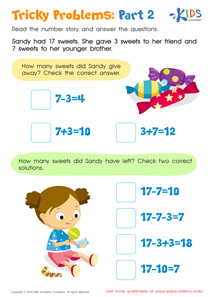
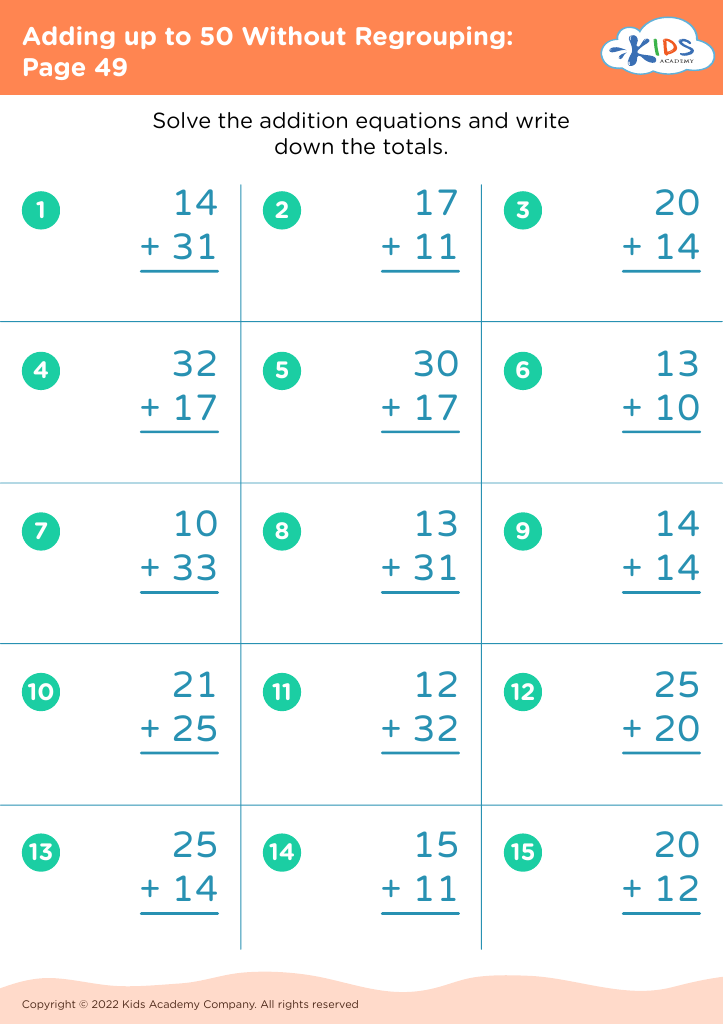
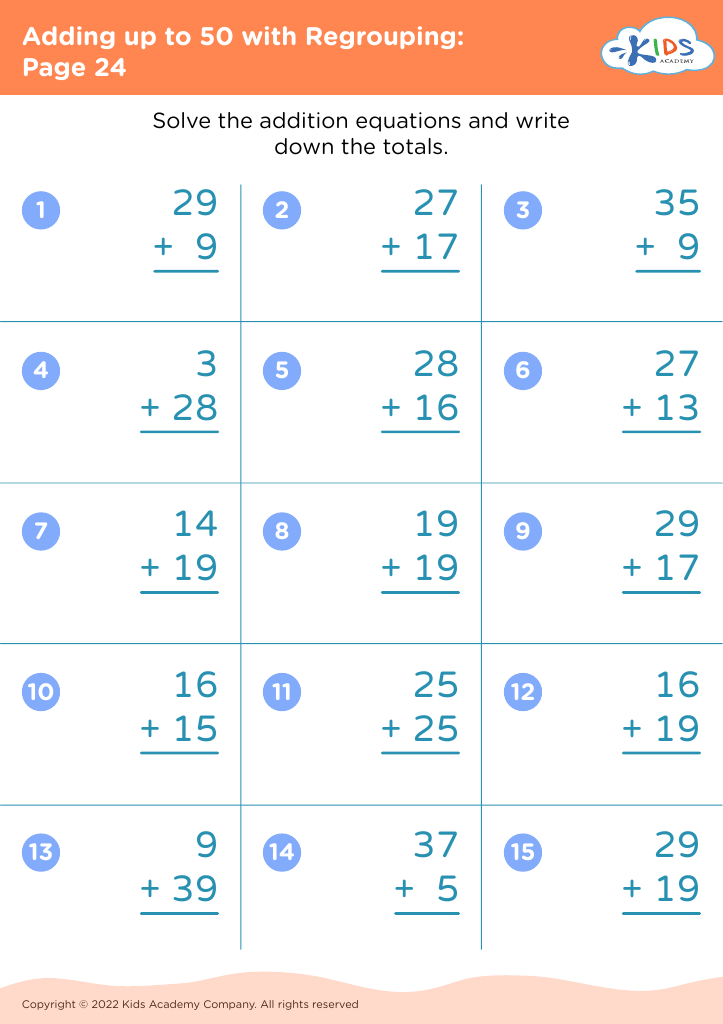
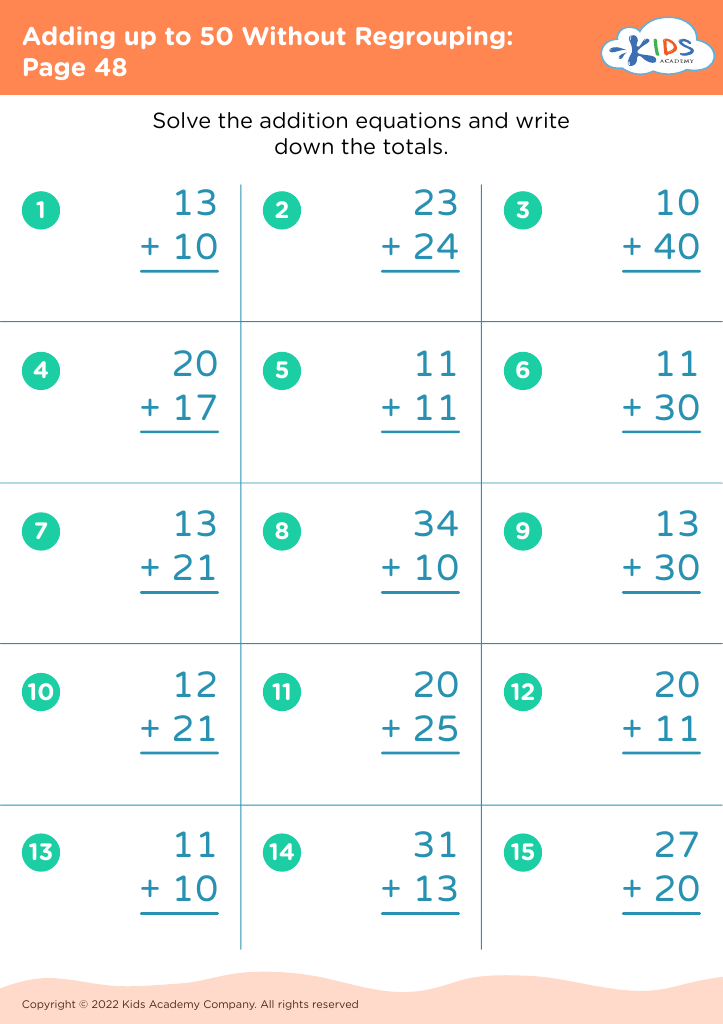
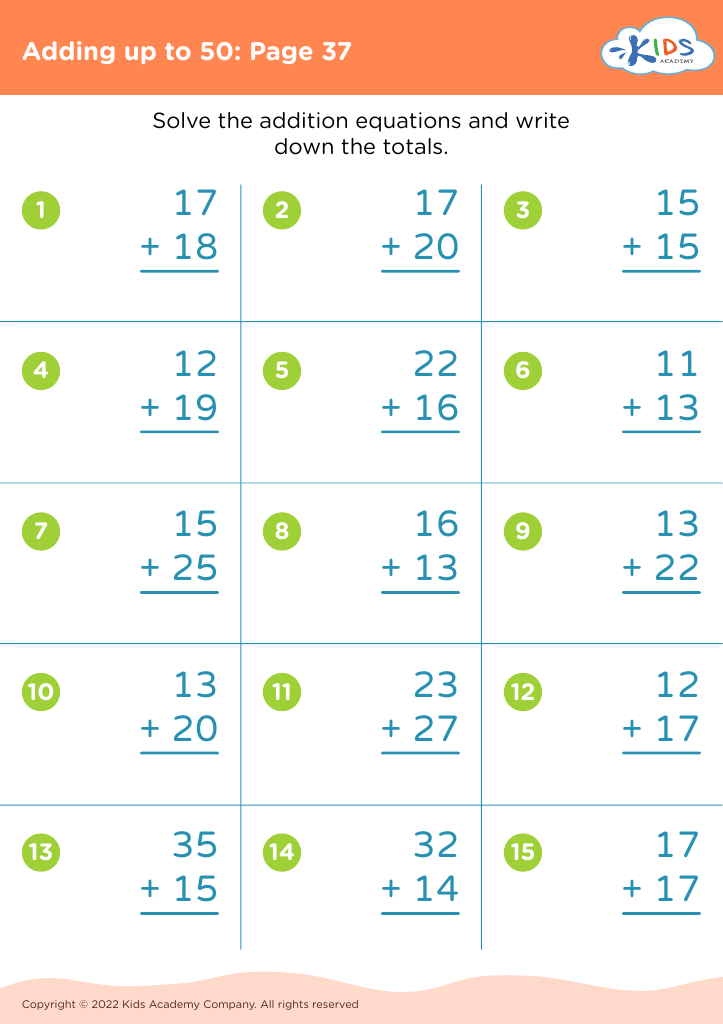
Enhance your second graders’ math skills with our "Recognizing Shapes Grade 2 Adding Up to 50 Worksheets." These engaging worksheets combine geometry and addition, helping students develop a solid understanding of various shapes while practicing their addition skills up to 50. Each worksheet is designed to reinforce shape recognition and provide fun, interactive learning experiences. Teachers can easily integrate these worksheets into their lesson plans to encourage creativity and critical thinking. By working through these exercises, students will gain confidence in their math abilities and shape identification, laying the groundwork for future mathematical concepts. Explore our collection today!
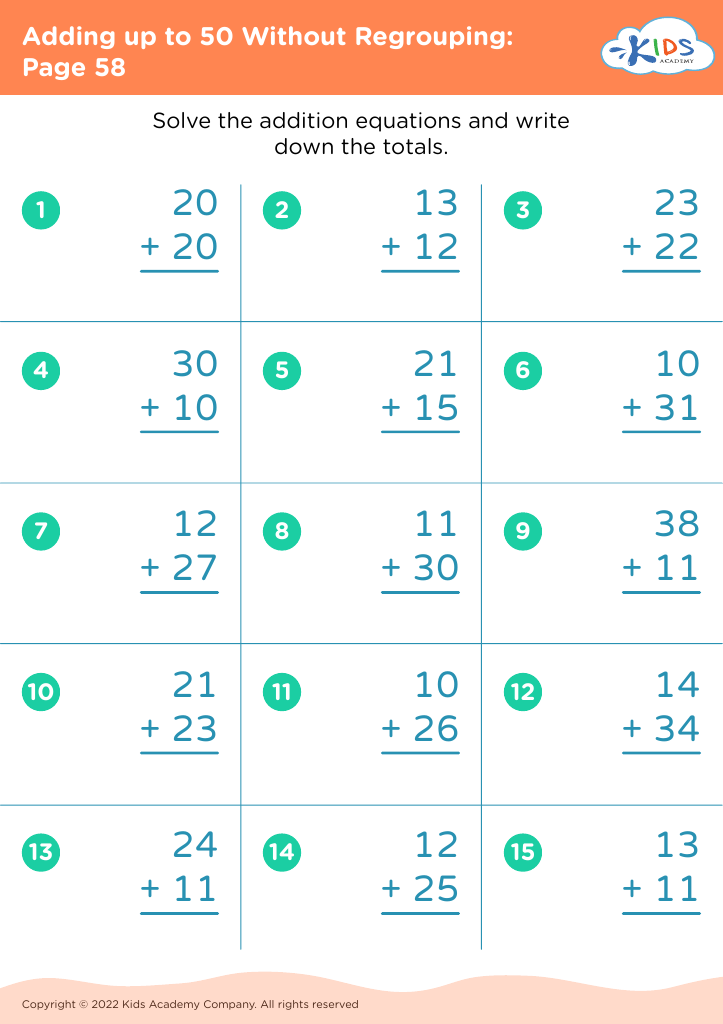
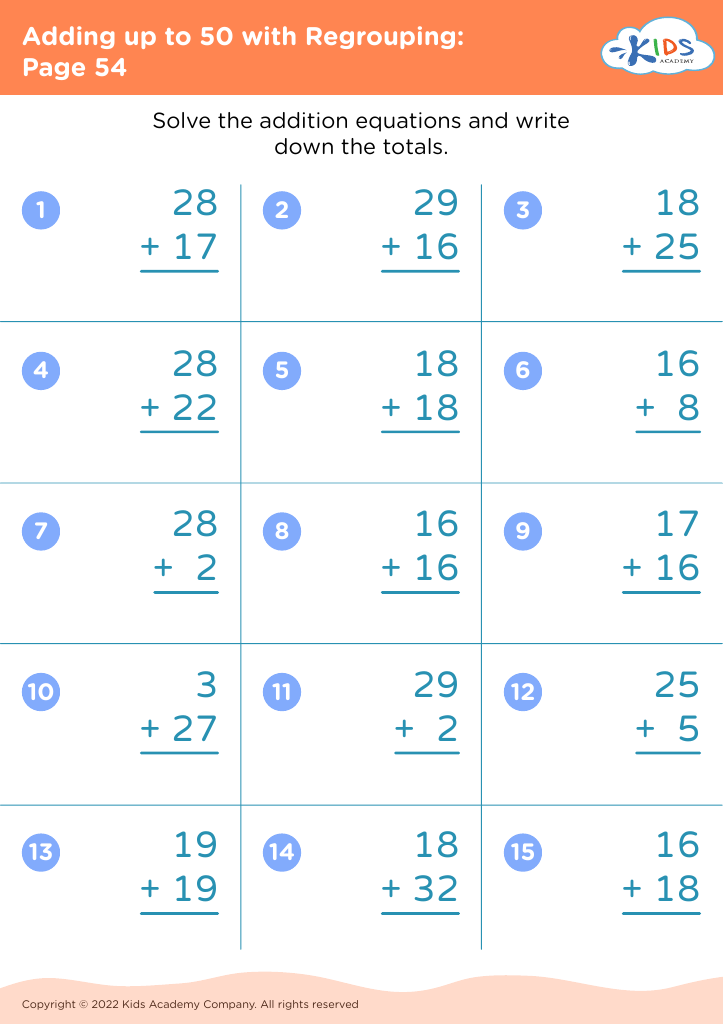
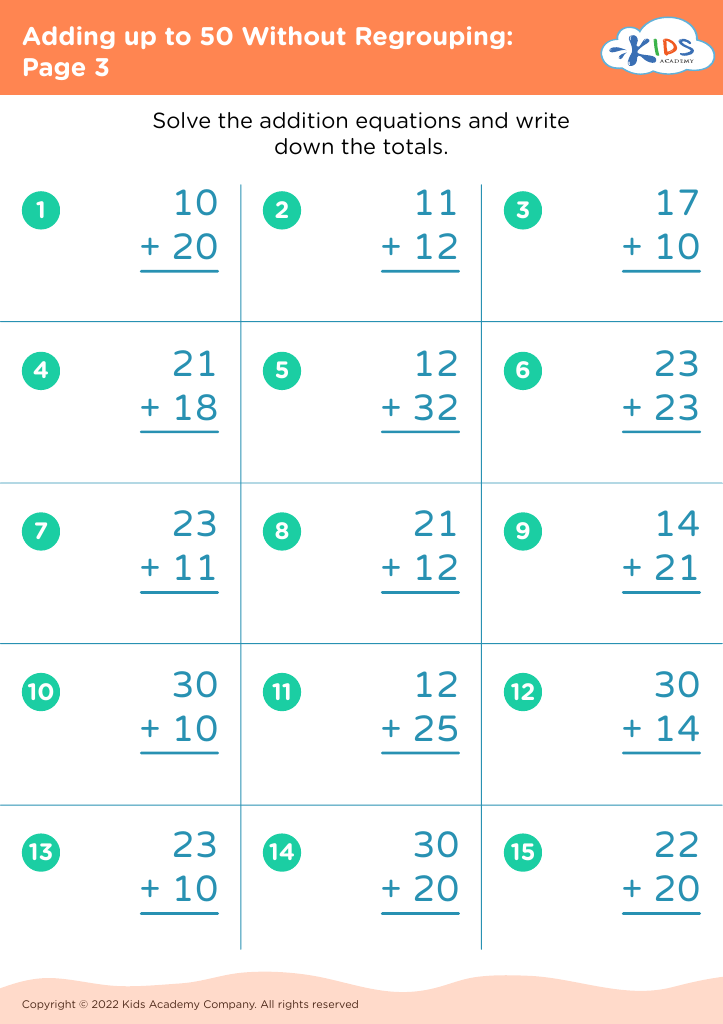
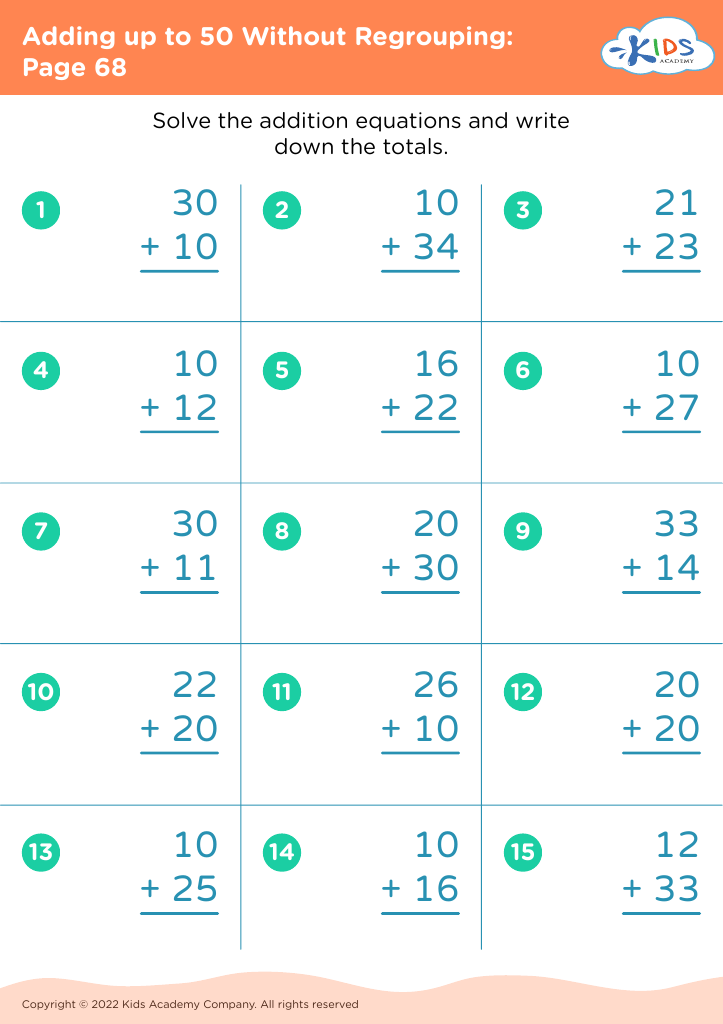


Recognizing shapes and understanding addition up to 50 are foundational skills in a child’s educational journey, especially in Grade 2. Mastery of these concepts supports cognitive development and lays the groundwork for more advanced mathematical principles.
Understanding shapes helps children to analyze their environment actively. It fosters spatial awareness, critical for subjects such as geometry, design, and engineering. Recognizing and naming shapes also enhances vocabulary and encourages children to describe their observations, thus improving communication skills.
Moreover, addition skills up to 50 introduce students to the essential concept of combining quantities. This ability to calculate is vital for everyday situations, teaching children how to manage money, measure time, and solve problems that occur in real life. Engaging students in fun and interactive activities, such as games and hands-on tasks, can help solidify these concepts while keeping learning enjoyable.
For parents and teachers, nurturing these skills is crucial, as they promote confidence in children as learners. When children understand these basic mathematical concepts, they build a positive attitude toward math, setting the stage for future academic success and encouraging lifelong learning. Ultimately, supporting shape recognition and addition fosters critical thinking and problem-solving abilities.