Addition skills Grade 2 Addition & Subtraction Worksheets - Page 2
29 filtered results
-
From - To
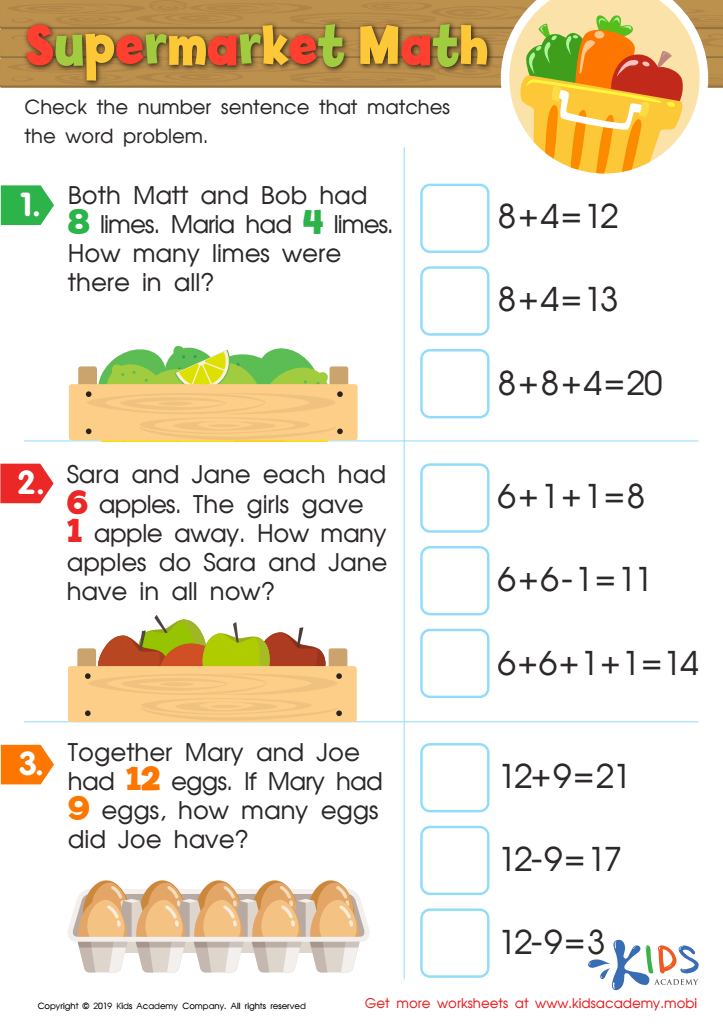
Supermarket Math Worksheet
 Assign to My Students
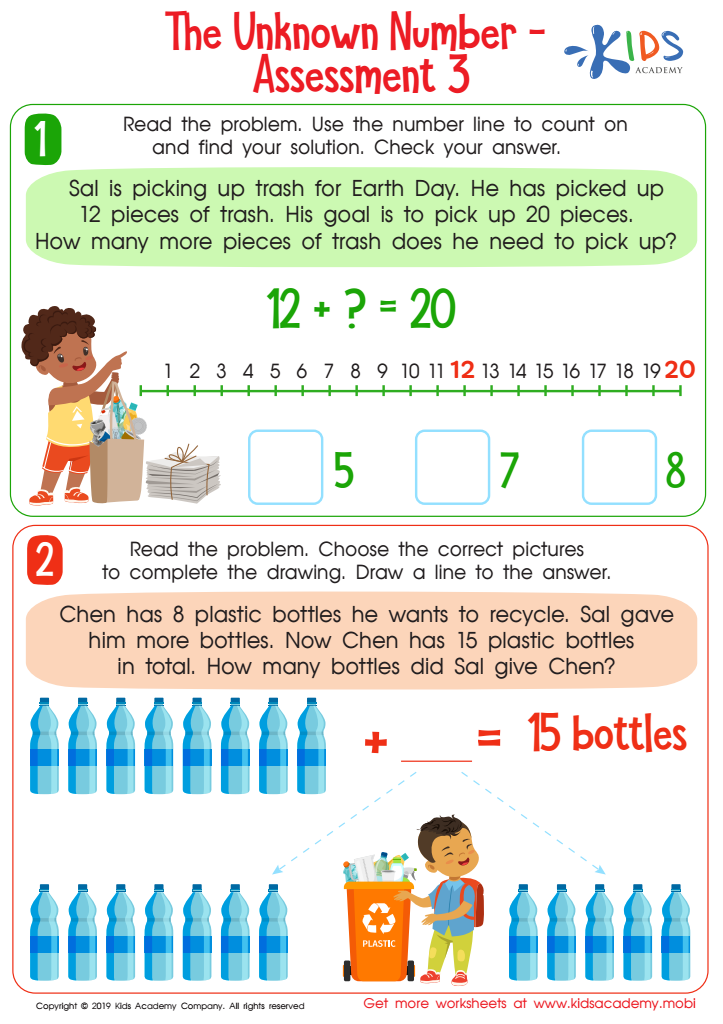
The Unknown Number - Assessment 3 Worksheet
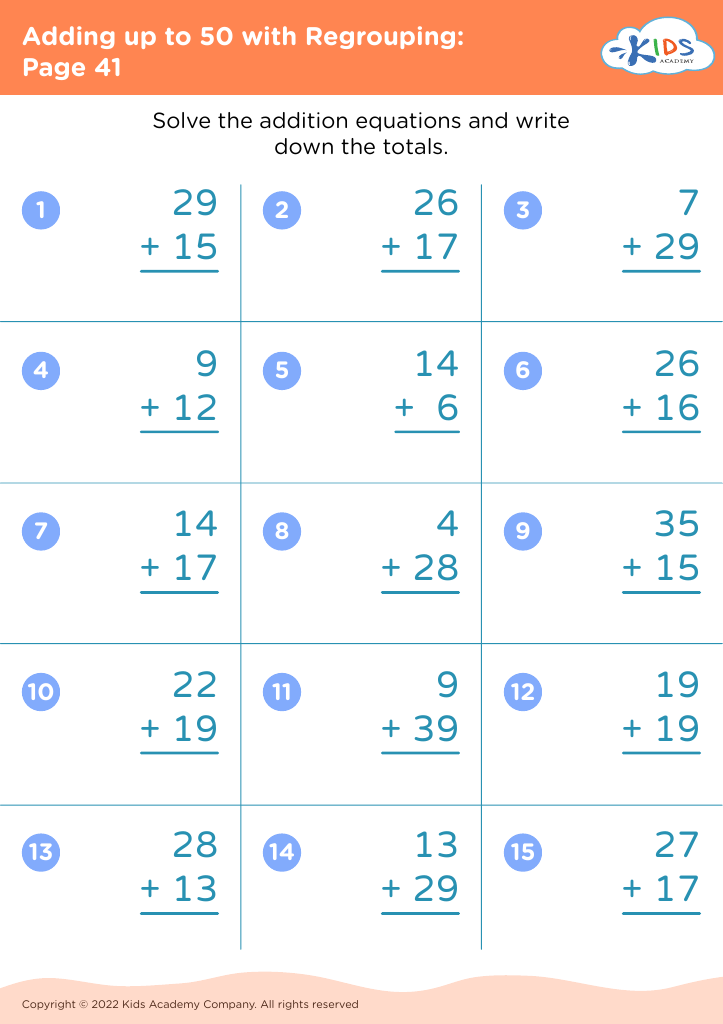








Parents and teachers should prioritize addition and subtraction skills in Grade 2, as these foundational skills are essential for a child's mathematical development and overall academic success. At this stage, children transition from concrete understanding to more abstract thinking. Mastery of basic addition and subtraction sets the groundwork for more complex math concepts, such as multiplication, division, and problem-solving in later grades.
Furthermore, strong math skills instill confidence in children, encouraging a positive attitude towards learning math and fostering a growth mindset. As children engage with these skills, they learn critical thinking and logic, which are valuable in everyday life situations beyond academics, from managing finances to planning activities.
Additionally, building proficiency in addition and subtraction aids in reinforcing other subjects, such as science and economics, where math plays a vital role. Socially, being comfortable with these skills allows children to engage in collaborative play that involves counting or sharing, enhancing their interpersonal skills.
Investing time and resources in helping children strengthen their addition and subtraction skills not only enhances their academic outcomes but also equips them with essential life skills needed for future success. In short, these basic skills lay a pivotal foundation for a child's lifelong learning journey.