Enhance your second graders' math skills with our engaging Basic Addition Skills worksheets! Designed to make learning fun, these printable worksheets focus on simplifying addition and subtraction concepts. With a variety of exercises that cater to different learning styles, students will master fundamental skills like single-digit addition, word problems, and visual aids. Our worksheets promote confidence and proficiency, ensuring children can tackle math with ease. Perfect for classroom use or at-home practice, these resources help prepare students for future math challenges. Download the Basic Addition Skills worksheets today and watch your child's math skills flourish!

Check out this FREE Grade 2 Trial Lesson on Addition & Subtraction!

Unknown Parts (basic algebra) Addition

Favorites
With answer key
Interactive
  • Grade 2
  • Basic Addition Skills
  • Addition & Subtraction
Balancing addition equations worksheet

Raindrop Math Printable

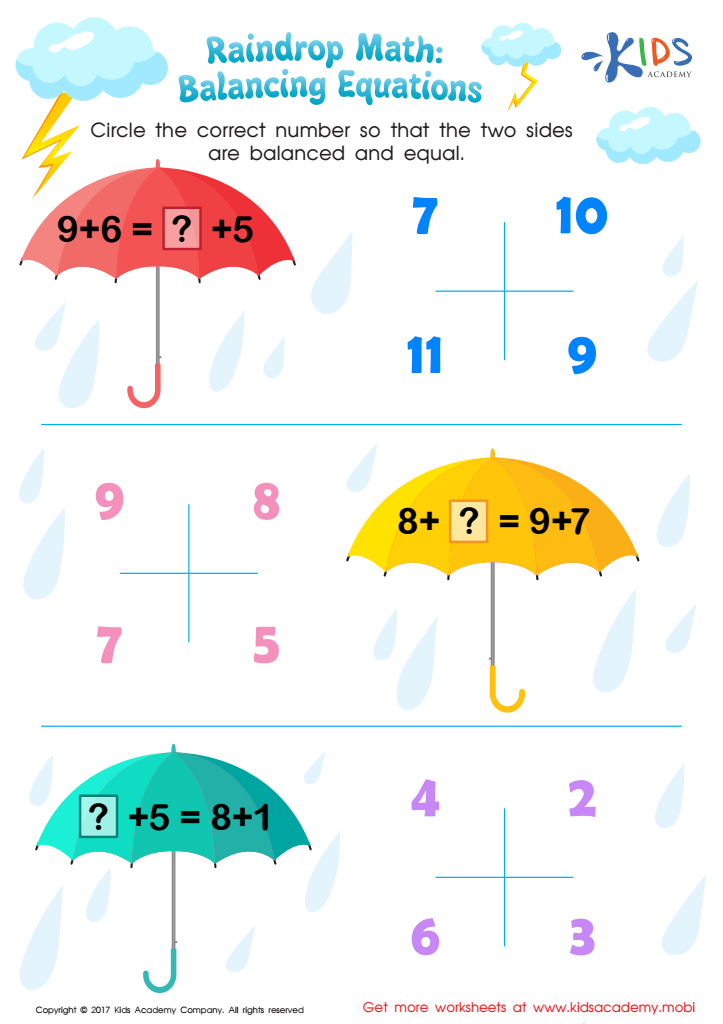
It will help them think deeper about equations, form a foundation for early algebraic thinking, and gain a better sense of numeracy. Plus, they get to practice simple addition skills.
Raindrop Math Printable
Worksheet
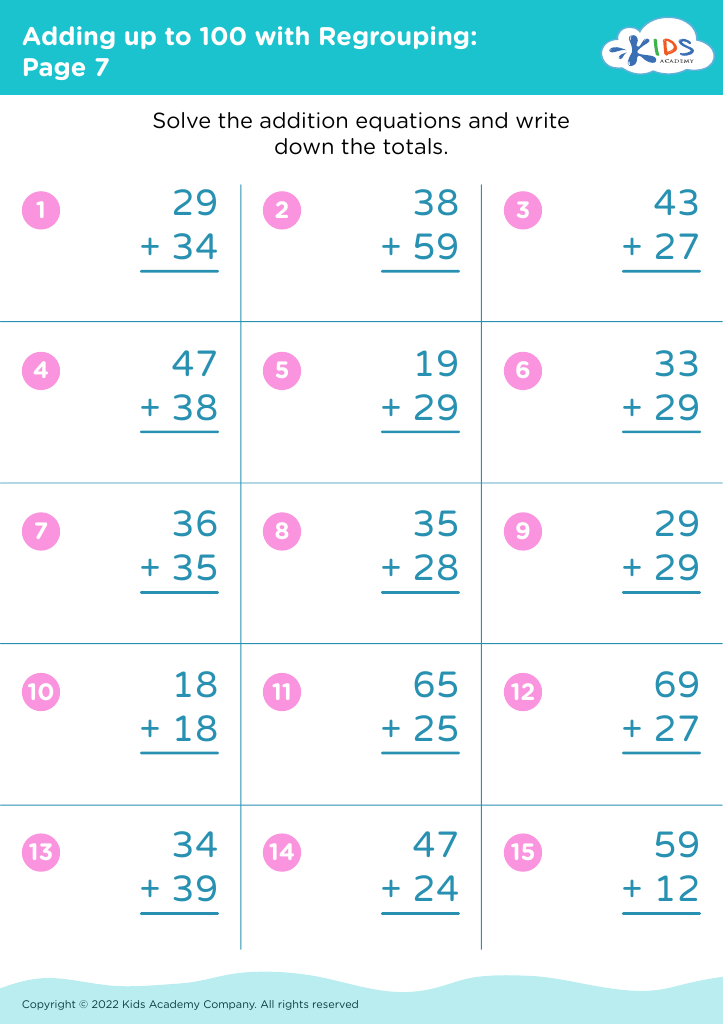
Adding up to 100 with Regrouping: Page 7
Worksheet
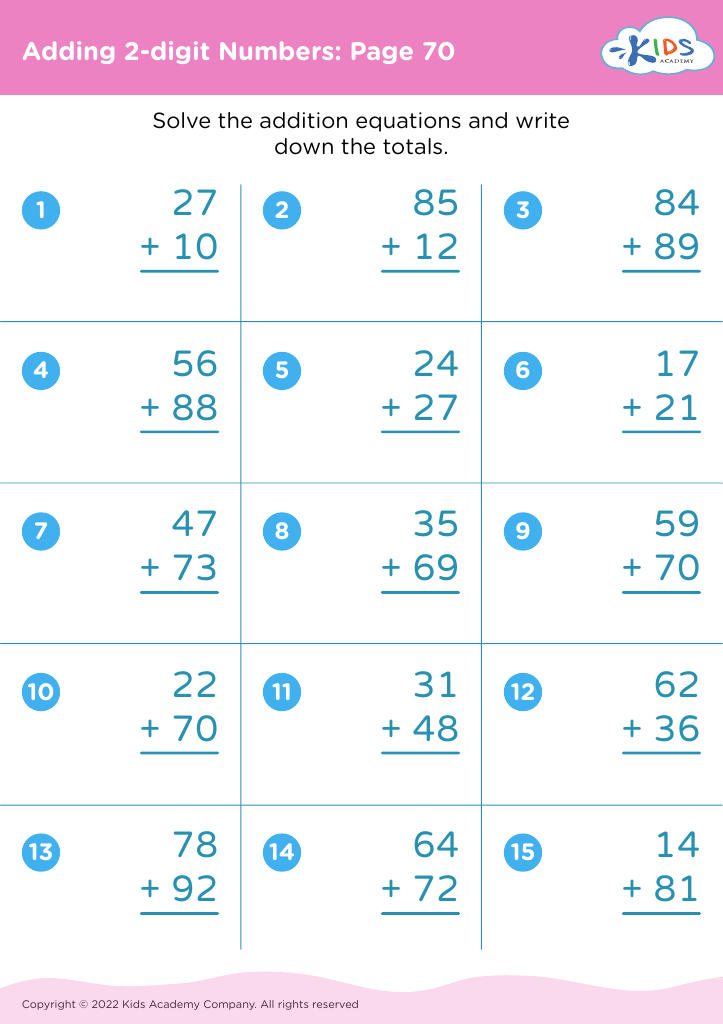
Adding 2-digit Numbers: Page 70

Adding 2-digit Numbers: Page 70

Adding 2-digit Numbers: Page 70
Worksheet
Counting Birds Worksheet

Counting Birds Worksheet

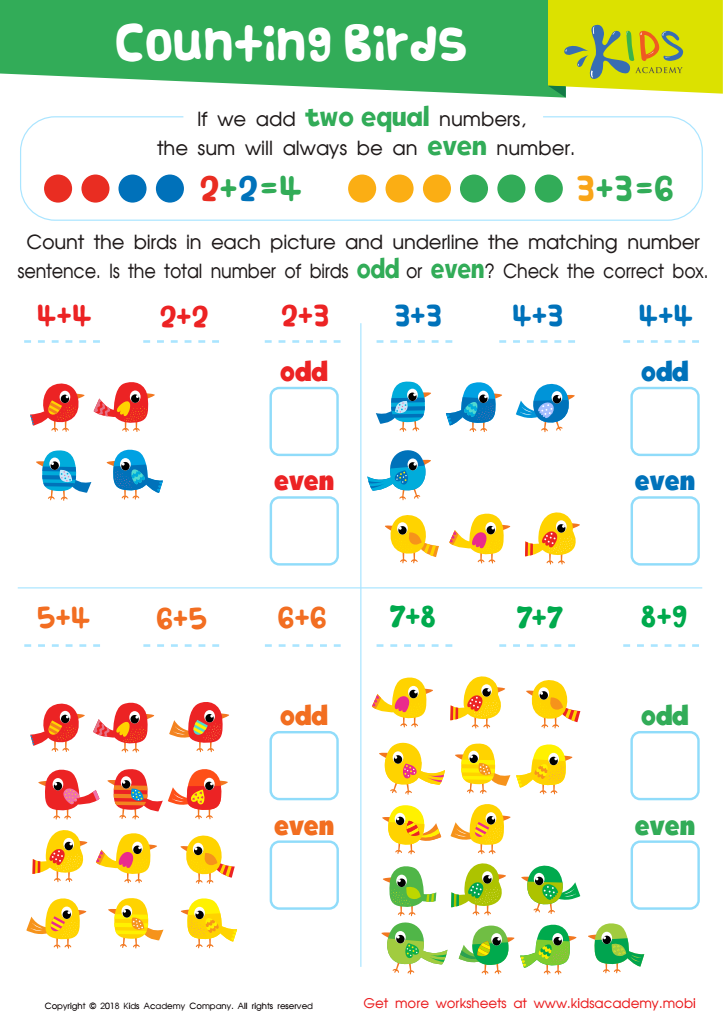
Help your child count and underline the matching number sentence in the worksheet. Ask them if the total number of birds in each picture is odd or even, then check the correct box. When two equal numbers are added, the sum is always an even number (e.g. 2+2=4, 4+4=8, both divisible by 2).
Counting Birds Worksheet
Worksheet
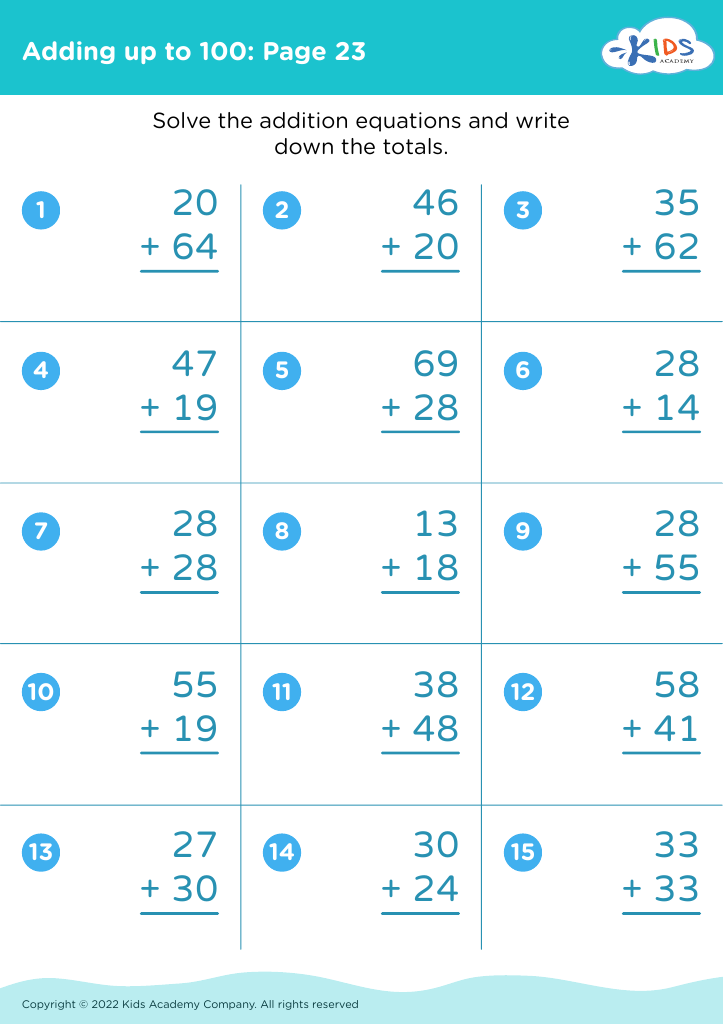
Adding up to 100: Page 23

Adding up to 100: Page 23

Adding up to 100: Page 23
Worksheet
Simple Addition PDF Worksheet

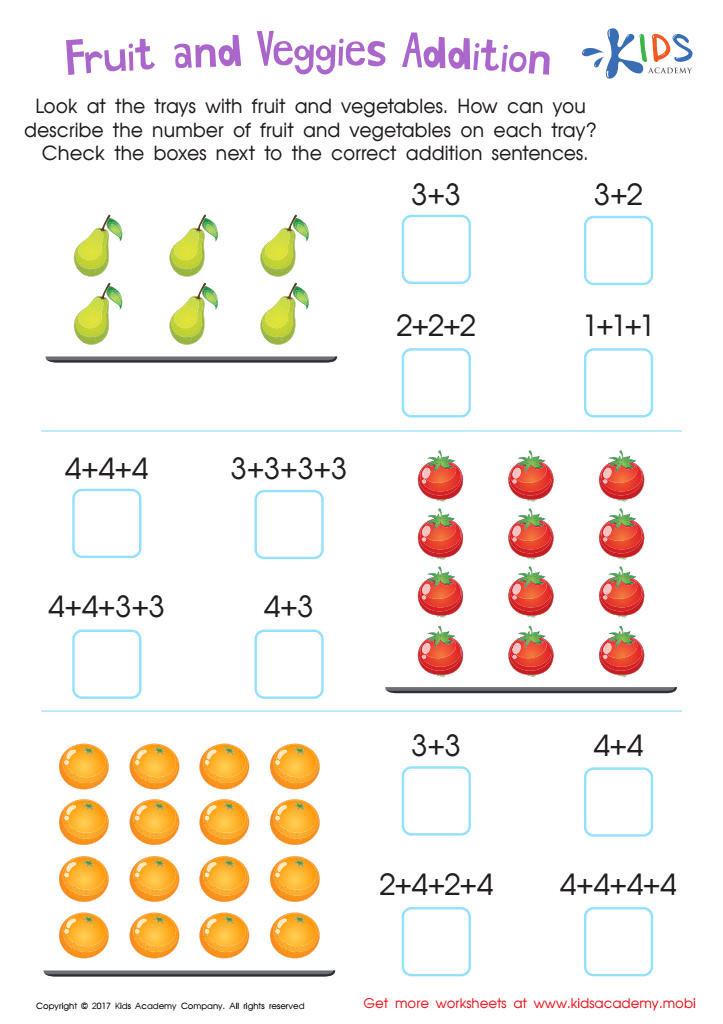
Fruit and Veggies Worksheet
It promotes problem-solving and analytical skills as kids match pictures to correct addition sentences. Help your child go beyond simple addition with this PDF worksheet!
Fruit and Veggies Worksheet
Worksheet
Adding up to 50: Page 12

Adding up to 50: Page 12

Adding up to 50: Page 12
Worksheet
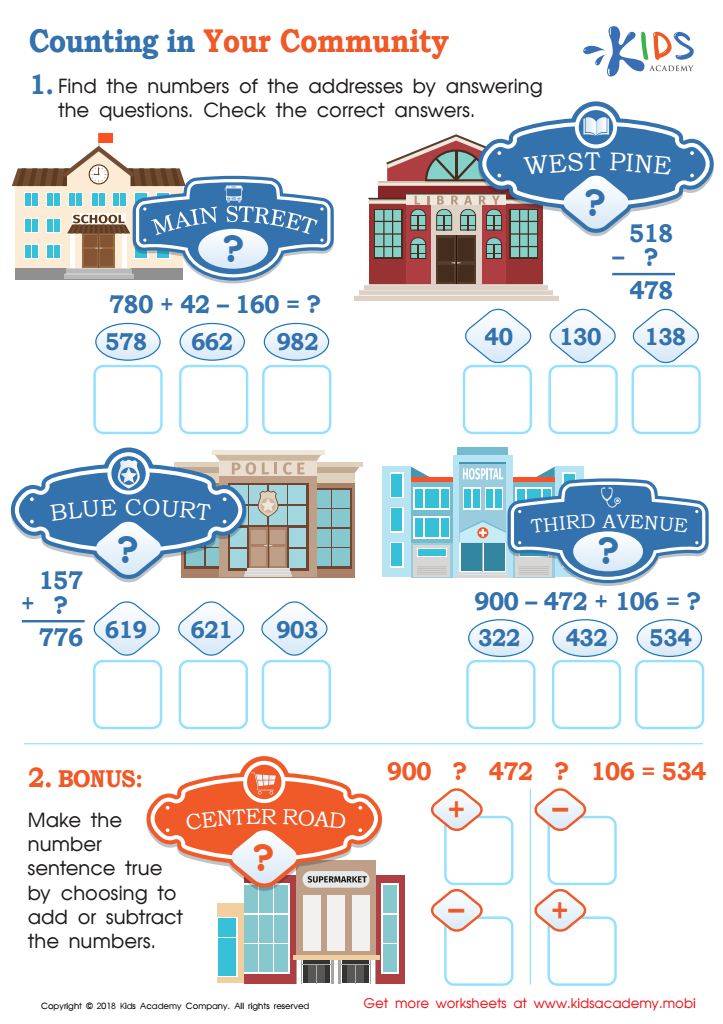
Counting in Your Community Worksheet
Counting in Your Community Worksheet
Introduce your kids to the idea of a community, where different people and buildings co-exist, each playing their part for the community's progress. Ask them to name the buildings they see in their community. Then work through this worksheet to find the numbers of the addresses by answering the questions. Check the answers once they've solved the equations.
Counting in Your Community Worksheet
Worksheet
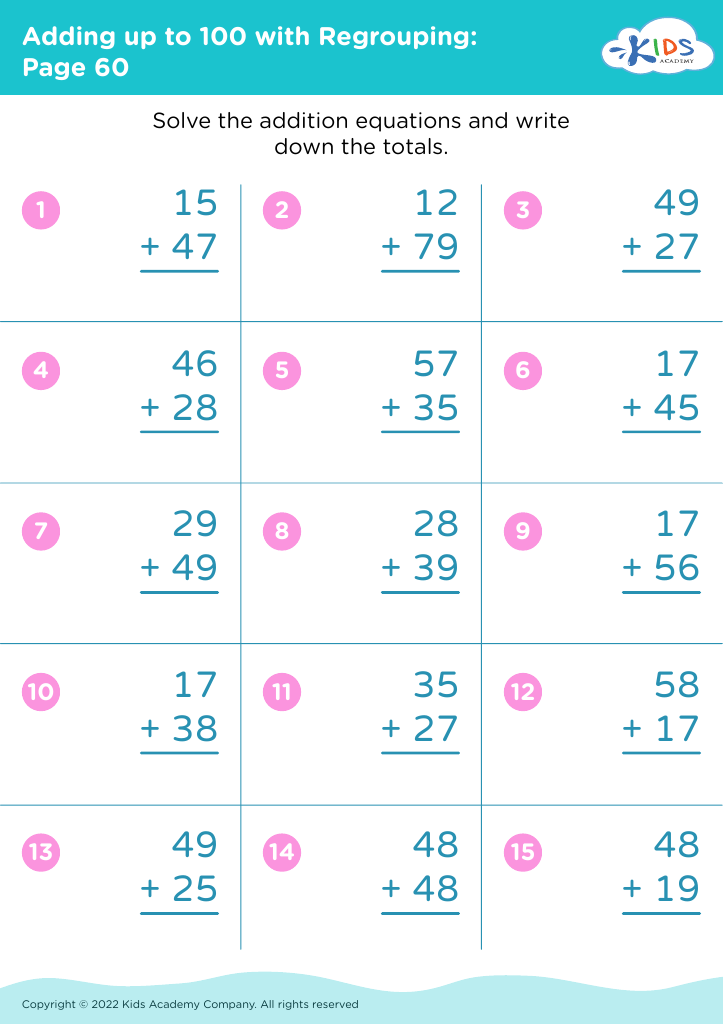
Adding up to 100 with Regrouping: Page 60
Worksheet
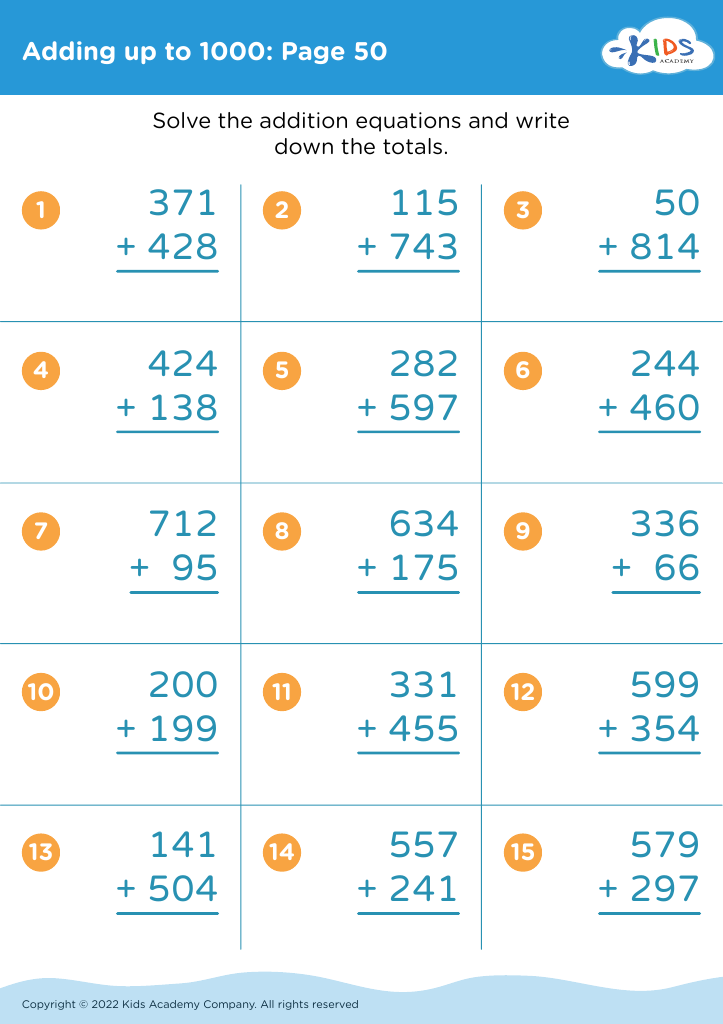
Adding up to 1000: Page 50

Adding up to 1000: Page 50

Adding up to 1000: Page 50
Worksheet
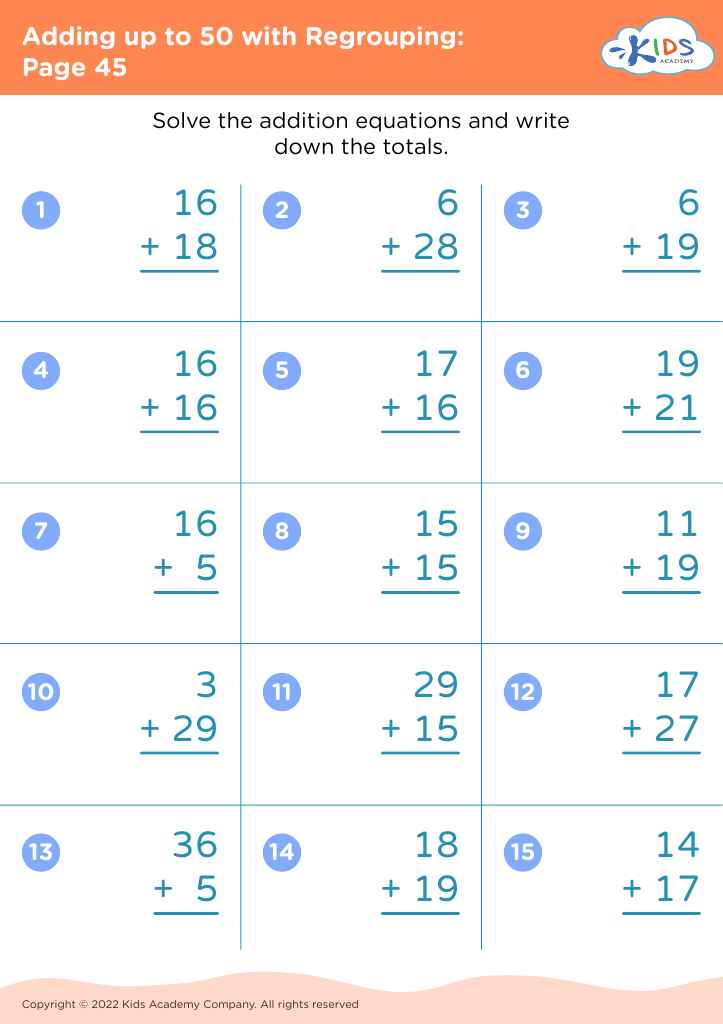
Adding up to 50 with Regrouping: Page 45
Worksheet
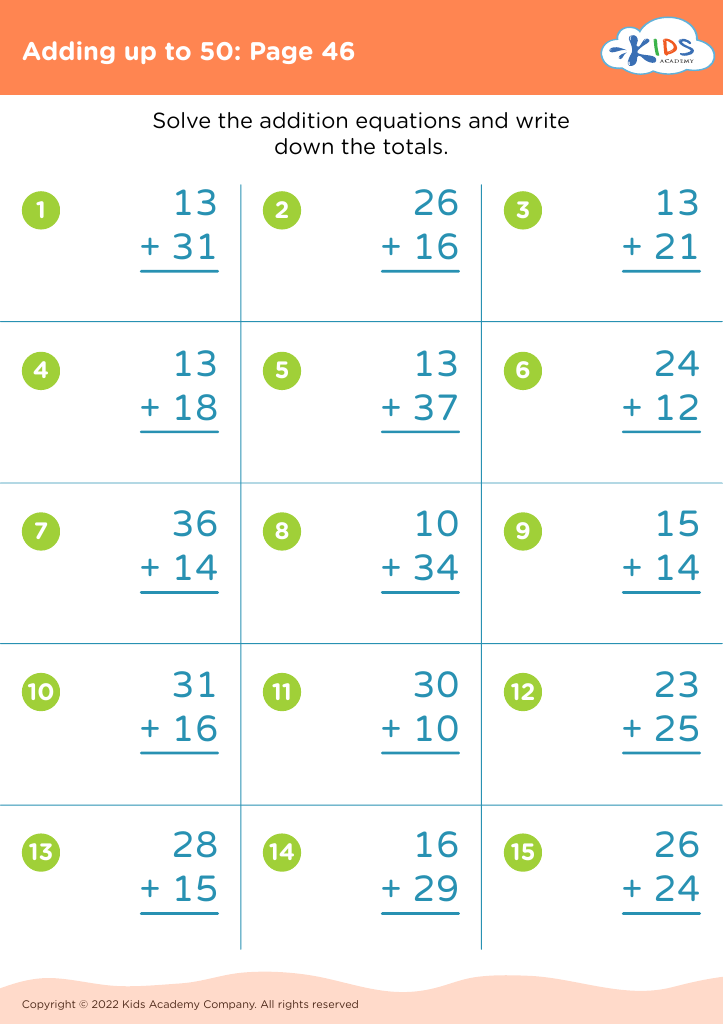
Adding up to 50: Page 46

Adding up to 50: Page 46

Adding up to 50: Page 46
Worksheet
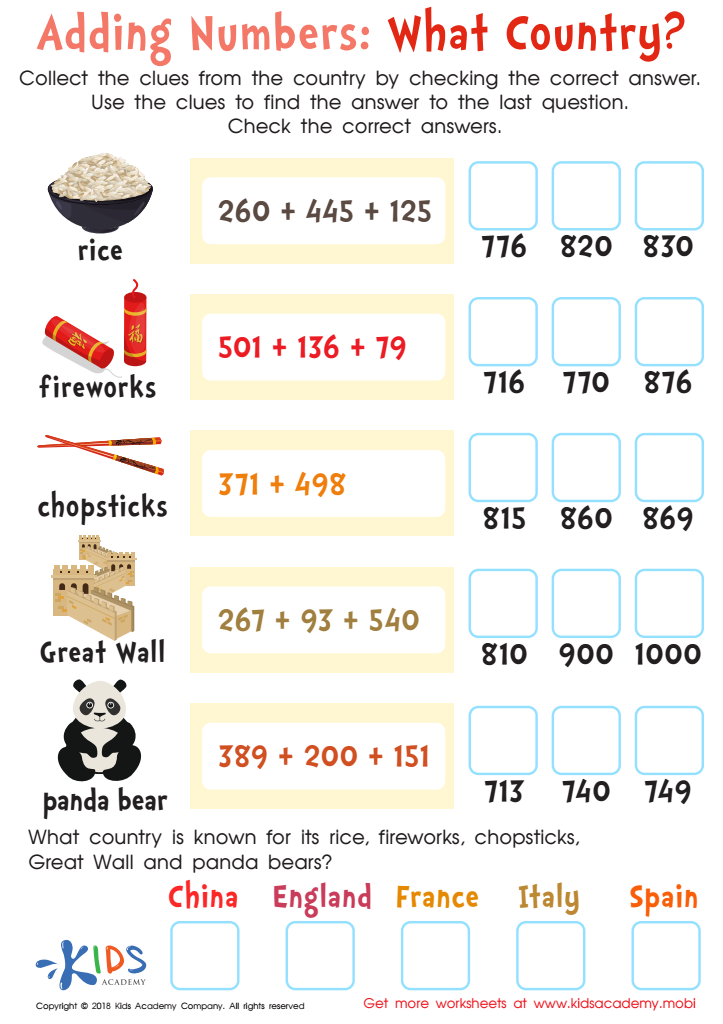
Adding Numbers: What Country Worksheet
Adding Numbers: What Country Worksheet

Students can use this worksheet to learn more about different countries. Have them collect clues from the worksheet to answer the last question. Help them check the correct answer, and they'll gain knowledge about each country's food, animals, celebrations, and landmarks.
Adding Numbers: What Country Worksheet
Worksheet
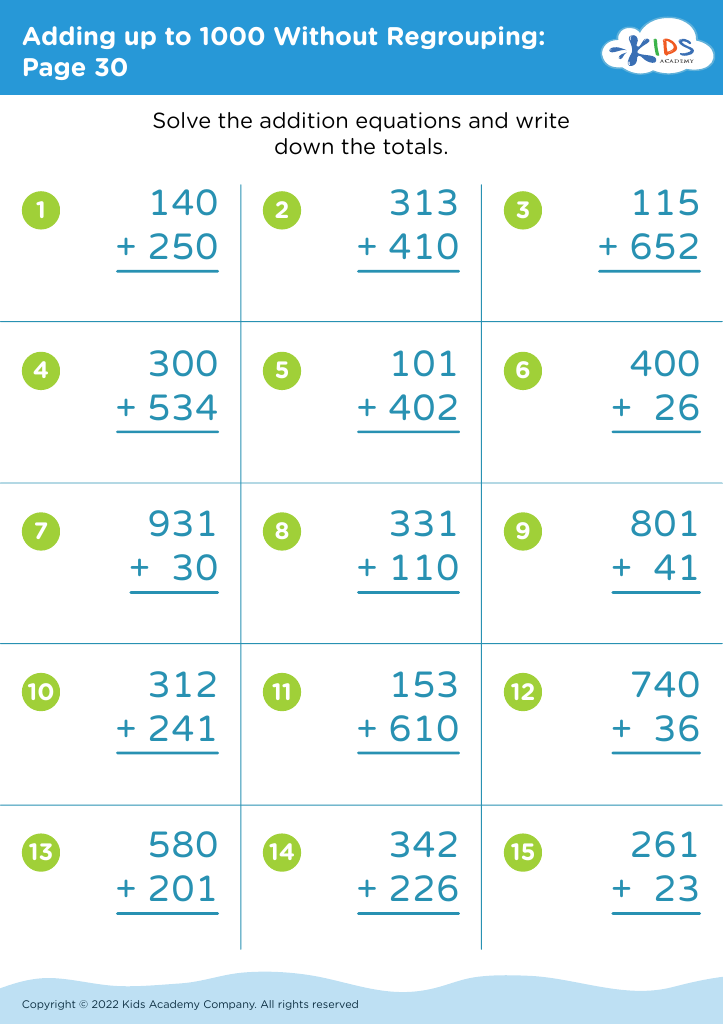
Adding up to 1000 Without Regrouping: Page 30
Worksheet
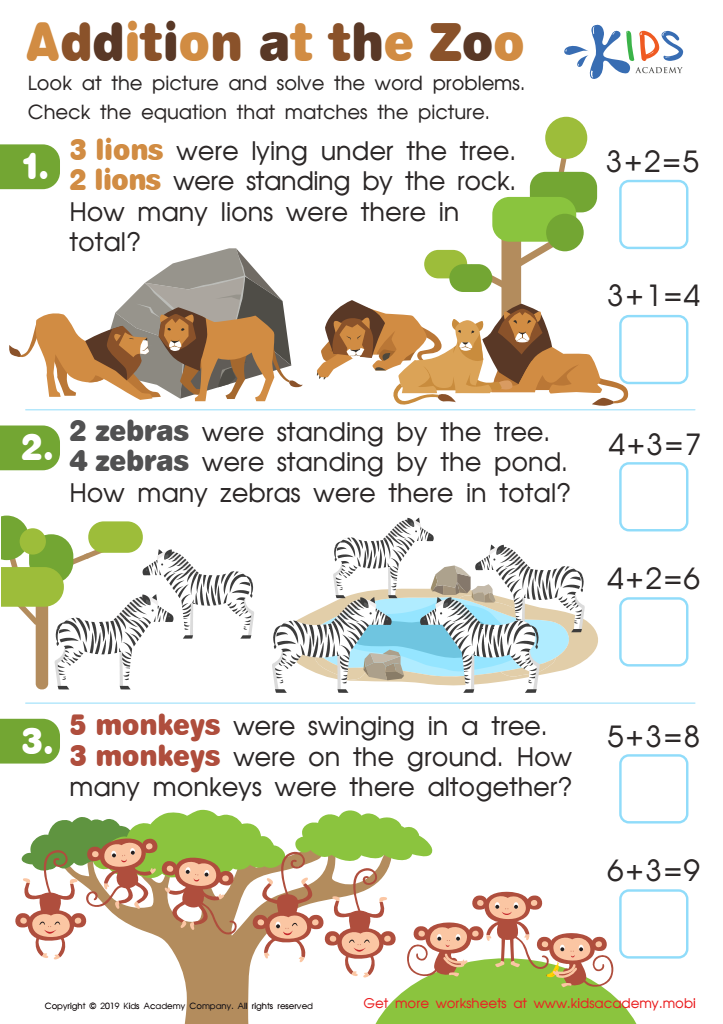
Addition at the Zoo Worksheet
Addition at the Zoo Worksheet
Visit the zoo with your kids and point out all the different animals. Ask them to name their favorites and identify animals on a worksheet. Challenge them to solve word problems related to the pictures. Ask them for the equation that fits the picture and check the answer.
Addition at the Zoo Worksheet

Worksheet
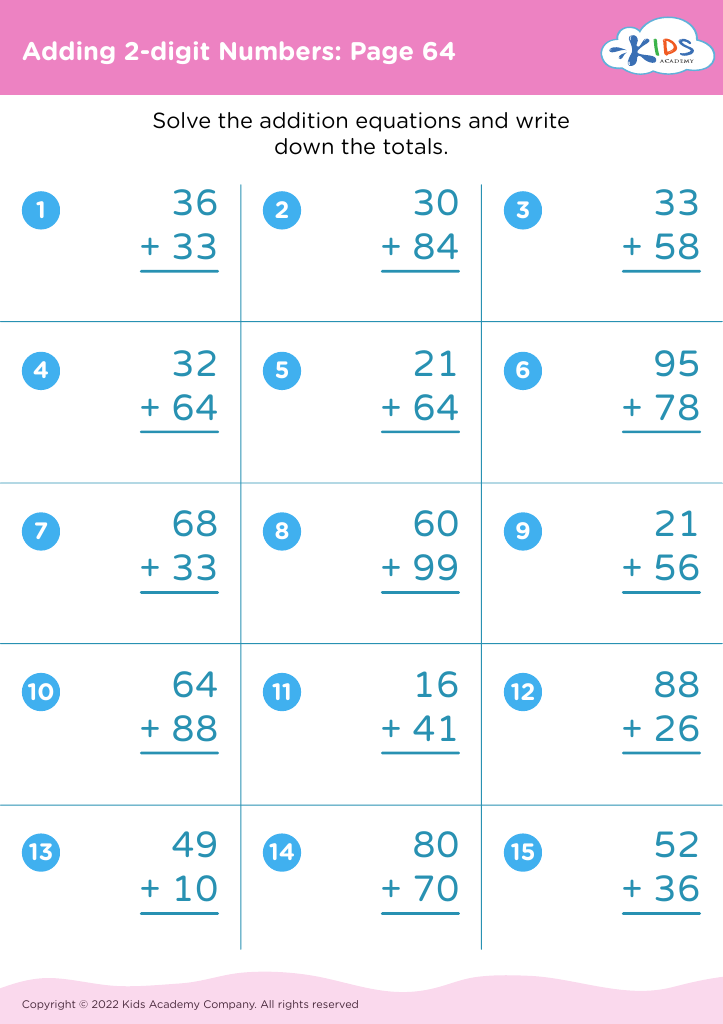
Adding 2-digit Numbers: Page 64

Adding 2-digit Numbers: Page 64

Adding 2-digit Numbers: Page 64
Worksheet
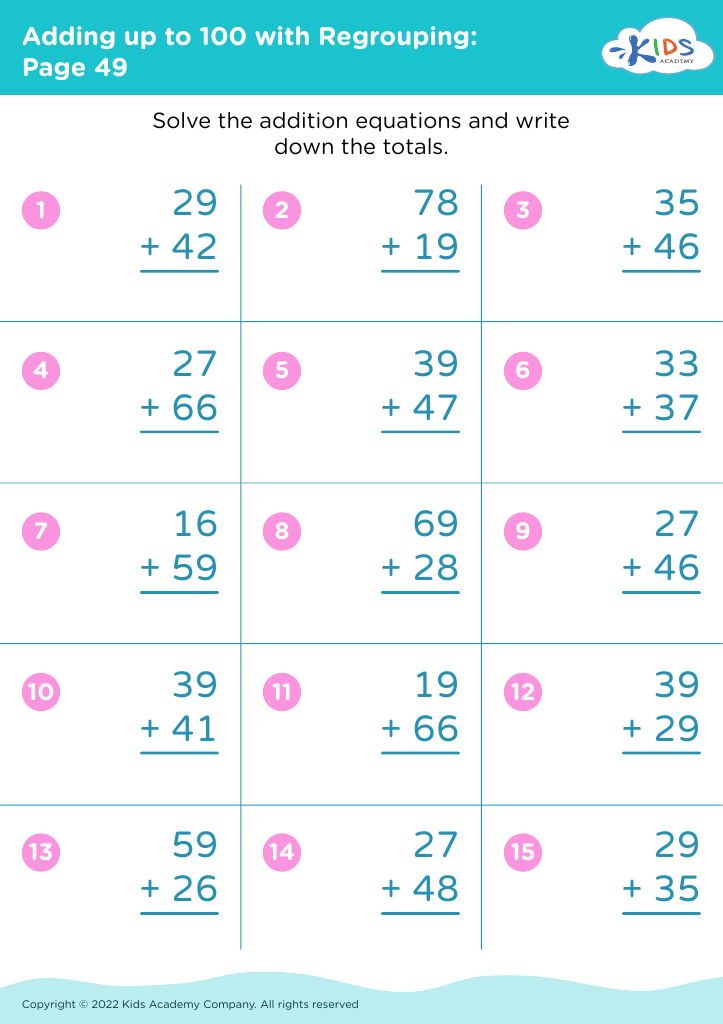
Adding up to 100 with Regrouping: Page 49
Worksheet
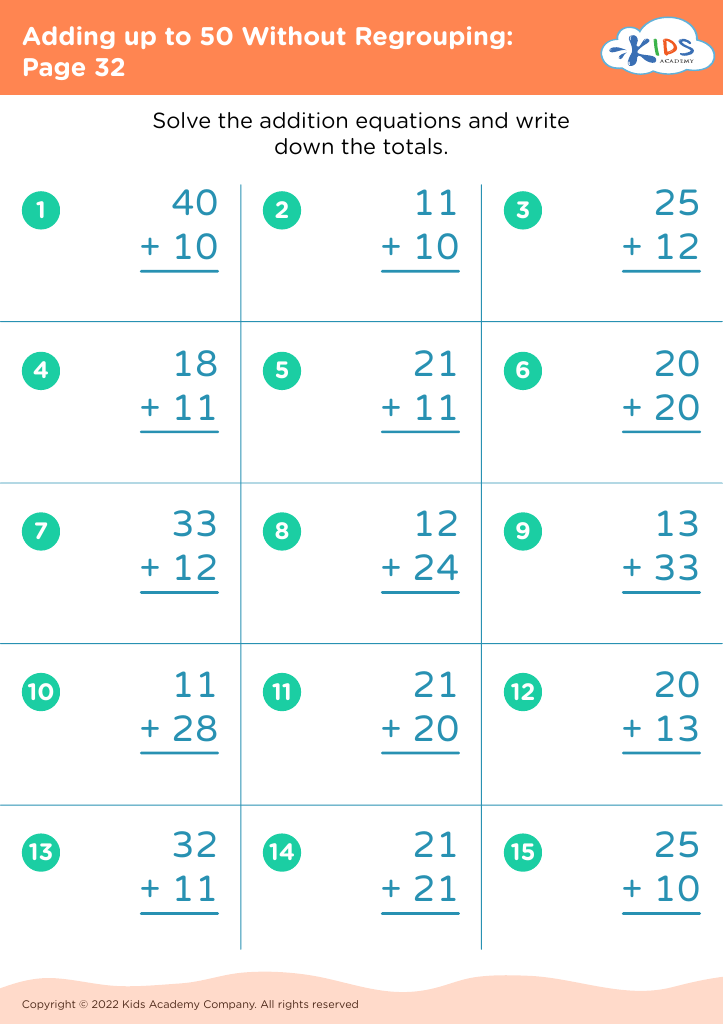
Adding up to 50 Without Regrouping: Page 32
Worksheet
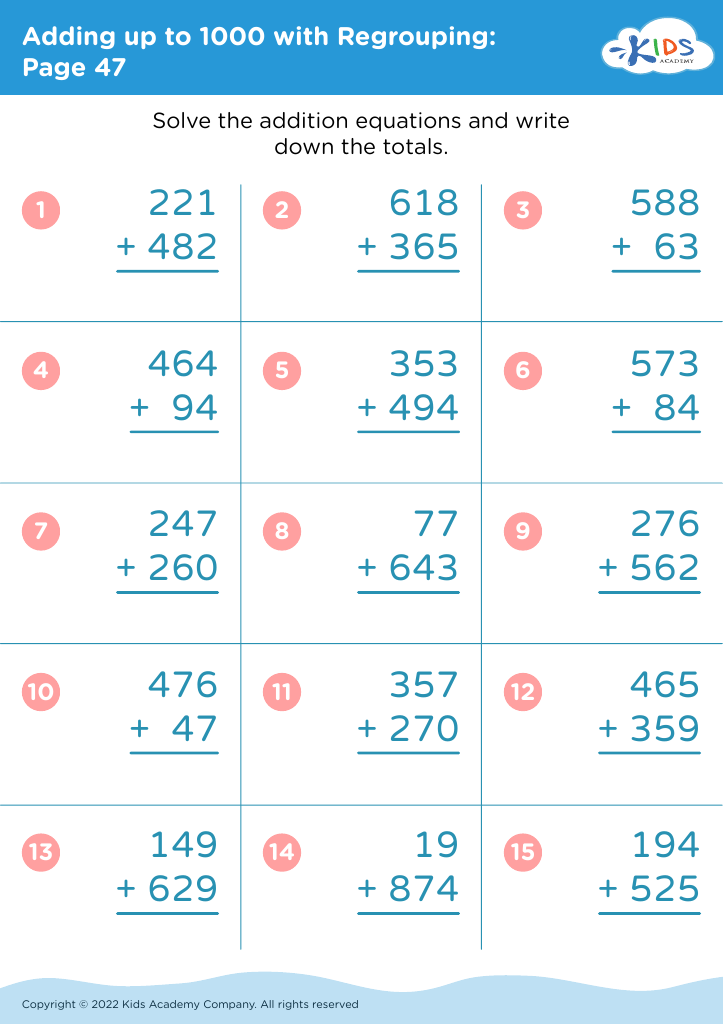
Adding up to 1000 with Regrouping: Page 47
Worksheet
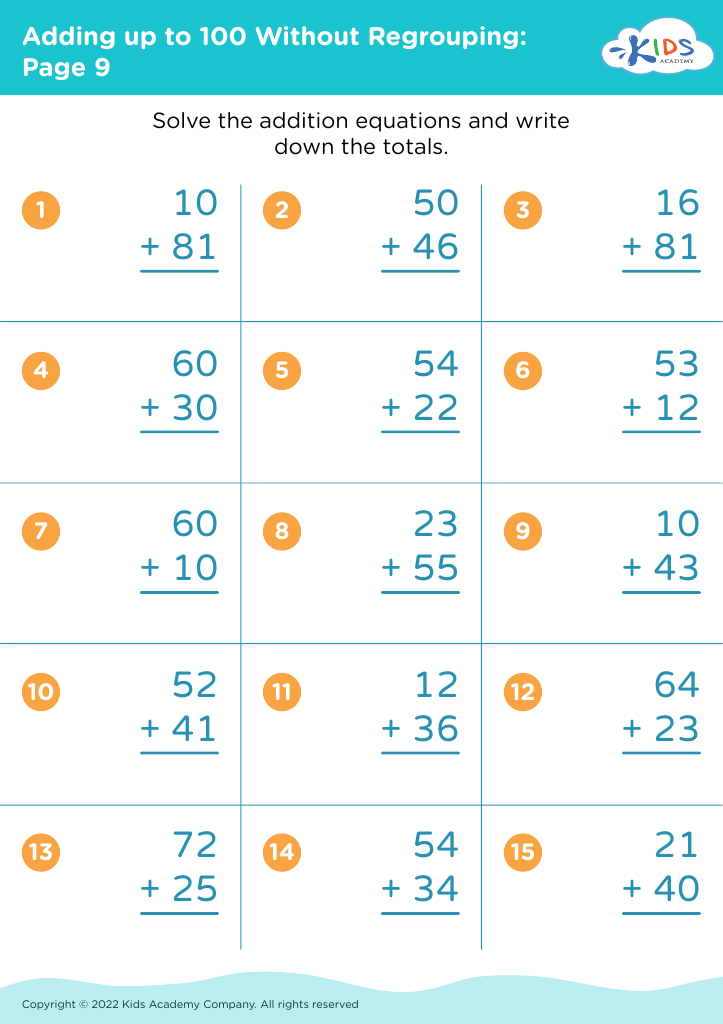
Adding up to 100 Without Regrouping: Page 9
Worksheet
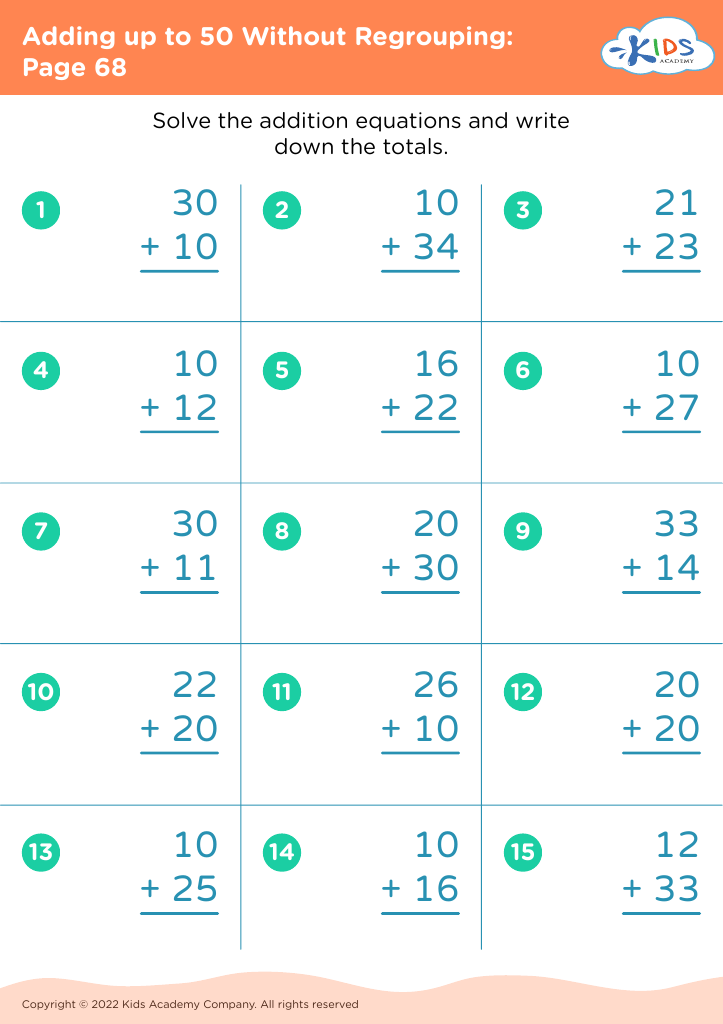
Adding up to 50 Without Regrouping: Page 68
Worksheet


Basic addition and subtraction skills are fundamental building blocks for young learners in Grade 2, and both parents and teachers should prioritize their development. Mastery of these skills fosters a strong mathematical understanding that is essential for more complex concepts in the future. In Grade 2, students begin to encounter multi-digit numbers and simple word problems, and a solid grasp of addition and subtraction enables them to tackle these challenges with confidence.

Additionally, early proficiency in these skills can enhance critical thinking and problem-solving abilities. It encourages students to recognize patterns, understand relationships between numbers, and apply their knowledge in everyday situations, such as budgeting, measuring, and time management.

Furthermore, these foundational skills contribute to a positive attitude toward math. When students experience success in basic calculations, their motivation and self-esteem grow, making them more willing to engage with new and more complex material.

Lastly, parents and teachers play a critical role in nurturing these skills. Through regular practice, engaging activities, and real-life applications, they can help children build a robust mathematical foundation that supports their ongoing education and overall cognitive development. Investing time in these skills now sets the stage for lifelong learning and success.