Counting practice Grade 2 Addition & Subtraction Worksheets - Page 3
55 filtered results
-
From - To
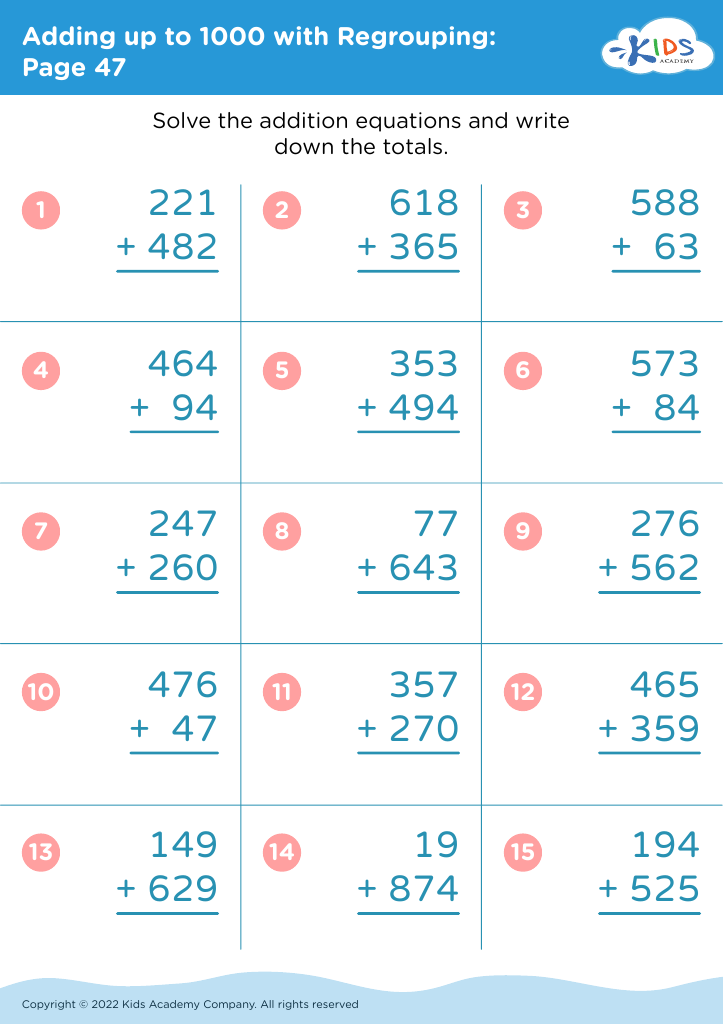
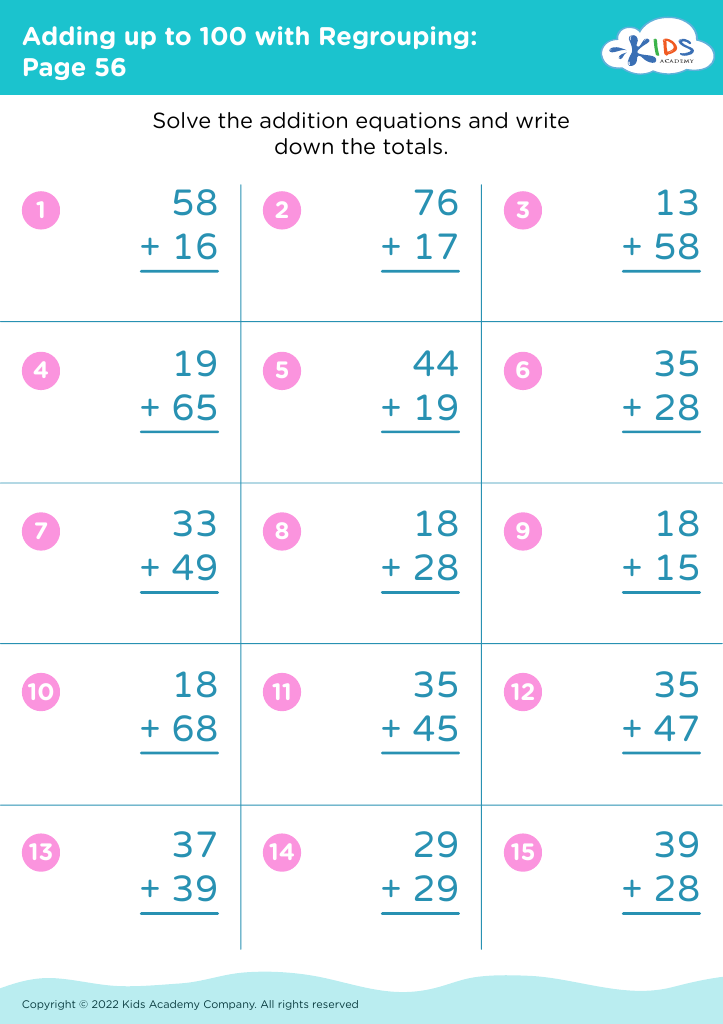
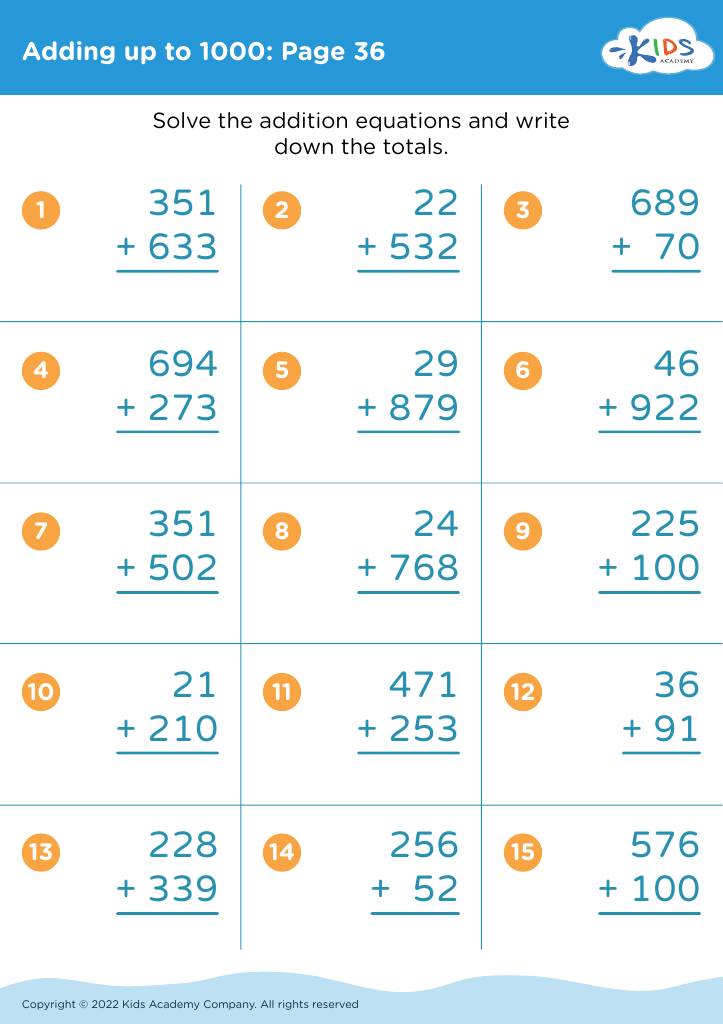
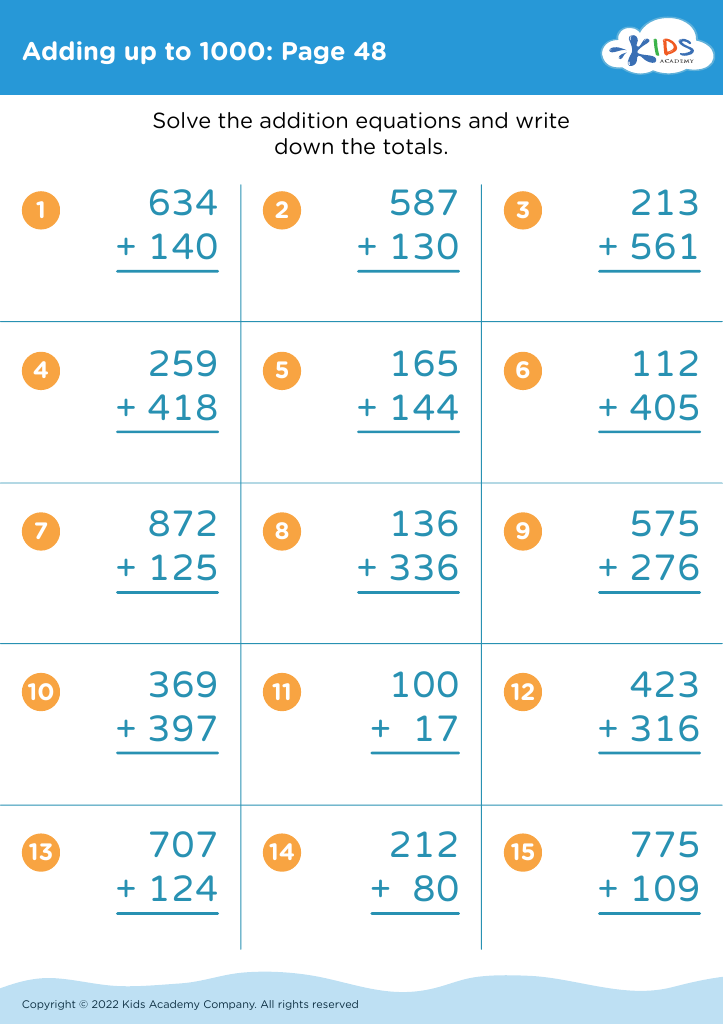
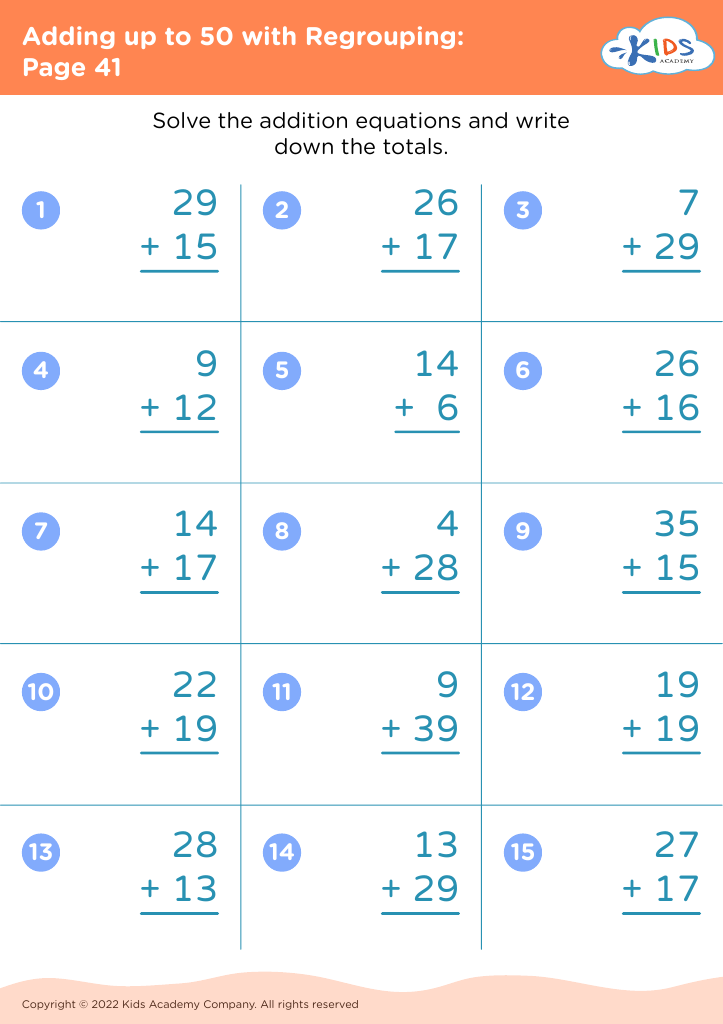
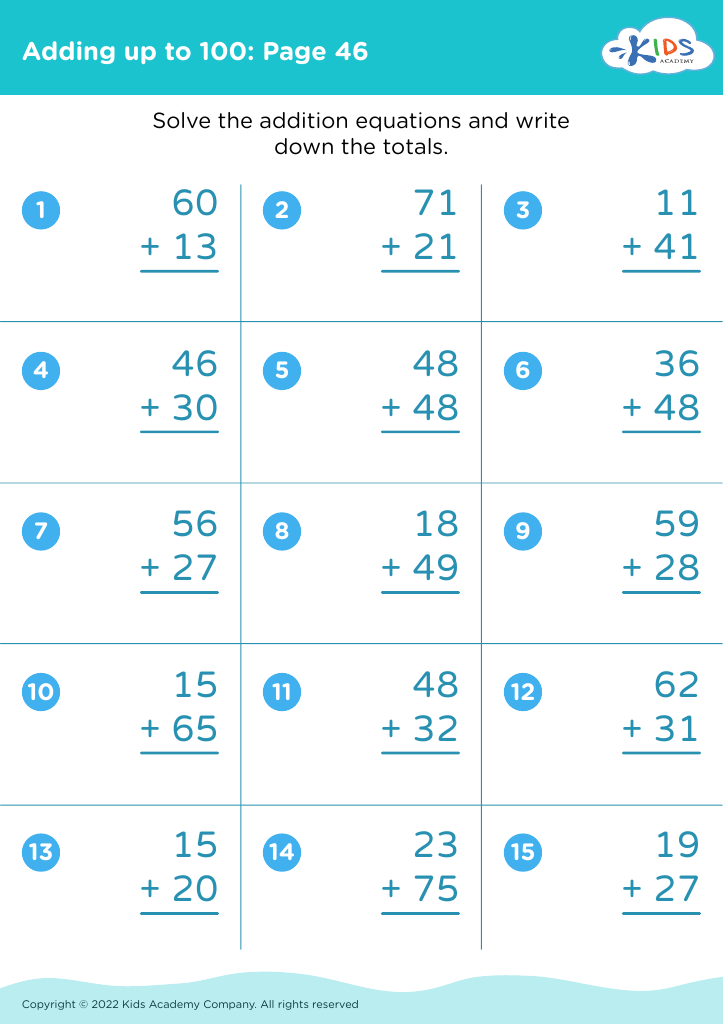
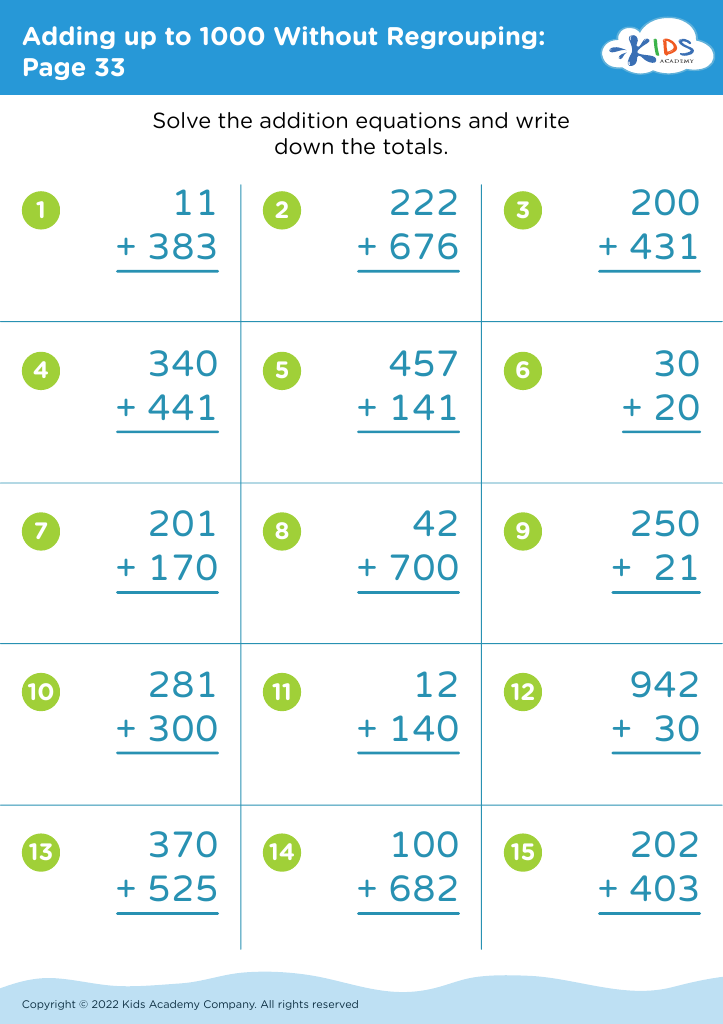








Counting practice in Grade 2, particularly in addition and subtraction, is crucial for several reasons. First, it lays the foundation for essential mathematical skills. In Grade 2, students transition from learning basic concepts to applying them in more complex problems. Mastering counting, addition, and subtraction not only boosts their confidence but also enhances their overall problem-solving abilities.
Secondly, consistent practice in these areas fosters number sense, which is vital for understanding higher-level math concepts. It allows students to compare numbers, recognize patterns, and develop strategies for mental calculations. This fundamental understanding will be beneficial as they progress to more advanced topics like multiplication and division in later grades.
Moreover, counting practice helps improve fine motor skills and attention to detail. Engaging activities involving counting objects or using visual aids reinforce learning in a hands-on manner. For parents and teachers, incorporating these practices into frequent routines, such as during play or everyday tasks, makes learning fun and interactive, which is essential in maintaining student interest.
Ultimately, emphasizing counting practice in addition and subtraction during Grade 2 effectively nurtures a child's early mathematical journey, setting them on the path to academic success and lifelong numeracy.