Enhance logical thinking Grade 2 Addition & Subtraction Worksheets
3 filtered results
-
From - To
Enhance your second grader's logical thinking skills with our Grade 2 Addition & Subtraction Worksheets. Designed by experienced educators, these engaging and fun worksheets help students practice essential math techniques while fostering critical thinking and problem-solving abilities. Each worksheet offers unique challenges to boost computational fluency and ensure understanding of addition and subtraction concepts. Ideal for classroom activities or home learning, these resources align with key academic standards to provide comprehensive math support. Invest in your child's educational journey today with our expertly curated collection, and watch them develop confidence and mastery in math.
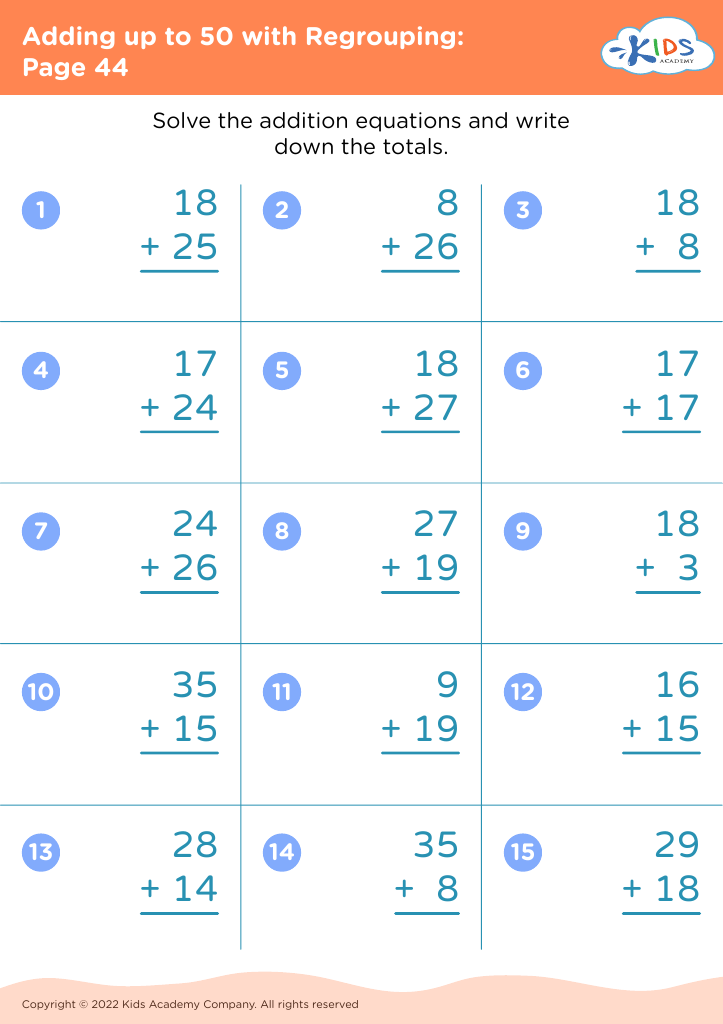
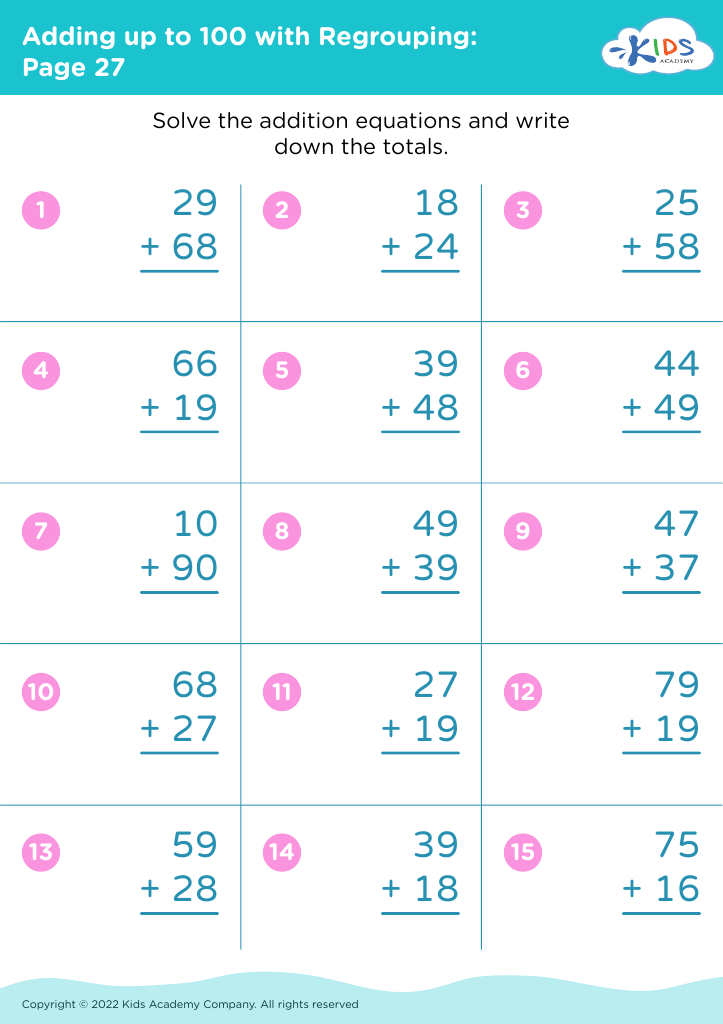
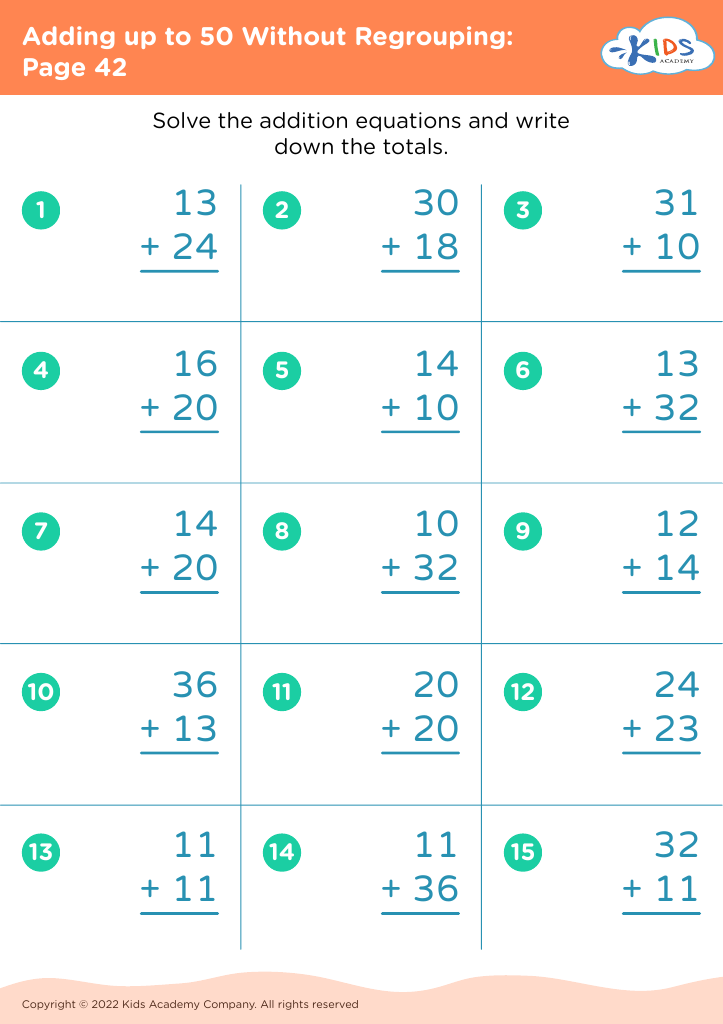








Developing strong logical thinking skills in Grade 2 students is crucial for several reasons, particularly through mastering addition and subtraction. At this foundational stage, math goes beyond rote memorization of numbers; it introduces children to problem-solving and critical thinking processes that are essential for their academic and everyday lives.
By focusing on logical thinking in addition and subtraction, children learn to understand and process the 'why' and 'how' behind mathematical operations. This deepens their comprehension and enables them to apply mathematical concepts to different scenarios, fostering adaptability. For instance, understanding that subtraction is essentially the reverse of addition helps children verify their work and enhances their confidence in handling numbers.
Additionally, honing logical thinking aids in developing essential life skills including decision-making, pattern recognition, and analytical reasoning. These skills are not limited to math but extend across various subjects, supporting overall cognitive development. For example, an enhanced ability to solve word problems can improve reading comprehension and verbal skills as children learn to decode and analyze questions before deriving the solution.
Teachers and parents should nurture these skills early on to build a strong foundation for advanced mathematical concepts and overall intellectual growth. Classroom activities, games, and interactive learning tools focused on addition and subtraction can make math both fun and intellectually stimulating, setting children on a path of lifelong learning and problem-solving.