Math problem-solving skills Grade 2 Addition & Subtraction Worksheets
4 filtered results
-
From - To
Discover our engaging Grade 2 Addition & Subtraction worksheets designed to enhance math problem-solving skills! These printable resources offer a variety of fun and interactive exercises, perfect for helping young learners master basic arithmetic. Each worksheet encourages critical thinking and the application of addition and subtraction in everyday scenarios. Easily accessible and tailored for second graders, these activities promote confidence in math while reinforcing essential skills. Ideal for home practice or classroom environments, our worksheets make learning math enjoyable and effective. Download now and watch your child excel in mathematics with these dynamic problem-solving challenges!
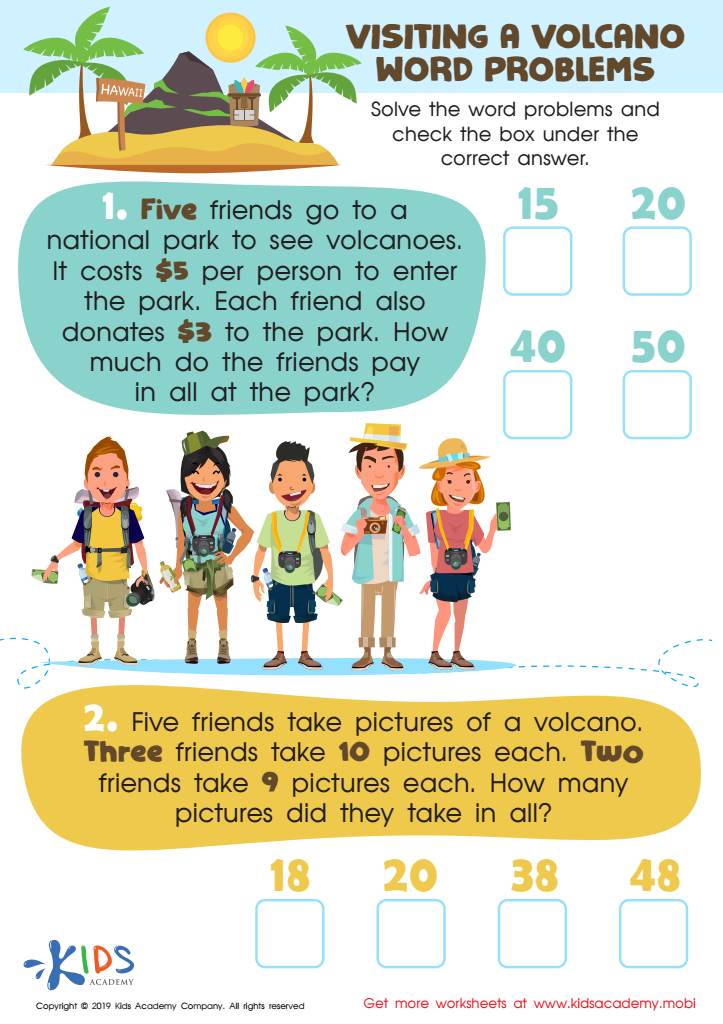
Visiting a Volcano Word Problems Worksheet
 Assign to My Students








Developing strong math problem-solving skills in grade 2, particularly in addition and subtraction, is crucial for several reasons. First, these foundational skills are essential components of numeracy, which is a key predictor of future academic success. Mastery of addition and subtraction not only facilitates the learning of more complex mathematical concepts in subsequent grades but also establishes a positive attitude toward math, reducing anxiety and promoting a growth mindset.
Second, problem-solving skills cultivate critical thinking. When children engage in solving math problems, they learn to analyze situations, make connections, and employ strategies to arrive at a solution. This cognitive development extends beyond math, benefiting children in other subjects and real-world scenarios.
Additionally, parents and teachers play a crucial role in supporting this development. By fostering an environment that encourages mathematical exploration and discussion, they can enhance children's confidence and ability in math. Learning together through games or practical applications—like cooking or shopping—makes math relevant and enjoyable for kids.
Overall, nurturing addition and subtraction problem-solving skills prepares young learners not only for academic success but also for practical decision-making, establishing lifelong skills that extend beyond the classroom.