Reading analog clocks Grade 2 Addition & Subtraction Worksheets
4 filtered results
-
From - To
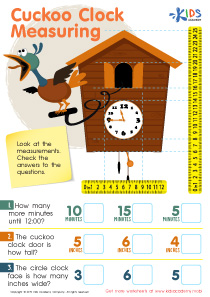
Enhance your Grade 2 students' understanding of time with our engaging "Reading Analog Clocks" worksheets focused on addition and subtraction. These carefully designed resources aim to develop essential skills in telling time while incorporating math practice. Students will learn to read clock faces, understand AM/PM distinctions, and solve time-related addition and subtraction problems. With a variety of fun exercises and visuals, these worksheets make learning interactive, helping young learners grasp the concept of time in a practical way. Perfect for reinforcing classroom learning, these resources are a valuable tool for teachers and parents alike. Start building confidence in both math and time-telling today!








Reading analog clocks is a crucial skill for young learners, especially in Grade 2, where students begin developing a deeper understanding of time. Being able to read an analog clock not only helps children grasp the concept of time management but also enhances their daily routine and responsibility. When parents or teachers emphasize this skill, it fosters independence as children learn to self-regulate their time for activities such as homework, playtime, and bedtime.
Additionally, incorporating addition and subtraction into understanding time boosts mathematical reasoning. For instance, if a child knows it's 2:30 and they want to add 45 minutes, they need to visualize the clock and subtract the initial time effectively. This real-world application enhances their math proficiency and allows them to make connections between different subjects.
Furthermore, learning to read analog clocks can bolster fine motor skills and improve children's focus and concentration as they practice the precise movement of hands around the clock face. Overall, prioritizing analog clock reading complements essential life skills and analytical thinking, equipping children with the tools they need for future academic success and daily decision-making. By nurturing these abilities early on, parents and teachers set a strong foundation for lifelong learning.