Understanding number sequence Grade 2 Addition & Subtraction Worksheets
4 filtered results
-
From - To
Discover our “Understanding Number Sequence” Grade 2 Addition & Subtraction Worksheets at Kids Academy. These engaging worksheets help second graders master number sequences while boosting their addition and subtraction skills. Bright visuals and fun exercises make learning enjoyable and effective. Perfect for classroom use or home practice, each worksheet strengthens number recognition, sequencing, and mathematical reasoning. With a focus on foundational math concepts, these tools pave the way for future success. Explore our collection today and give your child the confidence to excel in math!
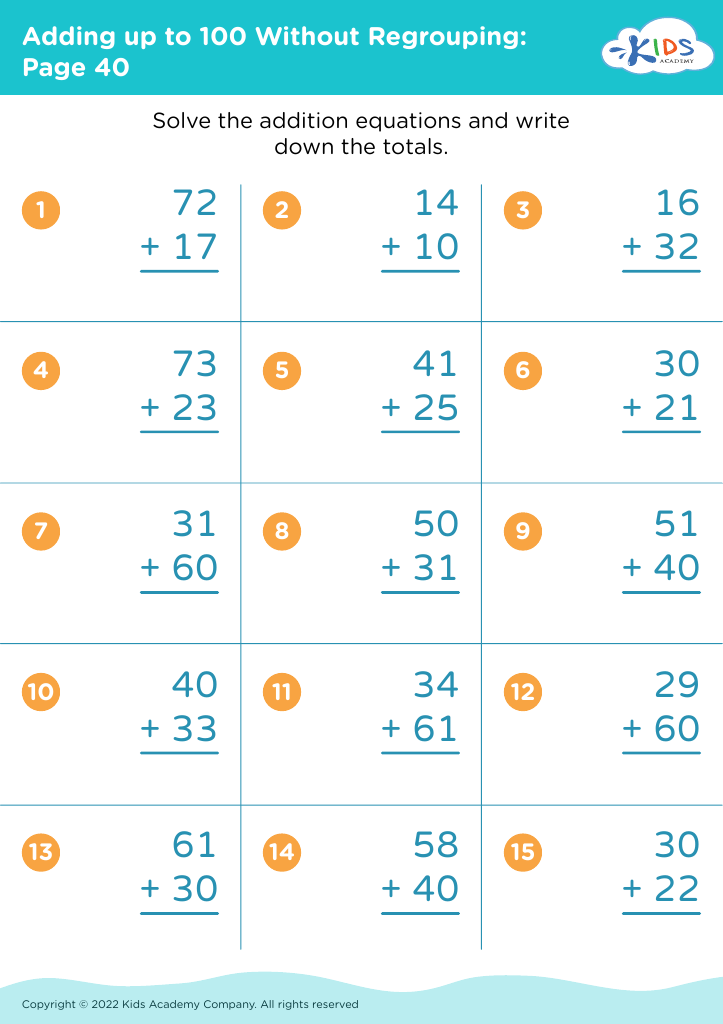
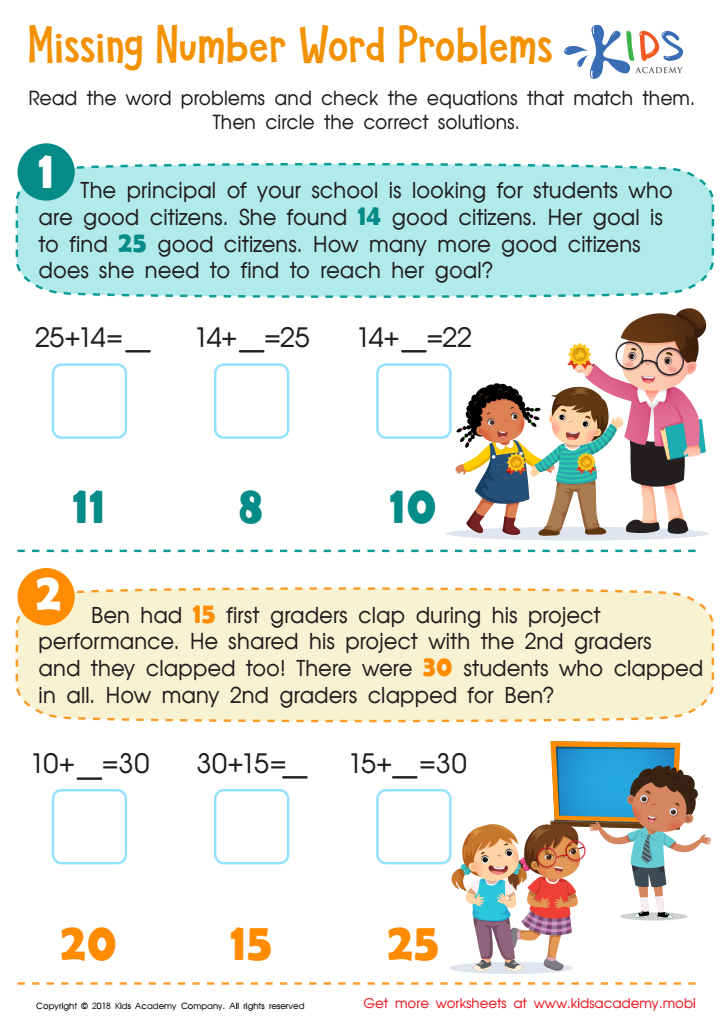
Missing Number Word Problems Worksheet
 Assign to My Students
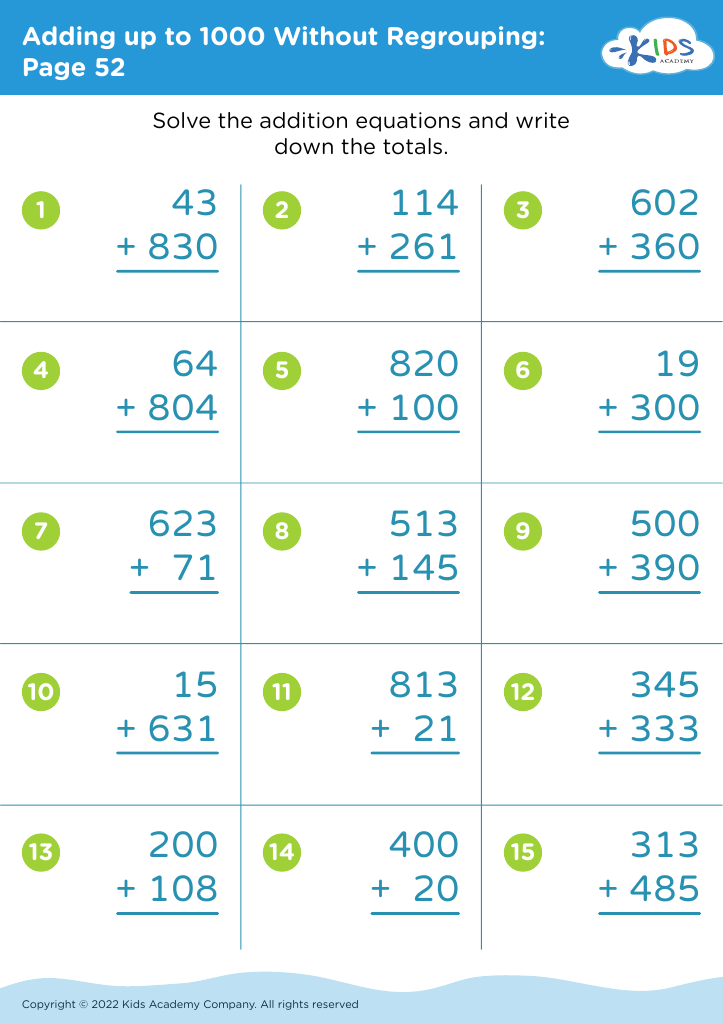
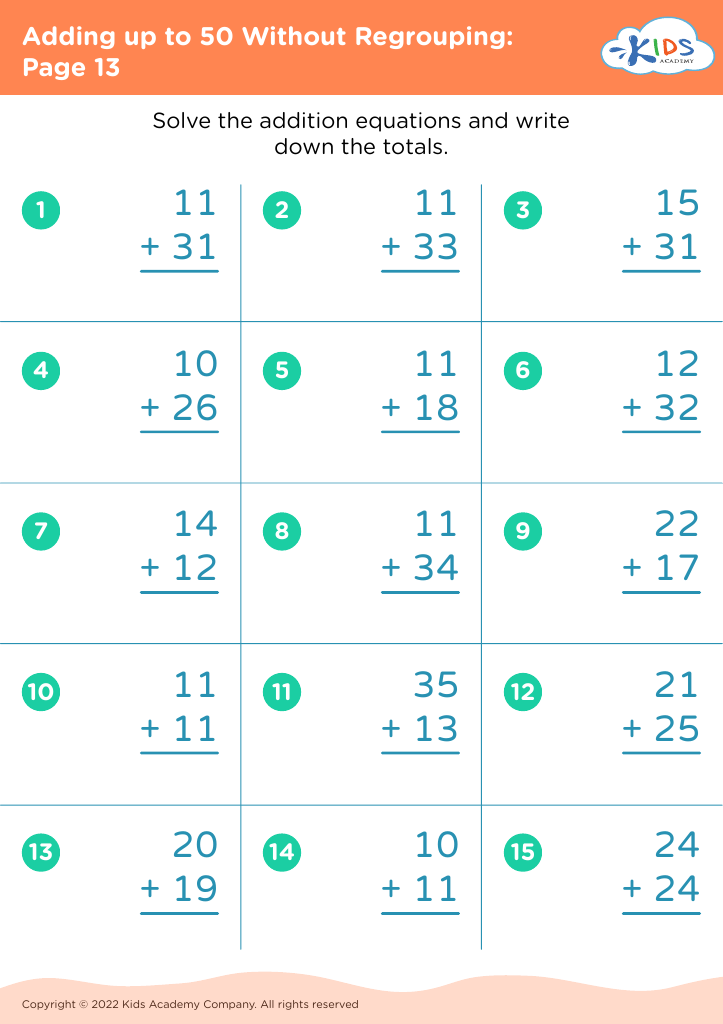








Understanding number sequencing in Grade 2, particularly through addition and subtraction, is fundamental for a child's mathematical development. This concept not only provides the foundational skills necessary for advanced mathematics but also aids in the enhancement of critical thinking and problem-solving abilities.
First and foremost, number sequencing helps children grasp the relationship between numbers, discerning patterns, and recognizing the systematic order of numerical values. This understanding is crucial for effective addition and subtraction. If a child can fluently navigate through numbers, incrementally moving up or down, they can more easily solve arithmetic problems, reinforcing their mental math capabilities.
Moreover, mastering addition and subtraction is integral to overall academic success and everyday life applications. These operations are pivotal for tasks ranging from counting money to measuring ingredients in a recipe. Early competence in these areas can lead to greater confidence in math, reducing math anxiety and encouraging a positive attitude toward learning.
Teachers and parents should invest time in ensuring that children are proficient with number sequences because this knowledge builds a strong mathematical foundation. Malalignment in these skills could mean struggles with more complex concepts in the future. Through structured practice and support, children can gain a robust numerical understanding, opening doors to higher-level math with ease and enthusiasm.