Vocabulary expansion Grade 2 Addition & Subtraction Worksheets
13 filtered results
Difficulty Level
Grade
Age
-
From - To
Subject
Activity
Standards
Enhance your Grade 2 math skills with our engaging Vocabulary Expansion worksheets focused on addition and subtraction. These interactive resources combine essential math concepts with vocabulary enrichment, helping students to understand key terms while mastering operations. Our visually appealing worksheets foster critical thinking and encourage students to connect words to mathematical processes, improving both vocabulary and computational skills. Perfect for classroom or home use, our worksheets are designed to make learning playful and effective, ensuring students gain confidence in their abilities. Explore our collection now and watch your child's mathematical vocabulary and problem-solving skills flourish!
Favorites
With answer key
Interactive
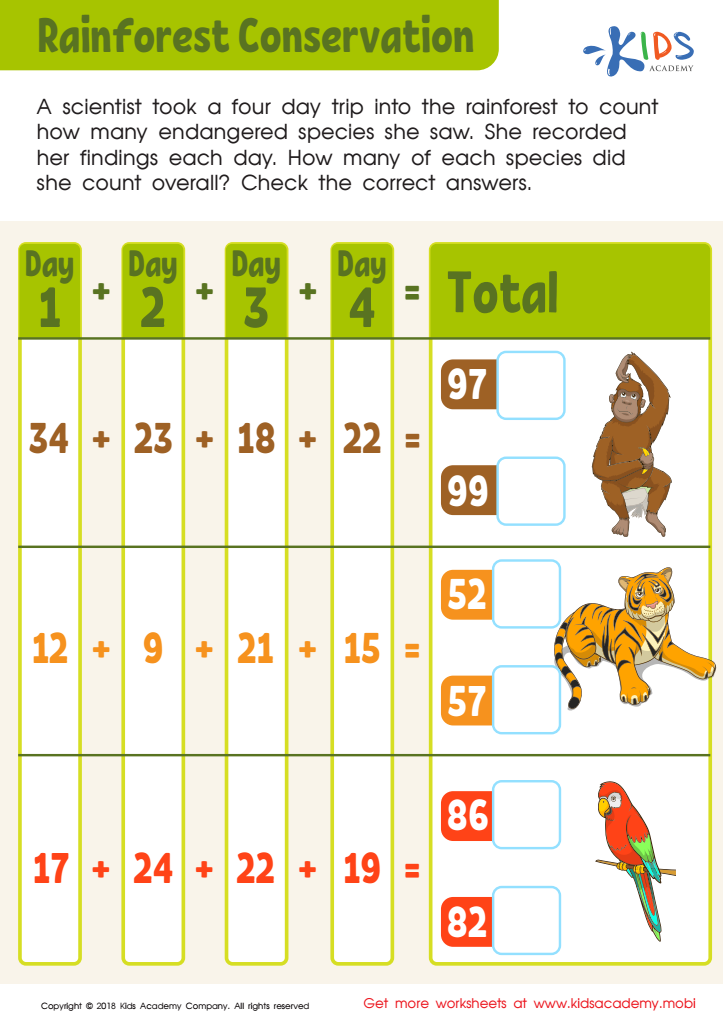
Rainforest Conservation Worksheet
Explain to your child what a rainforest is and why it's important. A scientist took a four-day trip to count endangered species. Let your child count how many of each species were seen in total. Check the answers and help them understand.
 Assign to My Students
Rainforest Conservation Worksheet
Worksheet
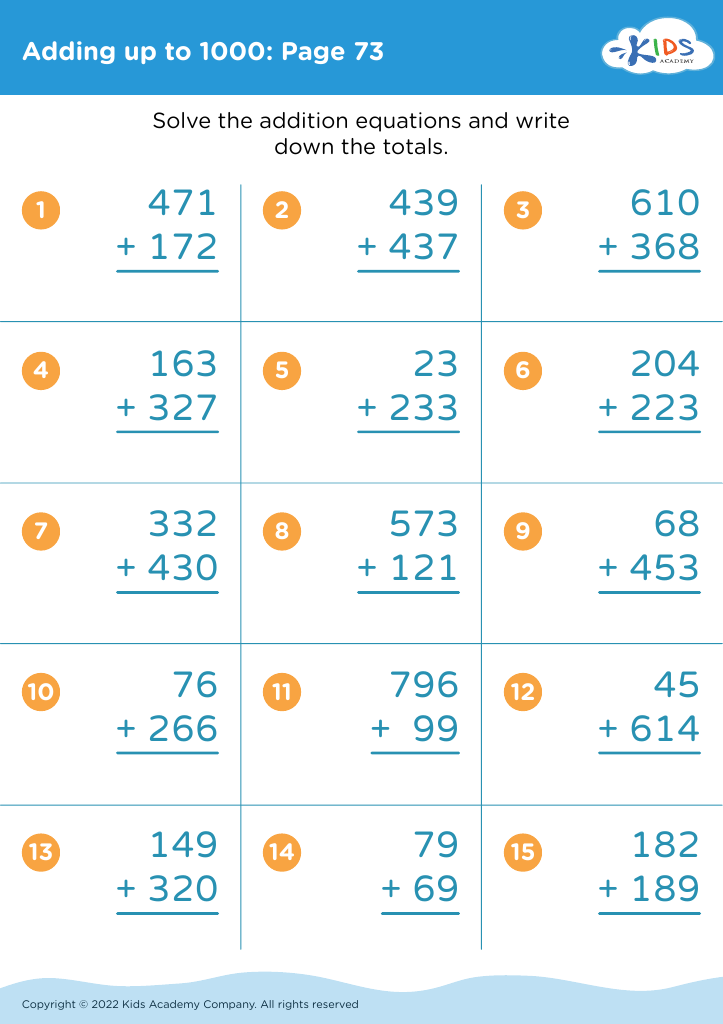
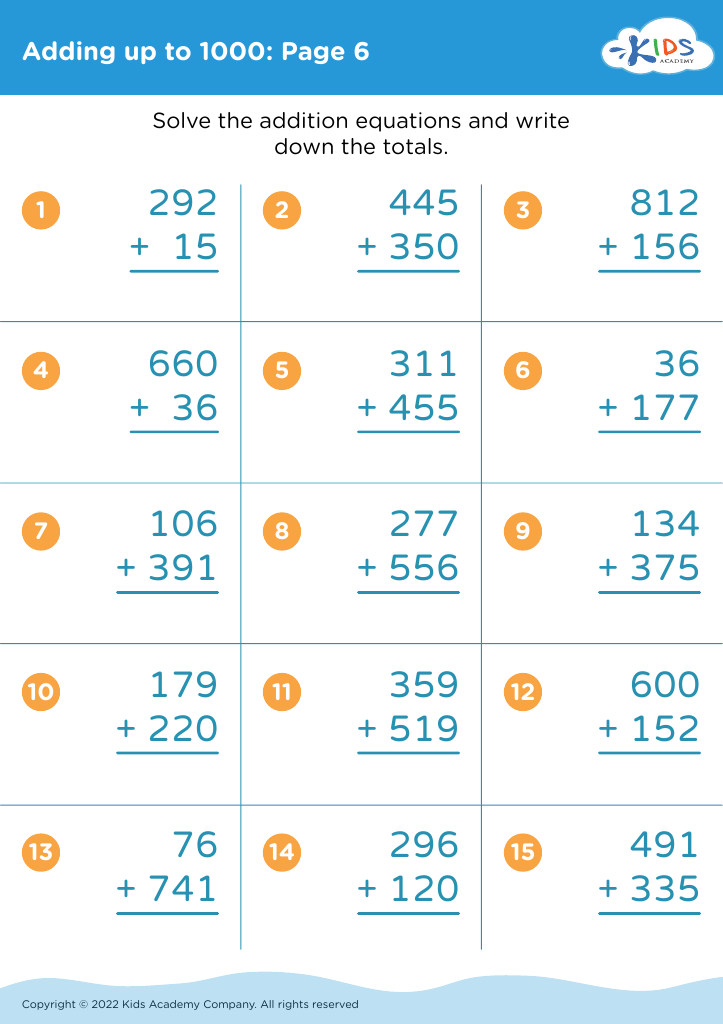
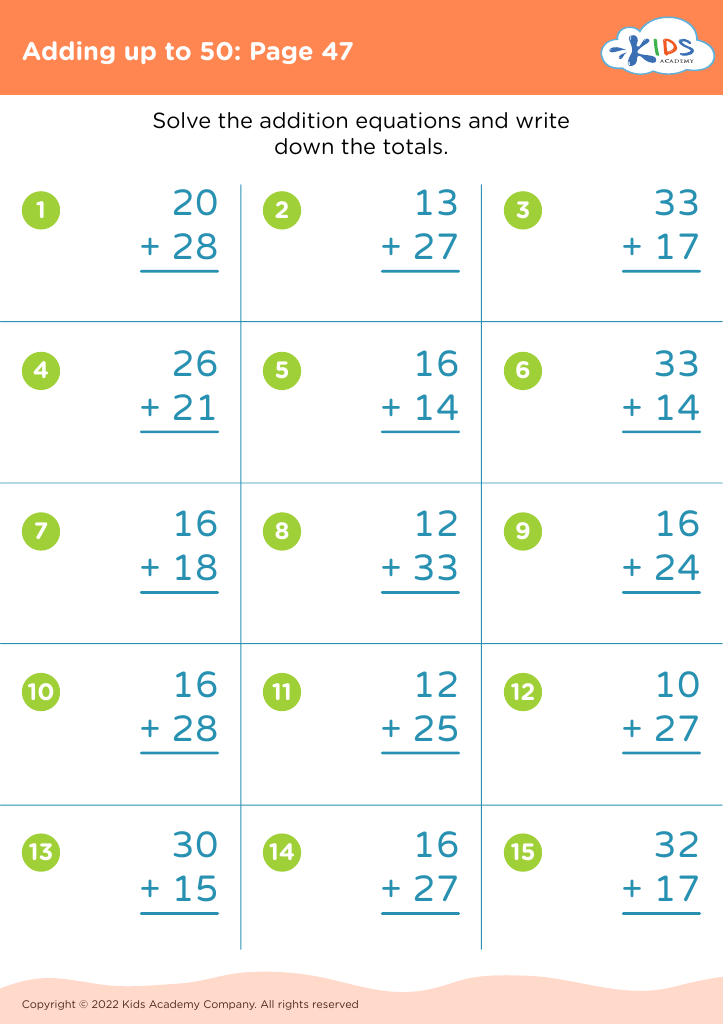
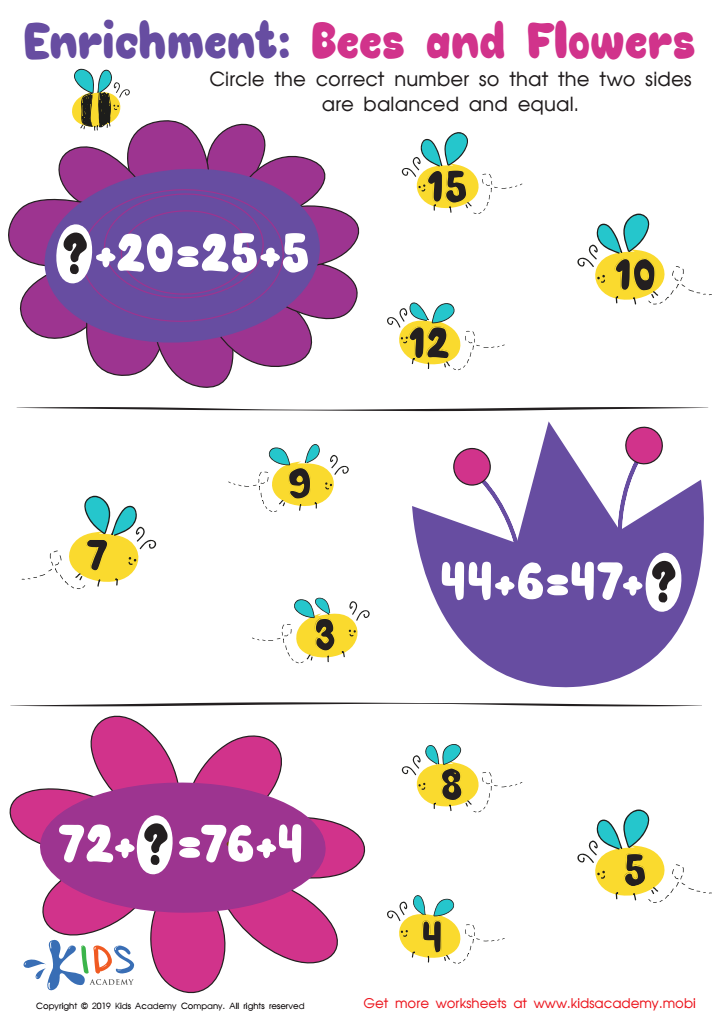
Enrichment: Bees and Flowers Worksheet
Help your kids become better at identifying bees and math with this worksheet! It features pictures of bees for your child to point out, as well as numbers to add up and circle to make the two sides equal. Let them having fun learning and watching bees flit around the flowers.
Enrichment: Bees and Flowers Worksheet
Worksheet
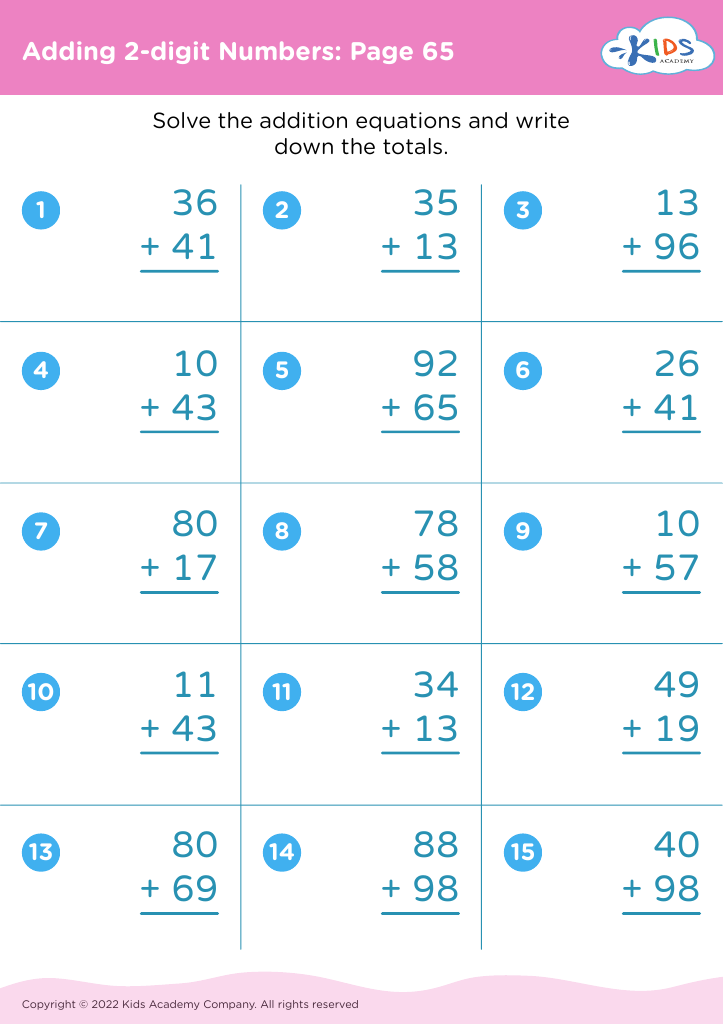
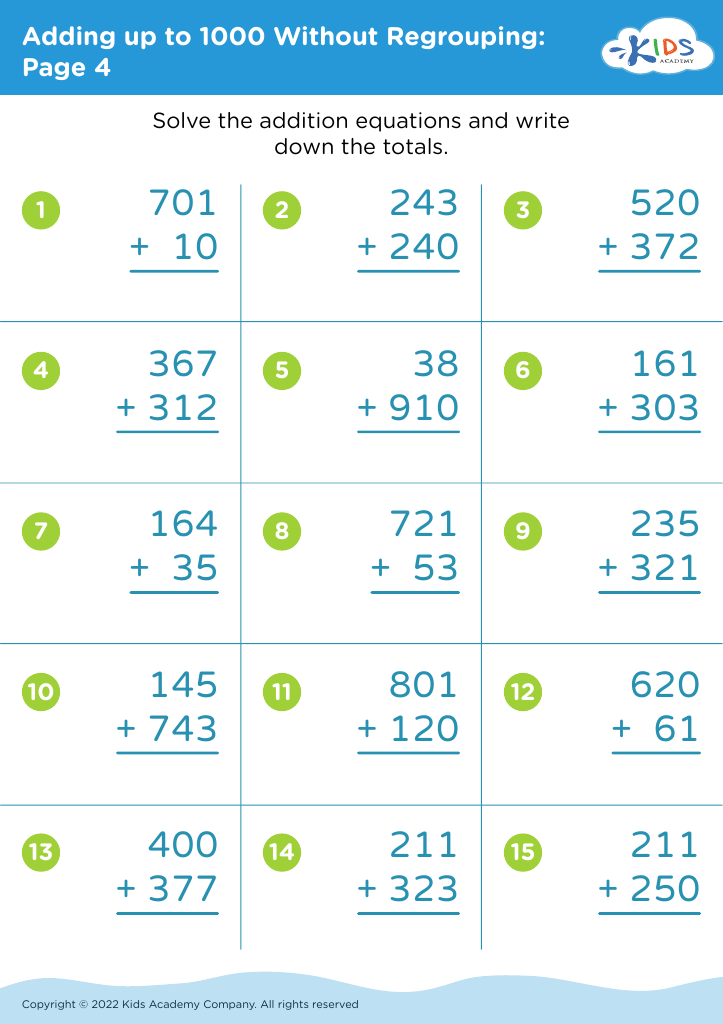
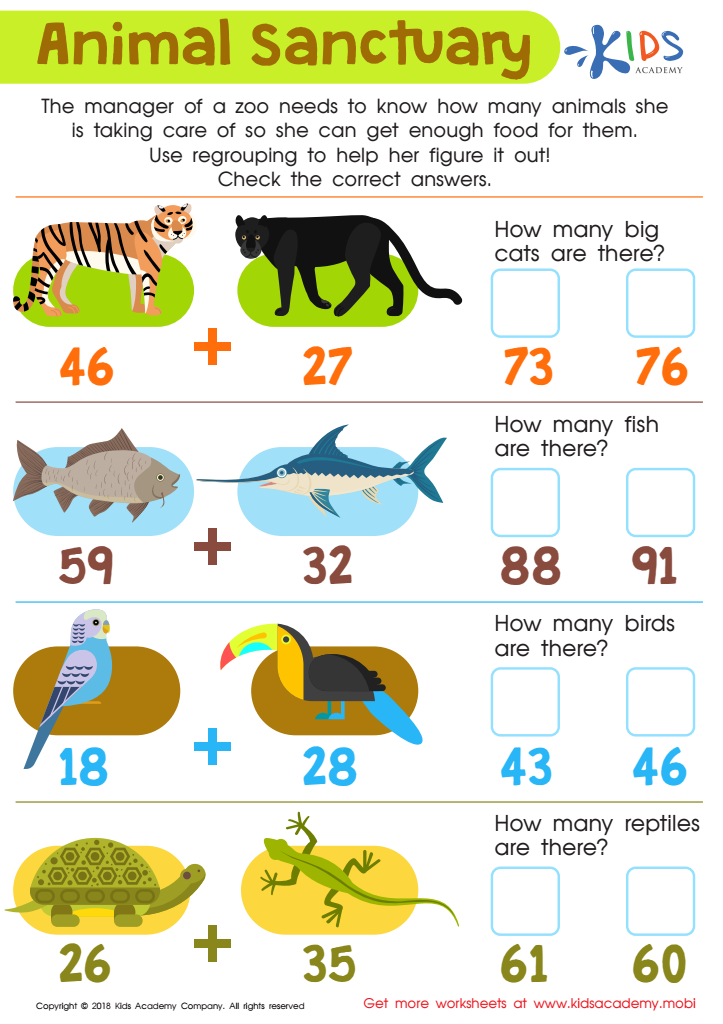
Animal Sanctuary Worksheet
Do your kids love visiting the zoo? Ask which animals they remember & which ones they liked the most. The manager needs help to get enough food for all the animals. Help your child use regrouping to figure out how many animals there are. And ask them to check the answers.
Animal Sanctuary Worksheet
Worksheet
Join Kids Academy for Free
Who is primarily going to use this learning content?








Vocabulary expansion is essential in Grade 2, particularly within the context of addition and subtraction. In this critical stage, children are developing not only their arithmetic skills but also their understanding of mathematical language. A rich vocabulary helps students grasp mathematical concepts more effectively. Terms such as "sum," "difference," "more than," and "less than" become foundational in enabling them to solve problems confidently.
Parents and teachers should prioritize vocabulary expansion because it fosters better comprehension and application of mathematical concepts. When children understand the language of math, they are more likely to engage with problem-solving tasks and show greater aptitude in calculations. Furthermore, a strong vocabulary equips students with the tools they need to explain their thinking and strategies, enhancing communication skills.
Moreover, as children encounter word problems, a well-developed vocabulary can deepen comprehension and analytical skills. This sets a solid groundwork for future mathematical learning, as students who struggle with vocabulary often face challenges in higher-level math. Investing time in vocabulary expansion through playful learning activities, discussions, and reading enriches their overall education, giving them both confidence and competence in their mathematical journey. Overall, vocabulary plays a crucial role in shaping young learners’ attitudes and success in math.