Addition of fractions Grade 2 Addition Worksheets
3 filtered results
-
From - To
Enhance your second grader's math skills with our engaging Addition of Fractions Worksheets! Tailored for Grade 2, these printable resources make learning fraction addition fun and interactive. Each worksheet features colorful visuals and simple problems designed to help young learners understand how to combine fractions with the same denominator. Our worksheets encourage critical thinking and offer a variety of exercises, promoting confidence in math while aligning with educational standards. Perfect for classroom use or at-home practice, our Addition of Fractions Worksheets provide the support needed to excel in this crucial mathematical concept. Start exploring the world of fractions today!
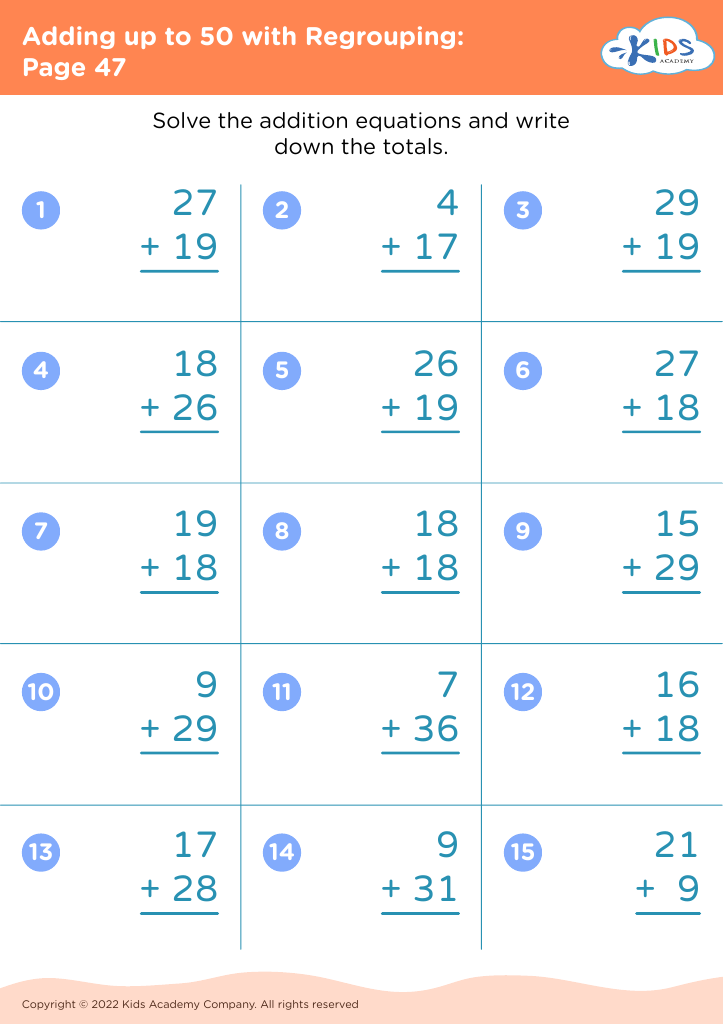
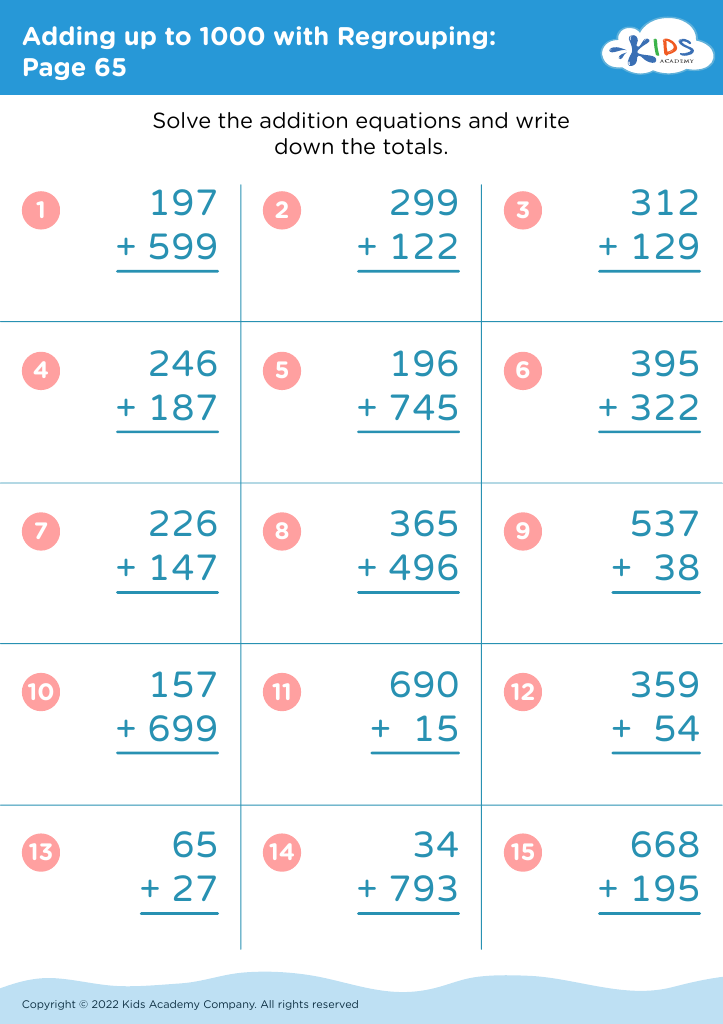
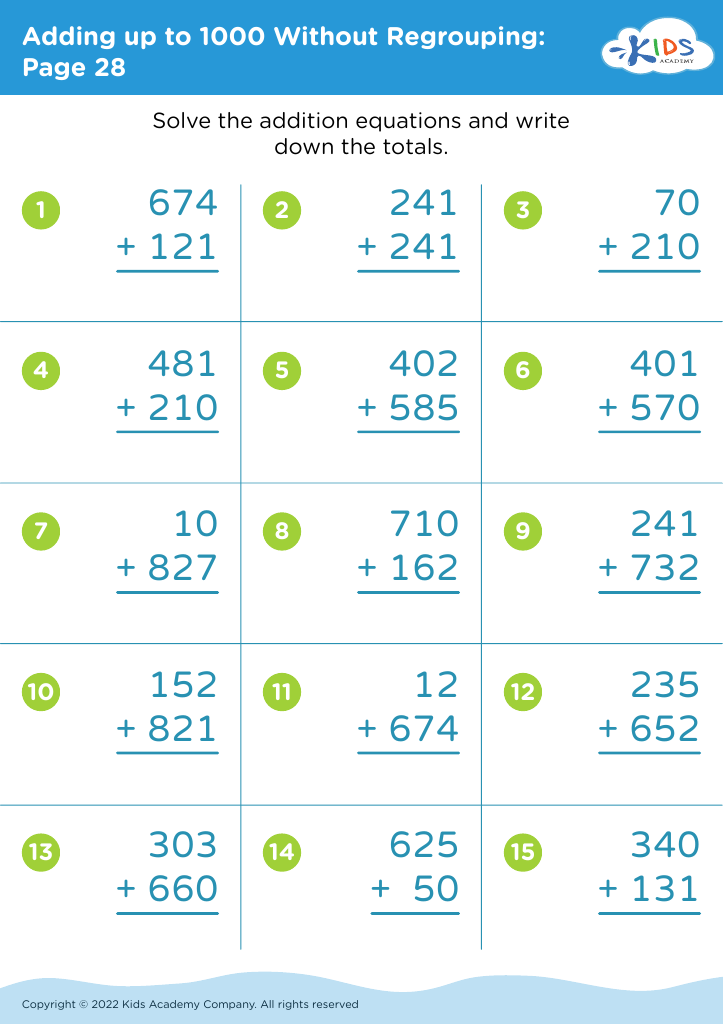








Understanding the addition of fractions is an essential foundational skill for second graders, making it crucial for both parents and teachers to pay attention to this topic. In Grade 2, students begin to formalize their mathematical understanding, transitioning from whole numbers to more complex concepts, including fractions.
Learning to add fractions helps students grasp the idea of parts of a whole, promoting their overall numerical literacy. It enhances their ability to understand and manipulate different quantities, which is vital for future math concepts like multiplication and division. Moreover, mastery of adding fractions fosters critical problem-solving skills, as children learn to analyze and represent real-world situations mathematically.
Additionally, emphasizing fraction addition encourages collaboration in the classroom and at home. Children often work on group projects or share tasks with family, making the ability to understand and add fractions valuable in teamwork scenarios. Parents can also use everyday experiences, like sharing food or dividing items, to reinforce this concept practically.
In summary, supporting students in mastering addition of fractions lays the groundwork for more advanced mathematics while developing essential life skills. Therefore, it is important for both parents and teachers to engage with and foster a solid understanding of this fundamental concept in young learners.