Critical thinking skills Grade 2 Addition Worksheets
5 filtered results
-
From - To
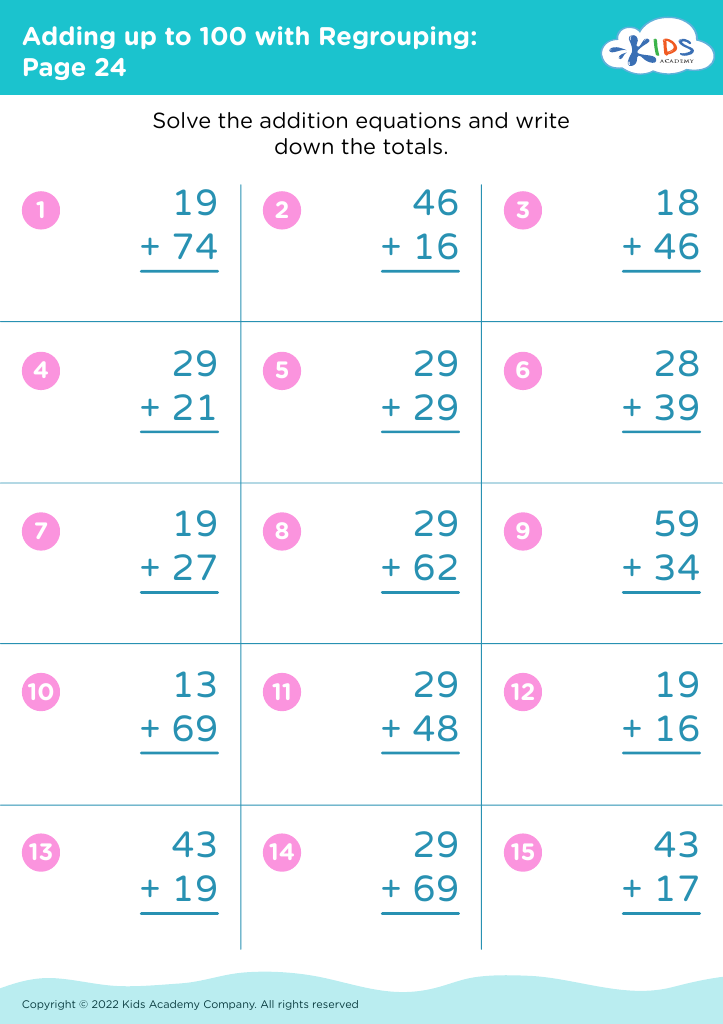
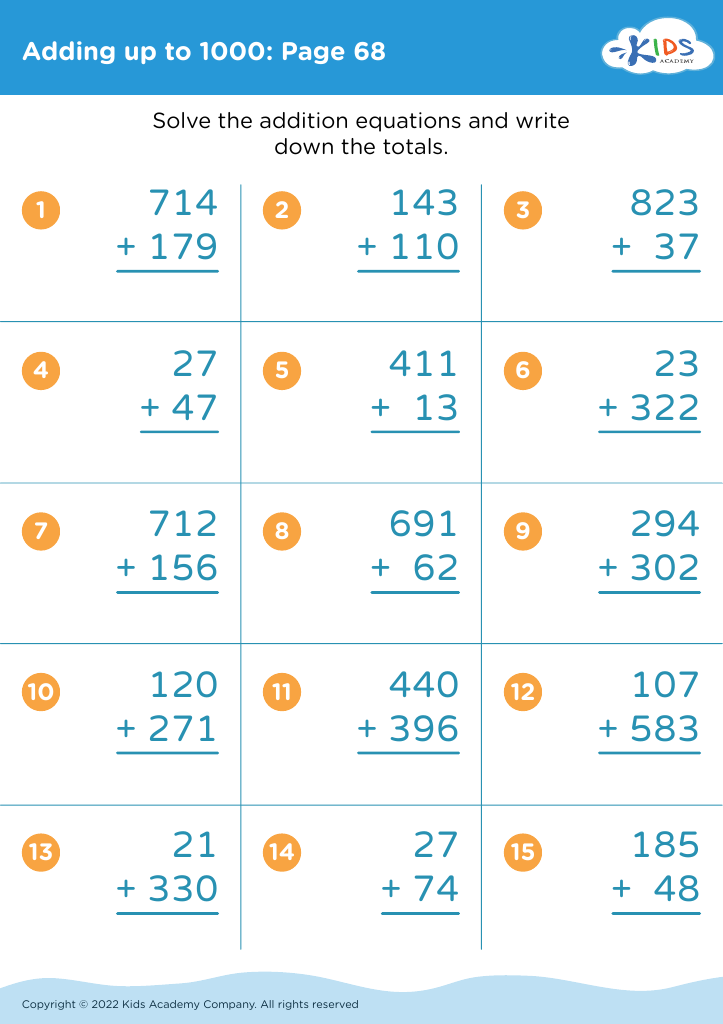
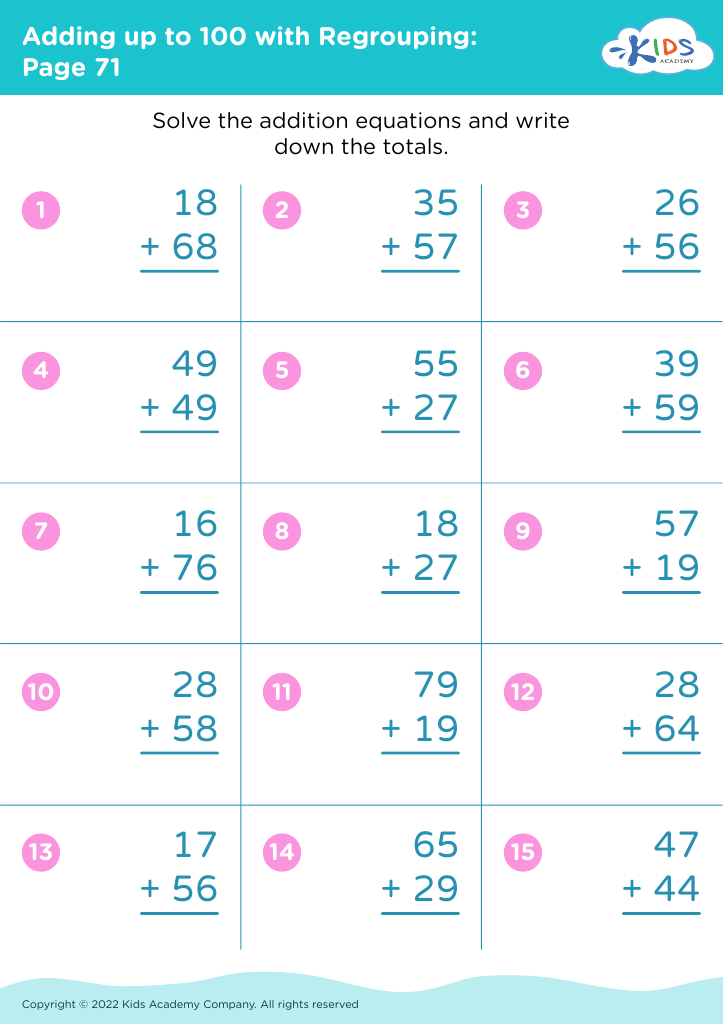
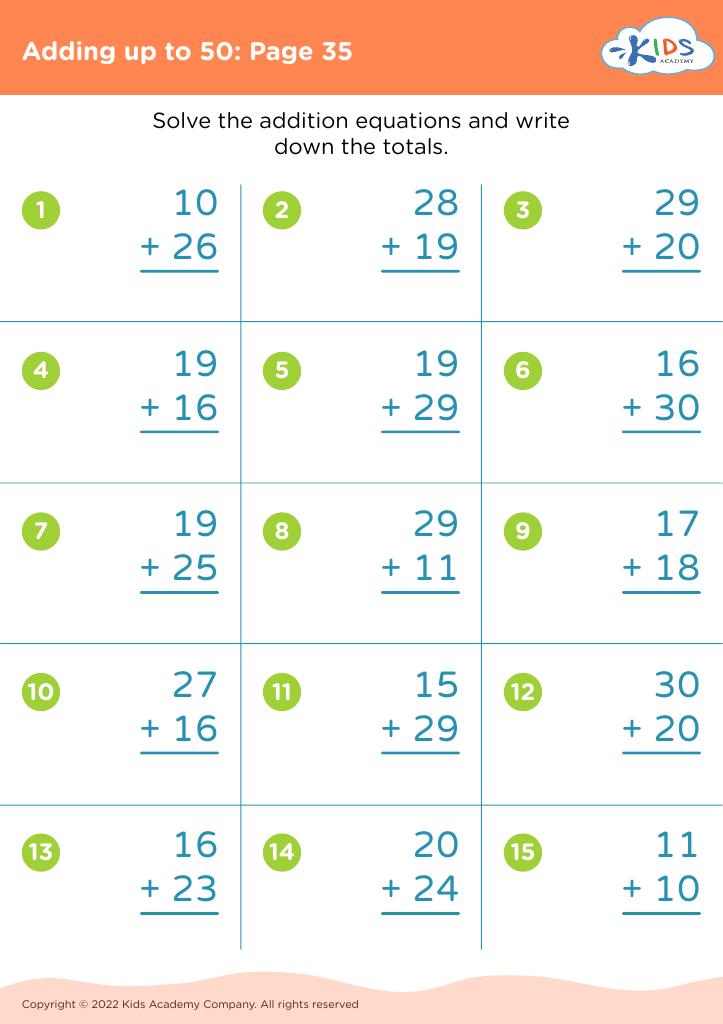
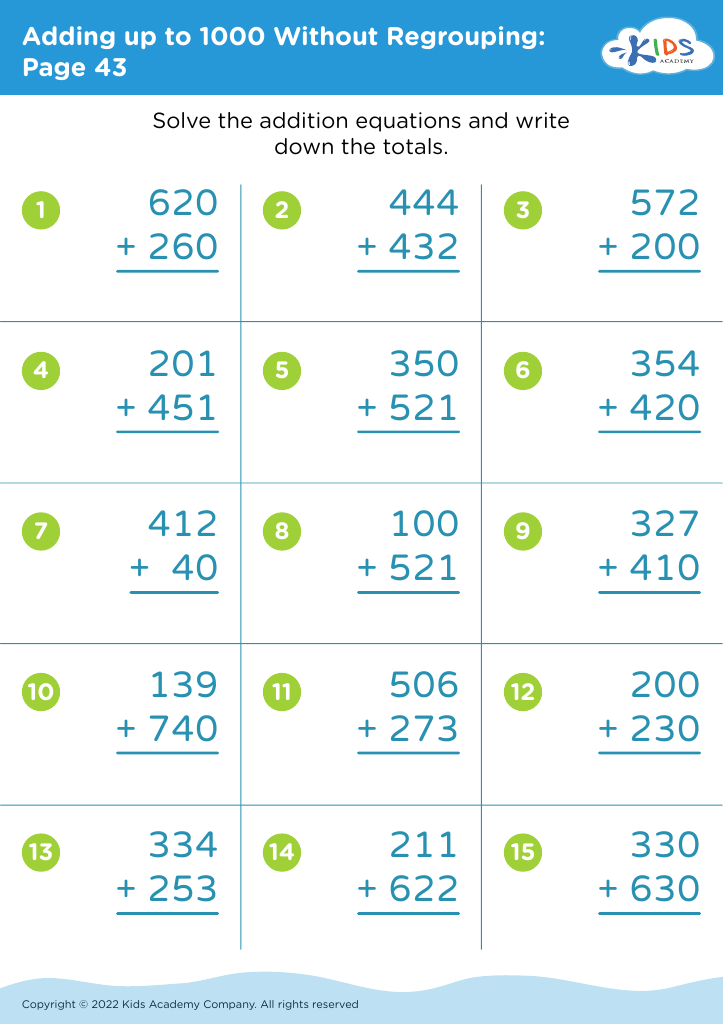
Enhance your second grader's mathematical understanding with our Critical Thinking Skills Grade 2 Addition Worksheets. Designed to engage young minds, these worksheets promote problem-solving and analytical thinking through fun and interactive addition activities. Students will explore various addition problems, encouraging them to think critically as they discover multiple strategies and apply logical reasoning. Perfect for at-home practice or classroom use, each worksheet aims to build confidence and strengthen foundational math skills. Boost your child's ability to tackle challenges with our comprehensive and enjoyable addition resources, crafting not just proficient mathematicians, but confident critical thinkers ready for future learning adventures!








Critical thinking skills are essential in Grade 2, especially in foundational subjects like math and addition. At this stage, children begin to develop the cognitive abilities necessary to analyze, evaluate, and synthesize information. By fostering critical thinking in addition, educators and parents help students understand not just how to solve math problems, but why certain methods work.
When children apply critical thinking to addition, they learn to approach problems from multiple angles. They might explore various strategies like grouping, using number lines, or visual aids, which enhances their ability to choose the most efficient method for solving—even as simple as 2+3. This deepens their cognitive understanding, making them more adaptable as they encounter more complex mathematical concepts in the future.
Moreover, critical thinking in math encourages confidence and perseverance. Students learn to approach challenges systematically, helping them become resilient learners who are not easily deterred by mistakes. For parents and teachers, promoting these skills means preparing children not only for academic success in math but also for life skills that require logical reasoning and decision-making. Ultimately, fostering critical thinking from an early age builds a strong foundation for lifelong learning and problem-solving capabilities.