Enhances number recognition Grade 2 Addition Worksheets
4 filtered results
-
From - To
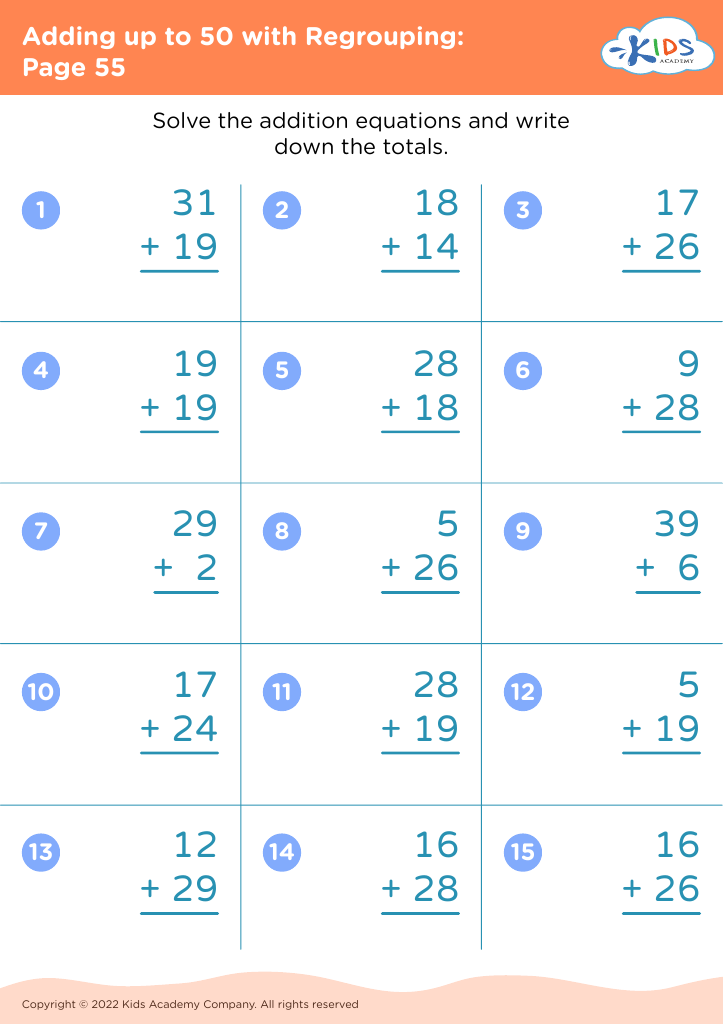
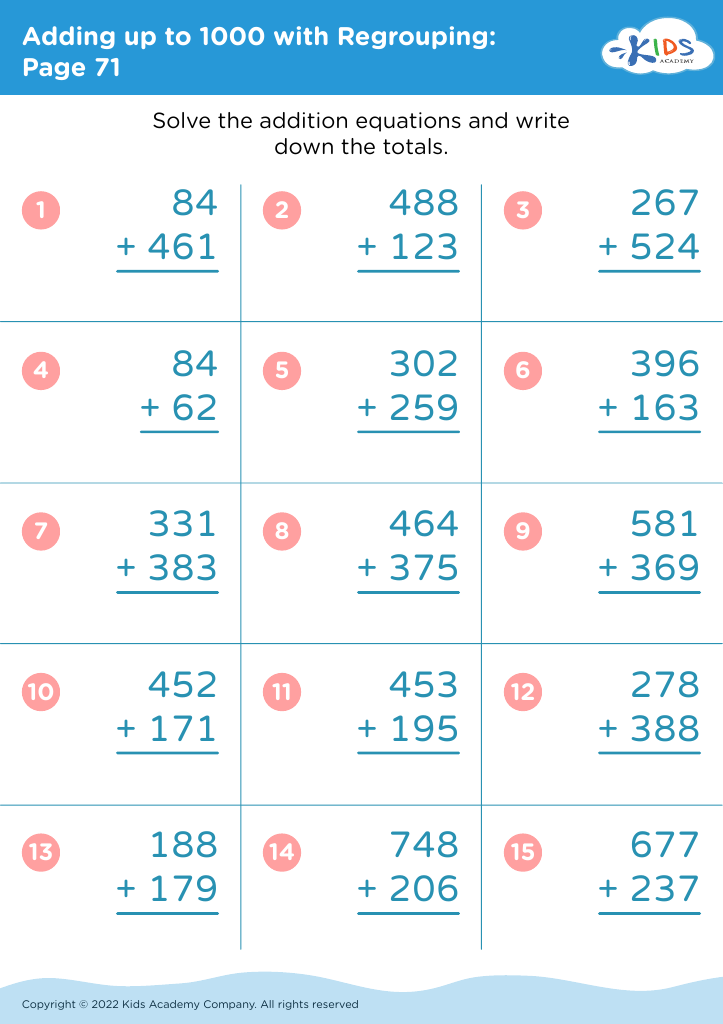
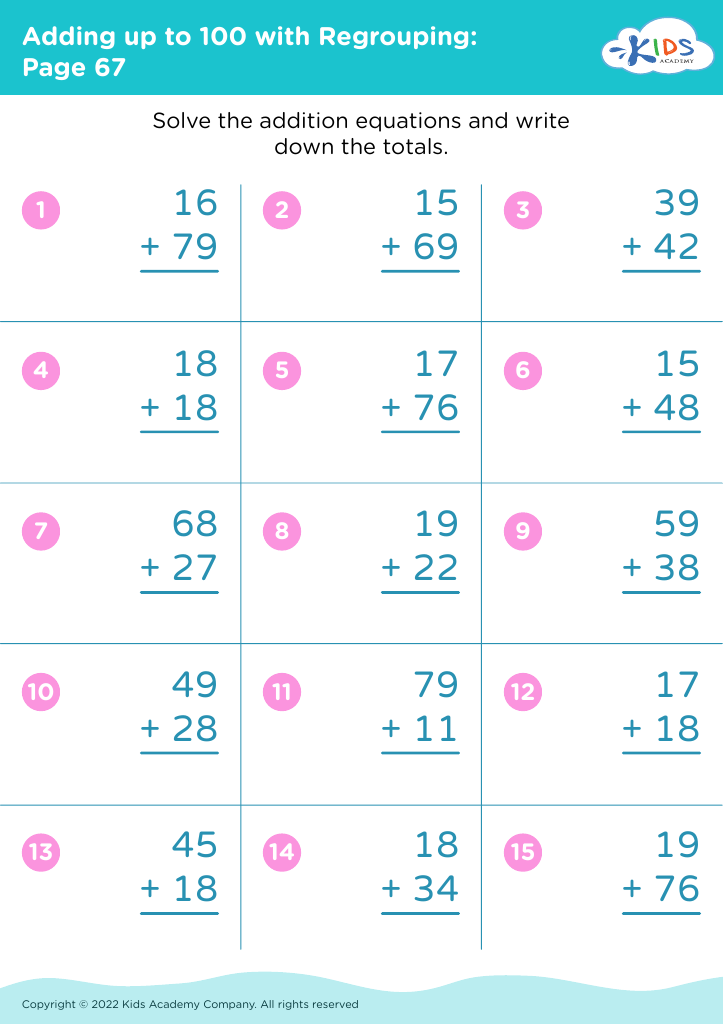
Boost your student's number recognition skills with our Grade 2 Addition Worksheets! Tailored for young learners, these worksheets combine engaging exercises with colorful graphics that make mastering addition fun. Each activity is designed to reinforce number recognition while children practice their addition skills, ensuring a comprehensive understanding of math concepts. Ideal for classroom use or at-home practice, these worksheets support various learning styles with interactive content. Perfect for enhancing your child’s confidence and proficiency in mathematics, our resources are easy to navigate and perfect for supplementing your curriculum. Start fostering a love for numbers in your second graders today!
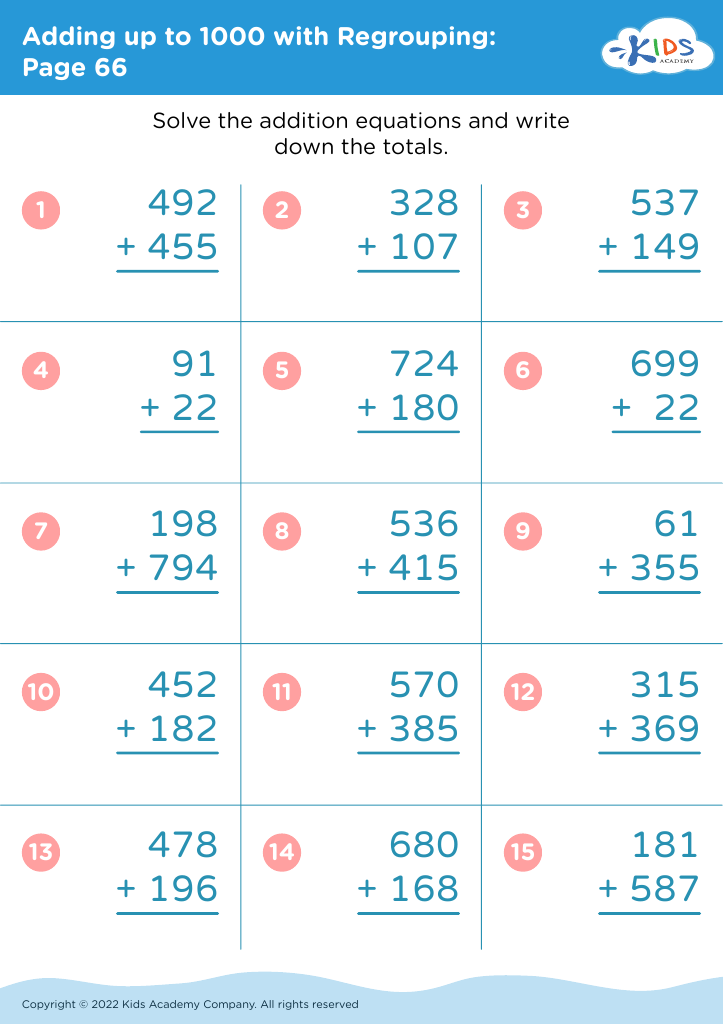








Enhancing number recognition in Grade 2 addition is crucial for several reasons. First, it lays the foundation for all future mathematical learning. As students progress through their academic journey, a solid grasp of numbers and basic addition is essential for understanding more complex concepts like subtraction, multiplication, and division.
Moreover, proficient number recognition helps students gain confidence in their mathematical abilities. Children who struggle with recognizing numbers may develop anxiety around math, which can hinder their overall performance and engagement in the subject. By promoting strong number recognition skills, parents and teachers foster a positive attitude toward math, encouraging students to embrace challenges rather than avoid them.
Additionally, strong number recognition encourages students to engage in problem-solving and critical thinking. When students can quickly identify numbers in addition problems, they are better equipped to analyze and solve real-world scenarios that require mathematical reasoning.
Finally, early intervention in developing these skills can prevent future learning gaps. By prioritizing number recognition and addition at this stage, educators and parents ensure that children build a strong mathematical foundation, setting them up for long-term academic success and enhancing their overall educational experience.