Fraction Addition Grade 2 Addition Worksheets
14 filtered results
-
From - To
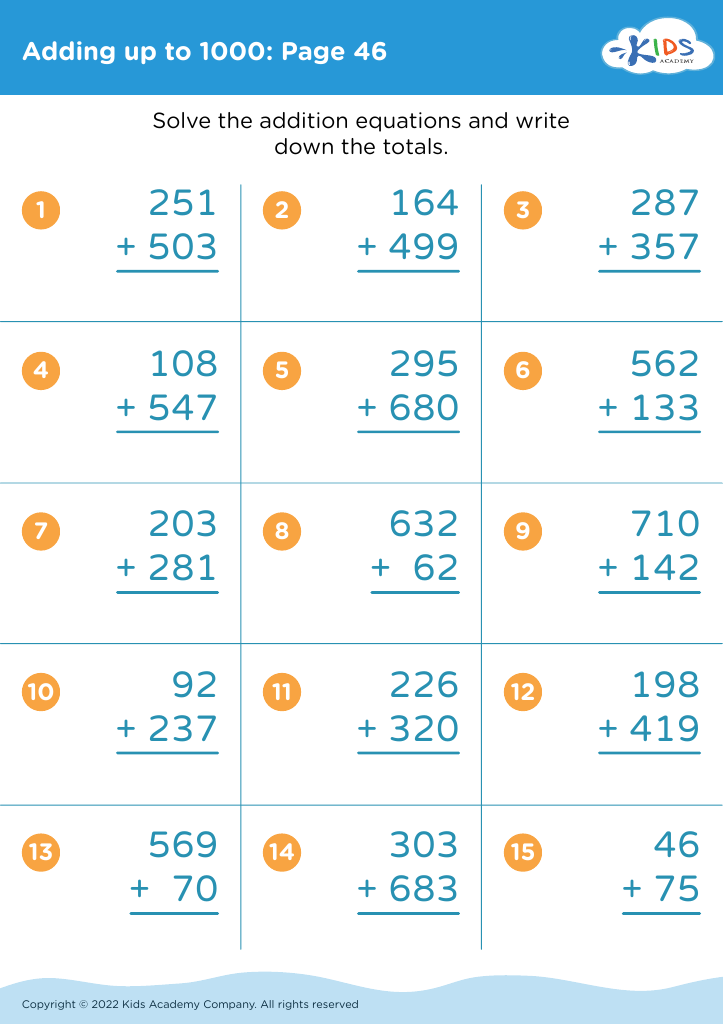
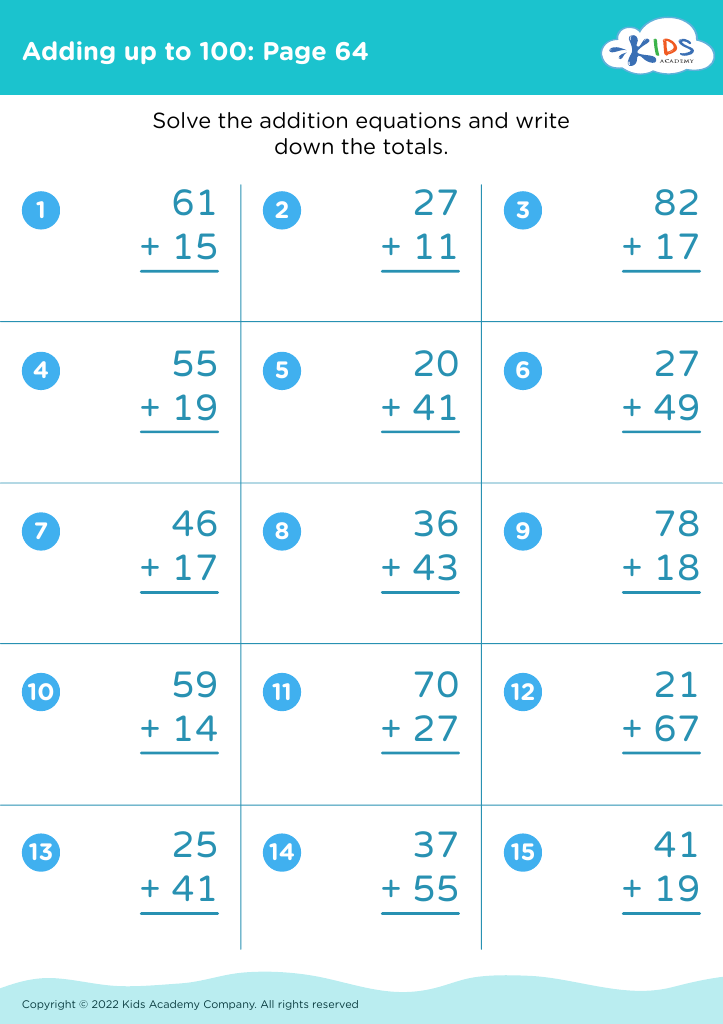
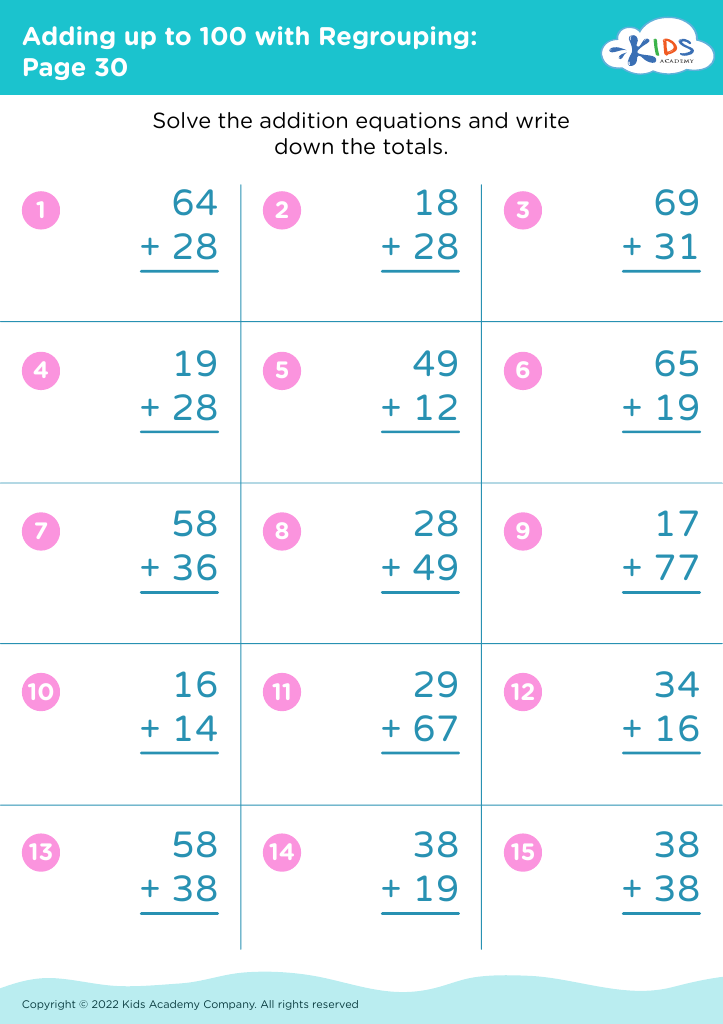
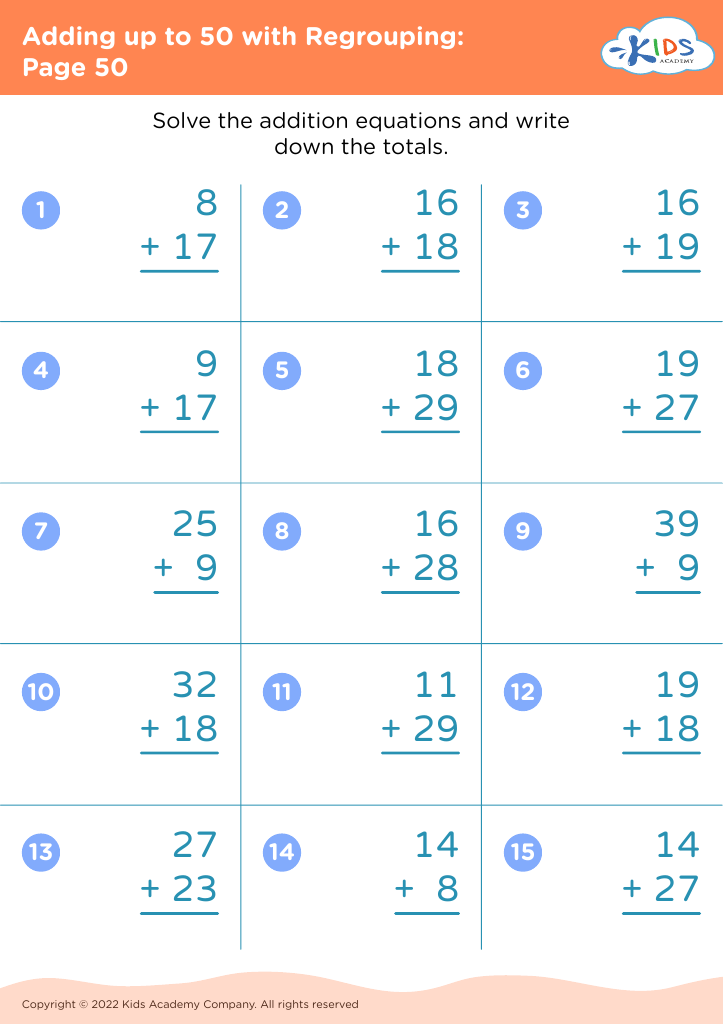
Our "Fraction Addition Grade 2 Worksheets" are designed to make learning fractions fun and engaging for your second grader! These beautifully illustrated worksheets help young students understand and practice adding fractions with like denominators. Each activity is thoughtfully curated to build a solid foundation in fraction addition, enhancing your child’s confidence and math skills. Featuring step-by-step guidance and interactive problems, these worksheets ensure that students not only learn the concept but also enjoy the process. Perfect for classroom or home practice, make these worksheets a part of your child’s learning adventure today!
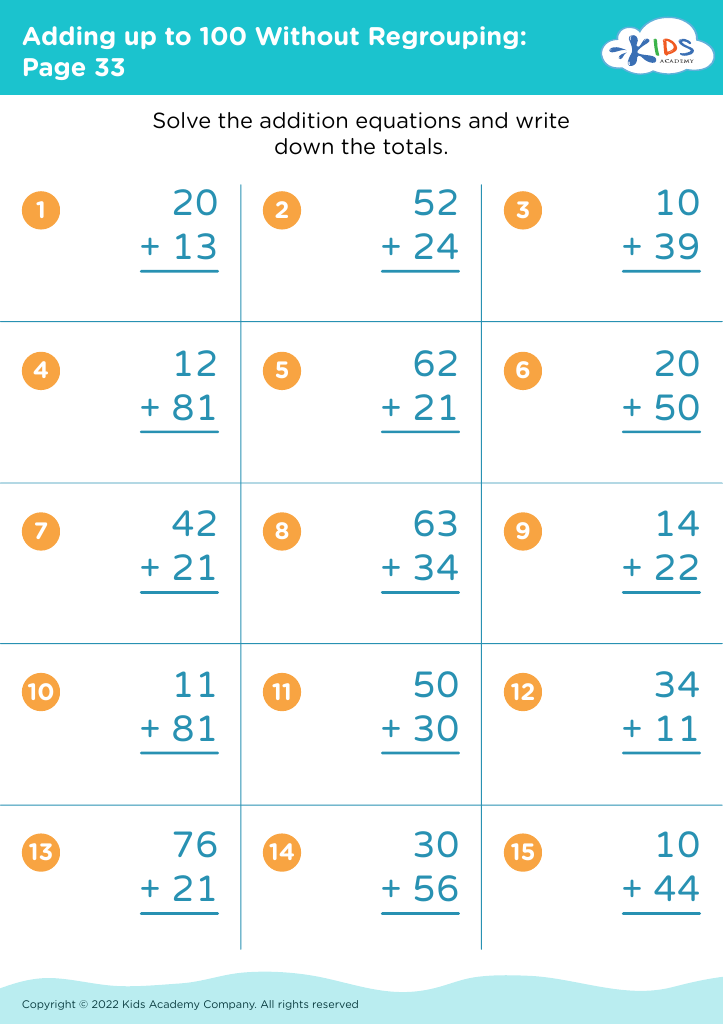
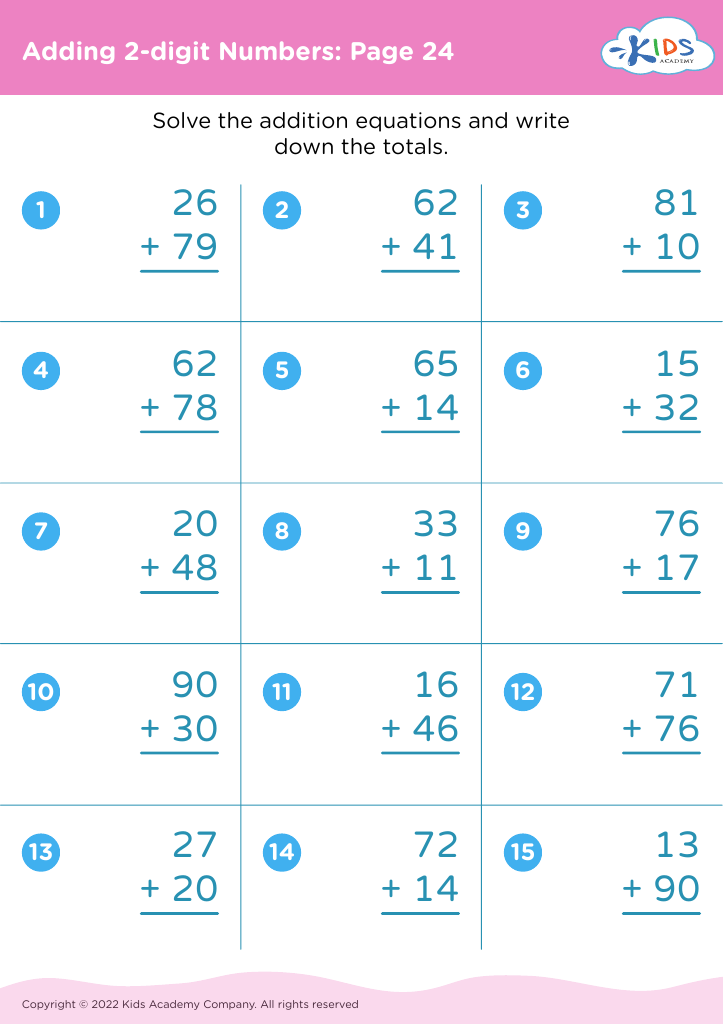
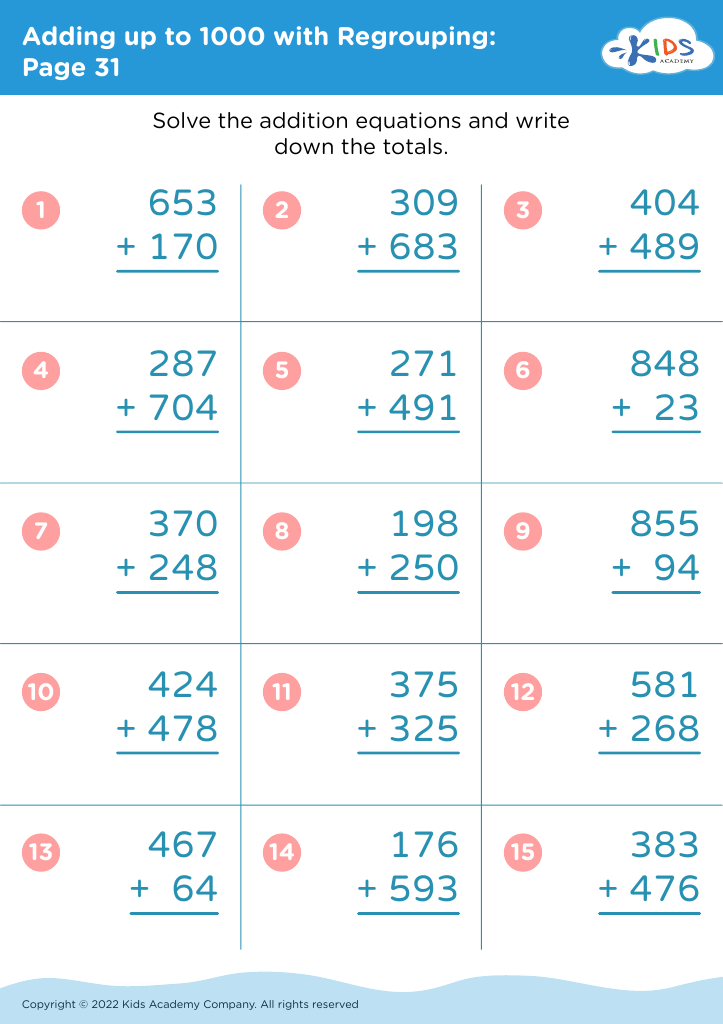
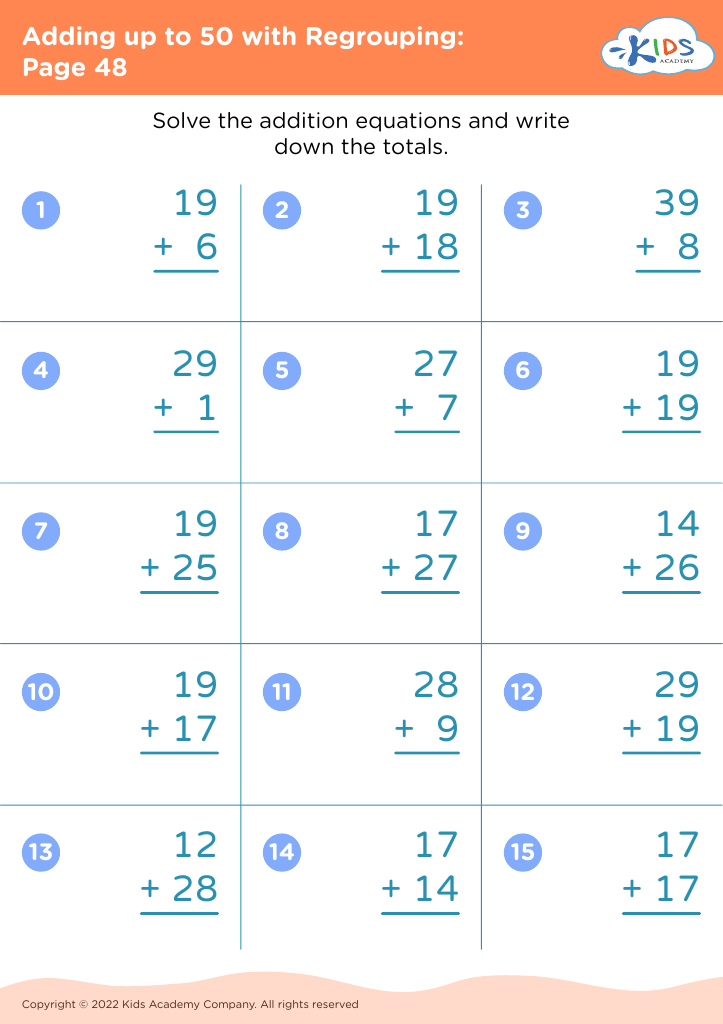








Understanding and mastering fraction addition at an early age, such as in Grade 2, is crucial for several reasons. Firstly, it lays the foundation for future math skills. Knowing how to add fractions simplifies the more advanced arithmetic and algebra that students encounter in later grades. Concepts like proportionality, ratios, and even higher-level calculus have their roots in basic fraction understanding.
Secondly, fraction addition engages and enhances essential cognitive skills including problem-solving, logical thinking, and pattern recognition. When children learn to add fractions, they develop a more profound sense of numbers, breaking away from whole numbers to appreciate the relationships between different parts.
Moreover, practical applications of fractions surround us daily—from cooking and dividing shared resources to understanding time and measurements. By fostering early comprehension, parents and teachers equip children with skills relevant both inside and outside the classroom.
Lastly, early intervention in teaching fractions can build confidence. Many children find fractions challenging; developing these skills in a supportive early grade environment allows students to approach math with a positive attitude rather than as something daunting and complex.
Thus, caring about fraction addition in Grade 2 means investing in students' long-term confidence, skill set, and ability to navigate both academic and real-world challenges.