Fraction identification Grade 2 Addition Worksheets
5 filtered results
-
From - To
Enhance your Grade 2 student's understanding of fractions with our engaging Fraction Identification Addition Worksheets! These printable resources are specifically designed to help young learners grasp the concept of fractions and their relationship to addition. Each worksheet features a variety of fun exercises, allowing kids to identify and add fractions in a straightforward manner. Perfect for classroom practice or at-home learning, these worksheets promote essential math skills and boost confidence. With appealing visuals and structured activities, students will enjoy mastering their fraction identification. Discover the joys of learning fractions today, making math both fun and educational!
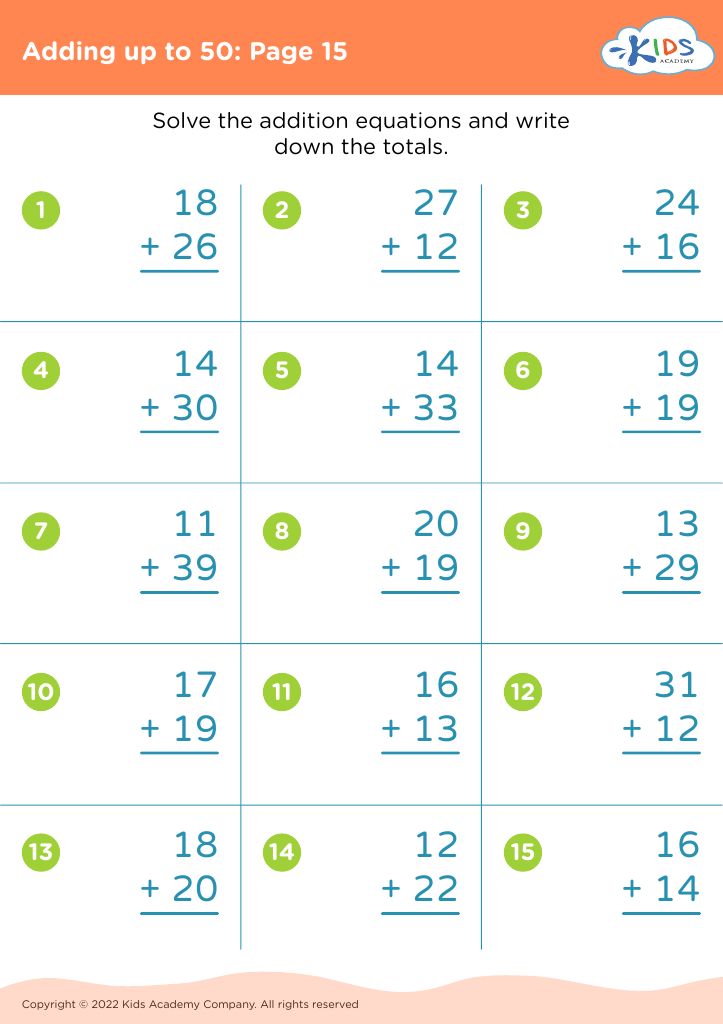
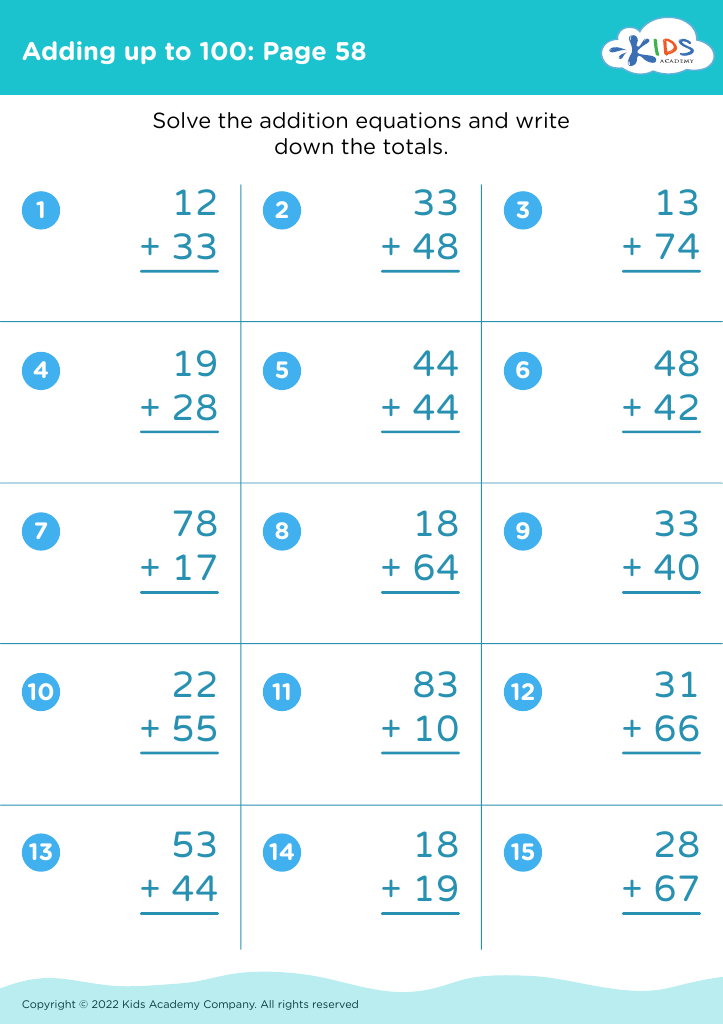








Understanding fractional concepts in Grade 2 lays the groundwork for more advanced mathematical skills and enhances overall number sense. Parents and teachers should care about fraction identification for several reasons. Firstly, fractions serve as a critical gateway to deeper mathematical understanding, acting as the building blocks for concepts like division, ratios, and proportions that students will encounter later on. Familiarity with basic fractions helps children develop spatial reasoning and the ability to compare and order numbers.
Additionally, a solid grasp of fractions aids in real-life applications, enabling children to interpret situations involving food, measurement, and even money. For example, sharing a pizza or dividing a candy bar becomes more feasible when children can comprehend and identify halves, quarters, or eighths. This foundational knowledge nurtures problem-solving capabilities and analytical thinking skills.
Lastly, collaborating in helping children identify and understand fractions fosters positive attitudes toward math in general. Parents and teachers can create supportive learning environments that enhance student confidence while making math enjoyable and relevant. Consequently, prioritizing fraction identification in Grade 2 is essential for cultivating positive, lasting relationships with mathematics, setting students up for academic success in future grades.