Identifying fractions Grade 2 Addition Worksheets
4 filtered results
-
From - To
Welcome to our Identifying Fractions Grade 2 Addition Worksheets! Designed specifically for second-grade students, these interactive worksheets help young learners master the concept of fractions while honing their addition skills. Through engaging exercises that involve visual representations, students will confidently identify fractions and understand their relationship to whole numbers. Our carefully crafted worksheets cater to various learning styles, promoting hands-on practice and critical thinking. By using fun visuals and relatable scenarios, these resources make math enjoyable while building a solid foundation for future mathematical concepts. Enhance your child’s learning journey with our comprehensive and accessible worksheets today!
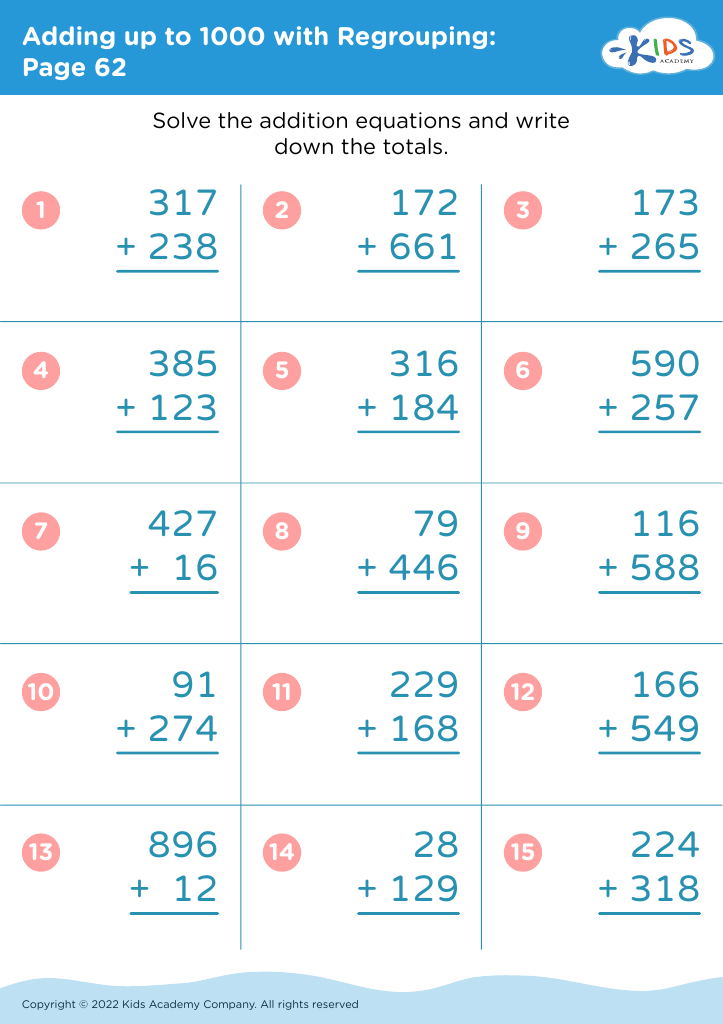
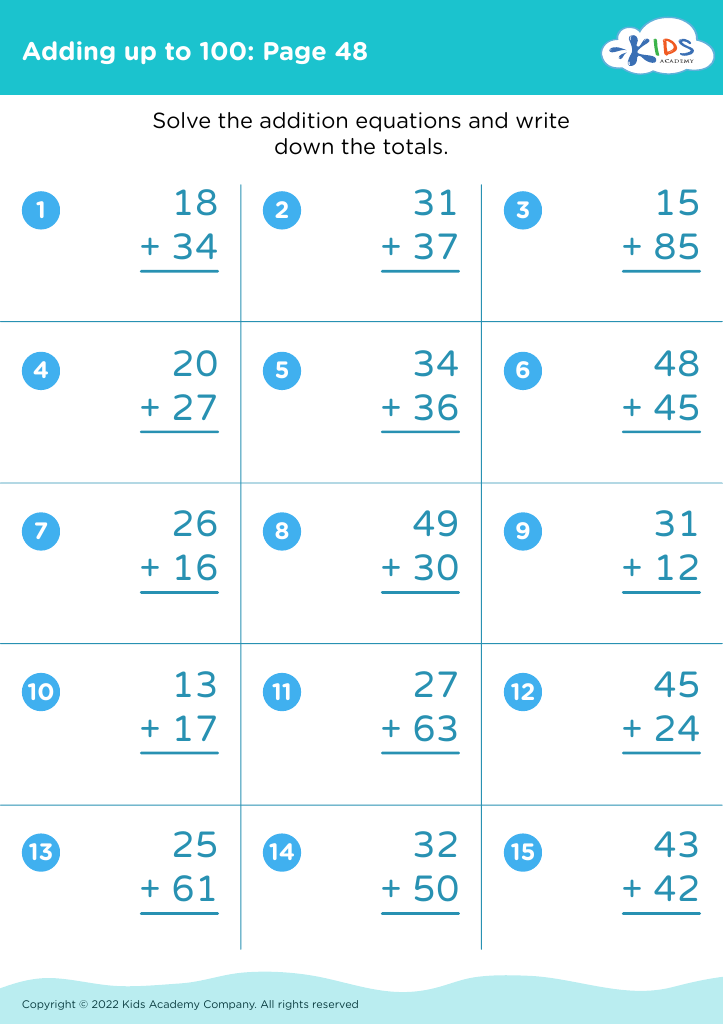
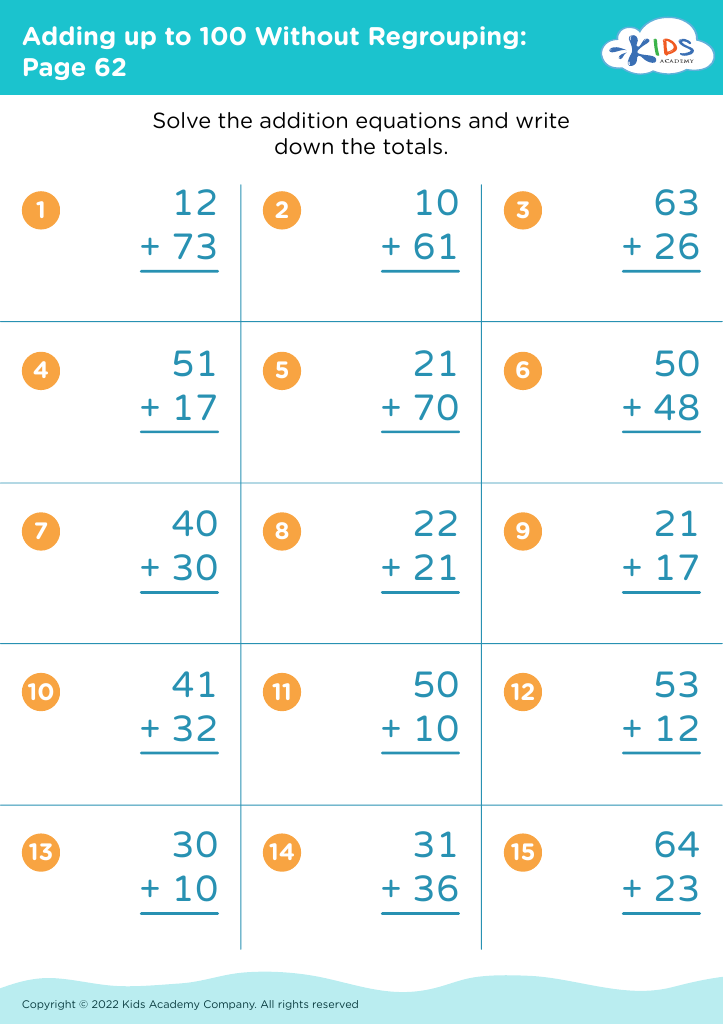
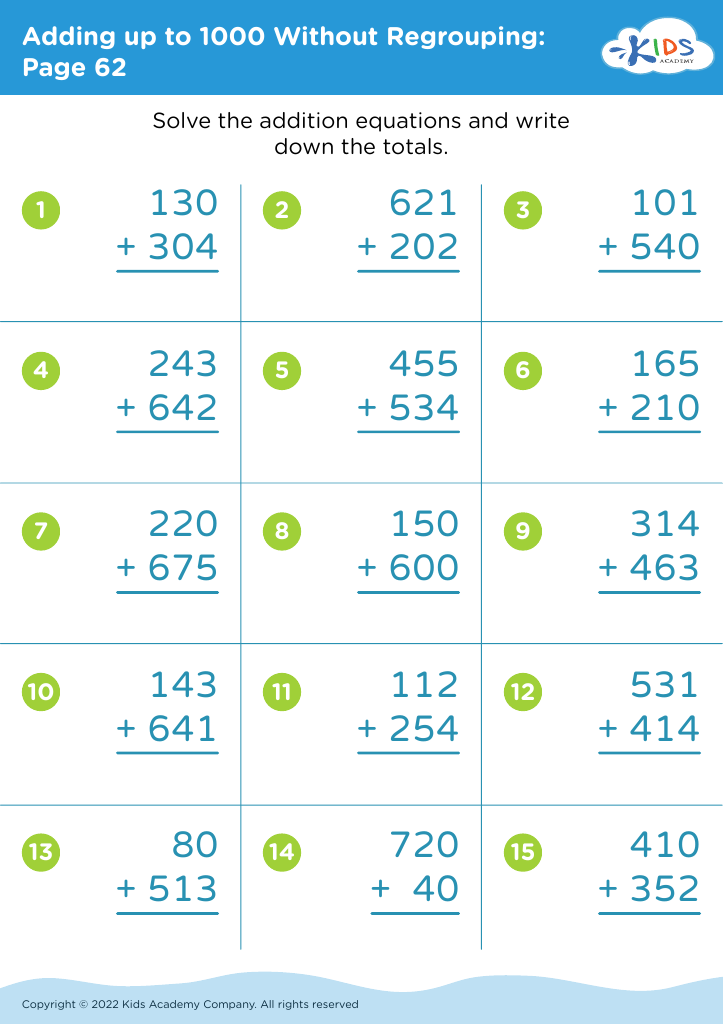








Identifying fractions is a fundamental skill for second graders, laying the foundation for more complex concepts in mathematics. Parents and teachers should prioritize this competency as it not only enhances numerical understanding but also fosters critical thinking. At this stage, students learn to recognize and compare fractions, which prepares them for future topics such as addition and subtraction of fractions in higher grades.
Understanding fractions also develops a child's ability to visualize parts of a whole, which is essential in many everyday situations, from cooking to sharing items. This real-world application reinforces a child's engagement with math and helps build a positive attitude toward the subject.
Furthermore, a strong grasp of fractions aids in developing problem-solving skills. As children learn to add fractions with like denominators, they begin to understand the importance of unit relationships and equivalence, aiding in their overall mathematical conceptualization.
Involving parents in this learning process, such as through fun activities and games, promotes a collaborative environment. This engagement boosts children's confidence in their abilities and fosters a love for learning. Ultimately, identifying fractions not only supports academic success but also equips children with mathematical skills essential for daily life.