Improves counting skills Grade 2 Addition Worksheets
4 filtered results
-
From - To
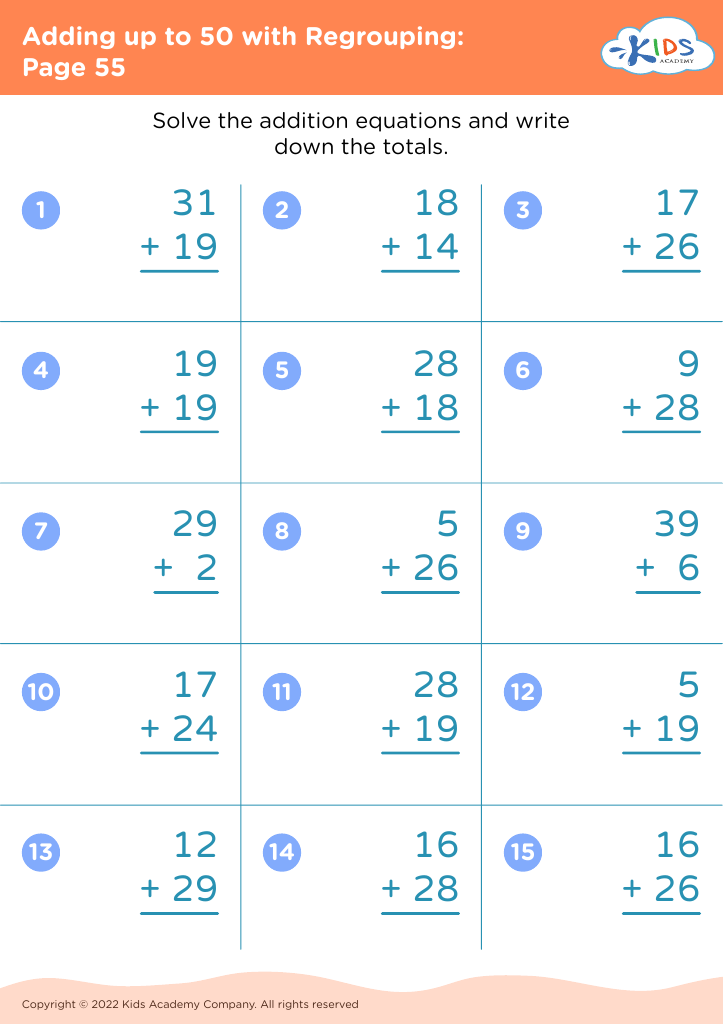
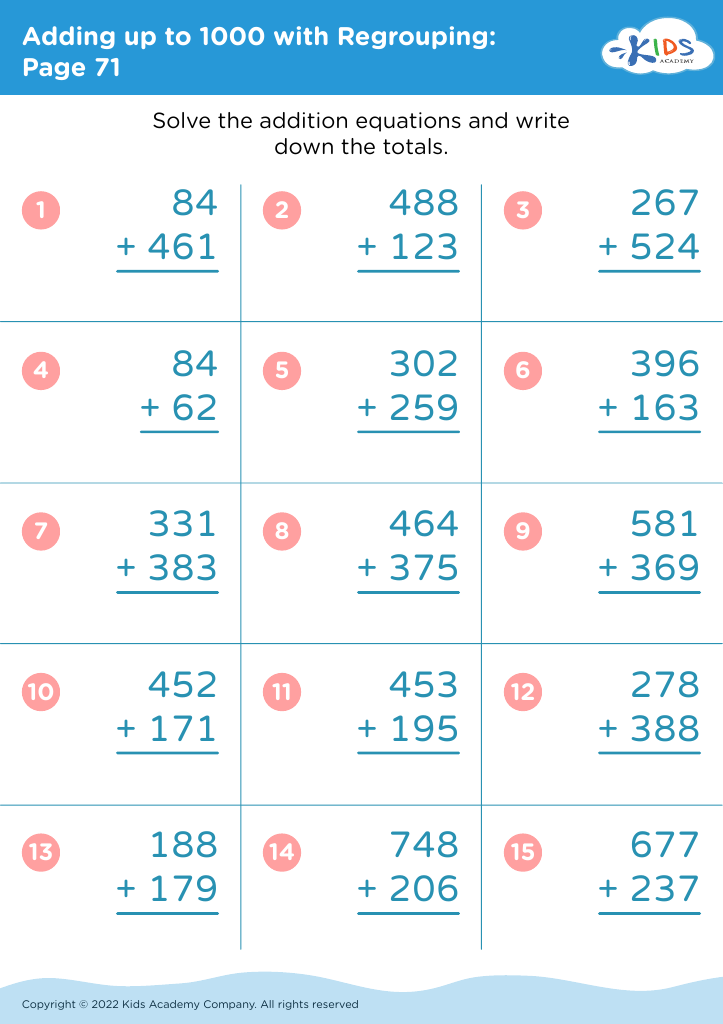
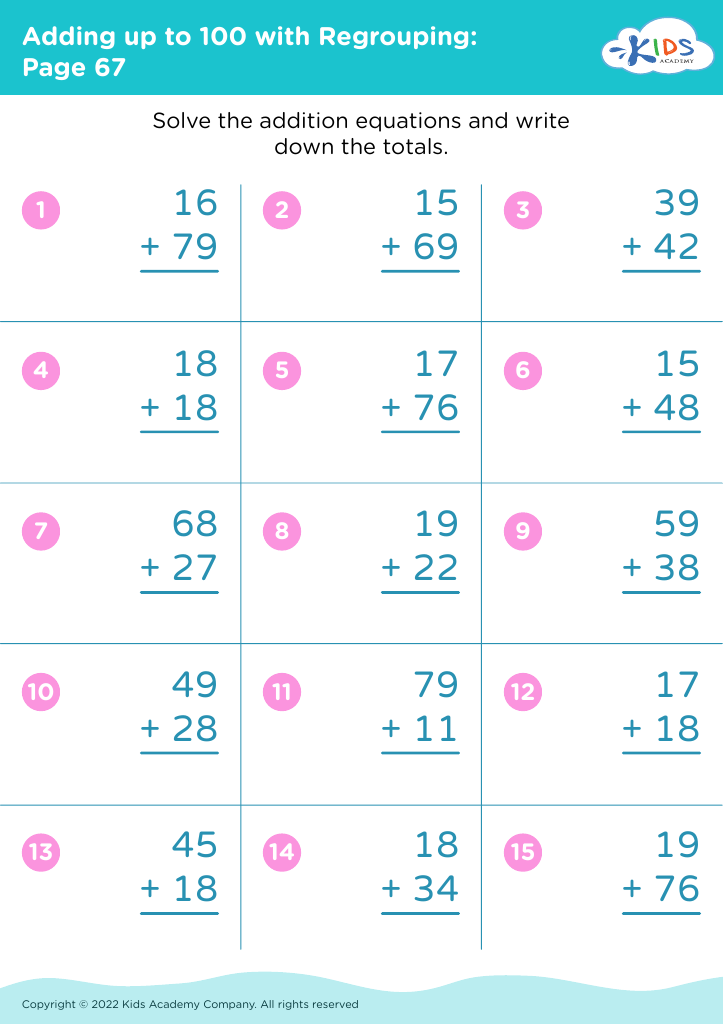
Boost your child's counting and addition skills with our Grade 2 Addition Worksheets. Carefully designed to enhance mathematical understanding, these sheets provide engaging exercises to help second graders master counting and addition effectively. Each worksheet targets key learning objectives, ensuring a solid foundation in basic arithmetic. Through fun and interactive tasks, students practice adding numbers, fostering improved numeracy and problem-solving abilities. Ideal for both classroom use and at-home learning, these worksheets offer a structured and enjoyable way for young learners to build confidence in math. Elevate your child's math proficiency with our expertly crafted addition activities.
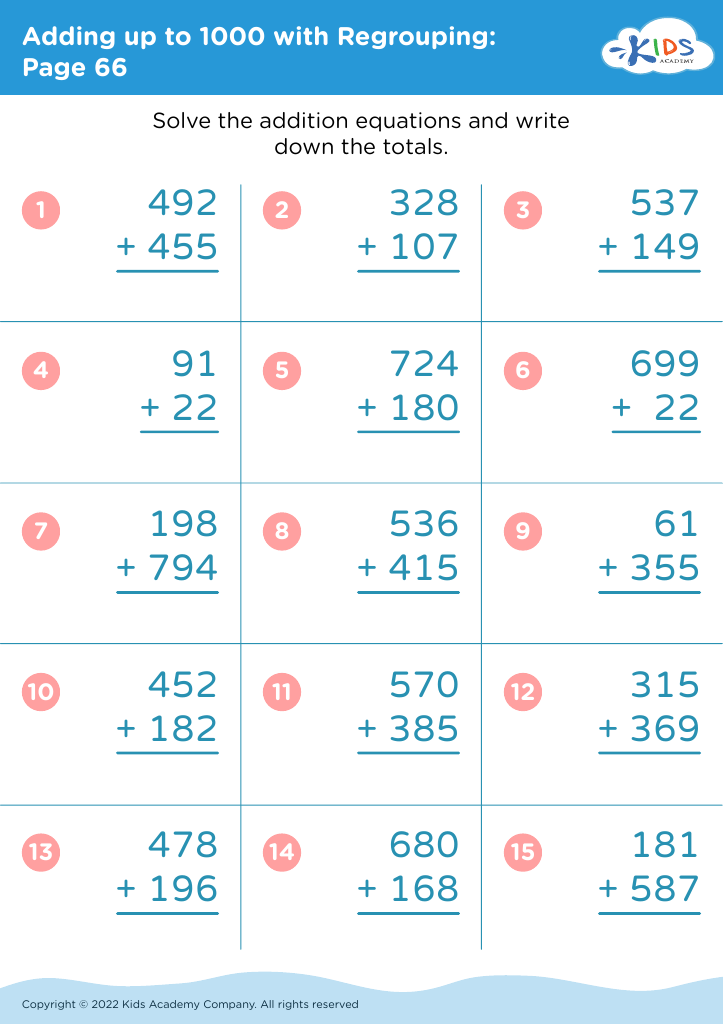








Counting skills are a fundamental part of early mathematics education, and enhancing them, particularly in Grade 2 through activities like addition, holds immense value for both teachers and parents. At this stage, children transition from mere counting to understanding more complex mathematical concepts, making it a pivotal time for cognitive development.
When parents and teachers focus on improving counting skills through Grade 2 addition, they foster not only academic success but also critical problem-solving abilities. Addition serves as a building block for future mathematical operations such as subtraction, multiplication, and division. Mastery of these skills at an early age paves the way for tackling advanced topics with confidence later in their education.
Moreover, developing strong counting and addition skills nurtures a child's ability to understand numerical relationships and patterns, which are crucial for logical reasoning. This foundational knowledge makes everyday activities, like handling money or measuring ingredients, more manageable and relatable.
Additionally, fostering a child's proficiency in counting and addition contributes to their overall confidence in learning. When children experience success in these areas, it encourages a positive attitude towards mathematics and education as a whole, setting a lifelong tone of curiosity and engagement. For these reasons, it's vital that parents and teachers invest effort and resources into developing robust counting skills in second-grade addition.