Practice counting Grade 2 Addition Worksheets
6 filtered results
-
From - To
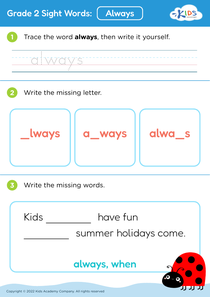
Welcome to our "Practice Counting Grade 2 Addition Worksheets"! Designed specifically for young learners, these worksheets provide a fun and engaging way for second graders to strengthen their counting and addition skills. With colorful illustrations and relatable contexts, students will enjoy practicing essential math concepts, improving their problem-solving abilities, and building confidence. Our easy-to-follow worksheets encourage independent learning, making them a valuable supplement to classroom instruction. Whether in school or at home, these materials are perfect for reinforcing foundational math skills. Explore our collection today and watch your child excel in addition while developing a love for math!
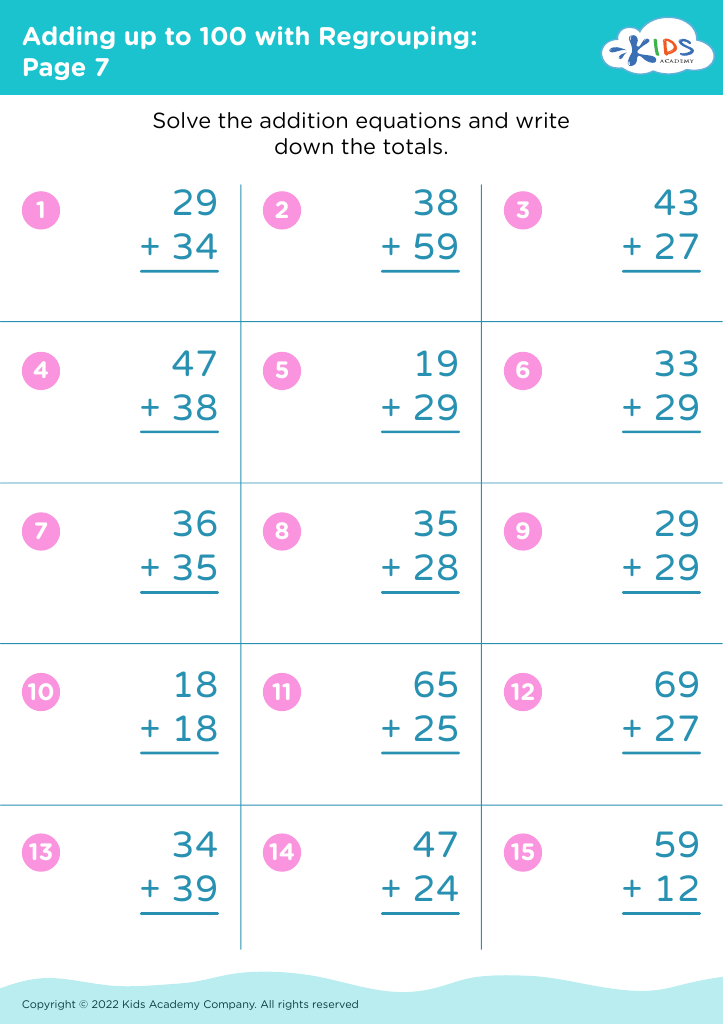
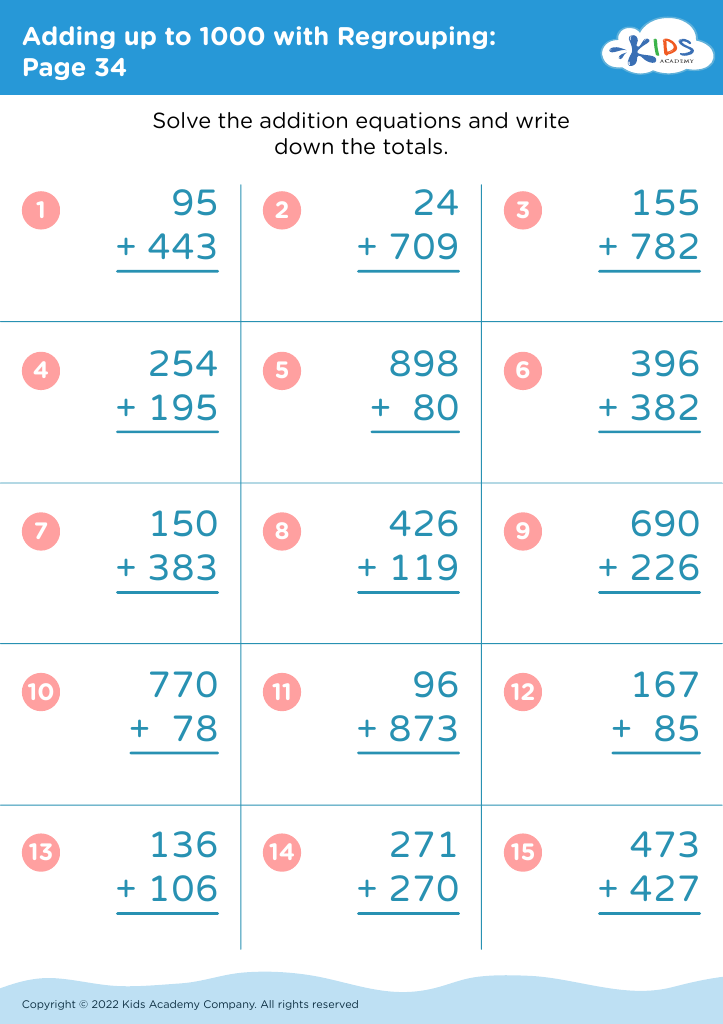
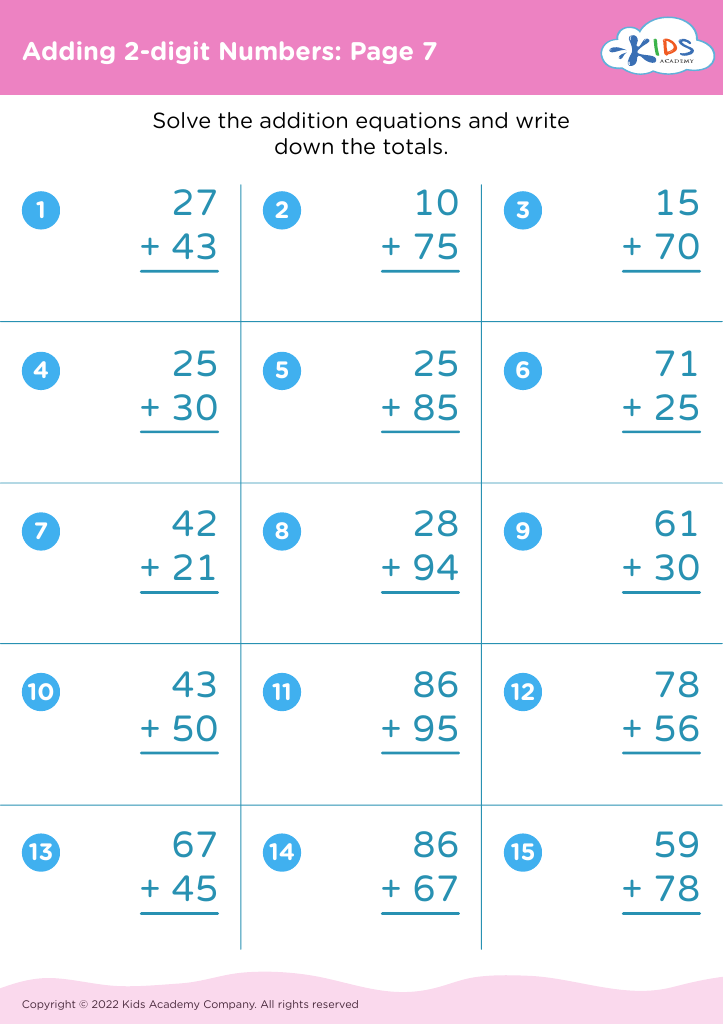
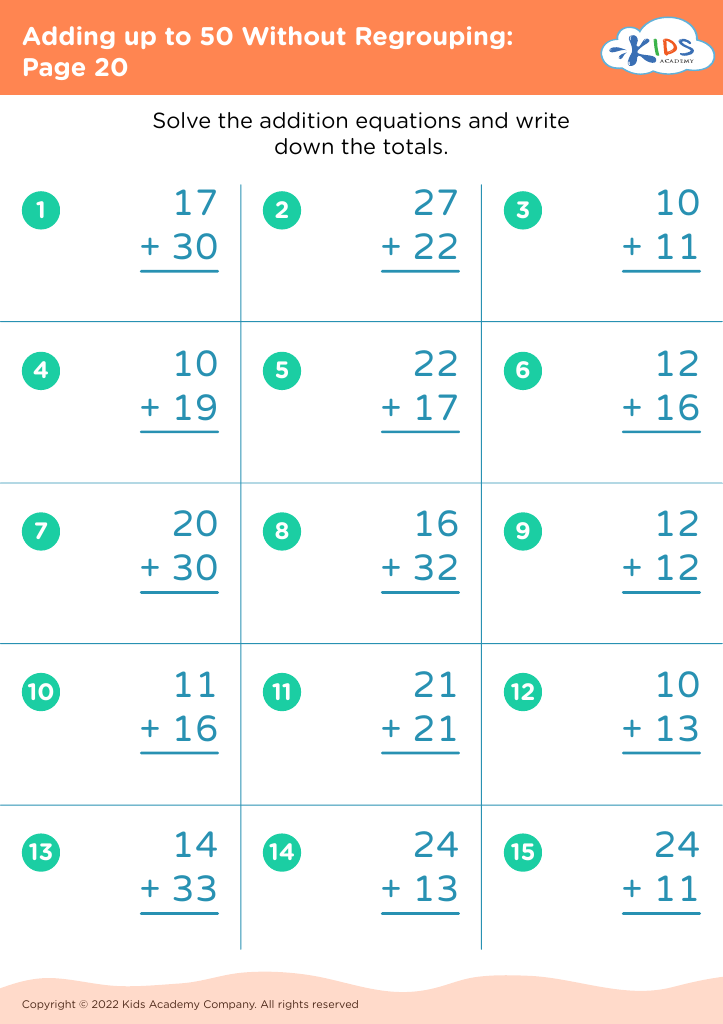
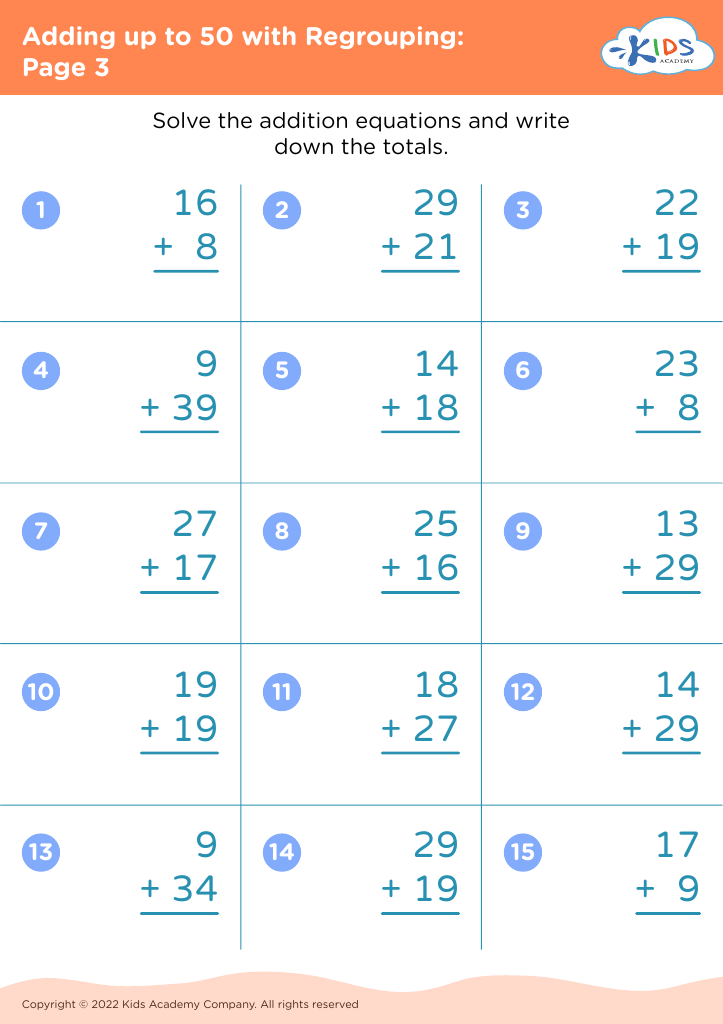
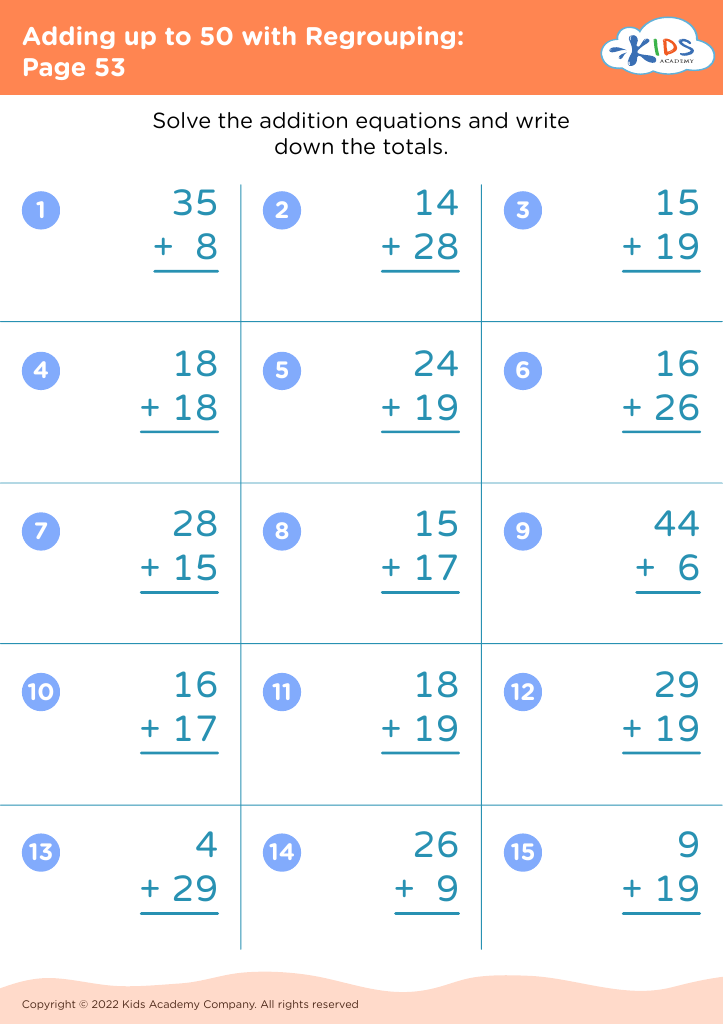








Practice counting in Grade 2 addition is crucial for multiple reasons that benefit children's overall math comprehension. Firstly, mastering addition lays a strong foundation for future mathematical concepts, including subtraction, multiplication, and division. In Grade 2, students encounter increasing complexity in math, making it essential for them to have a solid grip on basic addition to avoid confusion as they progress.
Additionally, practicing counting builds confidence in students. When they can fluently add numbers, it fosters a sense of accomplishment and encourages them to participate more actively in math-related activities. This confidence spills over into other subjects, promoting a positive attitude towards learning in general.
Parents and teachers also benefit from focusing on counting practice as it allows for everyday application. Incorporating counting into daily routines—such as during grocery shopping or through fun games—makes learning engaging and relevant. It encourages a love for numbers while showcasing the practical use of math in everyday life.
Moreover, diligent practice can help identify any learning gaps early, allowing for timely interventions. Overall, both parents and teachers play a vital role in supporting students through consistent practice, ensuring they develop the skills and confidence necessary for academic success.