Problem-solving practice Grade 2 Addition Worksheets
13 filtered results
-
From - To
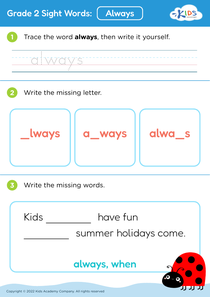
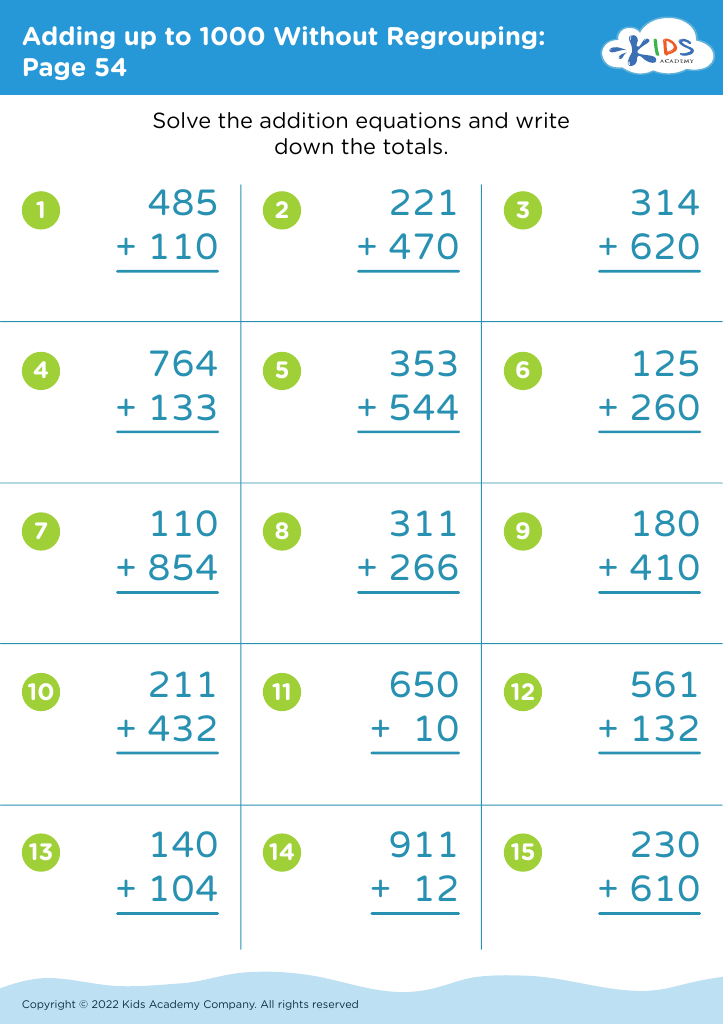
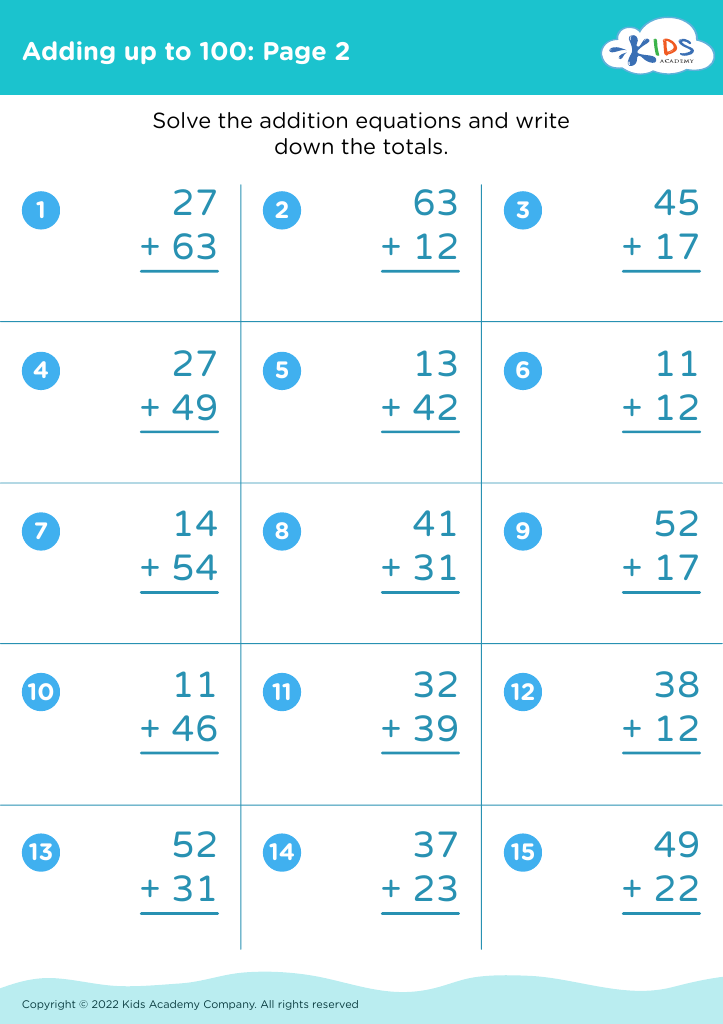
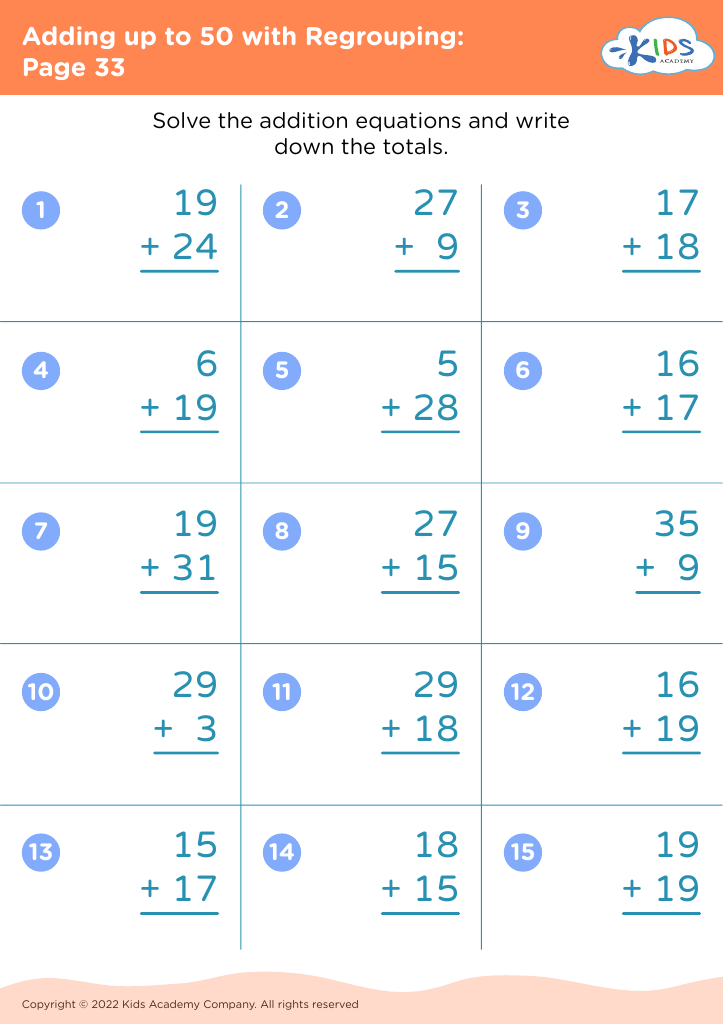
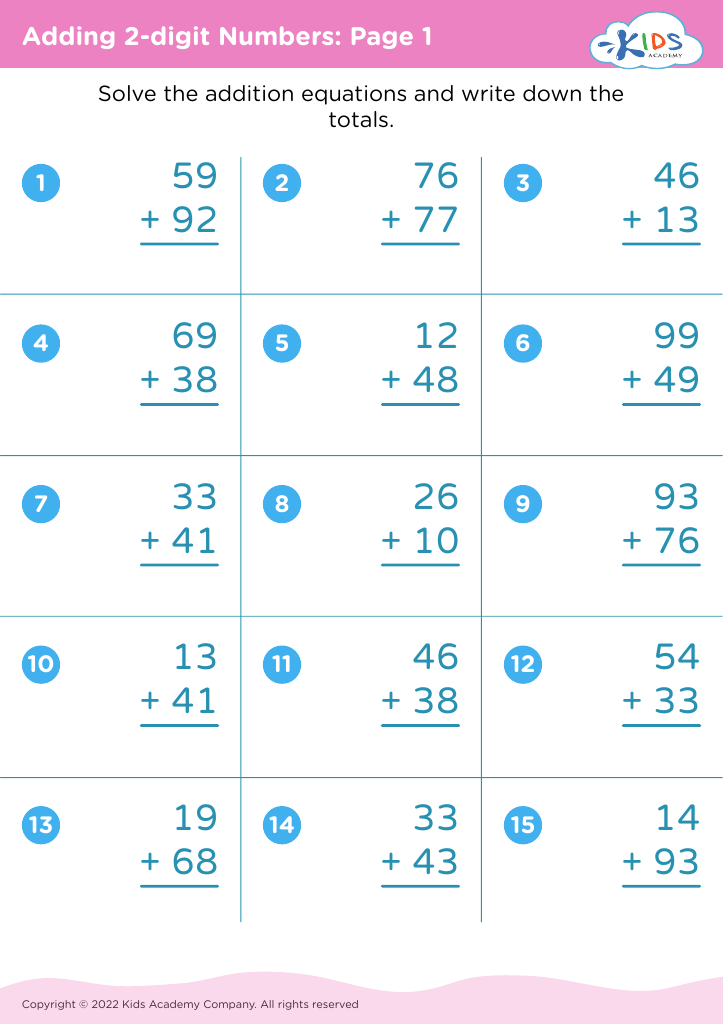
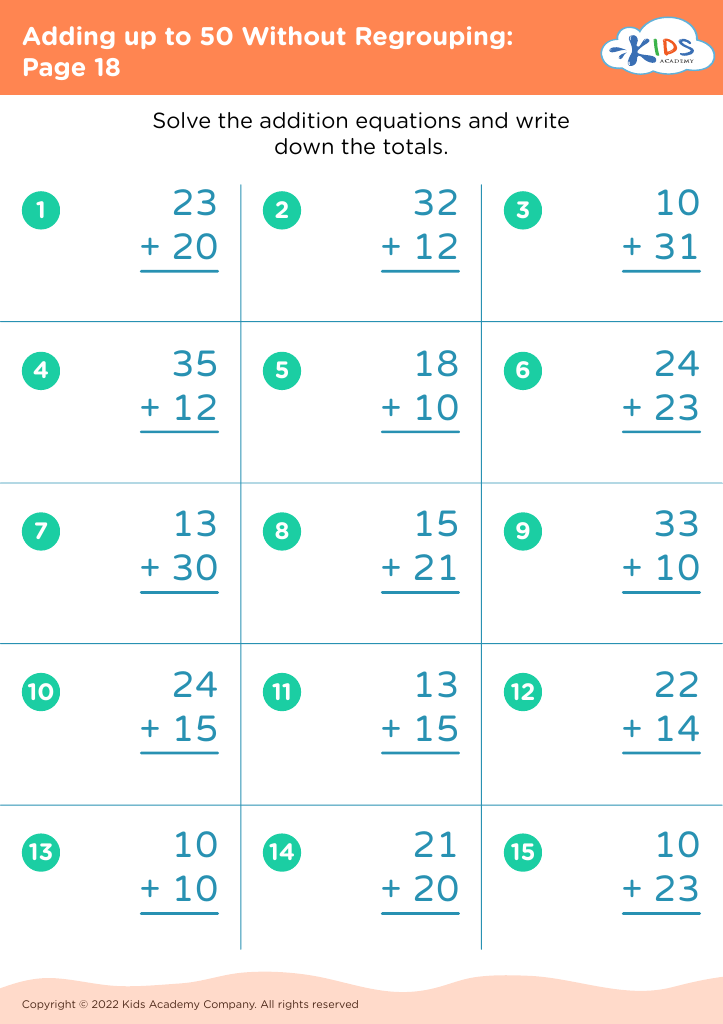
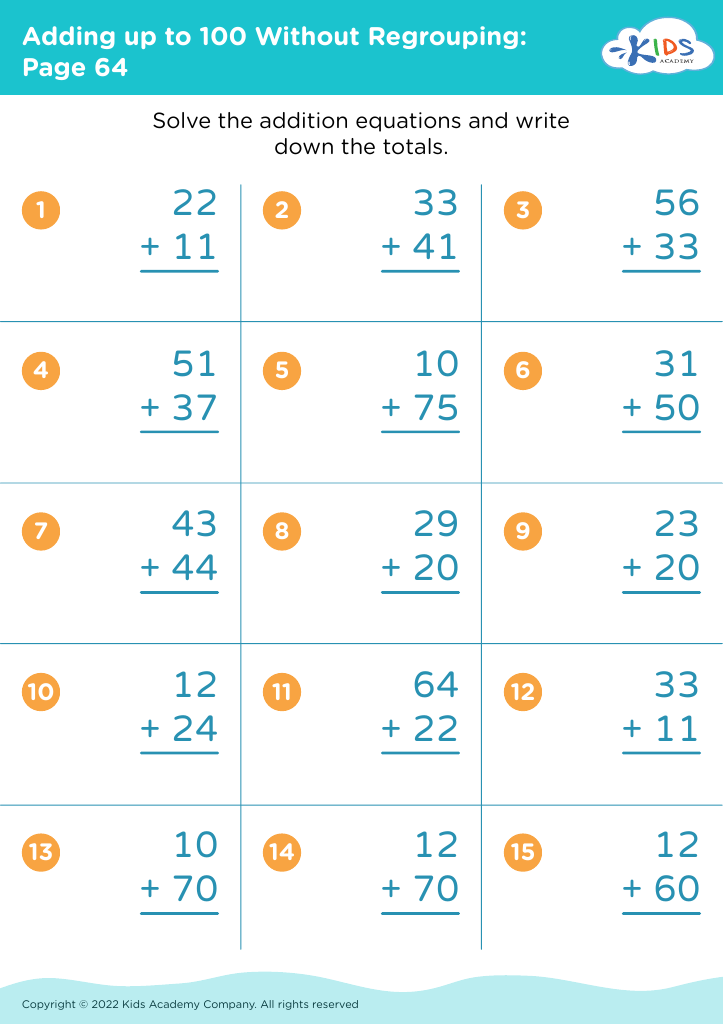
Enhance your second grader's math skills with our engaging Problem-Solving Practice Addition Worksheets! Designed specifically for Grade 2 learners, these worksheets encourage critical thinking and help students apply their addition skills to real-life scenarios. Featuring bright, kid-friendly graphics and diverse problem types, our collection fosters both enjoyment and educational development. Each worksheet focuses on problem-solving strategies, promoting a deeper understanding of mathematical concepts while building confidence. Ideal for classroom activities or home practice, our fun and interactive resources will equip your child with the necessary tools to tackle addition problems effectively. Start nurturing aspiring math whizzes today!
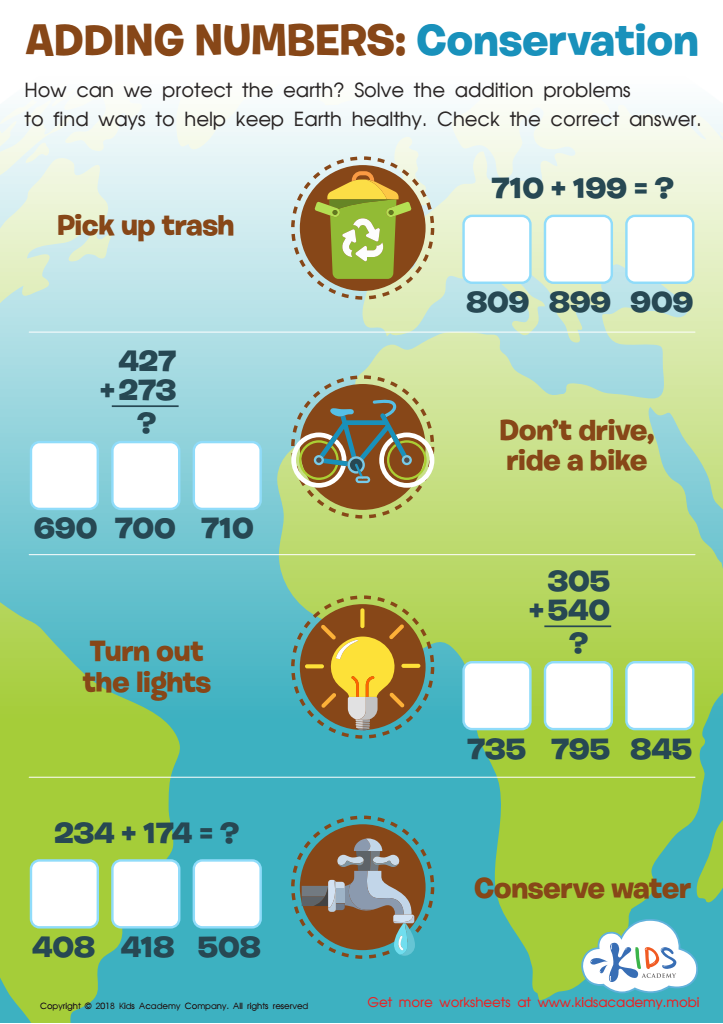
Adding Numbers: Conservation Worksheet
 Assign to My Students
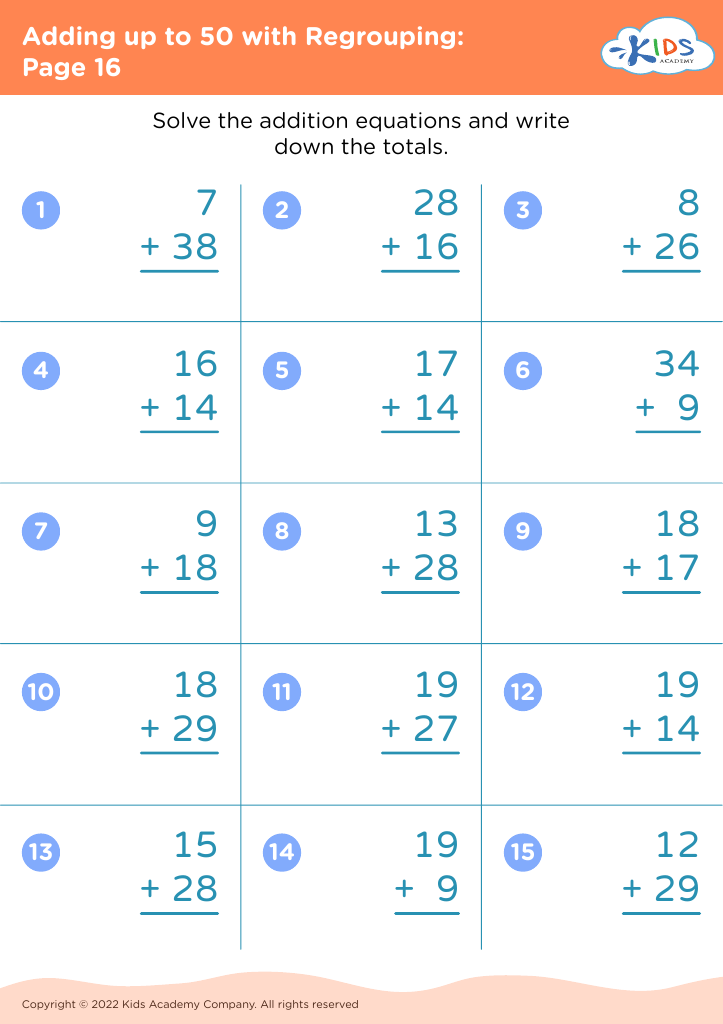
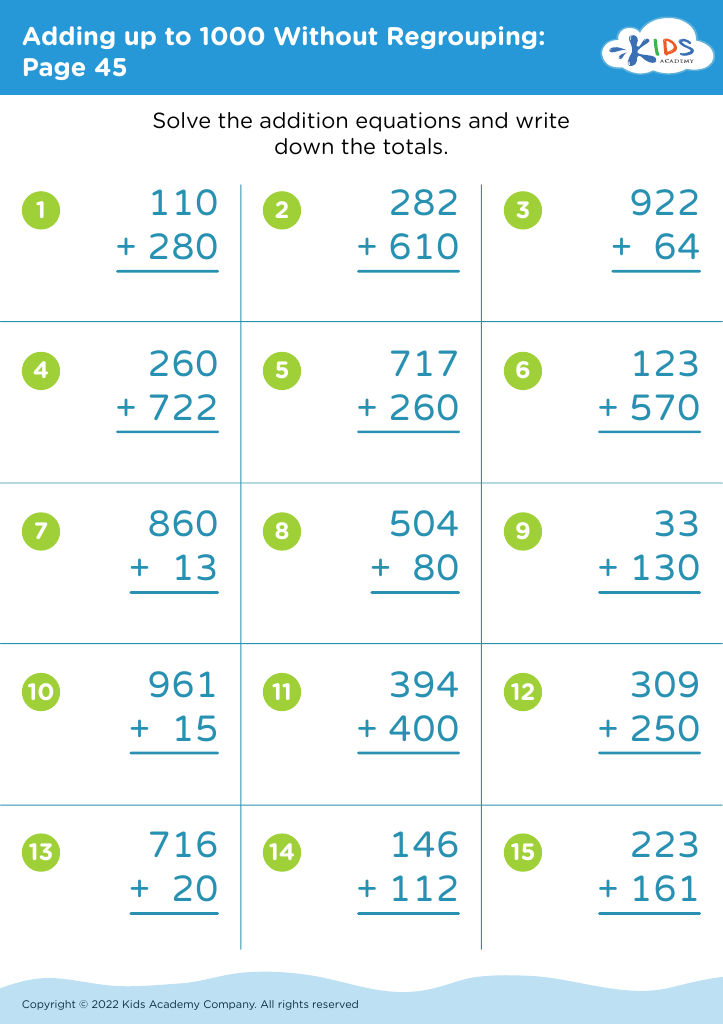








Problem-solving practice, particularly in Grade 2 addition, is crucial for several reasons. First, it lays the foundation for critical thinking and analytical skills. At this stage, students begin to move beyond rote memorization and develop their ability to apply mathematical concepts to real-world situations. This promotes a deeper understanding of addition as they learn to recognize how it fits into daily activities, such as shopping or cooking.
Second, problem-solving fosters perseverance and resilience. When faced with challenging problems, students learn to approach tasks methodically, explore different strategies, and derive solutions through trial and error. This mindset is invaluable, extending well beyond mathematics.
Additionally, engaging in problem-solving enhances collaboration and communication skills. When parents and teachers encourage students to discuss their thought processes and methods for solving addition problems, it provides an opportunity for social learning and promotes constructive dialogue.
Moreover, a strong foundation in addition problem-solving can directly influence future academic success in mathematics and related fields. For parents and teachers, prioritizing this practice supports holistic development, building not only mathematical proficiency but also essential life skills, ensuring students are well-equipped for future challenges. Ultimately, investing in problem-solving practices for addition encourages a love for learning and a strong mathematical identity.