Telling time Grade 2 Addition Worksheets
3 filtered results
-
From - To
Develop your child's time-telling skills with our engaging "Telling Time Grade 2 Addition Worksheets.” Perfect for 7 to 8-year-olds, these printable worksheets combine fun and learning by integrating basic addition with time-telling exercises. Through illustrative clocks and simple addition problems, students will enhance their ability to read both analog and digital clocks while reinforcing essential math skills. Our colorful and easy-to-follow activities are designed to keep young learners motivated and prepared for more complex math concepts. Ideal for classroom or home use, these worksheets provide comprehensive practice in a structured, educational format. Boost their learning today!
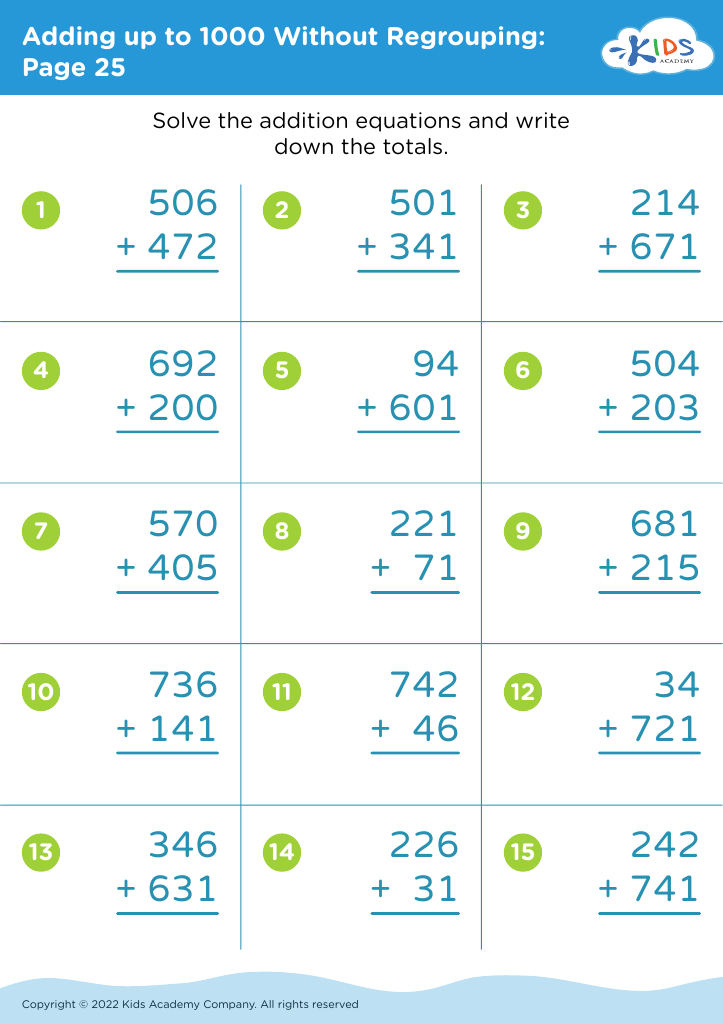
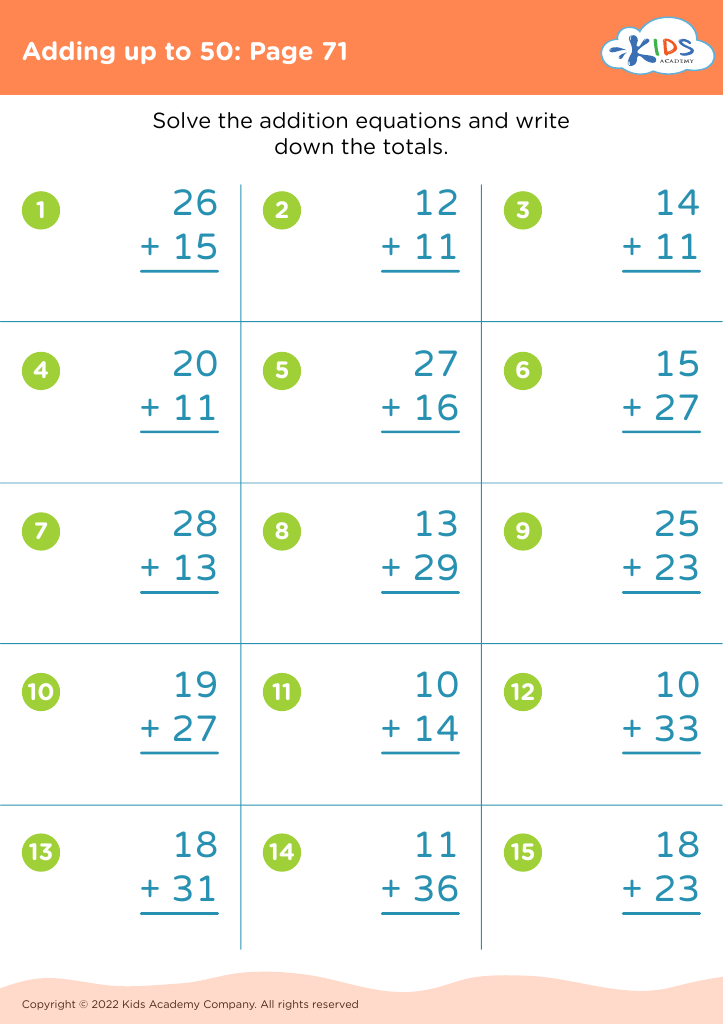
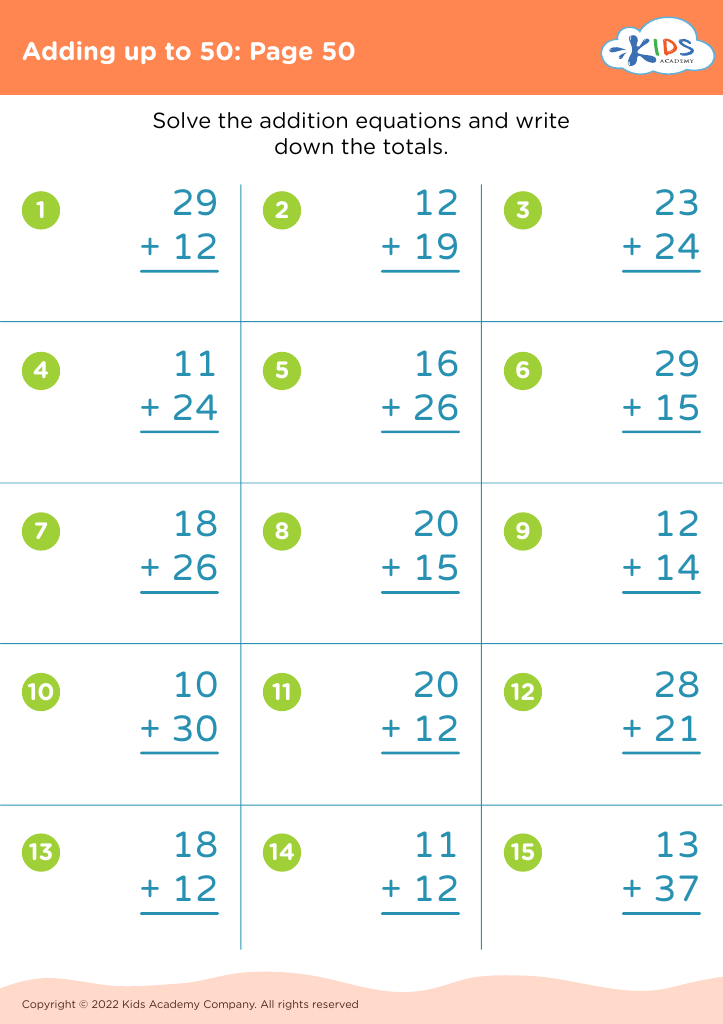








Understanding how to tell time and perform basic addition in Grade 2 is crucial for a child's cognitive development and daily life skills. At this age, children begin to grasp the concept of time and how it relates to their daily routines. Telling time helps them become more self-reliant and fosters a sense of responsibility.
Learning to read clocks encourages math-related reasoning and supports children in linking abstract concepts to their real-life applications. Combining this with basic addition reinforces their arithmetic skills, making math feel more intuitive and less intimidating. These foundational skills pave the way for more complex mathematical concepts they'll encounter in the future.
Additionally, being proficient in both telling time and performing addition allows children to manage their schedules better, understand time duration, and even recognize patterns. These abilities are not only important academically but also essential for life—helping kids with planning tasks, joining activities on time, and overall better time management.
Parents and teachers should thus prioritize these skills to ensure children are well-prepared for both academic challenges and everyday situations. A strong foundation in these early concepts builds confidence and sets the stage for lifelong learning and success.