Understand sequences Grade 2 Addition Worksheets
5 filtered results
-
From - To
Explore our "Understand Sequences Grade 2 Addition Worksheets," designed to engage students in mastering addition through sequence patterns. These innovative worksheets help young learners recognize and predict upcoming numbers in a sequence, promoting critical thinking and mathematical reasoning. Each activity is tailored to foster essential skills, ensuring that students grasp the concept of addition while enjoying interactive lessons. With colorful visuals and user-friendly formats, these worksheets provide a perfect blend of education and fun, ideal for classroom or home learning. Enhance your child's arithmetic abilities and sequence understanding with our comprehensive resources today! Start building a strong math foundation!
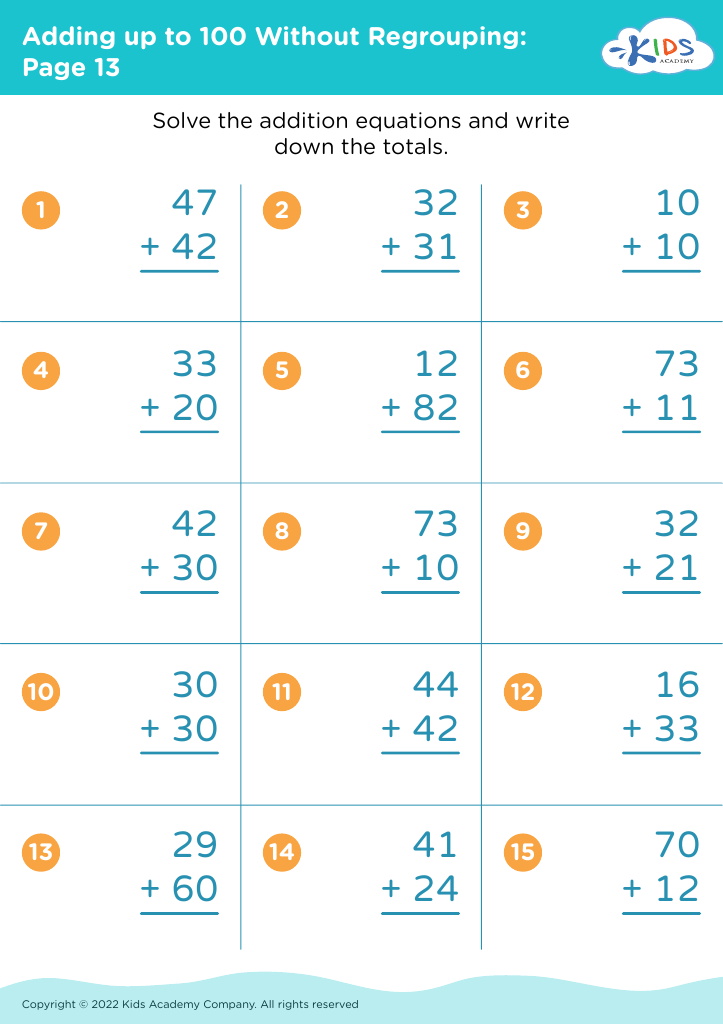
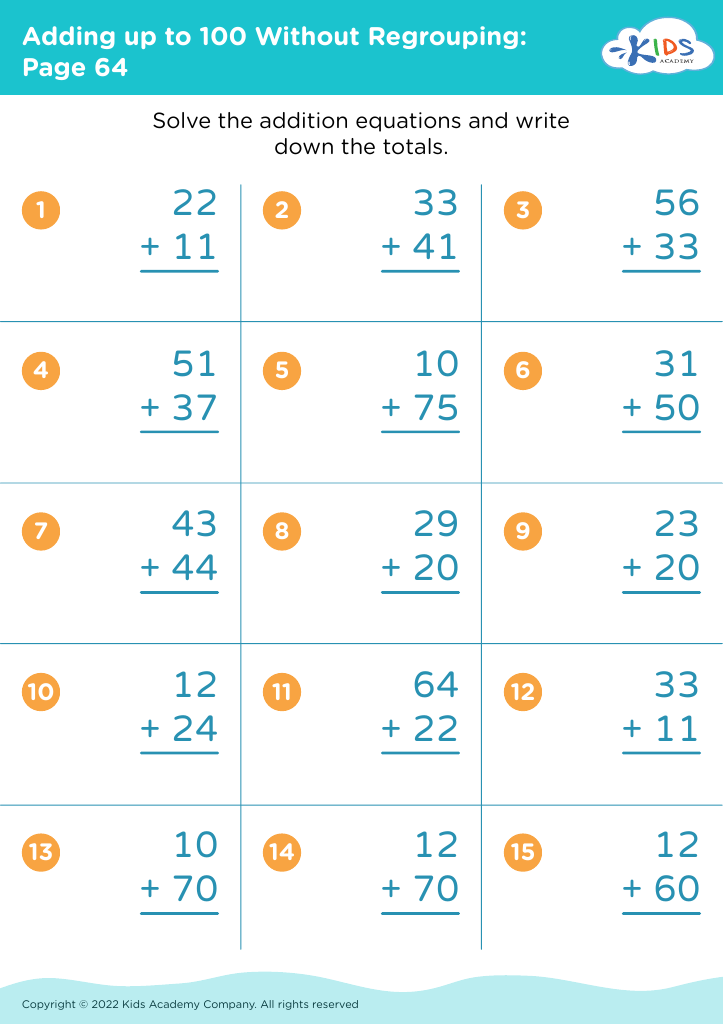
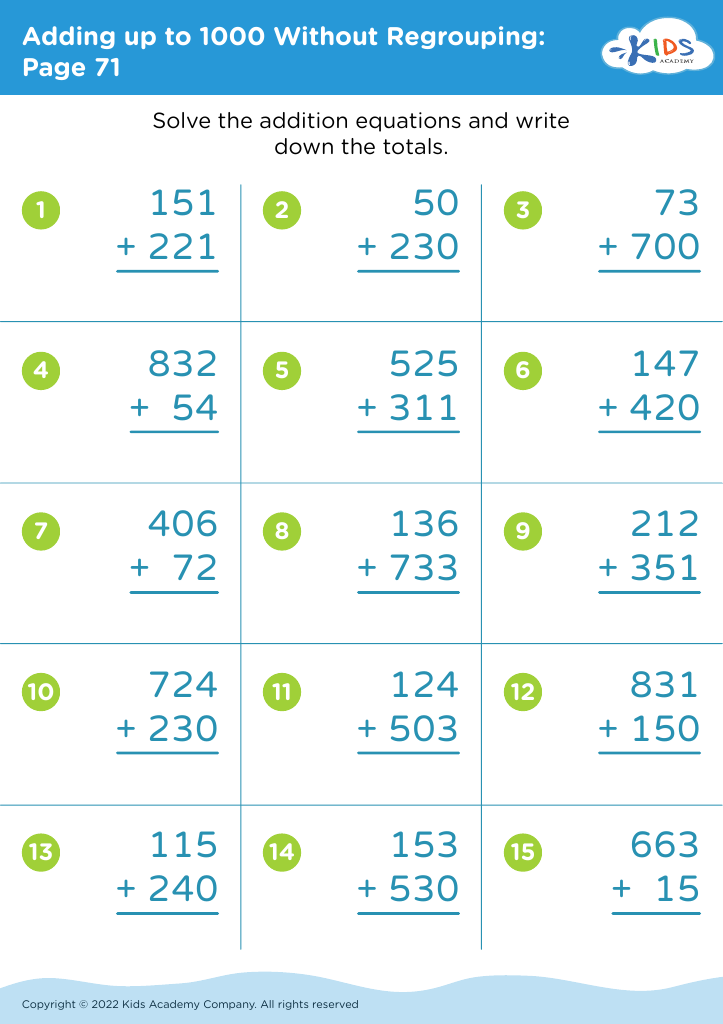
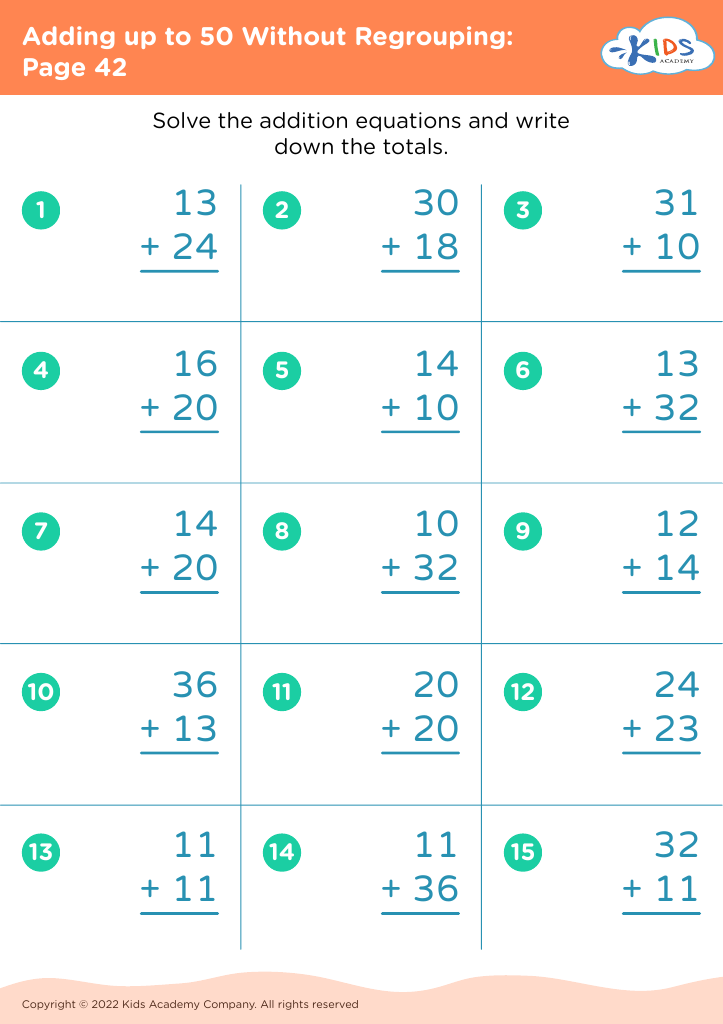
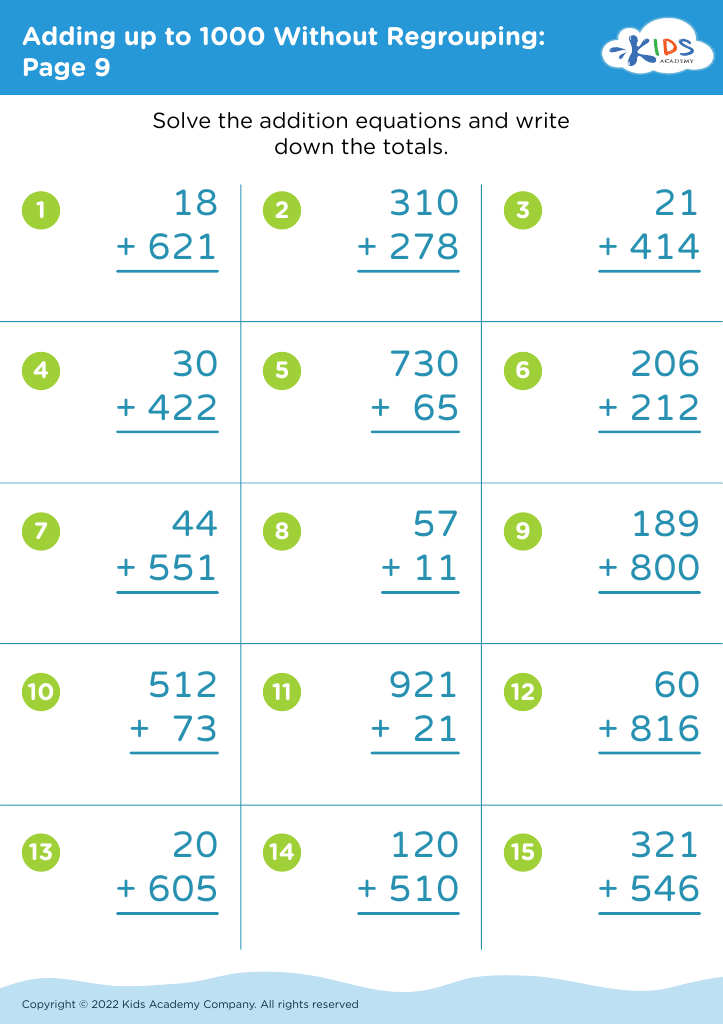








Understanding sequences in Grade 2 addition is crucial for several reasons. Firstly, it lays the foundation for mathematical reasoning and logic. Young learners begin to recognize patterns in numbers, which enhances their problem-solving skills. When children understand how numbers relate and create sequences—such as adding 2, 4, 6, etc.—they develop a stronger number sense, making advanced concepts easier to grasp later on.
Secondly, mastering sequences helps children become proficient in mental math. Recognizing patterns allows them to add numbers more quickly without relying solely on written calculations, fostering independence and confidence in their mathematical abilities. This is particularly helpful in everyday scenarios, such as calculating change or determining the total cost while shopping.
Furthermore, an understanding of sequences encourages collaboration and communication among peers. As they work together to identify patterns and solve problems, students enhance their social skills and learn the importance of teamwork.
Ultimately, parents and teachers should care about teaching sequences in addition because it serves as a critical stepping stone towards more complex mathematical concepts. By nurturing these skills early on, we equip children with the tools they need for future academic success.