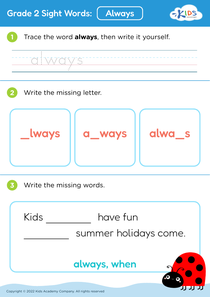
Vocabulary development Grade 2 Addition Worksheets
5 filtered results
-
From - To
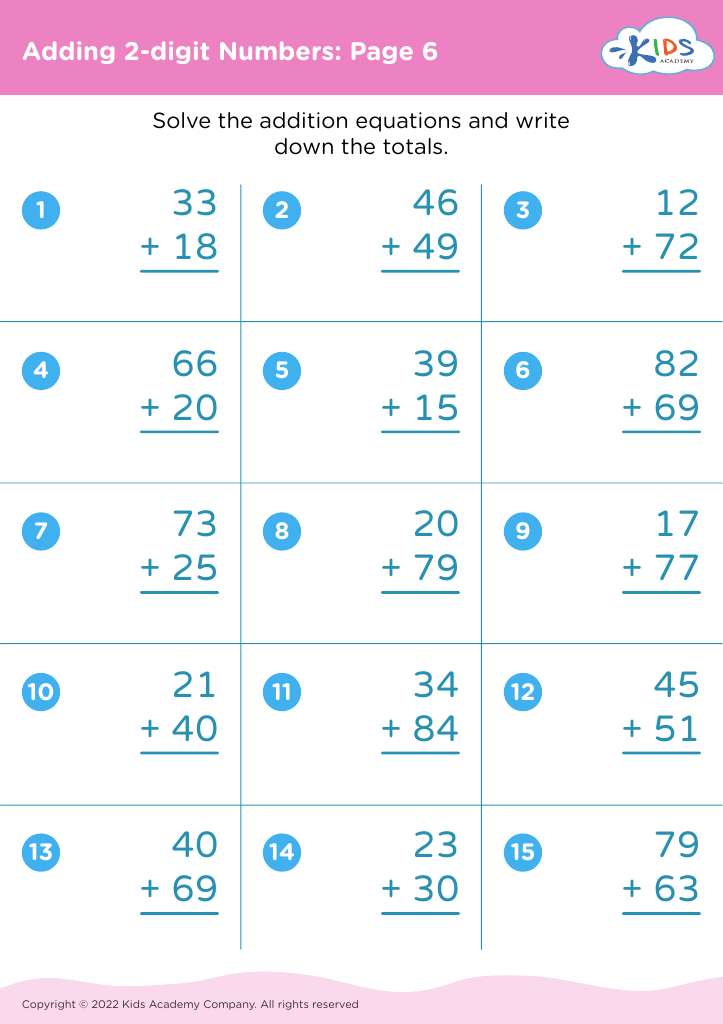
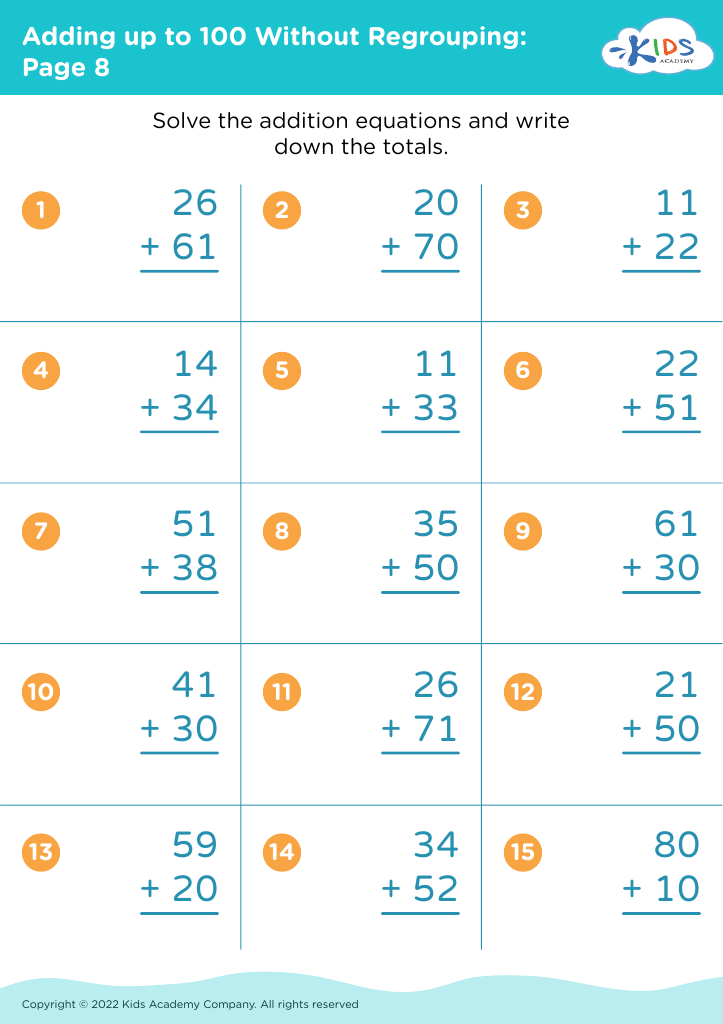
Boost your second grader's vocabulary with our Grade 2 Addition Worksheets, designed to enhance math skills while expanding language proficiency. These engaging worksheets integrate essential math concepts with key vocabulary, helping students master addition while learning new words. Ideal for reinforcing classroom lessons, each worksheet offers fun, illustrated problems and vibrant exercises to make math and vocabulary development an enjoyable experience. Encourage a deeper understanding of addition and language development simultaneously. Perfect for both home and school use, our resources provide a solid foundation for academic success. Explore our comprehensive selection today and watch your child's confidence grow!
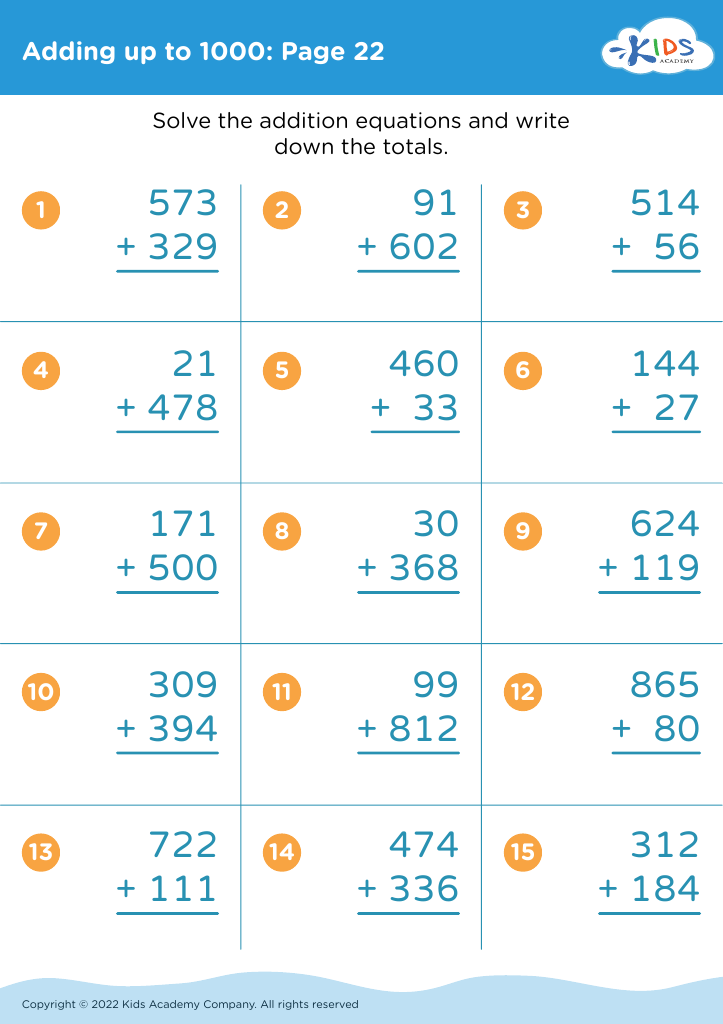
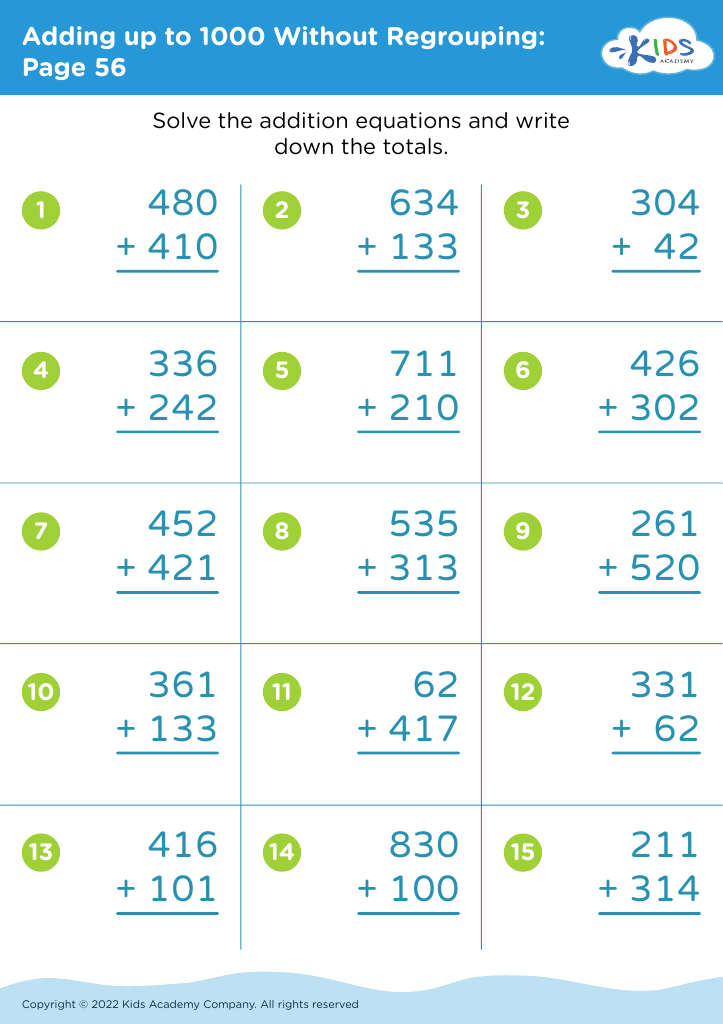
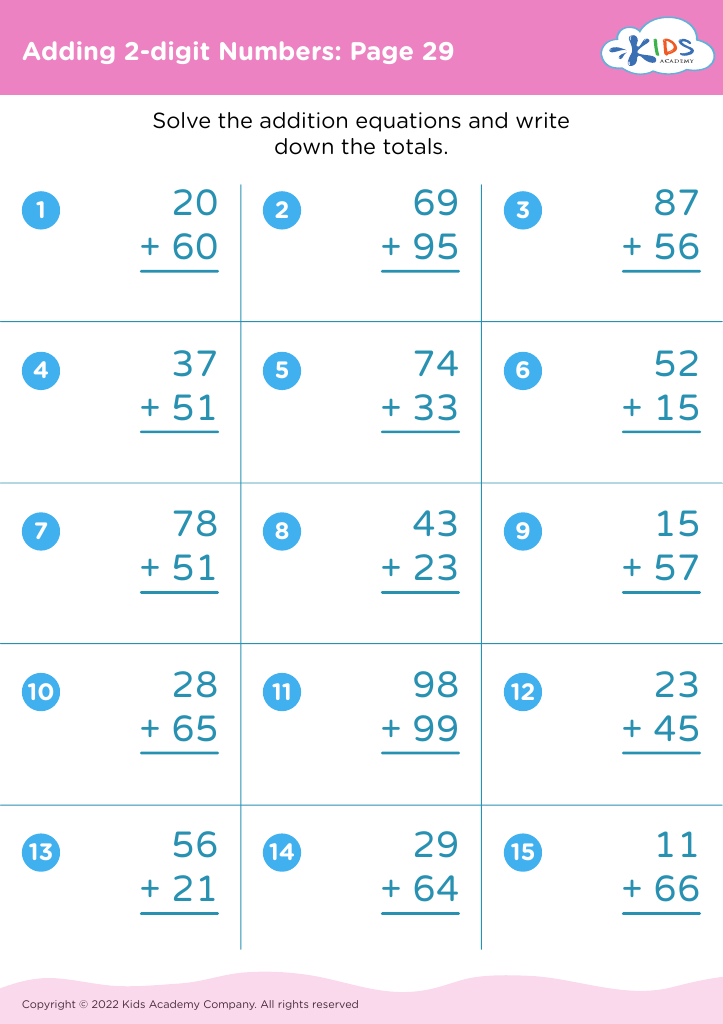








Vocabulary development is crucial for Grade 2 students as it forms the bedrock of their language and cognitive growth, facilitating better communication, comprehension, and academic success. At this stage, children are beginning to read more independently and encounter a broader range of texts. A strong vocabulary helps them decode, understand, and enjoy these texts more fully, building a positive relationship with reading.
In math, specifically with learning concepts like addition, having a well-developed vocabulary allows children to grasp instructions and explanations more quickly. Key mathematical terms such as "sum," "addend," and "equals" need to be understood and used correctly. Without this, children might struggle to follow along and fully grasp mathematical concepts, causing confusion and anxiety.
Moreover, vocabulary skills are interconnected with other academic areas. They enhance students’ ability to follow directions, participate in discussions, and express their thoughts clearly. This leads to greater confidence and a willingness to engage in classroom activities.
For parents and teachers, nurturing vocabulary development lays a strong educational foundation, setting children up for continued success in school and beyond. It empowers children to participate more actively and independently in their learning journey.