Financial literacy Grade 2 Money Worksheets
4 filtered results
-
From - To
Enhance your second graders' financial literacy with our engaging Grade 2 Money worksheets! Designed to introduce essential money concepts, these worksheets cover skills such as counting coins, understanding the value of money, and making simple transactions. Through fun activities and colorful illustrations, kids will develop their math abilities while learning to manage their finances responsibly. Our curriculum-aligned resources promote interactive learning, enabling students to make real-life connections with money management. Empower your child with the financial knowledge they need for their future! Explore our collection of fun and educational worksheets today to make learning about money exciting!
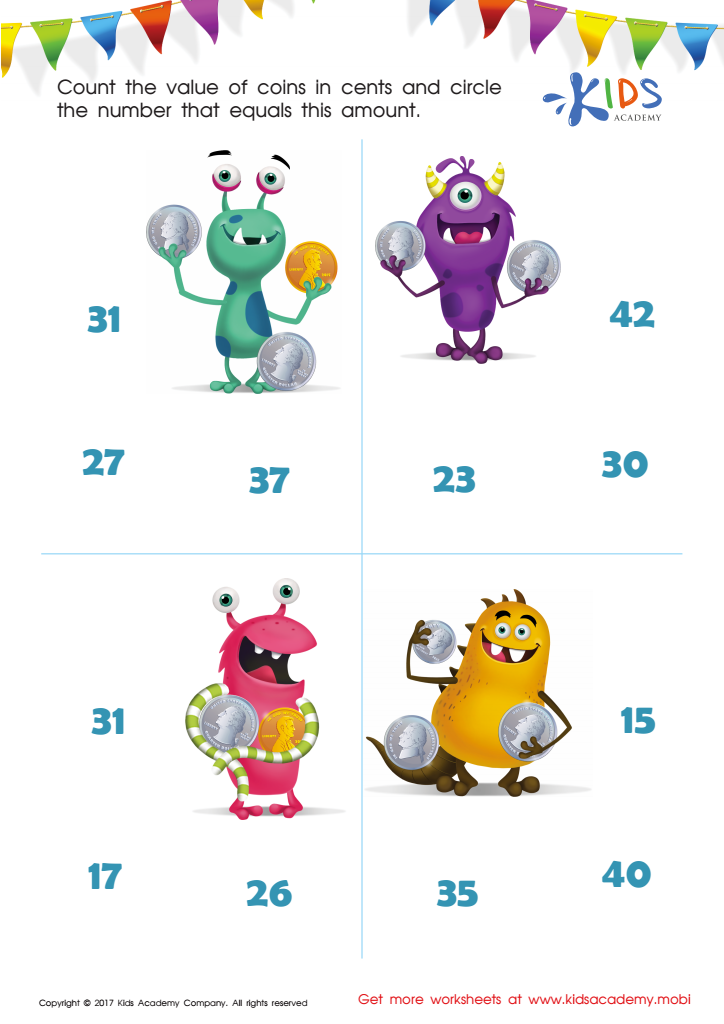
How Many Coins Money Worksheet
 Assign to My Students
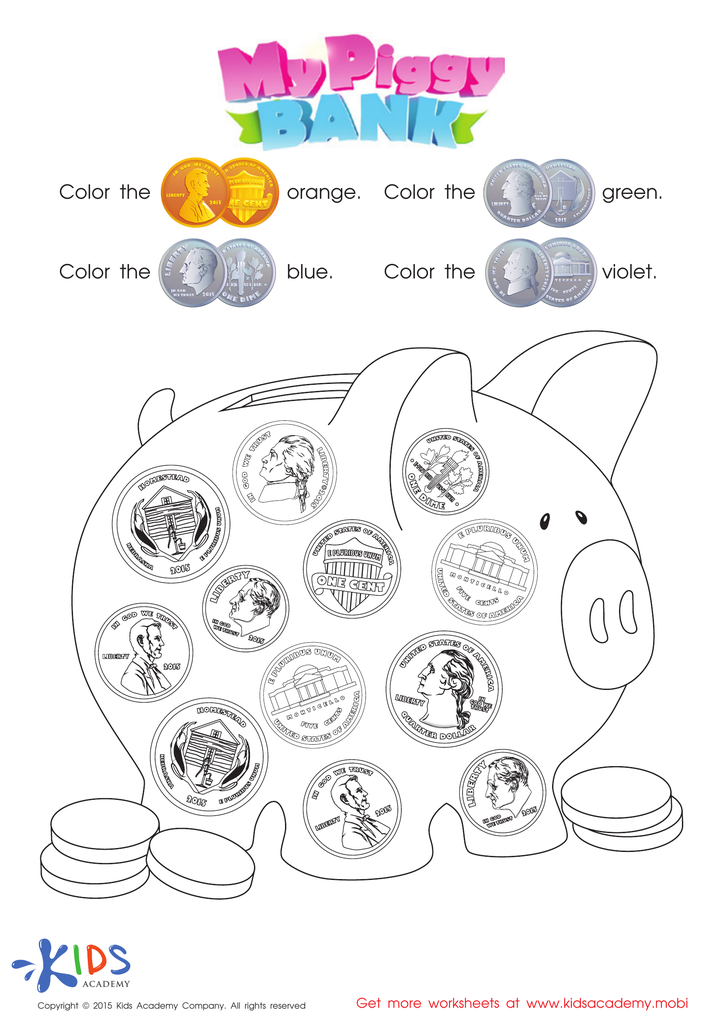
Recognizing Money Money Worksheet
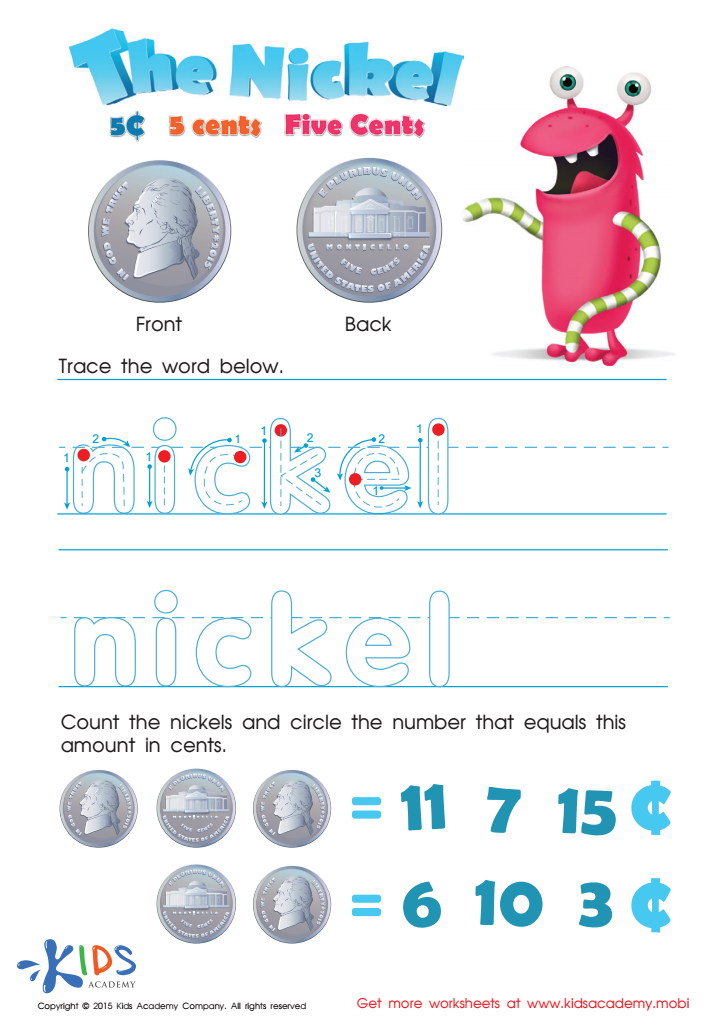
Five Cents or the Nickel Money Worksheet
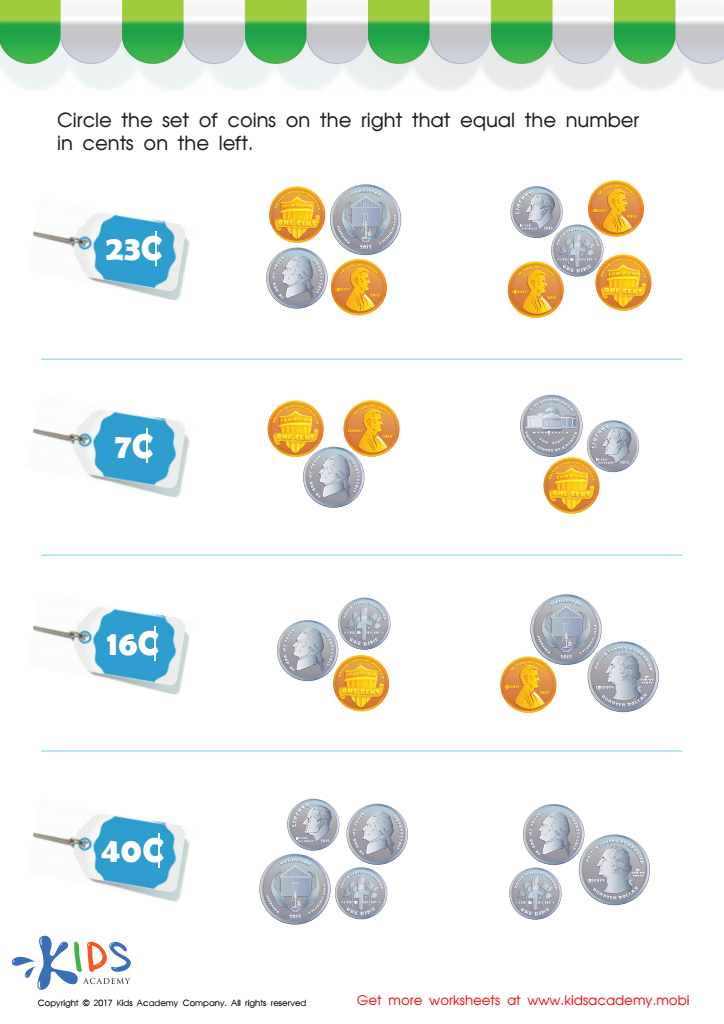
Picking the Coins You Need Money Worksheet








Financial literacy is a crucial life skill that greatly benefits children, starting as early as grade 2. This foundational knowledge equips students with essential tools to understand money, budgeting, and basic economic concepts. When parents and teachers prioritize financial literacy, they empower children to make informed decisions about saving, spending, and understanding value.
At this age, children begin to develop the habits that will shape their attitudes toward money. Introducing concepts like earning, saving, and sharing encourages responsibility and critical thinking. It helps children grasp the importance of delayed gratification, setting goals, and distinguishing between needs and wants.
Furthermore, teaching financial literacy aligns with educational standards and promotes overall cognitive development. Engaging activities such as interactive games, real-life scenarios, and hands-on budgeting lessons capture children's attention and enhance their learning experiences.
By instilling financial principles early on, we cultivate not only financially savvy individuals but also conscientious community members who can contribute responsibly and thoughtfully to society. Overall, prioritizing financial literacy in grade 2 lays the groundwork for confident decision-making and lifelong financial well-being, making it a vital focus for parents and educators alike.