Money recognition Grade 2 Money Worksheets
5 filtered results
-
From - To
Discover our "Money Recognition Grade 2 Money Worksheets" designed to engage young learners in mastering currency identification and counting skills. Perfect for second graders, these worksheets cover coins and bills through fun, interactive exercises and colorful visuals. Students will learn to recognize different denominations, understand their values, and confidently count various sums. Boost foundational math skills while making learning enjoyable and practical. These expertly crafted resources align with educational standards, making them an excellent tool for classroom activities or at-home practice. Prepare your child for real-world financial literacy with our comprehensive money recognition worksheets.
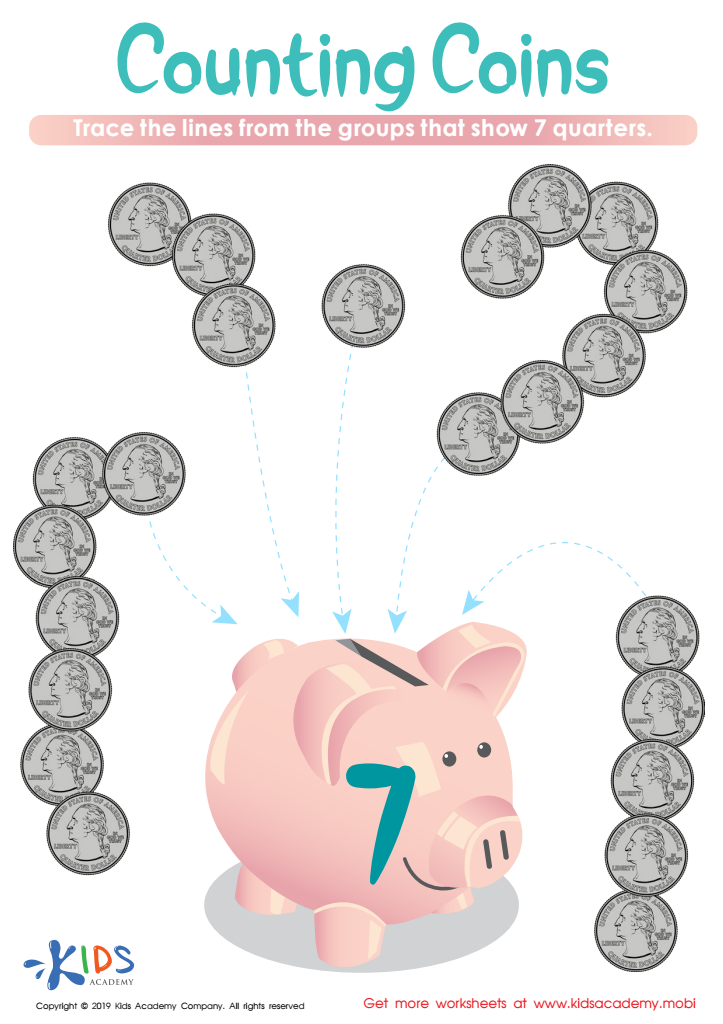
Counting Coins Worksheet
 Assign to My Students
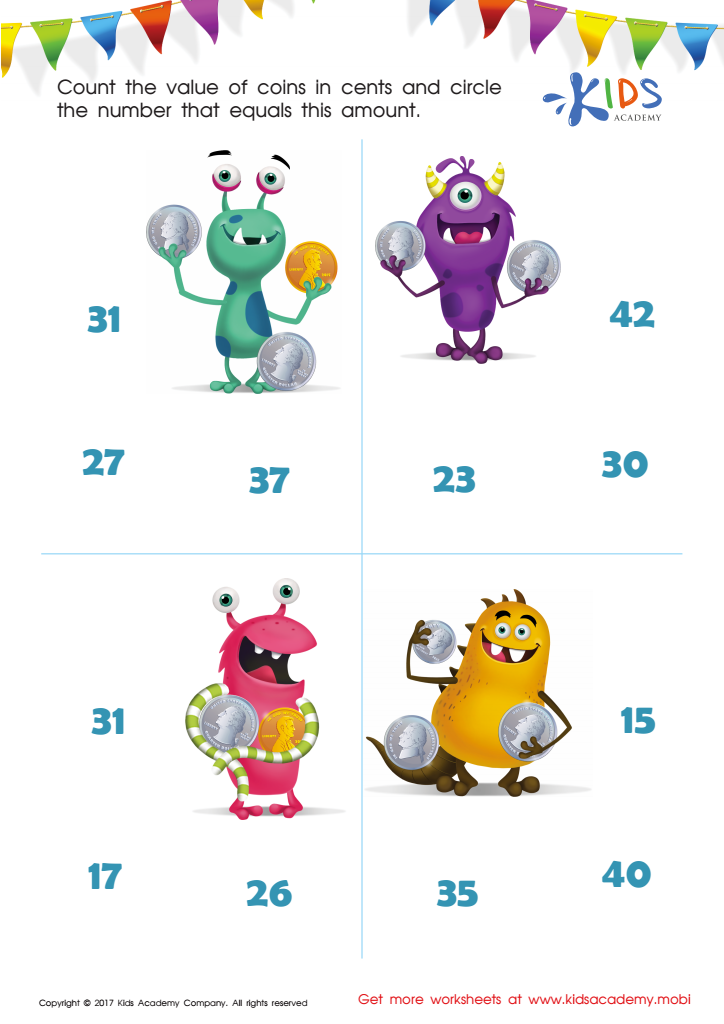
How Many Coins Money Worksheet
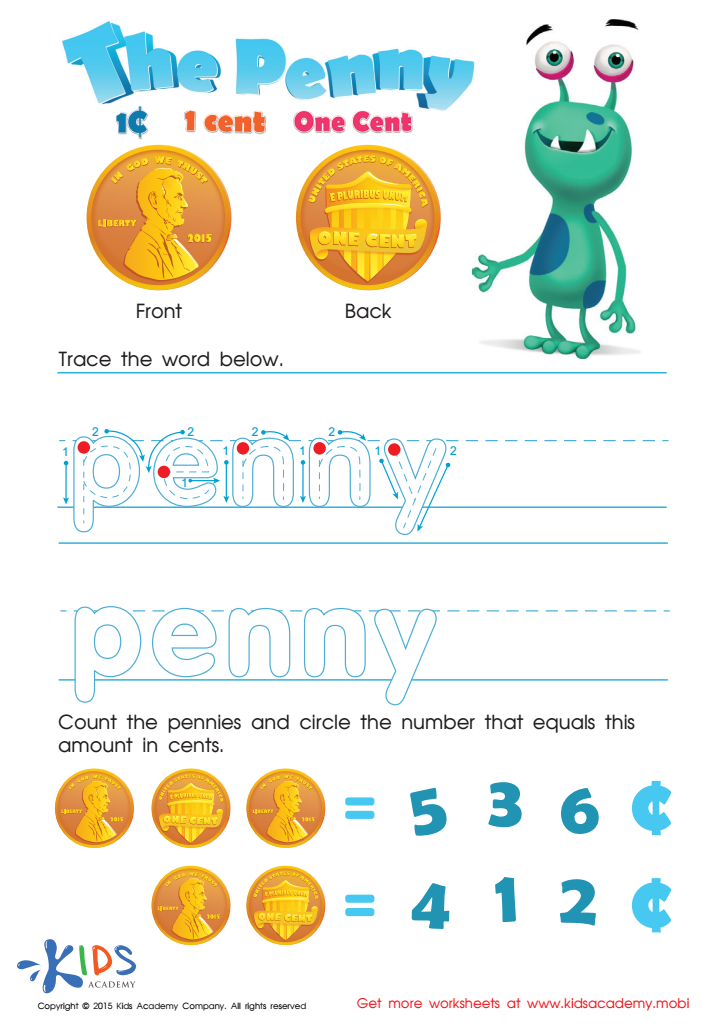
One Cent or the Penny Money Worksheet
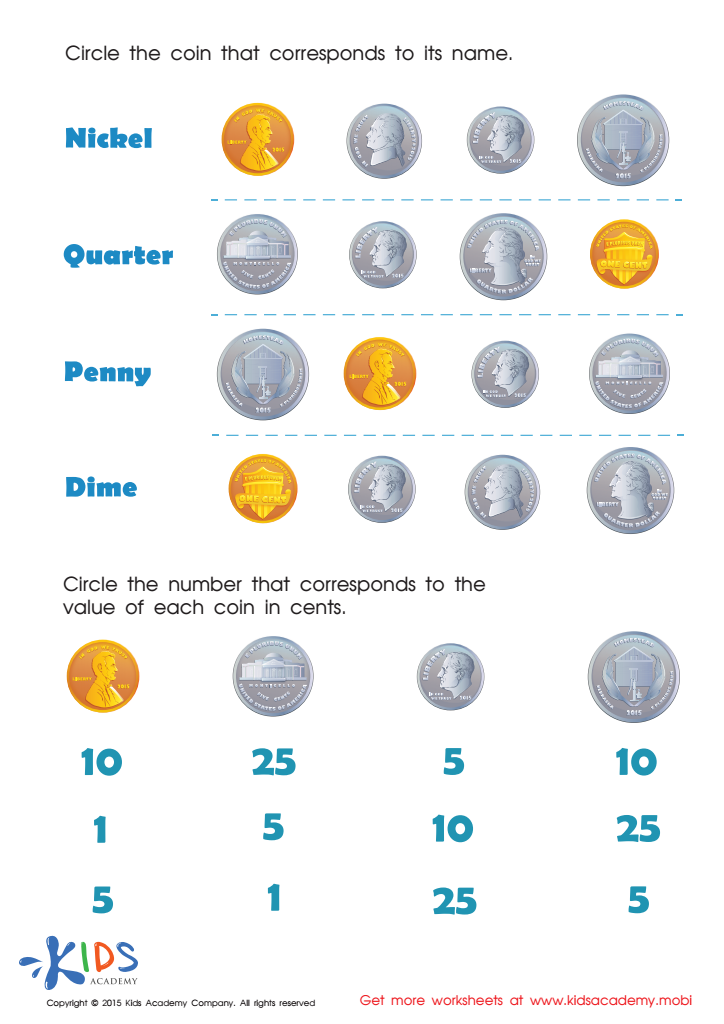
Coin Names and Values Money Worksheet
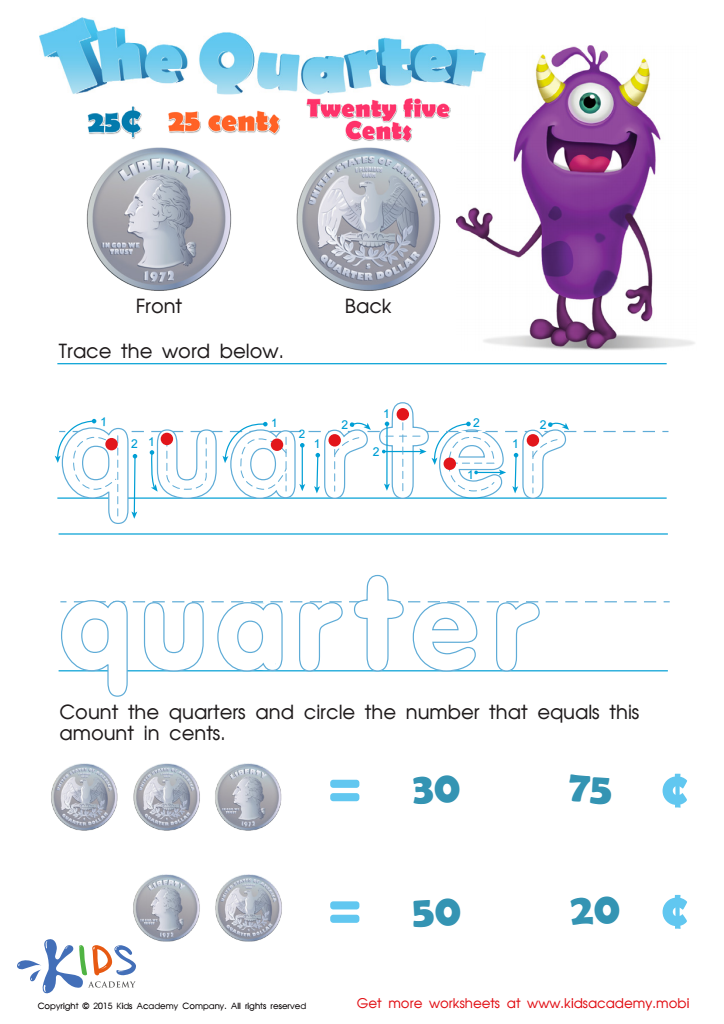
Twenty Five Cents or the Quarter Money Worksheet








Money recognition is a fundamental skill that second graders should master as it lays the groundwork for their financial literacy, a key life skill. For both parents and teachers, reinforcing money recognition fosters practical real-world competencies and gives children a sense of independence and confidence.
From a practical perspective, understanding money equips children to engage in everyday transactions, such as buying snacks or toys, which enhances their numeracy skills. It connects abstract mathematical concepts, like addition and subtraction, to tangible outcomes, making learning more engaging and meaningful.
Furthermore, early exposure to money concepts helps build the structure for responsible financial behavior. It encourages discussions about savings, spending, and the value of different items, setting the stage for smarter financial decision-making in later years.
Parents and teachers who emphasize money recognition also provide valuable opportunities for hands-on, experiential learning. Activities like setting up a mock store at home or school can make learning interactive and fun while embedding critical skills.
In sum, investing time in teaching second graders about money recognition is significant. It not only hones their arithmetic abilities but also prepares them for real-life skills that promote financial responsibility. This early financial education sets the foundation for their future economic well-being and decision-making.