Fine Motor Skills Grade 2 Fractions of Shapes Worksheets
6 filtered results
-
From - To
Boost your second grader's understanding of fractions and enhance their fine motor skills with our engaging "Fine Motor Skills Grade 2 Fractions of Shapes Worksheets". These expertly designed worksheets combine visual fraction problems with hands-on activities to help young learners grasp essential math concepts. Children will draw and color fractions of various shapes, reinforcing their comprehension while also promoting hand-eye coordination and precise pencil control. Perfect for classroom use or at-home practice, these worksheets make learning fractions fun and interactive. Unlock your child's full potential in both math and motor skill development today!
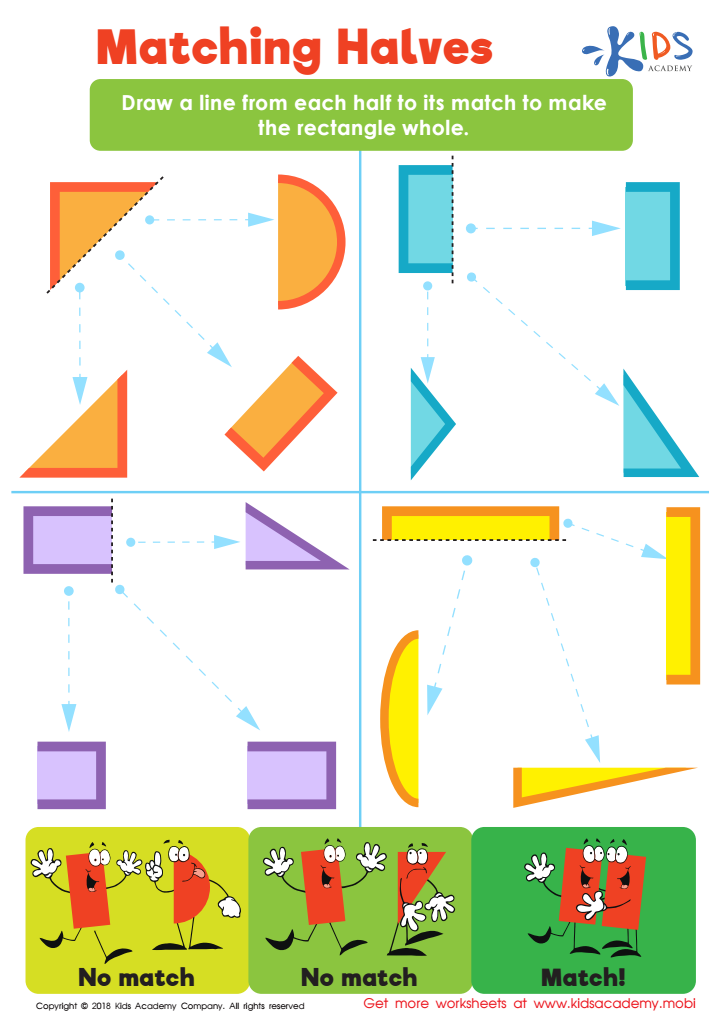
Matching Halves Worksheet
 Assign to My Students
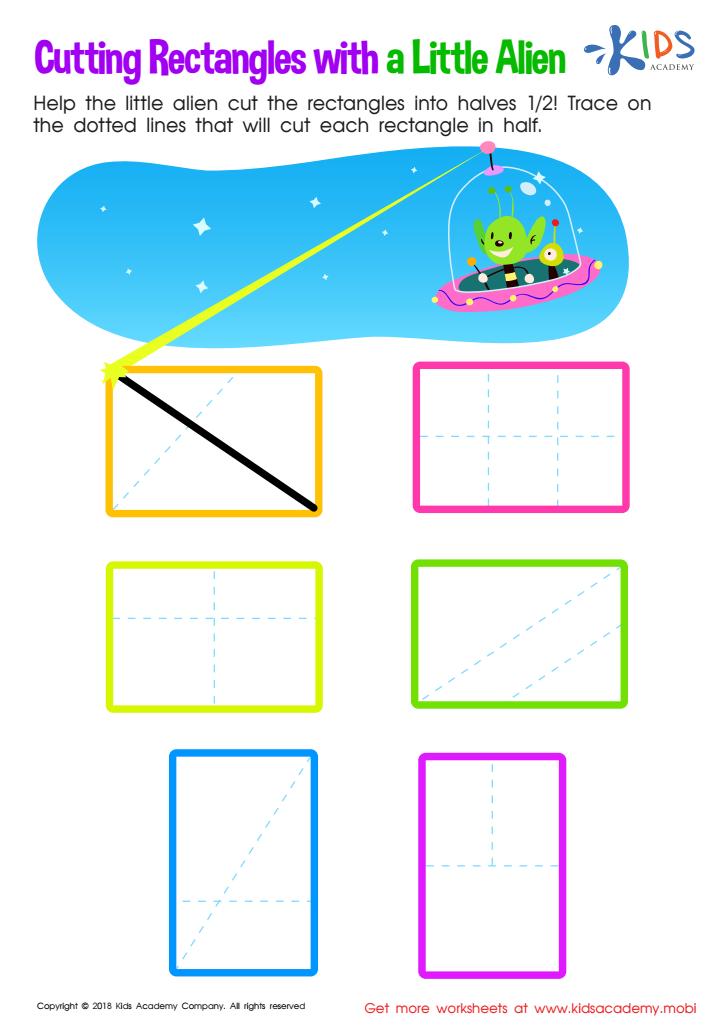
Cutting Rectangles with Alien Worksheet
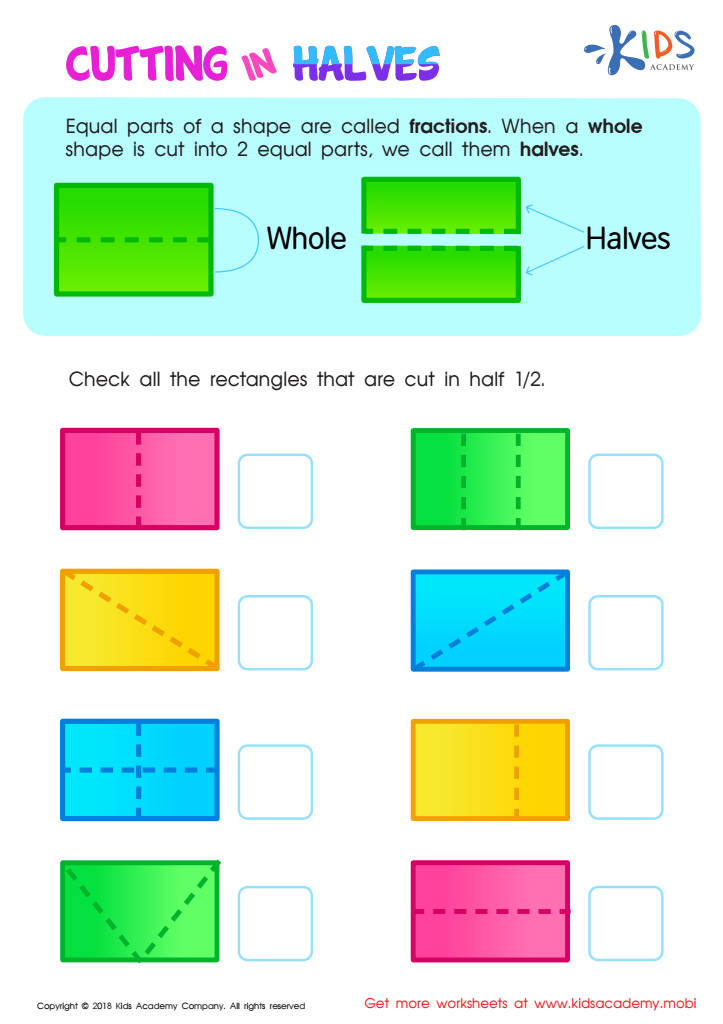
Cutting in Halves Worksheet
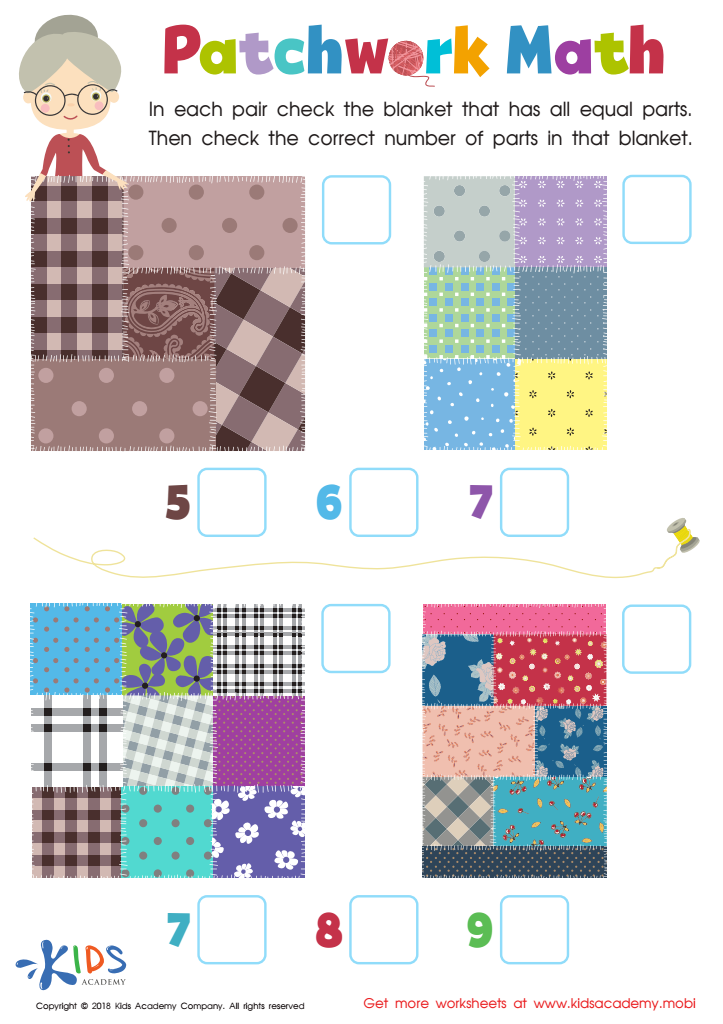
Patchwork Math Worksheet
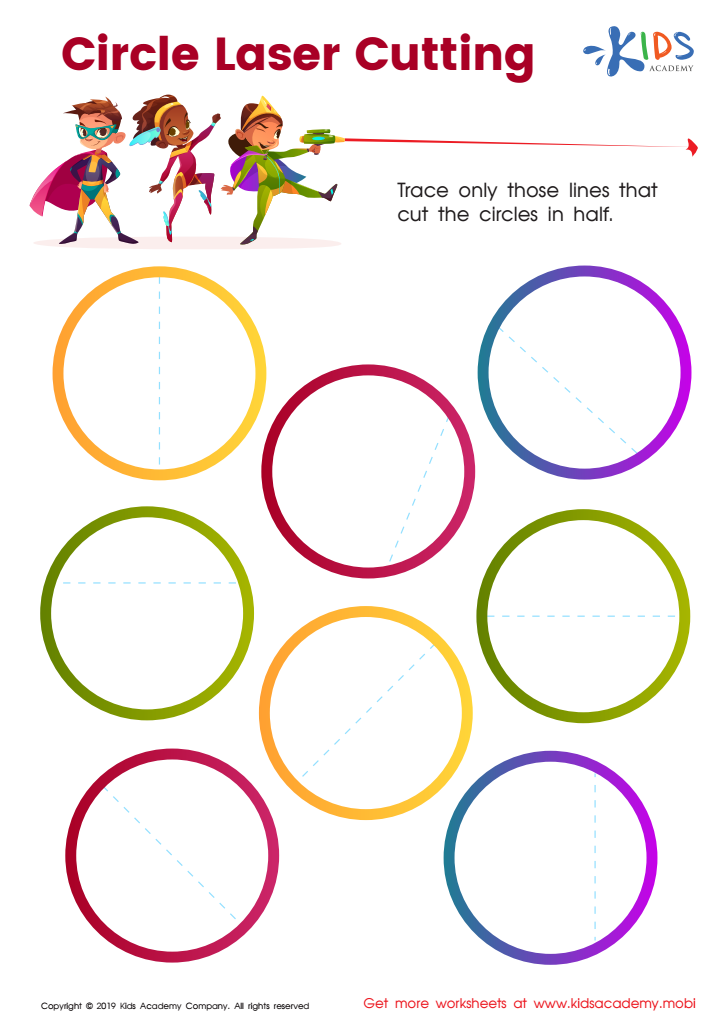
Circle Laser Cutting Worksheet
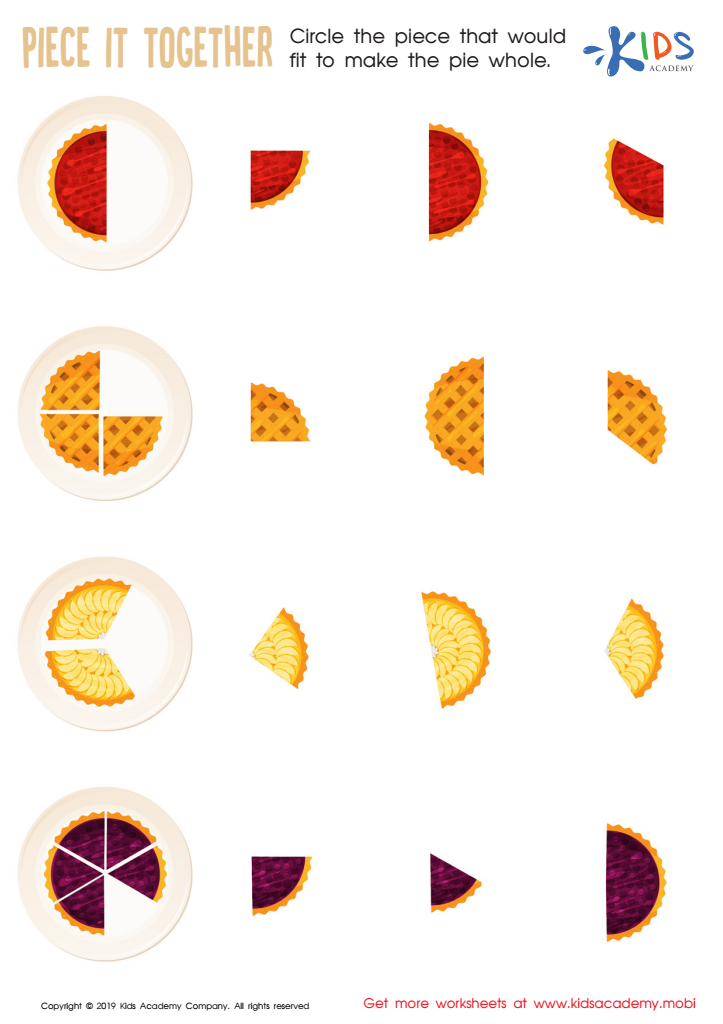
Piece it together Worksheet





Fine motor skills are essential for children’s overall development, influencing their academic success and daily life tasks. In Grade 2, students start to delve into more complex concepts such as fractions of shapes, marking a pivotal stage in their cognitive and educational journey. The connection between fine motor skills and learning fractions of shapes is integral and multifaceted.
Fine motor skills involve the coordination of small muscles in the hands and fingers, necessary for activities like cutting, drawing, and writing. These precise movements support children's ability to engage with educational tasks effectively. When learning fractions of shapes, students often use tools like rulers, compasses, and scissors for hands-on activities. Adequate fine motor skills ensure they can manipulate these tools with accuracy, helping them to understand and draw fractions correctly.
Moreover, recognizing and creating fractional parts involves visual-spatial skills and attention to detail, both of which are enhanced through fine motor practice. When children grasp these concepts early and efficiently, their confidence and ability to tackle more advanced mathematical problems in the future are significantly bolstered.
Therefore, parents and teachers should prioritize activities that develop fine motor skills, aligning them with educational tasks such as fractions of shapes, to foster a robust foundation in both motor and cognitive abilities. This integrated approach not only improves academic outcomes but also nurtures each child’s growth in a well-rounded, comprehensive manner.