Shape Recognition Grade 2 Fractions of Shapes Worksheets
6 filtered results
-
From - To
Enhance your second grader's understanding of geometry and fractions with our "Shape Recognition Grade 2 Fractions of Shapes Worksheets." These engaging worksheets help young learners identify and distinguish between various shapes, including circles, squares, triangles, and more. By integrating fractions into shape recognition, students will effortlessly grasp concepts like halves and thirds. Each worksheet is designed to make learning fun and interactive, helping to build a strong foundation in both geometry and fractions. Perfect for classroom use or at-home practice, these printable worksheets are essential resources for developing essential math skills.
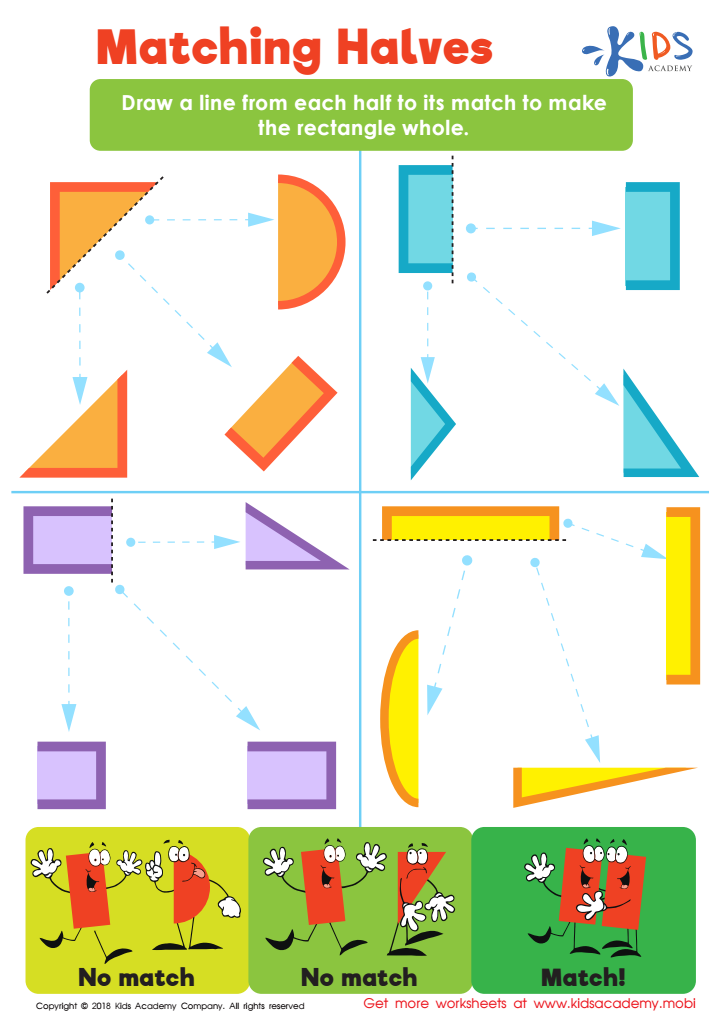
Matching Halves Worksheet
 Assign to My Students
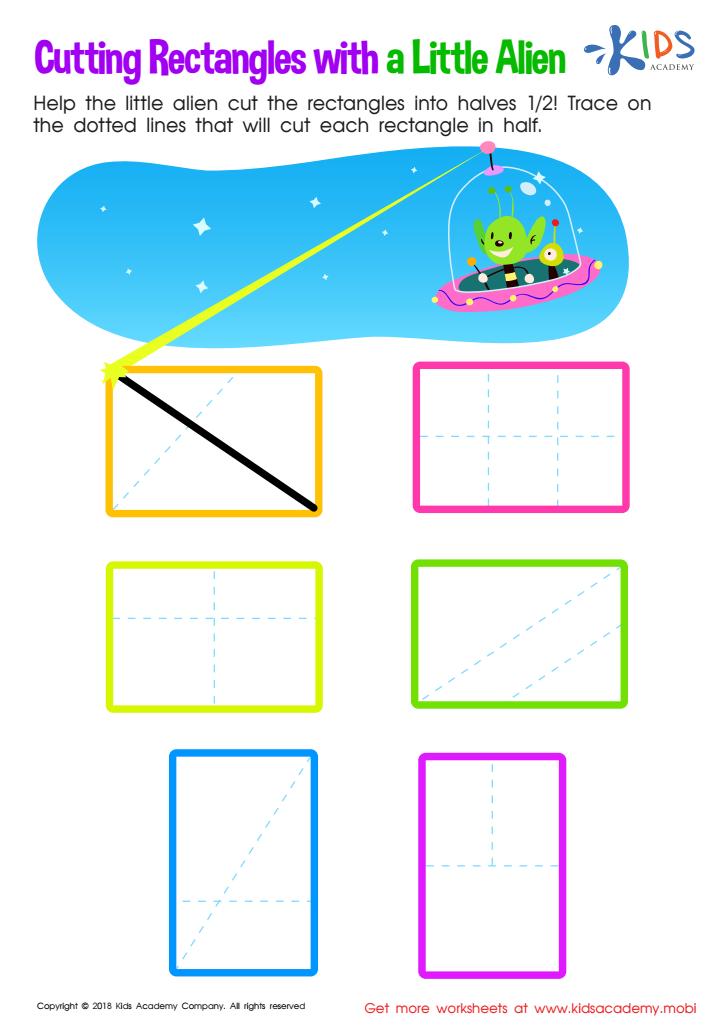
Cutting Rectangles with Alien Worksheet
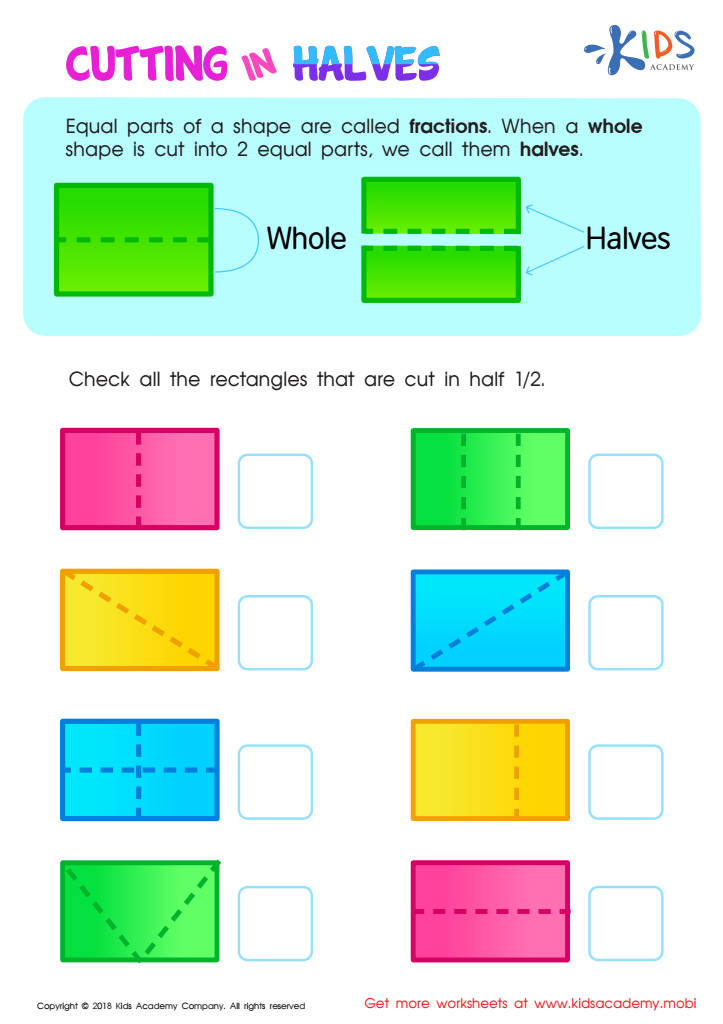
Cutting in Halves Worksheet
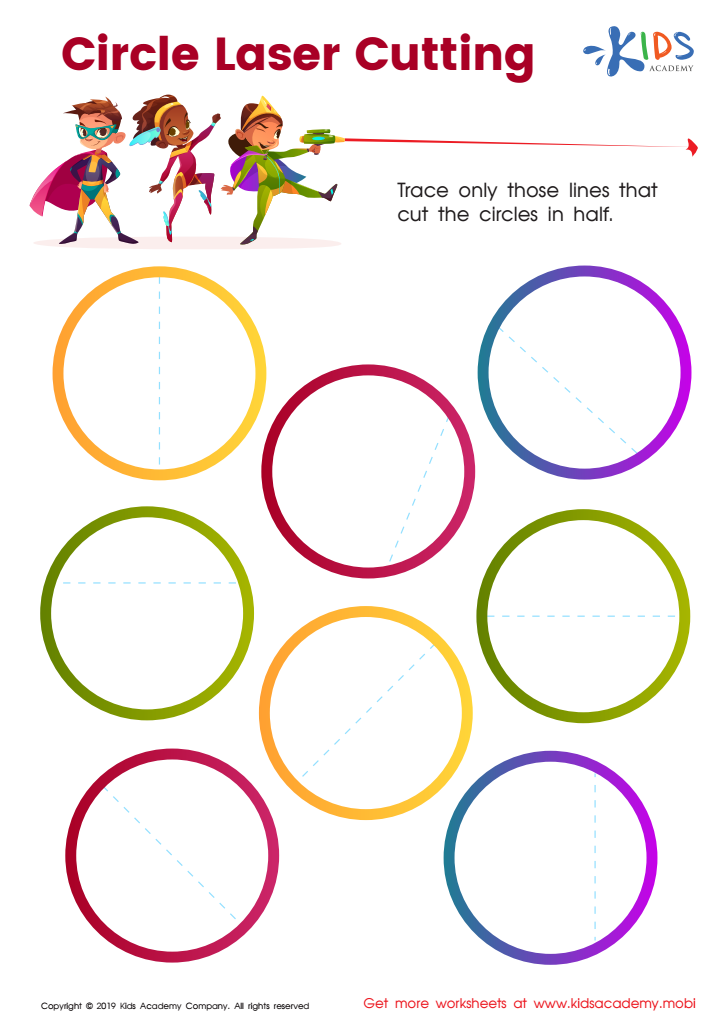
Circle Laser Cutting Worksheet
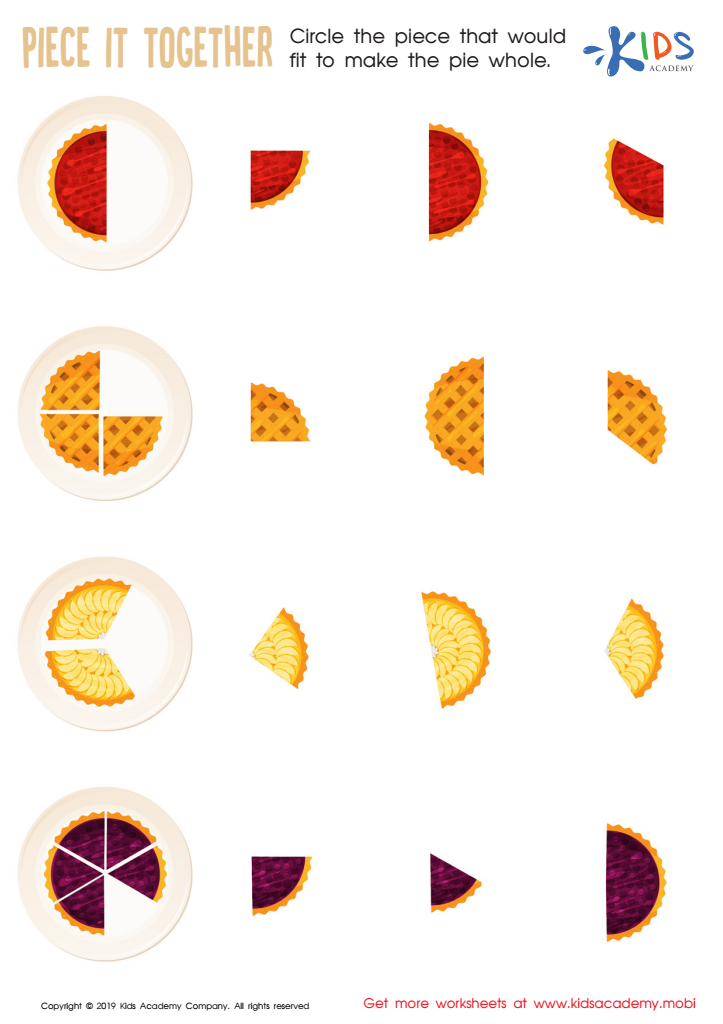
Piece it together Worksheet
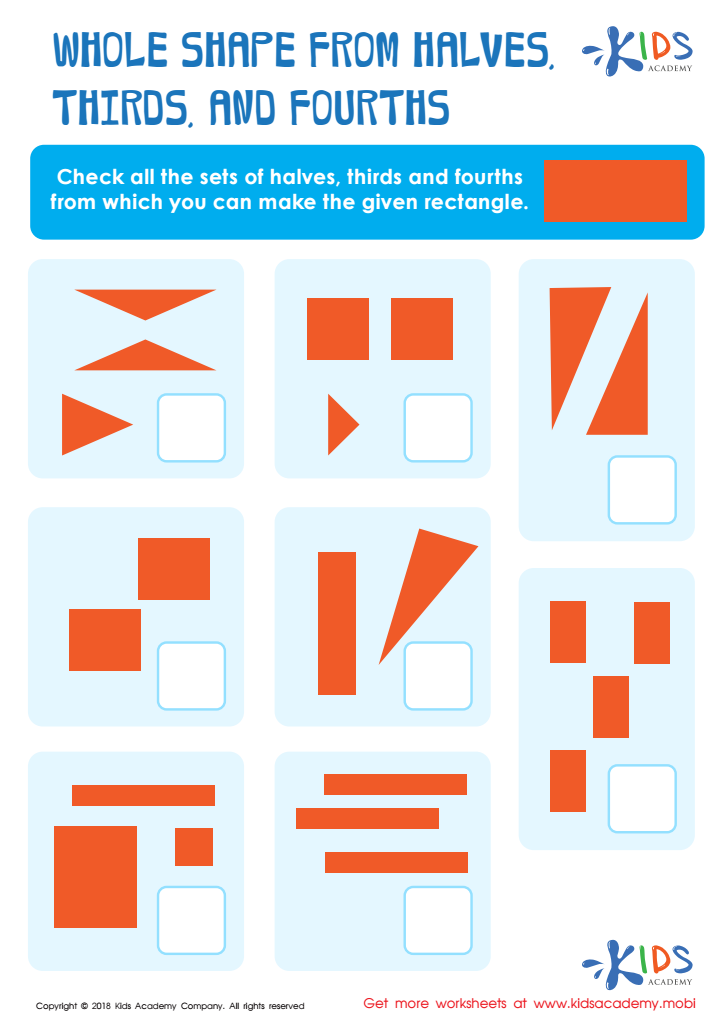
Whole Shape from Halves, Thirds and Fourths Worksheet





Understanding fractions of shapes is a foundational math skill that plays a crucial role in a child’s cognitive and mathematical development. For second graders, grasping shape recognition and being able to identify fractions of shapes – like halves, thirds, and quarters – is not just about learning math; it's about developing critical problem-solving skills and spatial awareness. When children identify how shapes can be divided, they are practicing their ability to see relationships, a fundamental concept across many subjects.
Moreover, fractions are a building block for more advanced mathematical concepts. If children understand halves and quarters early, they are better prepared for complex topics such as division, ratios, and percentages in later grades. This early understanding also extends to real-life skills such as measuring ingredients for recipes or understanding portions, enhancing their practical life competencies.
Additionally, working with fractions of shapes can facilitate better visual and tactile learning experiences. Educational activities involving cutting and coloring shapes engage multiple senses and learning styles, ultimately aiding memory retention and making abstract concepts more tangible. Therefore, fostering an early appreciation and understanding of fractions of shapes helps cultivate confident, well-rounded learners prepared to tackle future academic challenges.