Visual representation comprehension Grade 2 Geometry Worksheets
3 filtered results
-
From - To
Enhance your child's understanding of geometry with our Grade 2 Visual Representation Comprehension Worksheets. Designed specifically for young learners, these engaging activities help students identify and interpret various geometric shapes and their attributes. Through vibrant illustrations and interactive exercises, kids will practice recognizing, drawing, and relating shapes to their real-world counterparts. Our worksheets encourage critical thinking and visual skills, essential for mastering geometry concepts. Perfect for classroom learning or at-home practice, these resources foster mathematical confidence and prepare students for more advanced topics. Explore our comprehensive materials and watch your child excel in their geometry journey!
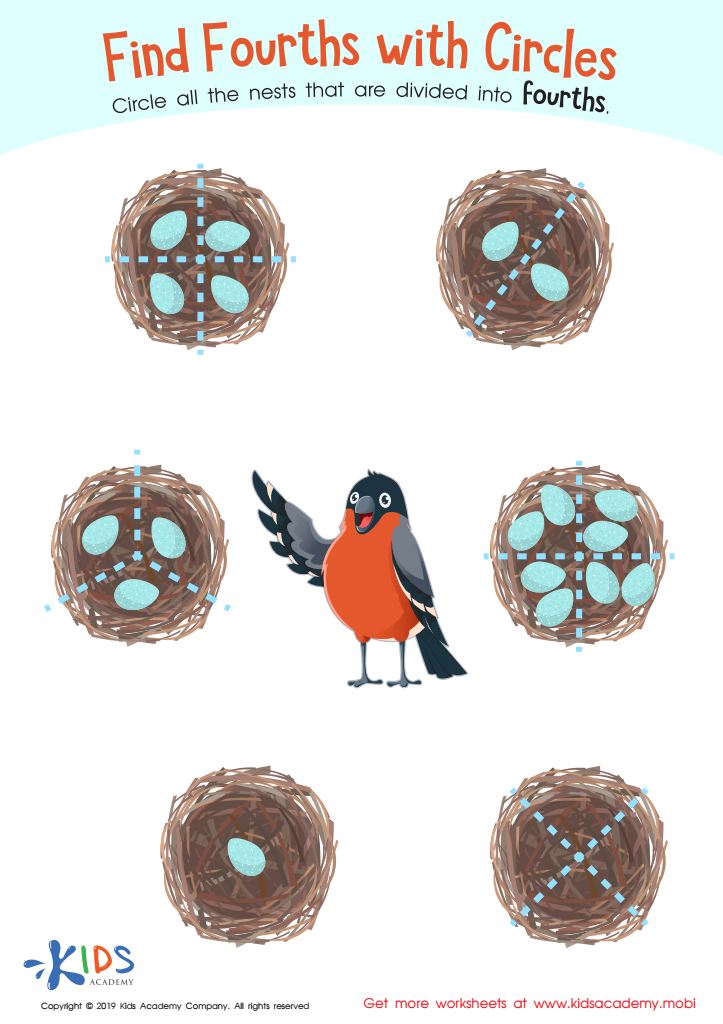
Find Fourths Circles Worksheet
 Assign to My Students
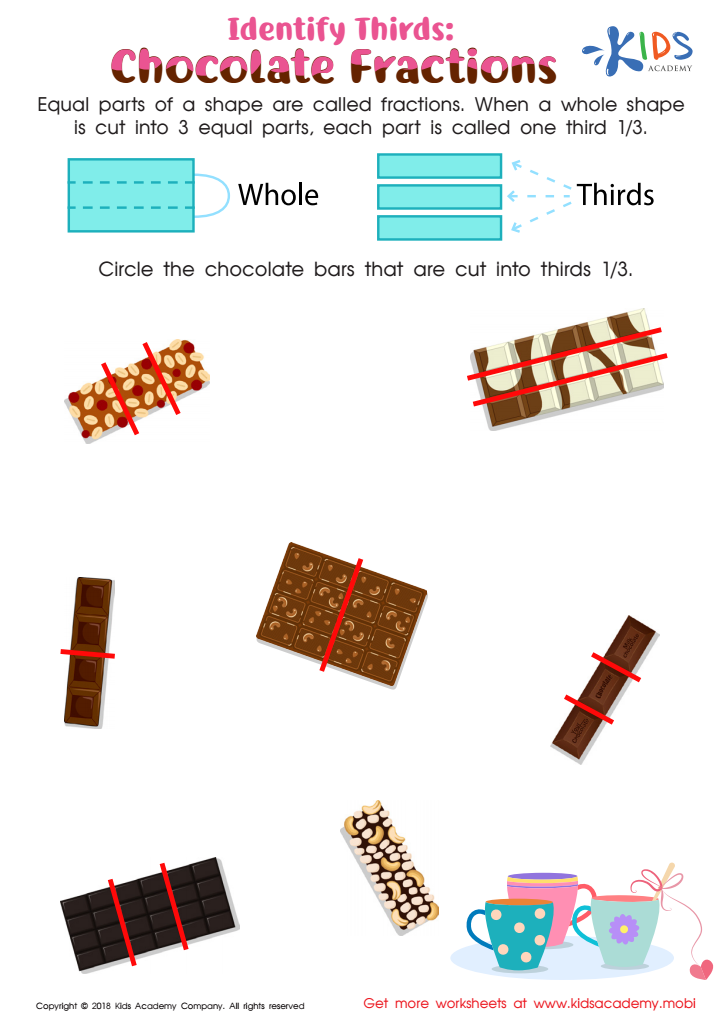
Identify Thirds: Chocolate Fractions Worksheet
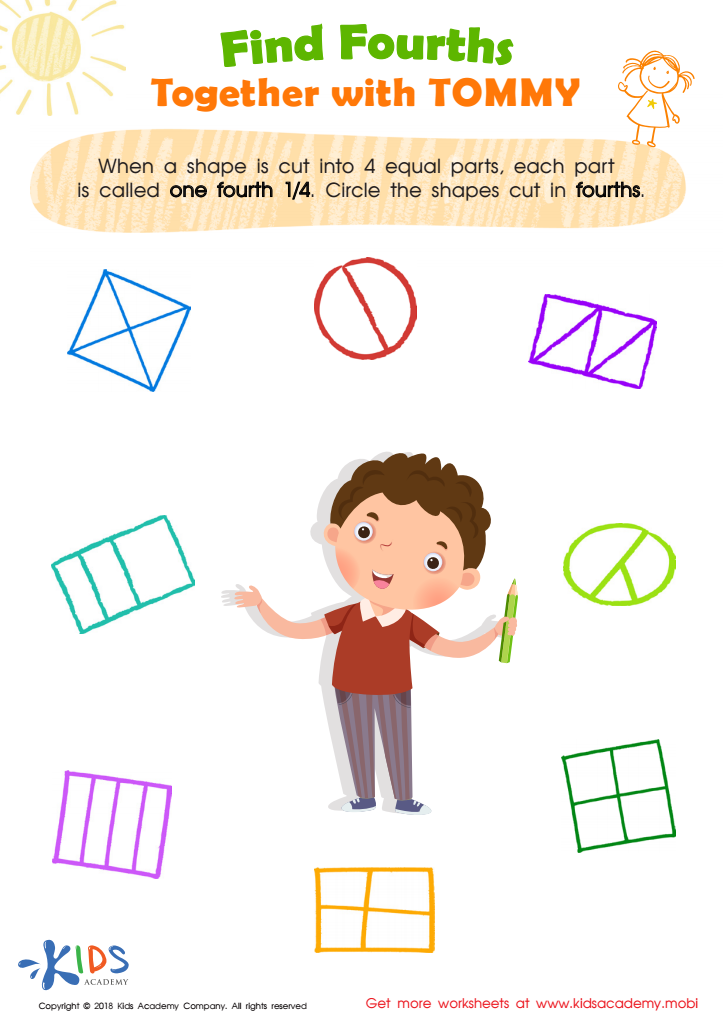
Find Fourths Together with Tommy Worksheet








Visual representation comprehension in Grade 2 Geometry is essential for several reasons. At this developmental stage, children are beginning to understand and interpret visual information, a skill critical for real-life problem-solving. Geometry introduces shapes, spatial relationships, and measurements, all of which are foundational to mathematical reasoning. When children engage with visual representations, they can better grasp geometric concepts, leading to deeper understanding and retention.
Furthermore, visual literacy supports critical thinking. When students learn to analyze and create visual representations—such as drawings, models, or diagrams—they develop their ability to convey and interpret ideas. This skill not only enhances their mathematical understanding but also integrates well with learning in other subjects, such as art, science, and engineering.
For parents and teachers, fostering visual representation comprehension is about equipping children with tools they will need throughout their academic journey and into adulthood. Engaged learners become confident problem solvers. Thus, by emphasizing visual comprehension in geometry, adults support holistic development and encourage a positive attitude towards mathematics, setting the stage for future successes in a variety of disciplines. Prioritizing this aspect of learning is crucial in nurturing well-rounded, capable learners.