Enhance Vocabulary Grade 2 Math Worksheets
4 filtered results
-
From - To
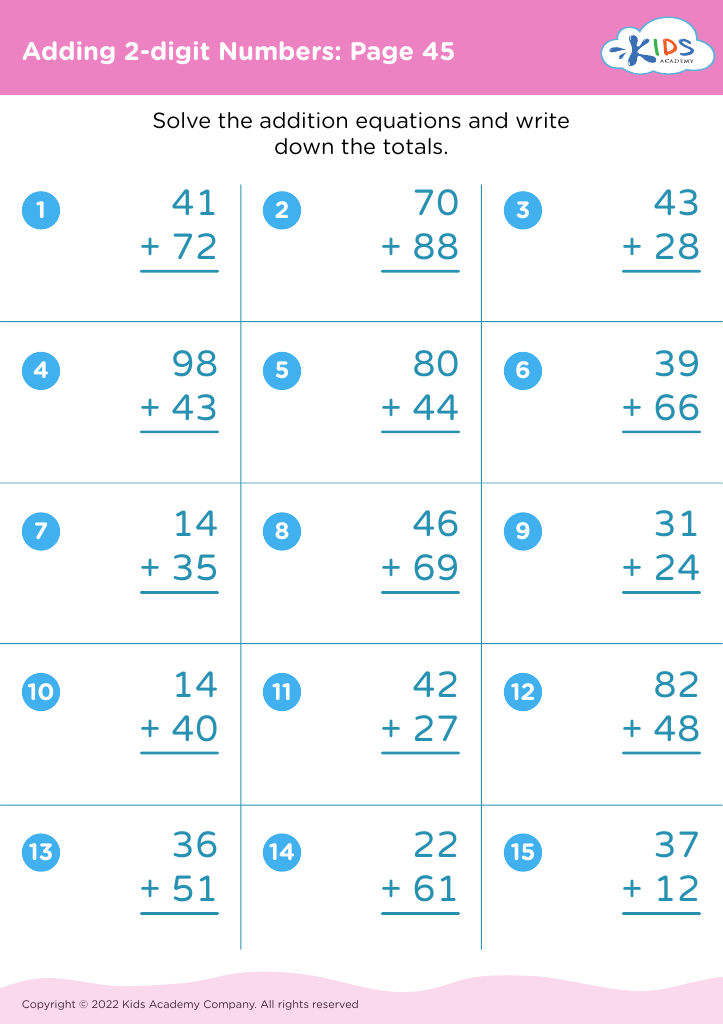
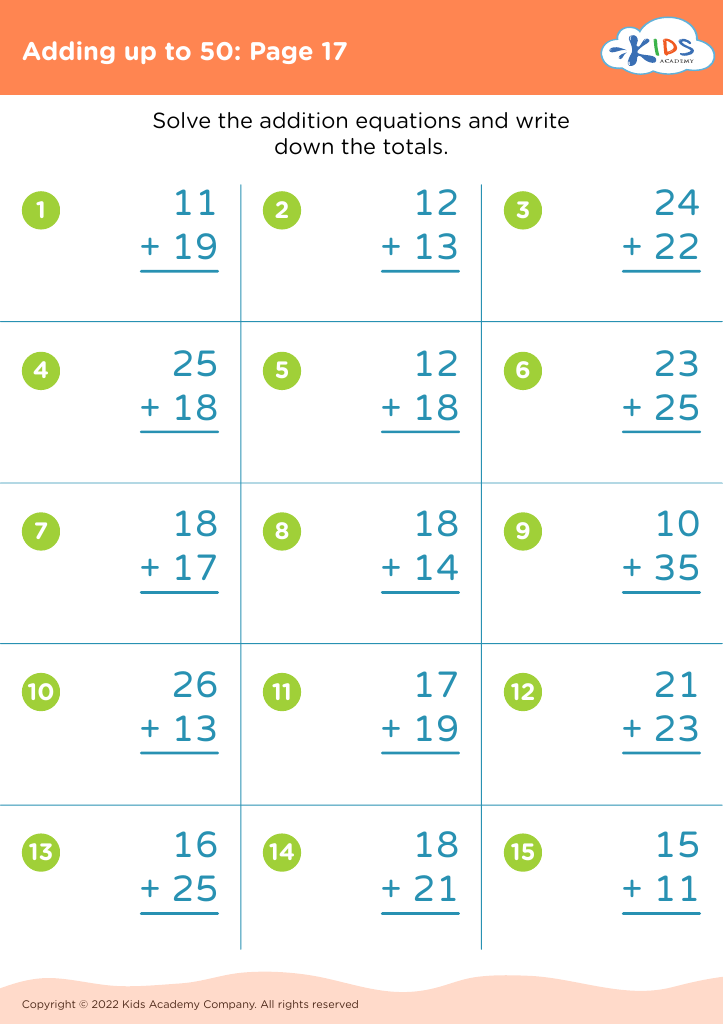
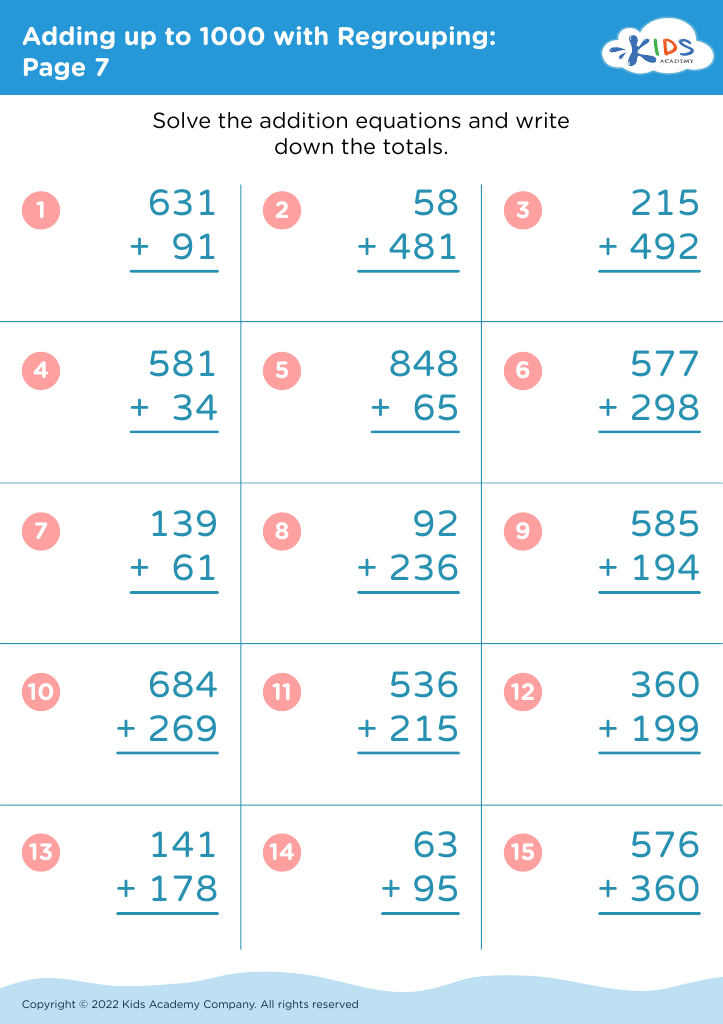
Unlock your child's potential with our "Enhance Vocabulary Grade 2 Math Worksheets." Specially designed for second graders, these engaging worksheets integrate essential math skills with vocabulary building. Each activity encourages students to expand their math-related terminology while reinforcing concepts like addition, subtraction, shapes, and measurement. Colorful and interactive, our worksheets make learning fun and effective, fostering a deeper understanding of math vocabulary and foundational skills. Ideal for classroom teaching or additional practice at home, these resources are perfect for enriching your child’s education and ensuring they stay ahead in their mathematical journey.






Focusing on enhancing vocabulary in Grade 2 math is crucial for several compelling reasons. Firstly, mathematical vocabulary is foundational for understanding and solving problems. Children at this age are forming critical cognitive and linguistic skills, and a strong vocabulary helps them grasp key concepts such as addition, subtraction, measurements, and geometry more readily.
Secondly, a rich math vocabulary enables students to follow instructions more effectively and comprehend word problems, which often pose the greatest challenge in math. When children understand terms like "sum," "difference," "greater than," and "equal," they can decode complex instructions, leading to better academic performance and confidence in math.
Moreover, fostering a robust math vocabulary early makes future learning smoother. As math becomes more advanced, concepts build on previous knowledge. If children are fluent in the language of math, they'll find it easier to transition to more complicated topics in later grades.
Finally, improving math vocabulary supports overall literacy and communication skills. Math-specific terms often appear in various subjects and real-life situations. Teachers and parents who prioritize vocabulary development ensure children are not only succeeding in math but are also better prepared thinkers and communicators. In essence, enhancing vocabulary in Grade 2 math lays a strong foundation for continued academic success and practical problem-solving.